
What does it actually feel like to live in Bowie? The answer depends less on what the city has and more on what you’re trading for it. Bowie sits in that specific suburban zone where commuter rail access meets car-dependent errands, where high household incomes create high expectations, and where the promise of space and stability sometimes bumps against the reality of logistical friction. It’s a place that works beautifully for some households and feels limiting to others—not because it’s broken, but because alignment here is about tradeoffs, not absolutes.
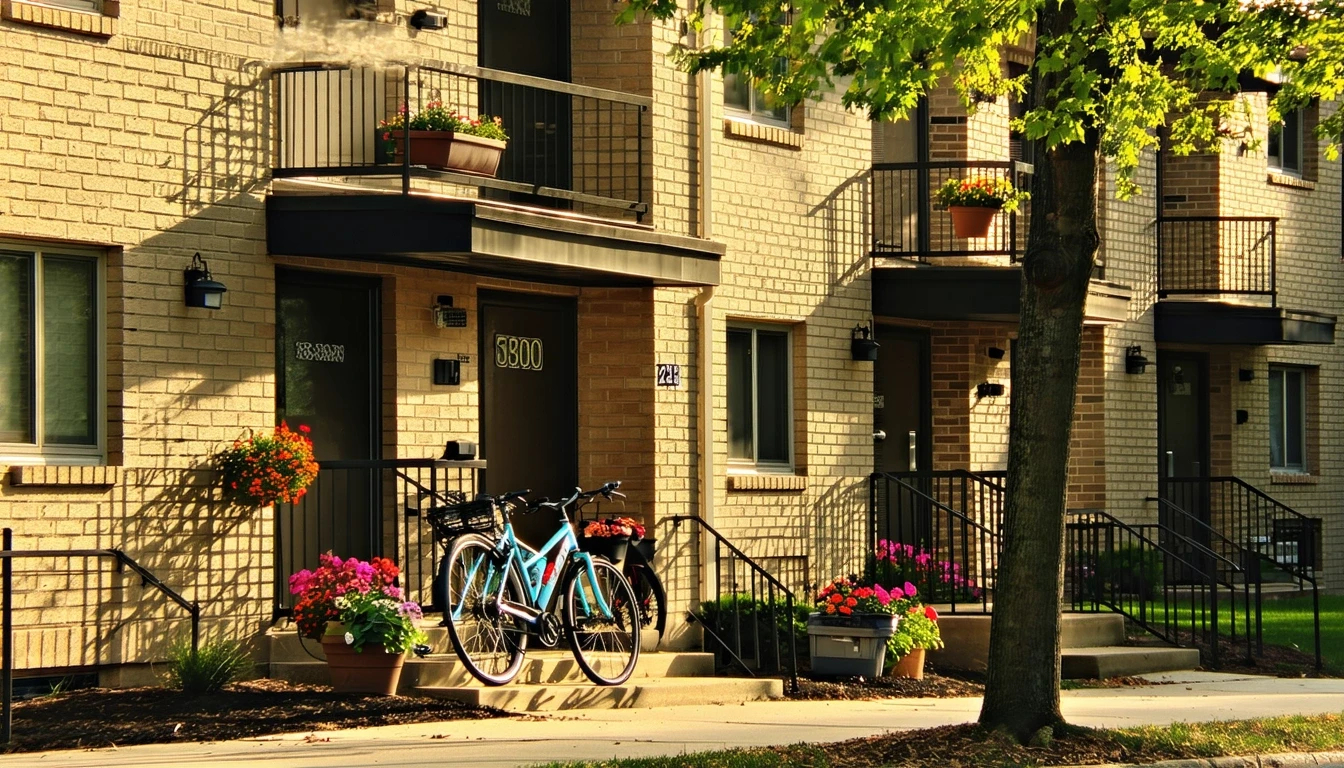
The Emotional Landscape of Bowie
Bowie’s vibe is shaped by a quiet tension: it offers suburban predictability and access to Washington DC via rail, but daily life still revolves around the car. The city has walkable pockets—areas where sidewalks and pedestrian infrastructure exceed typical suburban norms—but food and grocery density remains sparse. That means errands require planning, and spontaneity often means a drive.
For families who moved here for the schools and the safety, that tradeoff feels worth it. For younger professionals or remote workers who imagined a neighborhood where they could walk to coffee or pick up groceries on foot, it can feel isolating. The rail station is a lifeline for DC commuters, but it doesn’t change the fact that getting to the station, running weekend errands, or accessing routine healthcare usually means getting in the car.
“We moved to Bowie for the schools, but stayed for the neighbors,” one resident explains. “It’s quiet, it’s safe, the kids have yards. But if you forget milk, you’re not walking to the corner store—you’re driving ten minutes.” That sentiment captures the city’s emotional center: comfort and predictability, but not convenience.
What People Are Talking About Online
In local Facebook groups and regional subreddit threads, Bowie residents tend to discuss the city in terms of what it isn’t as much as what it is. There’s pride in the rail access, frustration with the lack of walkable dining and retail, and a recurring theme of “it’s great if you have a car and a family.”
Common discussion threads include:
- Commute strategies and parking at the station
- Where to find good restaurants (often outside Bowie)
- School quality and neighborhood recommendations for families
- Healthcare access and the need to travel for specialists
- Comparisons to College Park, Laurel, and Greenbelt
“It’s a bedroom community with a train station,” one commenter writes. “If you’re looking for nightlife or walkable anything, this isn’t it. But if you want a yard and a reasonable commute to DC, it’s solid.”
“I love the space and the quiet, but I do miss being able to just walk somewhere for dinner,” another adds. “Everything here is a trip.”
The tone is rarely angry—it’s more resigned pragmatism. People know what they signed up for, but they also feel the friction when their expectations don’t quite match the infrastructure.
How Local Coverage Frames the City
Local news and community coverage tend to frame Bowie as a stable, family-oriented suburb navigating slow evolution. The city isn’t experiencing rapid upheaval, but it’s also not static. Coverage reflects ongoing conversations about what growth should look like, how to balance residential character with commercial development, and whether the city can become more walkable without losing its suburban appeal.
Recurring themes in local coverage include:
- “Residents Weigh Convenience vs Quiet”
- “New Retail Options Arrive as Commuter Demand Grows”
- “Families Drawn to Schools, But Healthcare Access Remains Limited”
- “Rail Station Remains Key Draw for DC Workers”
- “Community Debates What Walkability Means in a Suburban Context”
The tone is civic-minded but cautious. There’s recognition that Bowie’s identity is tied to its suburban structure, and any shift toward mixed-use density or walkable retail will be gradual and contested.
Review-Based Public Perception
On platforms like Google Reviews, Yelp, and Nextdoor-style forums, Bowie’s public perception splits along expectation lines. People who wanted suburban safety, good schools, and rail access tend to rate their experience positively. People who expected walkable amenities, local dining variety, or easy access to healthcare tend to express mild disappointment.
Positive themes:
- Safe, quiet neighborhoods with good schools
- Rail access to DC without urban density
- Parks and green space integrated into residential areas
- Strong sense of community among long-time residents
Critical themes:
- Limited walkable dining and retail options
- Car dependency for all errands, even short trips
- Healthcare requires travel to nearby cities
- Feels isolated without a car
- Newer planned areas lack character compared to older pockets
“It’s perfect if you have kids and a car,” one review reads. “But if you’re single, carless, or looking for spontaneous plans, it’s going to feel pretty limiting.”
“We love the space and the neighbors, but we drive everywhere,” another notes. “Even the ‘walkable’ parts aren’t really walkable for daily life.”
How Bowie Compares to Nearby Cities
| Dimension | Bowie | College Park | Laurel |
|---|---|---|---|
| Overall Vibe | Suburban comfort with rail access, car-dependent errands | College-town energy, walkable pockets near campus, younger demographic | Working-class suburban, more affordable, similar car dependency |
| Walkability | Pockets exist but sparse errand access | Stronger near university, mixed elsewhere | Limited, similar to Bowie |
| Transit Access | Rail to DC, strong commuter identity | Metro access, more frequent service | MARC access, similar commuter role |
| Family Fit | Strong school infrastructure, family-oriented | Less family-focused, more transient | Family-friendly, more affordable baseline |
| Dining/Retail Variety | Limited, requires driving | More variety near campus | Similar limitations |
Bowie sits between College Park’s college-town texture and Laurel’s working-class suburban affordability. If you want more walkable dining and a younger demographic, College Park offers that—but with less space and more transience. If you want similar suburban structure at a lower income threshold, Laurel provides that—but with fewer high-income amenities. Bowie occupies the middle: higher income, family-oriented, rail-connected, but still car-dependent for daily logistics.
The choice depends on what you’re optimizing for: spontaneity and walkability, or space and stability with a longer errand loop.
What Locals Are Saying
“We love it here. The schools are great, the neighbors are friendly, and we can get to DC in under an hour. But yeah, you need a car. There’s no getting around that.”
— Family with school-age children, lived here six years
“I thought ‘walkable pockets’ meant I could walk to things. It really just means there are sidewalks. You still drive everywhere.”
— Remote worker, moved from Arlington
“It’s quiet, it’s safe, and honestly that’s what we wanted. We’re done with the city noise. But I do wish there was a grocery store I could bike to.”
— Retiree, longtime resident
“The train is a lifesaver. I don’t think I could do this commute by car every day. But on weekends, yeah, we’re driving to Annapolis or DC if we want to do anything interesting.”
— DC commuter, young professional
“It’s a great place to raise kids, but it’s not a great place to be a kid without a parent driving you everywhere.”
— Parent of teenagers
“I like the space and the yard, but I underestimated how much I’d miss being able to just walk somewhere. Even the parks require a drive.”
— Newcomer from Philadelphia
“If you’re looking for suburban predictability and you’re okay with driving, this is one of the better options near DC. Just don’t expect urban convenience.”
— Long-time resident, works remotely
Does Bowie Feel Like a Good Fit?
Bowie works best for households who value space, school quality, and rail access to DC, and who are comfortable with car-dependent errands. It’s a city where the tradeoff is explicit: you get suburban quiet and family infrastructure, but you give up walkable spontaneity and local dining variety.
It tends to frustrate people who expected more walkable texture, who don’t have reliable transportation, or who want routine healthcare and errands within a short walk or bike ride. The city’s structure rewards planning and car ownership; it penalizes spontaneity and carlessness.
If you’re a DC commuter who wants a yard and good schools, and you’re fine driving to the grocery store, Bowie delivers. If you’re looking for a neighborhood where you can walk to dinner, pick up prescriptions on foot, or feel less isolated without a car, the friction will be real.
Understanding monthly expenses and housing tradeoffs can help clarify whether the financial structure aligns with the lifestyle Bowie actually offers. The city’s vibe isn’t a mystery—it’s a reflection of its infrastructure. The question is whether that infrastructure matches what you’re looking for.
How this article was built: In addition to public economic data, this article incorporates location-based experiential signals derived from anonymized geographic patterns—such as access density, walkability, and land-use mix—to reflect how day-to-day living actually feels in Bowie, MD.
The perspectives shown reflect commonly expressed local sentiment and recurring themes in public discussion, rather than individual accounts.