
Bowie’s housing market carries two surprises that catch newcomers off guard: first, the property tax and insurance exposure that comes with a $419,200 median home value in a commuter-oriented suburb, and second, the reality that even with rail transit access, daily household logistics here assume you own a car. These aren’t deal-breakers, but they reshape the rent-versus-buy calculus in ways that don’t show up in listing prices alone.
This article explains how housing costs actually behave in Bowie—what drives rent and ownership expenses, which costs stay predictable and which don’t, and how the structure of the city itself changes what you’ll spend over time.
The Housing Market in Bowie Today
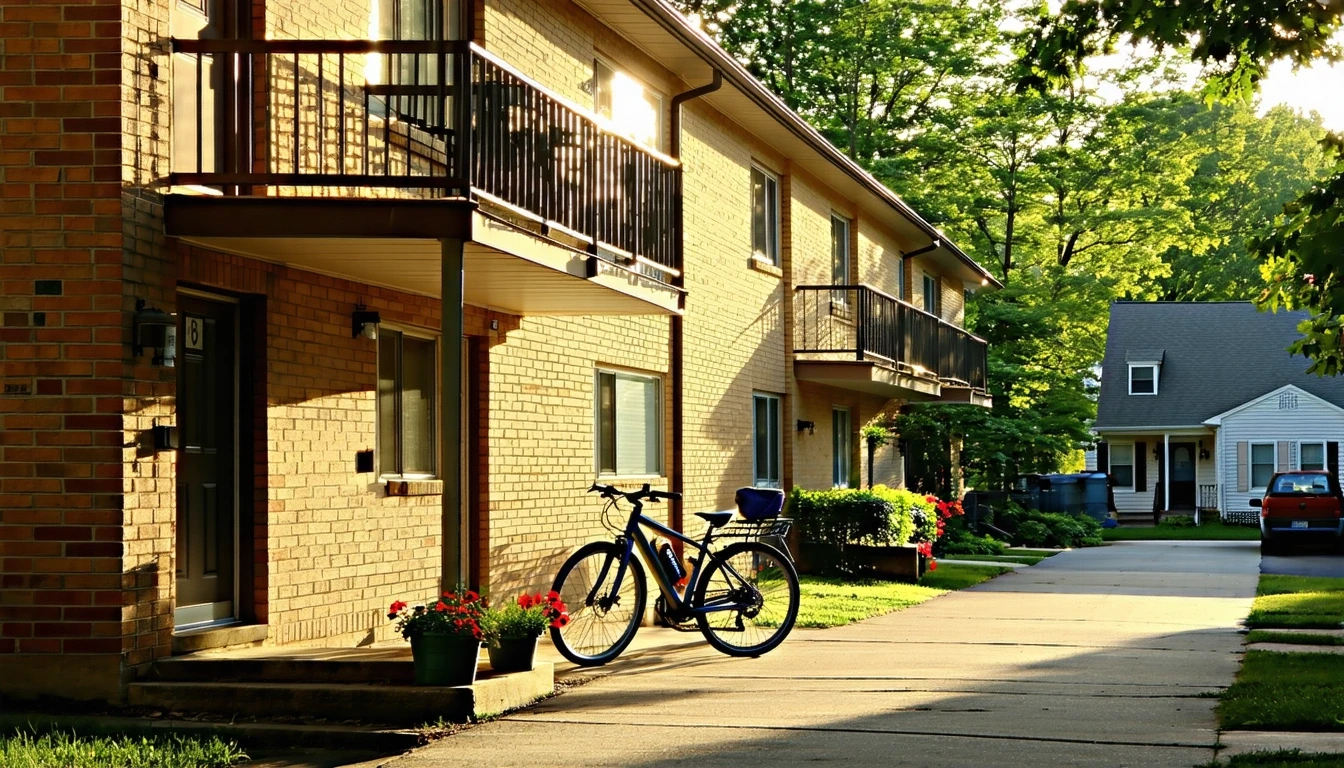
Bowie sits in the Washington, DC metro area with a median home value of $419,200 and median gross rent of $2,167 per month. These figures reflect the city’s role as an established commuter suburb with strong household incomes—median household income here is $138,797 per year—and access to both regional employment centers and rail transit. The housing stock shows mixed building heights and a blend of residential and commercial land use, meaning you’ll find single-family homes, townhouses, and some apartment complexes, but not the density or walkable retail corridors typical of urban neighborhoods.
What shapes Bowie’s market distinctly is the mismatch between transit infrastructure and daily convenience. Rail service is present and commute times average 36 minutes, but food and grocery establishment density falls below typical thresholds. This means homeownership here isn’t just about the mortgage—it’s about absorbing the ongoing costs of car dependency even when you live near a train station. Buyers who assume rail access reduces transportation expenses often underestimate fuel, maintenance, and parking costs tied to running errands locally.
The regional price parity index of 104 signals costs slightly above the national baseline, but Bowie’s housing premium comes less from luxury and more from space, school access, and proximity to federal employment corridors. Buyers compete with dual-income professional households who can carry higher home values without stretching, which keeps entry-level inventory limited and pushes first-time buyers toward the rental market or outlying areas.
Renting in Bowie
At $2,167 per month for median gross rent, Bowie’s rental market reflects the same commuter-suburb dynamics that drive ownership costs. Rent here isn’t a budget fallback—it’s a substantial monthly obligation that competes directly with ownership when you factor in the flexibility renters gain by avoiding property tax exposure, maintenance volatility, and the upfront capital required to buy.
Rental availability in Bowie tends to cluster around transit corridors and mixed-use developments, but the sparse daily errands accessibility means renters still plan their weeks around driving. You’re not trading a car for a MetroCard here; you’re renting in a place where the car remains essential even if your commute uses rail. This changes the rental value proposition: you’re paying for space and school access, not walkable convenience.
Renters also face the reality that lease renewals in commuter suburbs tend to track regional wage growth and housing demand from nearby employment centers. Bowie’s proximity to Washington, DC means rental increases often reflect broader metro trends rather than hyperlocal supply changes. If federal hiring accelerates or regional migration intensifies, rent pressure follows even when Bowie’s own housing stock remains stable.
For single professionals or younger households, renting in Bowie offers a way to access the metro area’s job market and rail transit without the capital and maintenance risk of ownership. For families, the calculation hinges on whether the school infrastructure and outdoor space justify rent levels that approach or exceed what a mortgage might cost elsewhere in the region.
Owning a Home in Bowie
Ownership in Bowie starts with a $419,200 median home value, and the cost structure from there depends heavily on property taxes, insurance, and the ongoing expenses tied to suburban homeownership in a region with variable weather and aging housing stock. While property tax rates aren’t provided in the data, buyers should expect that a home at this price point carries annual tax bills that rival or exceed monthly rent in less expensive markets. Add insurance—which in areas with occasional severe weather and humidity exposure can be substantial—and the fixed costs of ownership become a dominant budget line.
Homeowners in Bowie also absorb maintenance and repair exposure that renters avoid. The mixed building heights and moderate age of much of the housing stock mean buyers inherit HVAC systems, roofs, and appliances with finite lifespans. In a climate with hot, humid summers and cold winters, heating and cooling systems work year-round, and deferred maintenance accelerates wear. A furnace replacement or AC failure isn’t a minor expense—it’s a multi-thousand-dollar event that arrives without warning.
Homeowners associations are common in parts of Bowie, particularly in townhouse and planned communities. HOA fees, when present, can add hundreds of dollars per month and come with governance structures that limit exterior modifications, landscaping choices, and even vehicle parking. Buyers who value autonomy often underestimate how much HOA rules shape the ownership experience, especially in communities where fees fund amenities like pools or common area maintenance that not all households use.
The advantage of ownership here is stability and control. Once you’ve locked in a fixed-rate mortgage, your principal and interest payments don’t change, even as rent in the area continues to rise. You control when to upgrade, how to maintain the property, and whether to leverage home equity for other financial goals. For households planning to stay in the region long-term, ownership in Bowie offers predictability that renting can’t match—but only if you can carry the upfront costs and weather the maintenance volatility that comes with suburban homeownership.
Apartment vs House in Bowie — Cost Behavior Comparison
The table below isolates cost categories where apartments and single-family houses behave differently in Bowie, based on local housing stock, climate, and infrastructure. Rows are included only where the distinction is meaningful and locally justified.
| Expense Category | Apartment | House |
|---|---|---|
| Heating & Cooling | Lower exposure; shared walls reduce surface area and HVAC load in humid summers and cold winters | Higher exposure; standalone structures with more exterior surface area drive longer cooling and heating seasons |
| Maintenance Responsibility | Landlord or HOA covers exterior, HVAC, appliances; tenant exposure limited to lease terms | Owner absorbs all repair and replacement costs; aging systems and weather-related wear create unpredictable spikes |
| Property Tax Exposure | Indirect; embedded in rent but not separately billed or directly controllable | Direct annual obligation; scales with assessed home value and local rate, creating long-term cost growth |
| Parking & Vehicle Storage | Assigned or limited; some complexes charge separately for covered or reserved spaces | Typically includes garage or driveway; no separate fee but assumes space for multiple vehicles given car dependency |
| Outdoor Maintenance | None; landscaping and snow removal handled by property management | Ongoing; lawn care, leaf removal, and seasonal yard work required or contracted out |
Why these categories: Bowie’s climate drives meaningful heating and cooling differences between apartments and houses. The prevalence of car dependency makes parking and vehicle storage a functional cost, not just a convenience. Property tax exposure and maintenance responsibility differ structurally between renting and owning, and these distinctions intensify in a suburban market where housing stock skews toward single-family homes with yards and aging systems.
Categories omitted: Base rent vs mortgage principal, insurance, and HOA fees vary too much by property type and financing to generalize cleanly. Utility billing structures (whether separately metered or included) also vary by building and lease terms rather than by apartment-versus-house distinction alone.
Utilities & Upkeep Differences
Utility exposure in Bowie is shaped by the region’s climate and the housing stock’s energy profile. Electricity rates sit at 21.34¢/kWh, and natural gas prices are $17.52 per MCF. In practice, this means households face noticeable cooling costs during hot, humid summers and heating expenses during cold winters. Single-family homes, with more exterior surface area and often older HVAC systems, see higher seasonal swings than apartments where shared walls and centralized systems moderate temperature extremes.
Apartment dwellers in Bowie typically see lower utility bills not because rates are different, but because the building envelope and shared infrastructure reduce heating and cooling loads. Landlords or HOAs often cover water, sewer, and trash, leaving tenants responsible mainly for electricity and internet. Homeowners, by contrast, pay for all utilities separately, and older homes with minimal insulation or single-pane windows can see bills spike during peak summer and winter months.
Upkeep differences extend beyond utilities. Homeowners in Bowie manage lawn care, gutter cleaning, and seasonal tasks like leaf removal and snow clearance—work that takes time or costs money to contract out. Apartments shift this burden to property management, but the tradeoff is less control over timing, quality, and responsiveness. When a pipe bursts or an HVAC system fails in an apartment, the landlord handles it; in a house, the owner absorbs the cost and manages the repair process.
The presence of moderate park density and water features in Bowie suggests outdoor space is valued, but maintaining a yard in a climate with humid summers and variable precipitation requires consistent effort. Homeowners who underestimate the time or cost of outdoor upkeep often find themselves paying for landscaping services or dealing with deferred maintenance that affects curb appeal and property value.
Rent vs Buy: Long-Term Exposure in Bowie
The rent-versus-buy decision in Bowie hinges less on monthly payment comparisons and more on how each path exposes you to different risks and controls over time. Renting at $2,167 per month offers flexibility and transfers maintenance risk to the landlord, but it leaves you exposed to lease renewals that track regional housing demand and wage growth in the Washington, DC metro area. Ownership at a $419,200 median home value locks in your principal and interest payments but transfers all property tax, insurance, maintenance, and repair volatility directly to you.
Renters in Bowie avoid the upfront capital requirement of a down payment and closing costs, and they sidestep the risk of major system failures or property tax increases. But they also forgo the equity accumulation and long-term cost stability that ownership provides. In a commuter suburb where housing values reflect proximity to federal employment and regional infrastructure, renters who stay long-term effectively pay for someone else’s equity growth while remaining vulnerable to rent increases driven by factors outside the city itself.
Homeowners gain control and predictability once the mortgage is locked in, but they absorb the full cost of aging systems, weather-related wear, and any changes to local tax policy or insurance markets. In Bowie, where car dependency persists despite rail access and daily errands require planning, ownership also means carrying the ongoing costs of vehicle maintenance, fuel, and parking—expenses that don’t disappear when you pay off the house.
Over time, ownership in Bowie rewards households who can weather maintenance volatility, carry property tax exposure, and stay long enough for equity growth to outweigh transaction costs. Renting rewards those who value flexibility, want to avoid capital risk, or plan to relocate within a few years. Neither path is universally cheaper—each trades one set of exposures for another, and the right choice depends on how long you’ll stay, how much capital you have, and how much volatility you can absorb.
How People Actually Move Through Bowie
Bowie’s infrastructure creates a specific pattern of daily movement that shapes housing costs in ways the listing price doesn’t reveal. Rail transit is present and connects residents to regional employment centers, but the sparse accessibility of food and grocery establishments means most households still depend on cars for weekly errands. The pedestrian-to-road ratio is high in pockets of the city, suggesting some neighborhoods support walking, but these walkable areas don’t coincide with dense retail or daily services. You might walk your dog or reach a park on foot, but you’re driving to the grocery store.
This split between commute infrastructure and daily logistics changes the cost equation for both renters and owners. Homebuyers who choose Bowie for its rail access often assume they’ll reduce transportation costs, but the reality is that car ownership remains essential for household errands, school drop-offs, and accessing healthcare. Pharmacies are present, but hospital and clinic access is limited, meaning medical appointments often require driving to nearby cities. The cycling infrastructure exists in pockets but doesn’t form a cohesive network, so bikes serve recreational purposes more than transportation substitutes.
For families, the presence of schools and moderate park density makes Bowie functional, but the car remains the connective tissue. Parents drive kids to school, drive to grocery stores, and drive to access services that aren’t available within walking distance. This doesn’t make Bowie unlivable—it makes it car-dependent, and that dependency adds ongoing costs that compound over the years you live here. Fuel, insurance, maintenance, and vehicle replacement aren’t one-time expenses; they’re permanent budget lines that ownership or renting in Bowie assumes you’ll carry.
How this article was built: In addition to public economic data, this article incorporates location-based experiential signals derived from anonymized geographic patterns—such as access density, walkability, and land-use mix—to reflect how day-to-day living actually feels in Bowie, MD.
FAQs About Housing Costs in Bowie
Is it cheaper to rent or buy in Bowie, MD?
At $2,167 median rent and $419,200 median home value, the answer depends on how long you’ll stay and how much upfront capital you have. Renting avoids property tax, maintenance, and repair exposure but leaves you vulnerable to lease renewals tied to regional housing demand. Ownership locks in mortgage payments and builds equity but requires substantial savings and tolerance for maintenance volatility. Neither is universally cheaper—each trades predictability for flexibility.
What drives housing costs in Bowie higher than nearby areas?
Bowie’s housing costs reflect its role as an established commuter suburb with rail access, strong household incomes, and proximity to Washington, DC employment centers. The median household income of $138,797 per year supports higher home values, and competition from dual-income professional households keeps entry-level inventory limited. The regional price parity index of 104 signals costs slightly above the national baseline, driven more by space and location than luxury.
Do homeowners in Bowie pay HOA fees?
HOA fees are common in townhouse communities and planned developments in Bowie, though prevalence and amounts vary widely. When present, HOA fees can add hundreds of dollars per month and come with rules governing exterior modifications, landscaping, and parking. Buyers should confirm HOA status and fee structure before closing, as these costs are ongoing and non-negotiable once you own the property.
How does car dependency in Bowie affect housing costs?
Even with rail transit present, Bowie’s sparse daily errands accessibility means most households depend on cars for groceries, errands, and accessing services. This adds ongoing fuel, maintenance, insurance, and parking costs that compound over time. Homebuyers who assume rail access eliminates car expenses often underestimate how much driving remains essential for daily household logistics, especially for families with school-age children.
What should renters in Bowie expect during lease renewals?
Lease renewals in Bowie tend to track regional housing demand and wage growth in the Washington, DC metro area rather than hyperlocal supply changes. If federal hiring accelerates or regional migration intensifies, rent pressure follows even when Bowie’s own housing stock remains stable. Renters should expect increases that reflect broader metro trends, not just conditions within the city limits.
Making Housing Choices in Bowie
Housing in Bowie rewards households who understand the tradeoffs between space, stability, and car dependency. Ownership here offers equity growth and long-term cost predictability, but it requires substantial upfront capital and tolerance for property tax, maintenance, and repair exposure. Renting preserves flexibility and avoids capital risk, but it leaves you exposed to lease renewals driven by regional demand and limits your control over monthly expenses.
The city’s structure—rail transit present but daily errands sparse, walkable pockets but car dependency dominant—means housing costs extend beyond the mortgage or rent check. Fuel, vehicle maintenance, and time spent driving are permanent fixtures of life here, and they shape the true cost of living in Bowie in ways that listing prices don’t capture.
For dual-income professional households with established savings and long-term plans, Bowie’s housing market offers space, school access, and regional connectivity. For first-time buyers, single-income households, or those seeking walkable convenience, the capital requirements and car dependency create barriers that make renting or looking elsewhere more viable. The decision isn’t about which option is cheaper—it’s about which set of exposures you’re prepared to carry, and for how long.
If you’re planning a move to Bowie, understanding moving company costs and options early can help you budget for the transition and avoid surprises during what’s already a capital-intensive process.