
Is Boulder City the kind of place you grow roots—or just pass through? That question tends to reveal itself quickly here. This small city sits just outside the Las Vegas metro area, close enough to access big-city amenities but far enough to feel distinctly separate. The emotional tone of Boulder City revolves around a core tradeoff: you get quiet, space, and a slower pace—but you give up the density of services, walkable errands, and the kind of spontaneous convenience that comes with urban living. People who thrive here tend to value autonomy, car-based flexibility, and a strong sense of local identity. People who struggle often miss the texture of walkable neighborhoods, the variety of dining and shopping within arm’s reach, or the robustness of family infrastructure they expected from a place this close to a major metro.
What It Feels Like to Live Here
Boulder City’s vibe is shaped by its low-rise, residential character and its deliberate distance—both physical and cultural—from Las Vegas. The city has a mixed land use profile, meaning residential and commercial areas coexist, but the overall feel is suburban and car-oriented. While some pockets of the city support pedestrian activity, the street network as a whole requires a vehicle for most daily tasks. Bus service is available, but it’s not a comprehensive alternative to driving. Cycling infrastructure exists in limited areas, but it’s not woven throughout the city in a way that makes bike commuting practical for most households.
What stands out emotionally is the sense of intentional separation. Boulder City isn’t a bedroom community that simply absorbs overflow from Las Vegas—it has its own identity, its own rhythm, and its own rules. That independence feels rewarding to people who want a distinct sense of place. It feels limiting to people who expected more walkable access to groceries, schools, and healthcare without needing to plan every errand around a car trip.
Social Media Buzz in Boulder City
On platforms like Facebook and Reddit, Boulder City discussions tend to center on a few recurring themes: pride in the city’s small-town character, frustration with limited dining and shopping options, and ongoing tension about growth and change. The tone is often protective—residents value what makes Boulder City different from Las Vegas and resist changes that might erode that distinction. At the same time, there’s a pragmatic acknowledgment that day-to-day costs and convenience require trade-offs.
“It’s quiet, it’s safe, and it’s not Vegas. That’s the whole point.”
“I love the space and the slower pace, but I do wish we had more grocery options that didn’t require a drive.”
“If you’re looking for nightlife or walkable downtown energy, this isn’t it. But if you want a place where you actually know your neighbors, it’s hard to beat.”
The emotional range is narrow but consistent: satisfaction with what Boulder City is, paired with mild frustration about what it isn’t. There’s little appetite for becoming more like the surrounding metro, but there’s also recognition that amenity scarcity creates friction for families and younger households.
Local News Tone
Local coverage tends to frame Boulder City through the lens of identity preservation and incremental change. Headlines and story themes reflect ongoing community conversations about what growth should look like, how to balance tourism with residential quality of life, and how to maintain the city’s distinct character while addressing infrastructure needs. The tone is rarely alarmist but often cautious—change is discussed as something to manage carefully rather than embrace fully.
Typical story themes include:
- “Community Debates What Growth Should Look Like”
- “New Amenities Arrive as Town Identity Evolves”
- “Residents Weigh Convenience vs Quiet”
- “Local Voices Push Back on Metro Expansion Pressure”
- “How Boulder City Stays Boulder City”
The framing reflects a community that sees itself as steward of something specific—a place that chose not to become another Las Vegas suburb and continues to make decisions through that lens. For people who share that value, the tone feels reassuring. For people who want faster change or more amenities, it can feel stagnant.
Review-Based Public Perception
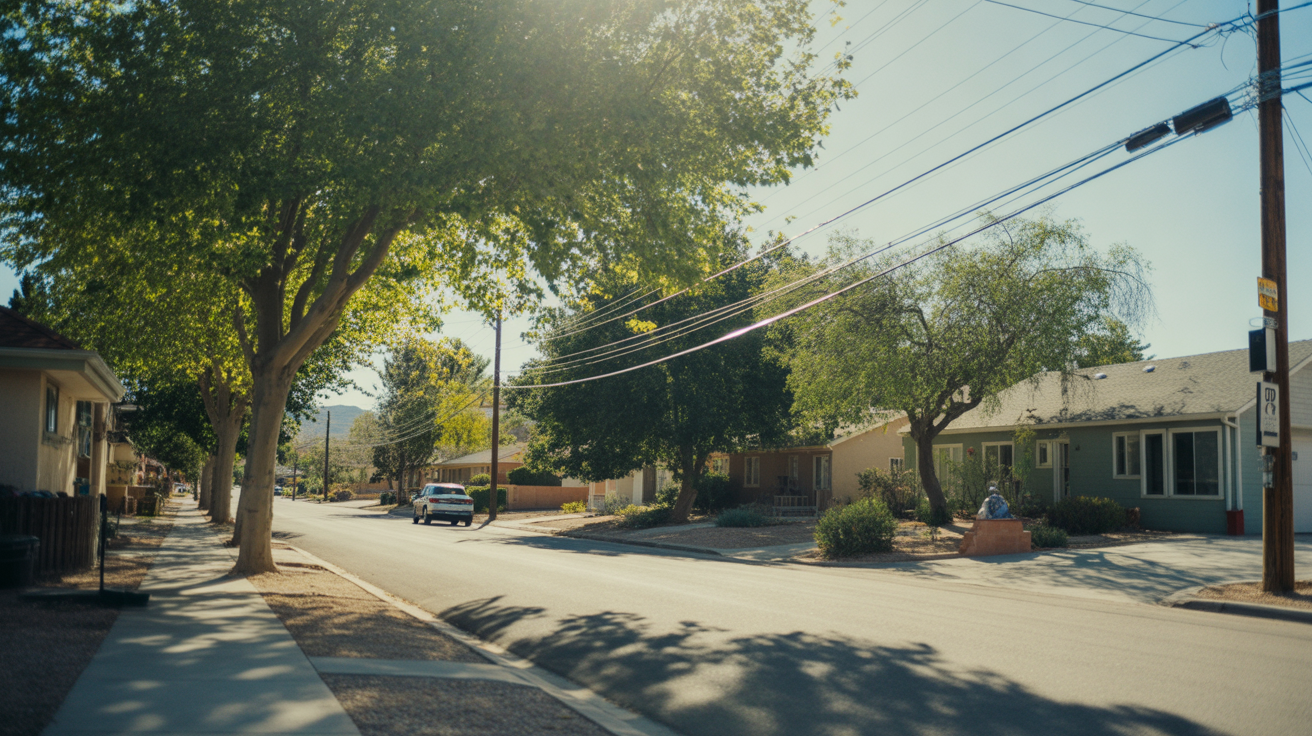
On platforms like Google Reviews, Yelp, and Nextdoor-style forums, Boulder City’s public perception splits along expectation lines. People who moved here seeking space, safety, and separation from urban intensity tend to leave positive reviews. People who expected more walkable errands, robust family infrastructure, or a wider variety of services tend to express disappointment—not with what Boulder City is, but with what they thought it would be.
Praise often centers on:
- Quiet streets and low traffic stress
- Strong sense of community and neighborly connection
- Access to outdoor spaces, parks, and water features
- Proximity to Las Vegas without living in it
Criticism often centers on:
- Limited grocery and dining options requiring frequent drives
- Sparse school and playground density for families with young children
- Lack of hospital facilities (clinics are present, but emergency care requires travel)
- Car dependency even in areas with sidewalks and pedestrian infrastructure
Newer planned areas tend to feel more polished and family-oriented, while older pockets retain a more established, low-key character. Both have their fans, but the distinction matters less than overall alignment with Boulder City’s trade-offs: you get calm and space, but you plan your errands and accept that convenience isn’t built into the street grid.
Comparison to Nearby Cities
| Aspect | Boulder City | Henderson | Mesquite |
|---|---|---|---|
| Overall Vibe | Small-town, protective of identity, car-oriented | Suburban, family-dense, more amenity-rich | Quieter, more isolated, retiree-heavy |
| Walkability | Pockets exist, but car is primary | More walkable corridors, better errands access | Minimal pedestrian infrastructure |
| Dining & Shopping | Limited, requires planning | Broader variety, more chains and local options | Very limited, often requires travel |
| Family Infrastructure | Below density thresholds for schools and playgrounds | Strong school and playground presence | Minimal family amenities |
| Healthcare Access | Clinics present, no hospital | Hospital and clinic access robust | Very limited, often requires travel |
| Emotional Tone | Proud, protective, trade-off aware | Pragmatic, growth-oriented, convenience-focused | Peaceful, isolated, slower-paced |
Henderson offers more of what Boulder City lacks—denser services, stronger family infrastructure, and more walkable pockets—but it feels more like a typical suburb and less like a distinct town. Mesquite leans even further into quiet and isolation, appealing to retirees and people seeking minimal stimulation. Boulder City sits in the middle: it has more identity and structure than Mesquite, but less convenience and density than Henderson. If you value small-town character and don’t mind driving for errands, Boulder City fits. If you need housing tradeoffs that include walkable schools and groceries, Henderson may align better. If you want maximum quiet and minimal interaction, Mesquite might be the better match.
What Locals Are Saying
“We moved here from Henderson because we wanted more space and less traffic. We got both, but we also gave up being able to walk to the store. It’s a trade I’d make again, but it’s definitely a trade.”
“I’m retired, and this place is perfect. I don’t need a ton of restaurants or nightlife. I need quiet, safety, and a place where I can take a walk without feeling like I’m in a city. Boulder City delivers.”
“As a parent, I wish there were more playgrounds and schools closer to where we live. We love the community feel, but the infrastructure for young families just isn’t as robust as I expected.”
“I work remotely, so I don’t commute. For me, Boulder City is ideal—I get space, I get calm, and when I need Vegas, it’s close enough. But if I had to drive to an office every day, I’d probably feel differently.”
“It’s not walkable in the way people from bigger cities expect. You can walk in some areas, but you’re still driving for groceries, errands, and anything beyond a neighborhood stroll.”
“I’ve lived here for 20 years, and I love that it hasn’t turned into just another Vegas suburb. But I also know that means we don’t get the same variety of services. You have to be okay with that.”
“The lack of a hospital is a real consideration. For routine care, it’s fine—we have clinics. But for anything urgent, you’re driving. That’s something to think about if you have health concerns or young kids.”
Does Boulder City Feel Like a Good Fit?
Boulder City works best for people who value autonomy, space, and a strong sense of local identity over walkable convenience and dense services. It fits retirees and empty-nesters who want peace without total isolation. It fits remote workers who prioritize calm and don’t need daily access to urban amenities. It fits households comfortable with car dependency and willing to plan errands around driving rather than walking.
It tends to frustrate families expecting robust school and playground density, young professionals seeking walkable nightlife and dining variety, and anyone who hoped for a more transit-oriented or car-optional lifestyle. The city’s low-rise character, mixed land use, and pedestrian-friendly pockets create moments of walkability, but they don’t add up to a walkable lifestyle. The sparse daily errands infrastructure and limited family amenities mean that convenience requires a vehicle and advance planning.
If you’re drawn to Boulder City’s distinct identity and slower pace, and you’re willing to trade amenity density for space and separation, the emotional fit is strong. If you need lifestyle requirements that include walkable errands, robust family infrastructure, or car-optional living, the friction points will surface quickly. The city doesn’t try to be everything—it tries to be something specific. Whether that something aligns with your needs is the question that determines whether Boulder City feels like home or just a place you pass through.
How this article was built: In addition to public economic data, this article incorporates location-based experiential signals derived from anonymized geographic patterns—such as access density, walkability, and land-use mix—to reflect how day-to-day living actually feels in Boulder City, NV.
The perspectives shown reflect commonly expressed local sentiment and recurring themes in public discussion, rather than individual accounts.