
Nearly 6,000 students attend University of Washington Bothell and Cascadia College, creating a distinct young adult presence in a city that blends suburban calm with urban-style walkability. For students weighing where to live during their academic years, Bothell presents an unusual proposition: it’s not a traditional college town, but its infrastructure—walkable pockets, notable cycling routes, and integrated park access—supports the kind of independent, car-light lifestyle many students prefer. The question isn’t whether Bothell has dorms and frat rows (it doesn’t), but whether its structure, costs, and opportunities align with how you actually want to live while earning your degree.
Bothell earns a student-friendliness score of 62 out of 100. That moderate rating reflects a tension: the city’s pedestrian-to-road ratio exceeds high thresholds, bike infrastructure is well-developed, and mixed residential and commercial land use means errands don’t always require a car. But median rent sits at $2,174 per month, and the regional price level runs 13% above the national average. Students here succeed by leaning into shared housing, maximizing the bus and bike networks, and taking advantage of the low 4.1% unemployment rate to secure part-time work. If you’re willing to navigate cost pressure with roommates and strategic planning, Bothell’s layout rewards you with green space, walkable access, and a quieter alternative to Seattle’s intensity.
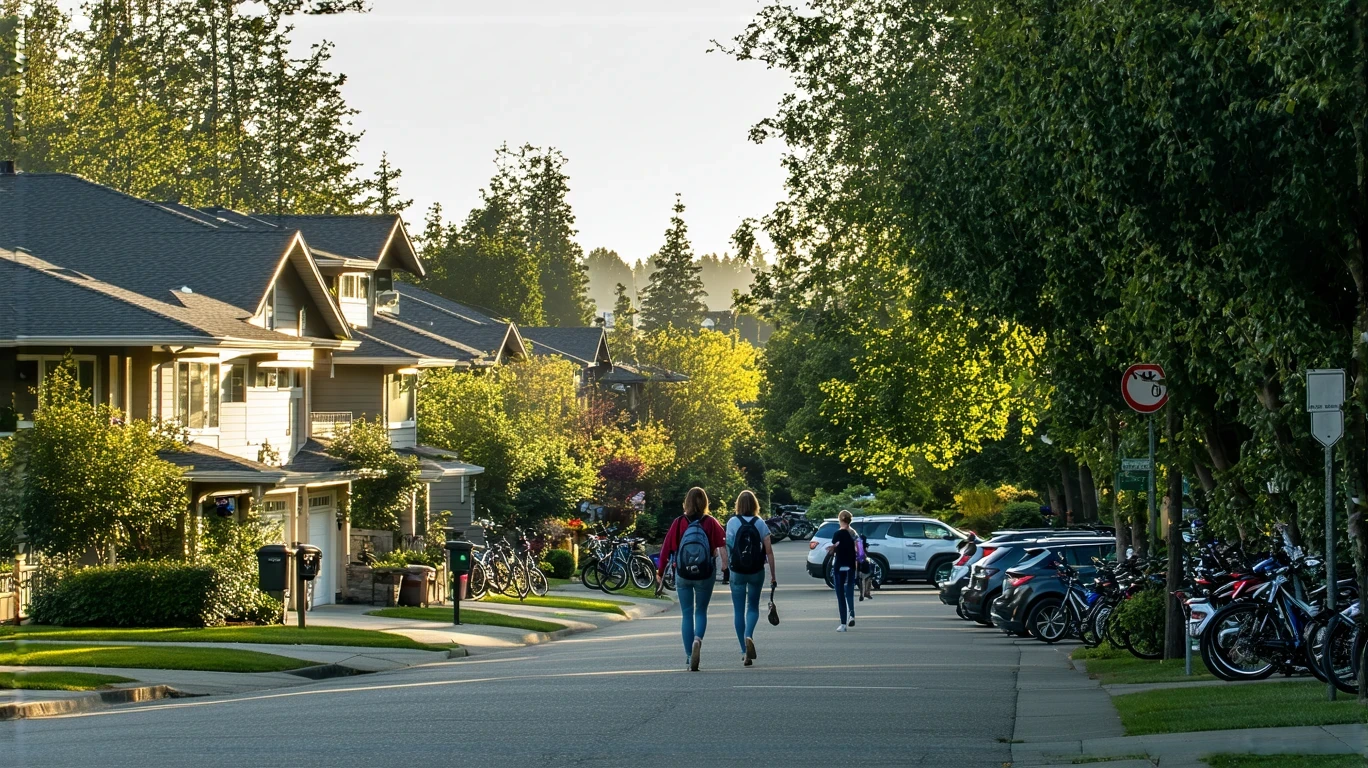
Housing Options for Students
Bothell does not offer traditional on-campus dormitories in the way large residential universities do. University of Washington Bothell operates primarily as a commuter campus, and while Cascadia College shares the campus footprint, neither institution maintains large-scale student housing complexes. That means off-campus rentals are the default, and students must approach the private rental market the same way young professionals do: by finding roommates, comparing lease terms, and budgeting carefully.
The median gross rent of $2,174 per month reflects the broader Seattle metro market, where housing pressure remains high. For a student living solo, that figure is prohibitive. But shared housing changes the math significantly. A two-bedroom apartment split between two people might run each tenant $900 to $1,200 per month, while a three-bedroom unit divided three ways can bring individual costs closer to $700 to $900. Lease terms typically require a first month, last month, and security deposit upfront—often totaling three months’ rent—so students should plan for $2,100 to $2,700 in initial cash outlay per person when moving into a shared unit.
Purpose-built student housing complexes are rare here, but some apartment communities near the UW Bothell campus cater to younger renters by offering individual leases by the bedroom, which reduces liability if a roommate moves out mid-lease. Proximity to campus matters: neighborhoods within a 15-minute bike ride or bus connection to UW Bothell are most desirable, and competition for those units peaks in late spring before fall quarter begins. Roommate-finding resources include campus bulletin boards, UW Bothell’s off-campus housing office, and Facebook groups specific to the university. Deposits are typically equal to one month’s rent, and landlords in this market often require proof of income or a co-signer, which means students without part-time jobs may need a parent or guardian to guarantee the lease.
Getting Around: Transportation and Campus Access
Bothell’s transportation structure reflects its position as a suburban city with urban-style infrastructure in specific areas. Bus service is present, connecting students to campus and key commercial corridors, and the city’s bike-to-road ratio exceeds high thresholds, meaning cycling is a genuinely viable option for daily errands and commuting. The pedestrian-to-road ratio also ranks high, so students living in walkable pockets—particularly near downtown Bothell or within a mile of campus—can handle many daily tasks on foot.
King County Metro operates several bus routes serving UW Bothell and Cascadia College, and students can access reduced fares through the ORCA Lift program if income-qualified, or purchase a standard ORCA card for pay-per-ride or monthly passes. A monthly pass typically costs around $99 for adults, though university students may have access to subsidized or discounted transit passes through student fees—check with UW Bothell’s transportation office for current programs. Ride-sharing costs vary but tend to run $8 to $15 for trips within Bothell, and $25 to $40 for rides into Seattle, making them practical for occasional use but expensive as a primary commute method.
Parking availability on campus is limited and requires a permit, which can cost several hundred dollars per academic year. Off-campus, street parking in residential neighborhoods is generally free but competitive near apartment complexes. A car is not strictly necessary if you live within the bus and bike network and plan your errands around corridor-clustered food and grocery options, but it does reduce friction—especially for late-night shifts, weekend trips, or accessing areas outside the main transit routes. Gas prices in Bothell currently sit at $3.97 per gallon, so students who drive should budget for fuel as a recurring monthly cost.
Student Cost of Living
Living as a student in Bothell means managing cost pressure that exceeds what you’d face in many other college towns. The regional price level runs 13% above the national baseline, which affects groceries, utilities, and services—not just rent. A frugal student budget prioritizes shared housing, home-cooked meals, bus and bike transportation, and minimal discretionary spending. A moderate budget allows for occasional dining out, ride-sharing when needed, and a slightly larger personal spending cushion. A comfortable budget includes a car, more frequent restaurant meals, and regular entertainment expenses, but remains rare among students without significant family support or high-earning part-time jobs.
Food costs depend heavily on whether you cook or rely on campus dining and takeout. Groceries for a student cooking most meals typically run $250 to $350 per month, reflecting the regional price adjustment. Bread costs around $2.07 per pound, eggs $3.06 per dozen, and chicken $2.28 per pound—all derived estimates based on the national baseline adjusted for Bothell’s regional price parity. Campus dining plans, if available, vary by institution and meal frequency, but students should expect to pay $300 to $500 per month for a mid-tier plan. Coffee shops, fast-casual restaurants, and food trucks near campus add convenience but increase monthly food spending quickly if used daily.
Textbooks and course materials remain a significant expense, often totaling $400 to $600 per quarter depending on major and course load. Used books, rentals, and digital editions reduce that burden, and some students offset costs by reselling texts at quarter’s end. Entertainment and personal expenses vary widely: a student who frequents Seattle for concerts and nightlife will spend far more than one who sticks to campus events and outdoor activities in Bothell’s integrated park system. Part-time job opportunities are supported by the 4.1% unemployment rate, and typical student wages range from $16 to $20 per hour for retail, food service, tutoring, and campus positions, providing essential income to cover non-tuition costs.
Monthly Student Budget in Bothell
Here’s what a typical monthly student budget might look like in Bothell:
| Category | Shared Housing | Solo Living |
|---|---|---|
| Housing (rent + utilities) | $850–$1,100 | $2,200–$2,400 |
| Food (groceries + occasional dining) | $300–$400 | $350–$500 |
| Transportation (bus pass or gas) | $100–$150 | $150–$250 |
| Textbooks & supplies (averaged monthly) | $130–$200 | $130–$200 |
| Entertainment & personal care | $100–$200 | $150–$300 |
| Miscellaneous (phone, subscriptions, etc.) | $75–$125 | $100–$150 |
| Total | $1,555–$2,175 | $3,080–$3,800 |
Estimates based on average student spending patterns and local costs.
Student-Friendly Amenities and Services
Bothell’s infrastructure supports student life in ways that don’t always show up in cost-of-living calculators. The city’s park density exceeds high thresholds, and water features are present, creating ample space for outdoor study, recreation, and social gatherings without spending money. The Burke-Gilman Trail runs through the area, offering a scenic route for running, cycling, and walking that connects students to green space and neighboring communities. Coffee shops with Wi-Fi are common in the downtown corridor and near campus, providing alternative study environments when dorm rooms and apartments feel too small or distracting.
Gym facilities vary by housing situation: some apartment complexes include fitness centers, while others require a separate membership. UW Bothell students typically have access to campus recreation facilities as part of student fees, which include cardio equipment, weights, and group fitness classes. Recreational activities extend beyond the gym—intramural sports, climbing groups, and outdoor clubs organize through the university and provide low-cost or free ways to stay active and meet people.
Healthcare services in Bothell include clinics but no hospital, meaning students rely on routine local care for non-emergency needs and travel to nearby facilities for urgent or specialized treatment. UW Bothell offers student health services, and mental health resources are available through campus counseling centers, though appointment availability can be limited during peak academic stress periods. Many local businesses offer student discounts, particularly coffee shops, restaurants, and entertainment venues—always ask, as discounts aren’t always advertised. Campus job opportunities range from library and lab positions to tutoring and administrative roles, and these jobs often offer flexible scheduling that accommodates class schedules better than off-campus retail or food service work.
Social Scene and Nightlife
Bothell is not a traditional college town, and students should adjust expectations accordingly. There are no dense clusters of student bars, no Greek row, and no stadium-driven game-day culture. What exists instead is a quieter, more distributed social landscape shaped by the city’s mixed-use urban form and the commuter nature of UW Bothell and Cascadia College. Campus social events—club meetings, guest lectures, cultural celebrations—provide the most consistent opportunities to meet other students, and involvement in student organizations often determines how connected you feel to the academic community.
Intramural sports leagues, outdoor adventure clubs, and volunteer groups create social structure outside the classroom, and these activities take advantage of Bothell’s integrated park access and proximity to hiking, kayaking, and cycling routes. Local nightlife skews older and quieter than what you’d find in a university district: there are breweries, wine bars, and casual restaurants, but fewer venues that cater specifically to the 18-to-22 age group. Students seeking a more active nightlife scene often travel to Seattle’s U District, Capitol Hill, or Fremont neighborhoods, which adds transportation time and cost but expands options significantly.
Cultural activities in Bothell include farmers markets, outdoor concerts in parks, and community festivals, all of which are free or low-cost and reflect the city’s emphasis on local character and sustainability. The dating scene and social networking opportunities depend heavily on your willingness to engage with campus life and explore Seattle’s broader social infrastructure. Bothell itself won’t hand you a ready-made social calendar the way a residential campus might, but its structure supports the kind of independent, exploratory lifestyle that appeals to students who prefer smaller-scale interactions and access to both urban and natural environments.
Safety and Practical Considerations
Campus safety measures at UW Bothell include security patrols, emergency call boxes, and a campus alert system that notifies students of incidents or weather-related closures. The campus itself is well-lit and designed with clear sightlines, and the surrounding neighborhoods are generally safe for walking and biking, particularly in the walkable pockets where pedestrian infrastructure is strong. Local crime statistics reflect a suburban environment with lower rates of violent crime compared to urban centers, though property crime—particularly bike theft and car break-ins—remains a concern. Students should invest in a high-quality bike lock and avoid leaving valuables visible in parked cars.
Emergency services in Bothell are responsive, and the presence of clinics ensures access to urgent care for non-life-threatening issues. For serious medical emergencies, students are transported to hospitals in nearby cities. Safe transportation options after dark include ride-sharing, campus escort services (if available), and traveling in groups when using bus routes or walking. Academic support services at UW Bothell include tutoring centers, writing labs, and peer mentoring programs, all of which help students manage coursework and reduce academic stress.
Internship opportunities and career services access are strengths of the UW system, and Bothell’s location within the Seattle metro area provides proximity to major employers in technology, healthcare, and professional services. Students who actively engage with career fairs, networking events, and faculty connections often secure internships that provide both income and resume-building experience. The low unemployment rate supports part-time job availability, but students should start job searches early in the quarter to secure positions before peak hiring periods.
FAQs About Student Life in Bothell
What’s the average cost of student living in Bothell?
Students in shared housing typically spend $1,555 to $2,175 per month on rent, food, transportation, textbooks, and personal expenses. Solo living pushes that range to $3,080 to $3,800 per month, which is prohibitively expensive for most students without significant financial support or high-earning part-time work.
How safe is it for students to live off-campus?
Bothell’s suburban character and walkable pockets create a generally safe environment for students, with lower violent crime rates than urban centers. Property crime, particularly bike theft, requires vigilance—use high-quality locks and avoid leaving valuables visible in cars. Campus security, well-lit streets, and active pedestrian areas contribute to overall safety.
Are there good part-time job opportunities?
Yes. The 4.1% unemployment rate supports a healthy job market, and students find work in retail, food service, tutoring, and campus positions. Typical wages range from $16 to $20 per hour, and many employers near campus offer flexible scheduling that accommodates class schedules. Starting your job search early in the quarter increases your chances of securing a position.
What’s the social scene like for college students?
Bothell is not a traditional college town, so the social scene requires more initiative than it would on a residential campus. Campus organizations, intramural sports, and outdoor clubs provide the most consistent opportunities to meet people. Local nightlife is quieter and skews older, but Seattle’s neighborhoods—accessible by bus or car—offer a much broader range of entertainment, cultural events, and age-appropriate venues.
Making the Decision: Is Bothell Right for Your College Years?
Bothell works best for students who value walkable infrastructure, integrated green space, and a quieter alternative to Seattle’s intensity, and who are willing to manage high costs through shared housing and part-time work. The city’s pedestrian-to-road ratio, notable bike infrastructure, and mixed-use urban form create a lifestyle that feels less car-dependent than many suburban areas, and the presence of UW Bothell and Cascadia College ensures a young adult community even without traditional college-town amenities. But the median rent of $2,174 per month and regional price level 13% above the national average mean financial pressure is constant, and students without roommates or family support will struggle.
If you’re considering Bothell, visit the neighborhoods near campus, test the bus routes, and talk to current students about how they manage monthly expenses. Pay attention to whether the corridor-clustered errands accessibility and bus-only transit feel manageable or frustrating for your daily routine. Bothell rewards students who plan carefully, embrace cost-sharing, and take advantage of the low unemployment rate to secure income. It’s not the cheapest place to earn a degree, but its structure supports the kind of independent, active lifestyle that many students prefer—if the numbers work.
How this article was built: In addition to public economic data, this article incorporates location-based experiential signals derived from anonymized geographic patterns—such as access density, walkability, and land-use mix—to reflect how day-to-day living actually feels in Bothell, WA.