
Is Bothell expensive to live in? Bothell is considered expensive in 2026, with a median home value of $796,900 and median rent of $2,174 per month. The value proposition depends on housing entry cost versus neighborhood walkability—car dependence varies sharply across the city.
Maya had done the math a dozen times before the moving truck arrived. She knew Bothell’s housing numbers, had mapped the grocery stores, even factored in the gas price at $3.97 per gallon. What she hadn’t anticipated was how much the structure of costs would shape her daily decisions—where she could walk, when she needed to drive, and which expenses felt fixed versus which ones she could control. Within three months, she realized the city’s cost pressure wasn’t just about the rent check; it was about how the pieces fit together.
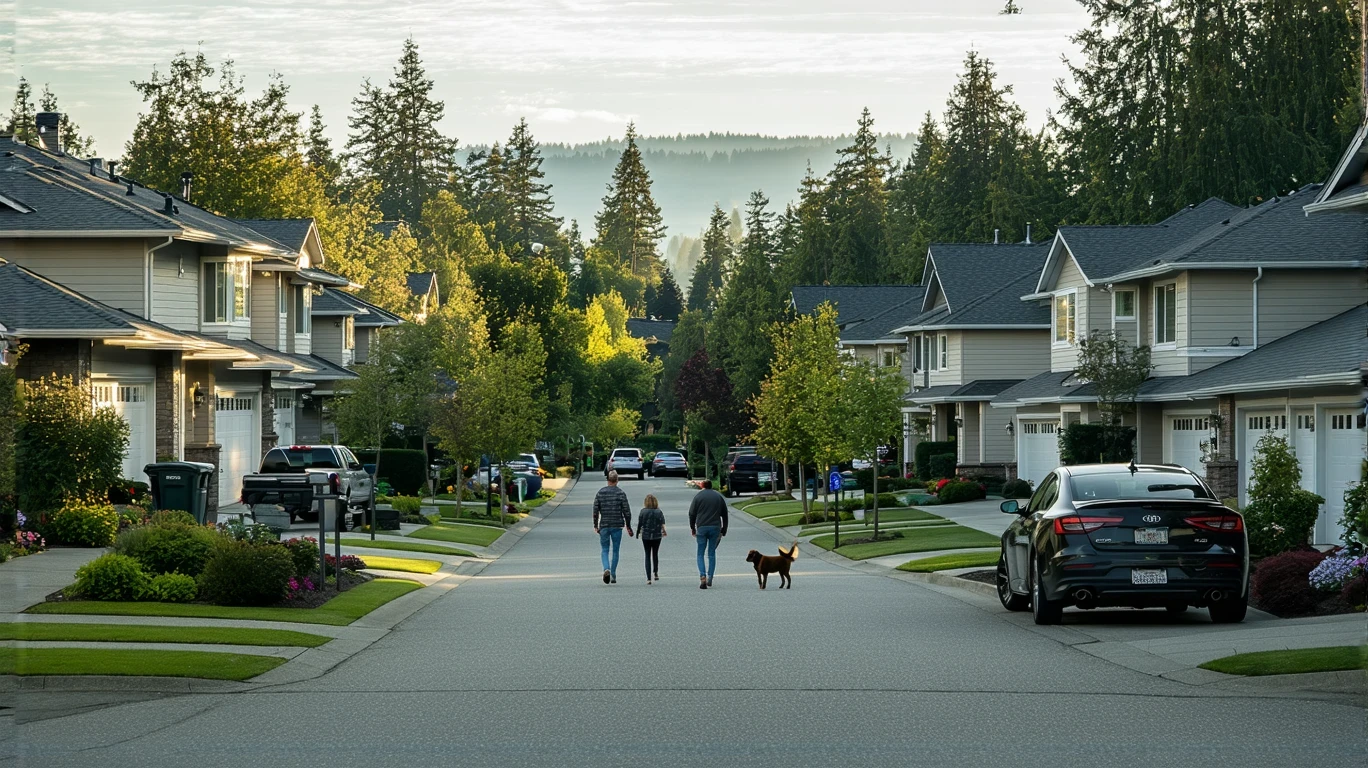
Overall Cost of Living Snapshot
Bothell’s cost structure is shaped overwhelmingly by housing, with secondary pressure from transportation and moderate exposure to utility seasonality. The regional price parity index of 113 signals that baseline costs run above the national average, but the cost structure itself is more revealing than any single index: housing entry costs dominate, while day-to-day expenses—groceries, gas, utilities—layer on top without offering much relief.
Compared to other Seattle metro suburbs, Bothell sits in the upper tier for both ownership and rental costs. The median home value of $796,900 reflects the broader Eastside premium, while the median household income of $127,944 per year suggests a population that has already cleared the housing entry barrier. For newcomers, the question isn’t whether Bothell is expensive—it is—but whether the tradeoffs (access to Seattle, parks, walkable pockets) justify the entry cost.
Driver verdict: Housing cost is the primary gatekeeper. Once you’re in, transportation and utilities create moderate recurring exposure, but neither approaches the magnitude of the housing burden. Surprises come from neighborhood-level variation: walkable areas with corridor-clustered errands reduce vehicle dependence, while other parts of the city require consistent car use.
Housing Costs (Primary Driver)
Housing is the single largest cost exposure in Bothell, and it’s not close. The median home value of $796,900 creates a steep ownership barrier, requiring substantial down payment capacity and income to service a mortgage. For renters, the median gross rent of $2,174 per month offers a lower entry threshold but exposes households to renewal risk and limits long-term cost predictability.
The renting versus owning decision in Bothell hinges on time horizon and income stability. Ownership locks in the largest component of housing cost (principal and interest), though property taxes, insurance, and maintenance remain variable. Renting preserves flexibility and avoids the upfront capital requirement, but it leaves households exposed to the regional rental market’s upward pressure over time. For households planning to stay multiple years, ownership becomes the primary path to cost stabilization—if the entry cost is manageable.
Conclusion: Bothell is a buying city for those who can clear the entry threshold. Renting works as a transitional or flexibility-preserving strategy, but it doesn’t offer a long-term cost advantage in a market where home values and rents both reflect the Seattle metro premium.
| Housing Type | Cost Anchor | What That Buys You |
|---|---|---|
| Ownership | $796,900 median home value | Long-term cost lock on largest expense; exposure to maintenance, taxes, insurance |
| Rental | $2,174/month median rent | Lower entry cost, flexibility; exposure to renewal increases and landlord decisions |
Utilities & Energy Risk
Utility costs in Bothell create moderate seasonal exposure rather than extreme volatility. The electricity rate of 13.85¢ per kWh sits slightly above the national average, and usage patterns in the Pacific Northwest—where cooling demand is limited but heating (electric or gas) dominates colder months—mean that winter bills rise predictably. Natural gas, priced at $24.71 per MCF (roughly 100 therms), adds another layer of seasonal variability for households using gas heat or water heating.
The risk profile here is moderate: utility bills swing with the seasons, but the swings are not as severe as in regions with extreme heat or cold. Households can reduce exposure through efficiency upgrades (insulation, programmable thermostats, water heater settings), but the baseline cost structure—driven by regional rates and climate—remains consistent. The key insight is that utility costs are a recurring, predictable pressure rather than a surprise factor.
Risk classification: Moderate. Seasonal variability is real, but it’s manageable with planning and efficiency measures.
Groceries & Daily Costs
Grocery costs in Bothell reflect the regional price parity index of 113, meaning that food and household staples run above the national baseline. Derived estimates for common items—bread at $2.07 per pound, ground beef at $7.56 per pound, eggs at $3.06 per dozen—illustrate the premium, though these figures are modeled rather than observed local prices.
For households, the grocery pressure translates into a steady, incremental cost layer. It’s not a dramatic swing factor like housing, but it’s persistent: every shopping trip costs more than it would in a lower-cost region. The impact scales with household size—larger families feel the premium more acutely—but even single-person households notice the difference over time. The corridor-clustered errands accessibility in Bothell means that food and grocery options are concentrated along specific routes, so proximity to those corridors can reduce the friction (and vehicle cost) of routine shopping.
Transportation Reality
Transportation costs in Bothell depend heavily on where you live within the city and how far you commute. The experiential signals reveal a city with walkable pockets—areas where pedestrian infrastructure is substantial—and notable bike presence, meaning cycling infrastructure exists throughout parts of the city. However, transit options are limited to bus service, with no rail present. This creates a split reality: some residents can reduce vehicle dependence significantly, while others face consistent car costs.
Gas prices at $3.97 per gallon add recurring exposure for households that drive regularly, whether for commuting, errands, or regional trips. The absence of rail transit means that longer commutes to Seattle or other Eastside employment centers typically require a personal vehicle or a bus route that may not align with all schedules. For households with multiple vehicles or long commutes, transportation becomes the second-largest recurring cost after housing.
The getting around tradeoff in Bothell is neighborhood-specific: walkable areas near corridor-clustered errands reduce the need for short trips by car, but regional connectivity still leans heavily on personal vehicles. Families with school-age children or multiple working adults often find that a second vehicle is functionally necessary, doubling the fuel, insurance, and maintenance exposure.
Cost Exposure Profiles
Cost exposure in Bothell is shaped by three primary factors: housing entry versus long-term ownership, transportation dependence, and utility seasonality. The city’s structure creates distinct low-exposure and high-exposure situations, driven less by income level and more by household composition, location within the city, and vehicle needs.
Low-exposure situations: Homeowners with locked housing costs, living in walkable pockets near corridor-clustered errands, with one vehicle or none. These households benefit from cost predictability (fixed mortgage or stable rent in a long-term lease), reduced transportation costs (walking or biking for daily errands), and the ability to manage utility exposure through efficiency measures. The integrated green space access and mixed land use in parts of Bothell support this lifestyle, making it feasible to reduce car dependence without sacrificing convenience.
High-exposure situations: Renters facing renewal risk, living outside walkable areas, with multiple vehicles and longer regional commutes. These households face compounding pressures: housing costs that can rise annually, transportation costs that scale with vehicle count and commute distance, and limited ability to reduce daily errands friction without driving. The bus-only transit system offers some relief, but it doesn’t fully substitute for the flexibility of a personal vehicle, especially for households juggling multiple schedules or destinations.
The difference between these profiles isn’t about who can or cannot afford Bothell—it’s about which cost levers a household controls. Ownership versus renting determines housing cost predictability. Neighborhood location determines transportation dependence. Vehicle count and commute length determine recurring fuel and maintenance exposure. Utility costs remain relatively consistent across profiles, creating a baseline pressure that all households share.
Frequently Asked Questions
Is Bothell more affordable than nearby Eastside cities in 2026? Bothell’s median home value of $796,900 and median rent of $2,174 per month place it in the upper tier of Seattle metro suburbs, though it tends to be slightly less expensive than Bellevue or Kirkland. The cost structure is similar across the Eastside, with housing as the dominant pressure.
What does a typical cost profile look like in Bothell? Housing dominates, followed by transportation (especially for households with multiple vehicles or long commutes) and moderate utility seasonality. Grocery costs run above the national baseline due to the regional price parity index of 113, but they’re a steady layer rather than a swing factor.
Do utilities cost more in Bothell than in nearby areas? Utility rates in Bothell (13.85¢/kWh for electricity, $24.71/MCF for natural gas) are consistent with the broader Seattle metro region. Seasonal variability is moderate, driven more by climate and usage patterns than by rate premiums.
What costs tend to surprise newcomers in Bothell? The neighborhood-level variation in walkability and errands accessibility surprises many newcomers—car dependence is not uniform across the city. Additionally, the magnitude of the housing cost relative to other expenses often exceeds expectations, even for households familiar with Seattle metro pricing.
Are property taxes higher in Bothell than in nearby cities? Property tax rates in Washington State are set at the county and local district level, so Bothell’s effective rate depends on the specific tax district. King County property taxes tend to be higher than the national average, but variation within the metro area is modest compared to the variation in home values themselves.
How does transportation cost vary within Bothell? Transportation costs depend heavily on neighborhood location and commute patterns. Residents in walkable pockets with access to corridor-clustered errands can reduce vehicle dependence significantly, while those in less walkable areas or with regional commutes face higher recurring fuel and maintenance costs.
Is Bothell a good value compared to Seattle proper? Bothell offers lower housing entry costs than many Seattle neighborhoods, along with more green space access and a quieter suburban character. However, the tradeoff includes greater car dependence for regional trips and bus-only transit, which limits flexibility compared to Seattle’s more extensive transit network.
What drives the regional price parity index of 113 in Bothell? The index reflects the overall cost of goods and services in the Seattle metro area, driven primarily by housing costs, labor costs, and regional demand. It signals that baseline expenses—groceries, services, utilities—run above the national average, though housing remains the largest contributor to the premium.
How this article was built: In addition to public economic data, this article incorporates location-based experiential signals derived from anonymized geographic patterns—such as access density, walkability, and land-use mix—to reflect how day-to-day living actually feels in Bothell, WA.