
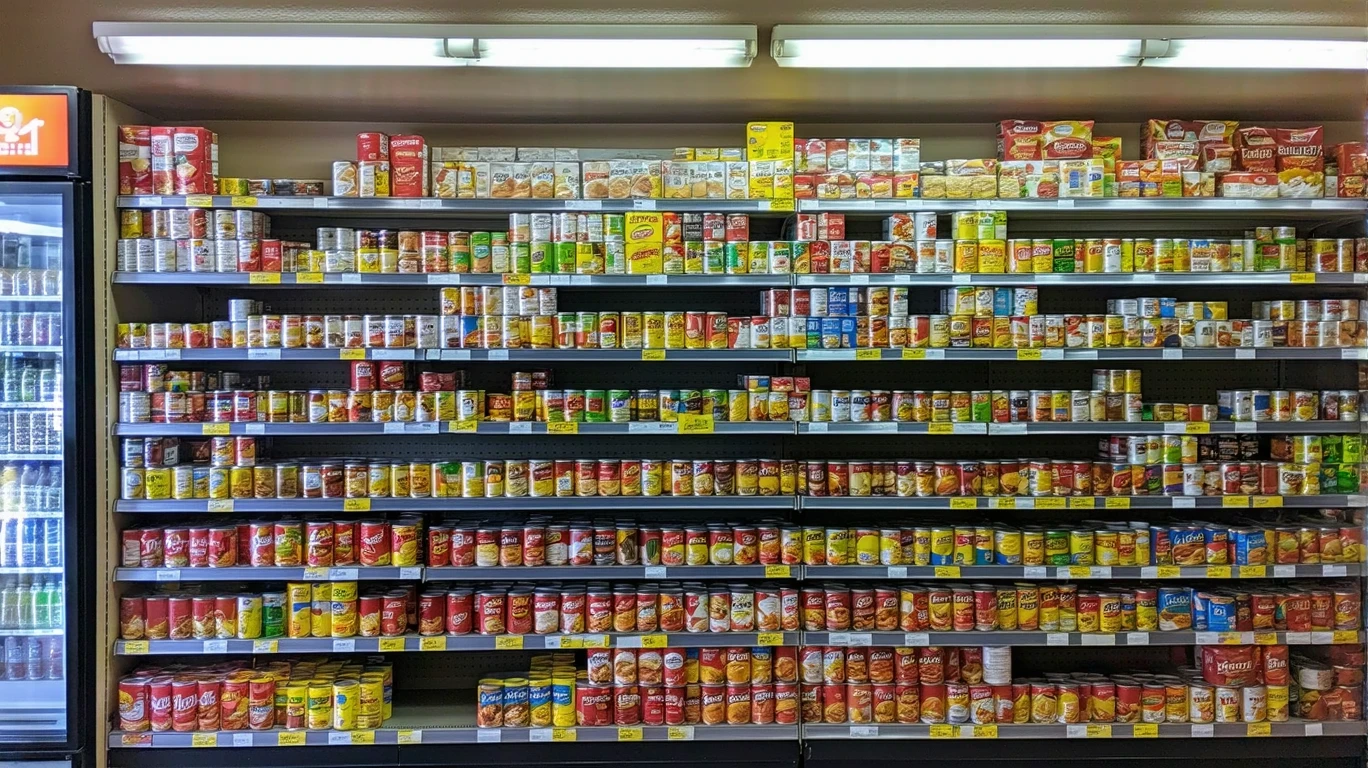
How Grocery Costs Feel in Boerne
Grocery prices in Boerne tend to run slightly below the national baseline, reflecting the city’s regional price parity index of 94. For households moving from higher-cost metros, the difference shows up most clearly in staples—bread, eggs, dairy, and proteins—where even modest per-item savings accumulate over weeks of shopping. For those relocating from rural areas or smaller Texas towns, the shift may feel neutral or slightly higher, particularly if they’re accustomed to farm-stand access or bulk buying in less competitive markets. The experience isn’t uniform: singles and couples often absorb grocery costs without much strain, while families with school-age children or dietary restrictions feel price pressure more acutely, especially when convenience and variety become non-negotiable.
Income plays a significant role in how grocery costs register. With a median household income of $82,982 per year, many Boerne households have enough margin to prioritize quality or organic options without restructuring their budgets. But for renters paying $1,453 per month or recent buyers navigating mortgage payments on a $398,500 median home value, groceries become a more visible line item—one of the few categories where week-to-week decisions can create meaningful flexibility. The city’s car-oriented layout and corridor-clustered food access mean that most residents drive to shop, and store choice becomes a deliberate cost lever rather than a convenience default.
Families with multiple children, particularly those managing after-school schedules or dietary preferences, tend to notice grocery costs most. A household of four can easily spend 15–20% more than a couple simply due to volume, snack demand, and the need to keep a wider variety of items on hand. Singles, by contrast, often find that grocery spending feels manageable even when eating well, though per-unit costs can run higher when buying smaller quantities or avoiding bulk purchases that don’t make sense for one person.
Grocery Price Signals (Illustrative)
These prices illustrate how staple items tend to compare locally—not a full shopping list. They’re derived estimates based on national baselines adjusted by Boerne’s regional price parity, and they reflect mid-tier grocery store positioning rather than discount or premium extremes. Use them as relative anchors, not checkout predictions.
| Item | Illustrative Price |
|---|---|
| Bread (per pound) | $1.72/lb |
| Cheese (per pound) | $4.45/lb |
| Chicken (per pound) | $1.90/lb |
| Eggs (per dozen) | $2.55/dozen |
| Ground beef (per pound) | $6.29/lb |
| Milk (per half-gallon) | $3.80/half-gallon |
| Rice (per pound) | $1.01/lb |
Chicken and rice anchor affordable meal planning, while ground beef and cheese represent higher-cost proteins and dairy. Eggs remain a versatile, budget-friendly option, though prices can swing seasonally. Bread and milk sit in the middle—everyday staples that most households buy weekly, making even small price differences noticeable over time. These figures don’t account for organic premiums, specialty diets, or prepared foods, all of which shift the cost curve upward.
Store format matters as much as the item itself. The same pound of chicken might cost $1.90 at a mid-tier grocer, closer to $1.50 at a discount chain, and $2.50 or more at a premium market emphasizing organic or local sourcing. Boerne’s food establishment density sits in the medium band, meaning most residents have access to multiple store types within a reasonable drive, but the corridor-clustered layout means that comparison shopping requires intentional routing rather than spontaneous stops.
Store Choice & Price Sensitivity
Grocery price pressure in Boerne varies significantly by store tier, and understanding that spectrum is more useful than focusing on a single “average” experience. Discount grocers—including chains like Aldi, Walmart, or regional budget formats—anchor the low end, often running 15–25% below mid-tier pricing on staples. These stores emphasize private-label goods, limited selection, and no-frills environments, which translates directly into lower per-item costs. Families managing tight budgets or prioritizing volume over variety often build their weekly routines around these formats, especially when feeding multiple children or stocking pantries for the month.
Mid-tier grocers—such as H-E-B, Kroger, or similar regional chains—offer broader selection, more national brands, and better in-store services (bakery, deli, pharmacy). Prices here reflect the illustrative figures shown earlier: competitive but not rock-bottom, with frequent promotions that reward loyalty-card users and sale-focused shoppers. Most Boerne households default to this tier because it balances cost, convenience, and variety without requiring significant tradeoffs. For couples and smaller households, mid-tier stores often feel like the sweet spot—affordable enough to shop weekly without stress, flexible enough to accommodate preferences.
Premium grocers—including natural food markets, specialty stores, or upscale chains—cater to households prioritizing organic, local, or specialty items. Prices here can run 30–50% above discount formats, and the gap widens further for prepared foods, artisan products, or niche dietary needs. In Boerne, where median household income provides some cushion, premium stores serve a meaningful segment of residents who view grocery quality as a lifestyle priority rather than a budget compromise. But for families already stretched by housing or childcare costs, premium shopping becomes an occasional indulgence rather than a weekly habit.
Store choice isn’t just about price—it’s about time, access, and household complexity. A single professional might shop premium for convenience and quality, absorbing higher costs without strain. A family of five might split trips between discount bulk buys and mid-tier fill-ins, optimizing for both budget and variety. The car-oriented texture of Boerne means that most residents drive to shop, and the corridor-clustered food access pattern rewards those willing to route strategically rather than defaulting to the closest option.
What Drives Grocery Pressure Here
Income interaction is the clearest driver of grocery pressure in Boerne. At $82,982 median household income, many families have enough margin to absorb grocery costs without restructuring their budgets, but that median masks significant variation. Households earning below $60,000—particularly renters or single-income families—feel grocery costs more acutely, especially when housing, utilities, and transportation already consume the majority of take-home pay. For these households, groceries become one of the few flexible categories, and even small price increases or unexpected needs (birthday parties, dietary shifts) create noticeable strain.
Household size amplifies sensitivity. A couple spending $400–$500 per month on groceries might barely notice a 10% price swing, but a family of four or five spending $800–$1,000 feels that same percentage shift as a material budget event. Larger households also face less flexibility in substitution—when you’re feeding multiple children with varying preferences, switching from name brands to store brands or cutting back on snacks often triggers friction that smaller households avoid. The volume effect is real: more people means more trips, more waste risk, and more pressure to keep a wider variety of items on hand.
Regional distribution patterns also shape the grocery experience in Boerne. The city’s position within the San Antonio metro means it benefits from competitive grocery supply chains and frequent promotions, but it’s not dense enough to support the hyper-competitive store clustering seen in larger metros. The medium-band food density and corridor-clustered layout mean that most residents have access to multiple store types, but comparison shopping requires deliberate planning rather than spontaneous stops. For households without reliable transportation or those managing mobility constraints, that access friction can narrow choices and push costs upward.
Seasonality plays a quieter but persistent role. Produce prices fluctuate with growing seasons, and Texas summers—marked by triple-digit heat—can drive up costs for perishables that require more careful handling and faster turnover. Holiday periods (Thanksgiving, Christmas, back-to-school) create predictable spikes in both volume and per-item costs, and families managing those peaks without advance planning often absorb higher prices. The lack of a strong local food infrastructure in Boerne means that most households rely on conventional grocery channels year-round, with limited ability to offset costs through farmers’ markets or direct-from-farm purchasing.
Practical Ways People Manage Grocery Costs
Store rotation is one of the most effective levers households use to control grocery spending in Boerne. Rather than defaulting to a single store, many families split their shopping: bulk staples and proteins from discount grocers, fresh produce and specialty items from mid-tier chains, and occasional premium purchases for specific needs. This approach requires more planning and driving—Boerne’s car-oriented layout makes multi-stop trips feasible—but it allows households to capture the best pricing across formats without sacrificing variety or quality. The tradeoff is time: families with tight schedules or multiple working adults often consolidate trips for convenience, even when it means paying slightly more.
Loyalty programs and digital coupons reduce costs without requiring extreme couponing discipline. Most mid-tier grocers in Texas offer app-based discounts, personalized offers, and fuel rewards that stack with sale pricing. Households that take ten minutes per week to review offers and load digital coupons can shave 5–10% off their bills without changing what they buy. The key is consistency: sporadic coupon use delivers sporadic savings, but integrating it into a weekly routine makes it a reliable cost lever. Discount grocers, by contrast, often skip loyalty programs entirely, baking lower prices into their everyday model—a simpler but less flexible approach.
Meal planning and batch cooking help families avoid the convenience premium that drives up grocery costs. Households that plan weekly menus around sale items and seasonal produce spend less on impulse purchases and reduce food waste, both of which erode grocery budgets quietly over time. Batch cooking—preparing large portions of soups, casseroles, or proteins and freezing them—extends the value of bulk purchases and reduces the temptation to order takeout on busy nights. For families with children, this approach also smooths weeknight logistics, turning groceries into a source of control rather than stress.
Buying in bulk works well for non-perishables and household staples, but it requires upfront capital and storage space. Families with the budget and room to stock up on rice, pasta, canned goods, and frozen proteins can lower per-unit costs significantly, especially when buying from warehouse clubs or discount grocers. Singles and couples, by contrast, often find that bulk buying leads to waste or staleness, making smaller, more frequent purchases the better value. The decision hinges on household size, storage capacity, and cash flow—bulk buying saves money over time, but only if you can afford the larger upfront outlay and use what you buy.
Avoiding prepared foods and pre-cut produce is another quiet cost lever. A whole chicken costs less per pound than breasts, a head of lettuce costs less than a salad kit, and a block of cheese costs less than pre-shredded. The tradeoff is time and skill: households with the capacity to prep ingredients from scratch capture meaningful savings, while those managing long commutes, multiple jobs, or young children often pay the convenience premium because the alternative isn’t realistic. There’s no moral dimension here—it’s a practical tradeoff between time, energy, and money, and different households land in different places depending on their constraints.
Groceries vs Eating Out (Directional)
The cost gap between cooking at home and eating out in Boerne is wide enough to matter, but not so extreme that it eliminates the appeal of restaurant meals. A home-cooked dinner for two—built around chicken, rice, and vegetables—might cost $8–$12 in ingredients, while the same meal at a casual restaurant runs $30–$45 before tip. For families, that multiplier effect is even sharper: feeding four at home might cost $15–$20, while a sit-down restaurant meal easily reaches $60–$80. The math makes home cooking the clear budget winner, but it assumes time, energy, and planning capacity that not all households have in equal measure.
Eating out serves different functions depending on household type and income. For higher-earning couples or empty-nesters, restaurant meals are a regular lifestyle choice rather than a budget compromise—part of how they spend discretionary income. For families managing tighter budgets, eating out becomes a deliberate treat or a fallback when schedules collide and cooking isn’t feasible. The key tension isn’t whether eating out costs more—it always does—but whether the convenience, time savings, or social value justifies the premium in a given week. Boerne’s mix of chain restaurants and local spots provides options across price tiers, but even fast-casual meals add up quickly when feeding multiple people.
Takeout and delivery occupy a middle ground, often costing less than sit-down dining but more than cooking at home, with added fees and tips that push the total higher. For busy households, takeout can feel like a reasonable compromise—less effort than cooking, less commitment than dining out—but the frequency matters. One or two takeout meals per week might fit comfortably into a mid-income budget, while three or four can quietly erode grocery savings and push monthly expenses higher than planned. The decision isn’t binary; it’s about finding a rhythm that balances convenience, cost, and the mental load of constant meal planning.
FAQs About Grocery Costs in Boerne (2026)
Is it cheaper to shop in bulk in Boerne? Bulk buying lowers per-unit costs on non-perishables and staples, but it requires upfront capital and storage space. Families with the budget and room to stock up on rice, pasta, canned goods, and frozen proteins can capture meaningful savings, especially when buying from warehouse clubs or discount grocers.
Which stores in Boerne are best for low prices? Discount grocers—such as Aldi, Walmart, or regional budget chains—anchor the low end of the price spectrum, often running 15–25% below mid-tier stores on staples. Mid-tier grocers like H-E-B or Kroger offer broader selection and frequent promotions, while premium markets cater to households prioritizing organic or specialty items at higher price points.
How much more do organic items cost in Boerne? Organic and specialty items typically run 30–50% above conventional equivalents, with the gap widening further for prepared foods or niche dietary products. Premium grocers carry the widest organic selection, but mid-tier stores increasingly stock organic staples at competitive prices, especially for high-turnover items like milk, eggs, and produce.
How do grocery costs for two adults in Boerne tend to compare to nearby cities? Boerne’s regional price parity of 94 suggests grocery costs run slightly below the national baseline, making it more affordable than higher-cost metros but potentially neutral or slightly higher compared to smaller Texas towns. The difference shows up most clearly in staples—bread, eggs, dairy, and proteins—where even modest per-item savings accumulate over weeks of shopping.
How do households in Boerne think about grocery spending when cooking at home? Most households view groceries as one of the few flexible budget categories, where week-to-week decisions—store choice, meal planning, bulk buying—create meaningful control. Families with children feel grocery pressure more acutely due to volume and variety demands, while singles and couples often find that grocery spending feels manageable even when prioritizing quality or convenience.
Does Boerne’s car-oriented layout affect grocery costs? The city’s car-oriented texture and corridor-clustered food access mean that most residents drive to shop, and store choice becomes a deliberate cost lever rather than a convenience default. Households willing to route strategically—splitting trips between discount bulk buys and mid-tier fill-ins—can capture better pricing, but the tradeoff is time and planning effort.
How do seasonal price swings affect grocery budgets in Boerne? Produce prices fluctuate with growing seasons, and Texas summers—marked by triple-digit heat—can drive up costs for perishables that require more careful handling and faster turnover. Holiday periods create predictable spikes in both volume and per-item costs, and families managing those peaks without advance planning often absorb higher prices.
How Groceries Fit Into the Cost of Living in Boerne
Groceries occupy a distinct position in Boerne’s cost structure: they’re meaningful enough to notice, flexible enough to control, and less dominant than housing or utilities in shaping overall affordability. With a median home value of $398,500 and median rent of $1,453 per month, housing consumes the largest share of most household budgets, leaving groceries as one of the few categories where week-to-week decisions can create breathing room. Utilities—shaped by electricity rates of 16.11¢/kWh and the extended cooling season driven by triple-digit summer heat—add another layer of fixed cost pressure, making groceries a more visible lever for households managing tight margins.
For families, groceries often compete with childcare, transportation, and discretionary spending for the same budget dollars. A household that saves $100 per month by shopping strategically—rotating stores, meal planning, avoiding convenience premiums—can redirect that margin toward savings, debt reduction, or quality-of-life upgrades. The savings aren’t transformative on their own, but they compound over time and reduce the stress of managing unexpected expenses. Singles and couples, by contrast, often find that grocery spending feels manageable even without aggressive optimization, especially when income provides enough cushion to prioritize convenience or quality without strain.
Understanding how groceries fit into your broader cost picture requires looking at the full budget, not just the food category in isolation. The Monthly Spending in Boerne: The Real Pressure Points article walks through how housing, utilities, transportation, and groceries interact to shape take-home flexibility, and it provides the context needed to make confident decisions about where to tighten, where to spend, and where to build margin. Groceries are part of the equation, but they’re not the whole story—and treating them as a standalone decision without understanding the broader cost structure can lead to false confidence or misplaced worry.
The goal isn’t to minimize grocery spending at all costs—it’s to understand how food costs behave in Boerne, which levers you control, and how your household type and income position shape the experience. Some households will find that groceries feel affordable and flexible, a category where they can spend comfortably without stress. Others will find that groceries require deliberate management, a place where strategic choices create meaningful margin. Both experiences are valid, and both depend on the same underlying cost signals—store choice, household size, income cushion, and the broader budget context that determines how much flexibility you have to work with.
How this article was built: In addition to public economic data, this article incorporates location-based experiential signals derived from anonymized geographic patterns—such as access density, walkability, and land-use mix—to reflect how day-to-day living actually feels in Boerne, TX.