

Boerne and Converse sit within the same San Antonio metro area, share identical utility rate structures, and face the same regional price environment—yet the cost experience between them diverges sharply. Boerne’s median home value of $398,500 creates a steep entry barrier for buyers, while Converse opens at $216,100. Renters see near-parity at $1,453 in Boerne versus $1,403 in Converse, but the cities split on mobility infrastructure: Boerne operates as a car-oriented environment with minimal pedestrian density, while Converse shows a mixed texture with moderate walkability in parts of town. Both cities cluster food and grocery options along corridors rather than distributing them broadly, and both offer routine local healthcare without hospital presence. The decision between them hinges not on affordability in the abstract, but on which structural pressures—housing entry, car dependence, or income baseline—dominate your household’s daily reality in 2026.
Families weighing space against access, first-time buyers calculating down payment thresholds, and commuters evaluating time-versus-distance tradeoffs all encounter different cost profiles depending on which city they choose. Boerne’s higher median household income of $82,982 compared to Converse’s $77,237 suggests a slightly different earnings baseline, but income alone doesn’t resolve the question of where cost pressure concentrates. The real differentiation emerges in how housing stock, mobility patterns, and daily errands infrastructure interact with household composition and spending flexibility.
This comparison explains where costs show up differently, which households feel those differences most acutely, and how the same gross income can produce stability in one city and tightness in the other—without declaring a universal winner or computing total monthly expenses.
Housing Costs: Entry Barrier vs Ongoing Obligation
Housing separates Boerne and Converse more decisively than any other category. Boerne’s median home value of $398,500 positions it as a higher-entry market, requiring larger down payments, higher closing costs, and greater mortgage obligations for buyers. Converse, at $216,100, reduces that front-loaded pressure substantially, opening homeownership to households with smaller savings reserves or lower debt-to-income ratios. For first-time buyers, this difference isn’t marginal—it determines whether a household can enter the market at all in 2026 or must continue renting while building equity elsewhere.
Renters, by contrast, face nearly identical baseline costs: $1,453 in Boerne versus $1,403 in Converse. The $50 gap reflects market noise rather than structural divergence. Both cities draw from the same regional rental inventory, compete for similar tenant pools, and experience comparable lease renewal dynamics. Renters choosing between the two cities won’t find relief in monthly obligations—they’ll differentiate based on housing form (single-family rentals versus apartments), proximity to employment centers, and tolerance for car dependency.
Homeowners in Boerne carry higher property tax exposure due to elevated assessed values, even though both cities operate under Texas’s property tax framework. Maintenance costs, insurance premiums, and HOA fees (where applicable) scale with home value, meaning Boerne homeowners face persistently higher fixed obligations beyond the mortgage itself. Converse homeowners experience lower baseline exposure but must account for the age and condition of housing stock, which can shift maintenance unpredictability onto the household rather than the builder or HOA.
| Housing Type | Boerne | Converse |
|---|---|---|
| Median Home Value | $398,500 | $216,100 |
| Median Gross Rent | $1,453/month | $1,403/month |
Housing takeaway: First-time buyers and households prioritizing lower entry barriers will find Converse structurally more accessible, while Boerne’s higher home values appeal to buyers with larger down payments seeking newer construction or specific neighborhood amenities. Renters experience near-parity in monthly obligations, making the housing decision less about rent levels and more about mobility preferences, commute friction, and access to daily errands. Families planning to stay long-term must weigh Boerne’s higher property tax exposure against Converse’s potential maintenance variability in older housing stock.
Utilities and Energy Costs: Identical Rates, Different Exposure
Both cities operate under the same utility rate structure: 16.11¢/kWh for electricity and $30.71/MCF for natural gas. This eliminates rate-based differentiation entirely—households in Boerne and Converse pay identical per-unit costs for energy. The divergence appears not in pricing but in consumption patterns driven by housing stock, home size, and construction age. Boerne’s higher median home value correlates with larger floor plans and newer construction, which can reduce heating and cooling inefficiency but increases baseline usage due to square footage. Converse’s lower home values suggest a mix of older and smaller homes, where insulation quality and HVAC age introduce more volatility into seasonal bills.
South-central Texas imposes extended cooling seasons with triple-digit summer heat, making air conditioning the dominant utility cost driver for both cities. Households in larger Boerne homes may run higher absolute bills due to volume, while those in older Converse homes may experience sharper seasonal spikes due to inefficient systems or poor insulation. Winter heating costs remain modest in both cities, with natural gas usage concentrated in short cold snaps rather than sustained heating seasons. The result: utility cost pressure in both cities tilts heavily toward summer months, but the intensity and predictability differ based on home characteristics rather than location.
Apartment renters in both cities benefit from smaller square footage and shared-wall insulation, reducing exposure to extreme seasonal swings. Single-family homeowners, particularly those in older Converse housing stock, face greater volatility and less predictability. Boerne homeowners in newer construction may see higher baseline bills but more stable month-to-month costs due to modern HVAC efficiency and better building envelopes. Households sensitive to budget predictability will prefer newer construction regardless of city, while those prioritizing lower baseline usage may favor smaller homes in Converse—if they can tolerate occasional seasonal spikes.
Utility takeaway: Identical rate structures mean utility cost differences emerge entirely from housing characteristics—size, age, and construction quality. Boerne’s higher home values correlate with larger homes and higher baseline usage, while Converse’s older housing stock introduces more seasonal volatility. Families in larger homes will experience higher absolute costs in Boerne, while households in older Converse homes must budget for less predictable summer spikes. Renters in both cities face lower exposure overall, with minimal differentiation between markets.
Groceries and Daily Expenses: Corridor Access, Not Broad Distribution
Both Boerne and Converse show corridor-clustered food and grocery accessibility, meaning options concentrate along major commercial corridors rather than distributing evenly across neighborhoods. This pattern creates similar friction for households in both cities: access depends on proximity to those corridors and willingness to drive. Neither city offers the dense, walkable grocery infrastructure found in urban cores, and both require car-based errands for most residents. The practical result: grocery shopping in both cities involves planned trips rather than spontaneous walk-up convenience, and households without flexible transportation face higher time costs.
Price sensitivity at the grocery level reflects the broader San Antonio metro environment rather than city-specific variation. Both cities draw from the same regional distribution networks, compete for the same retail chains, and experience similar pricing on staples like bread, milk, eggs, and ground beef. Derived estimates suggest $1.72/lb for bread, $3.80/half-gallon for milk, and $6.29/lb for ground beef in both cities, adjusted for regional price parity. These figures serve as illustrative context, not observed local prices, and reflect the fact that grocery costs in Boerne and Converse behave nearly identically at the category level.
Dining out and convenience spending introduce more household-specific variation. Boerne’s slightly higher median income may correlate with more frequent restaurant visits or specialty grocery purchases, while Converse households may lean more heavily on discount retailers and bulk buying to manage tighter budgets. Both cities offer access to big-box stores and regional grocery chains, but the frequency and convenience of those trips depend on residential location relative to commercial corridors. Families managing larger grocery volumes will feel the time cost of car-dependent errands more acutely, regardless of city, while single adults and couples can absorb that friction more easily.
Grocery takeaway: Grocery and daily expense costs behave nearly identically in both cities, driven by regional pricing and corridor-clustered access rather than city-specific factors. Households sensitive to convenience and time costs will experience similar friction in both markets, with car dependency shaping the errands experience more than price differences. Families with larger grocery volumes face higher absolute spending in both cities, but the structure of that spending—planned trips, bulk buying, discount versus specialty—depends more on household income and flexibility than on location.
Taxes and Fees: Property Tax Exposure Scales with Home Value
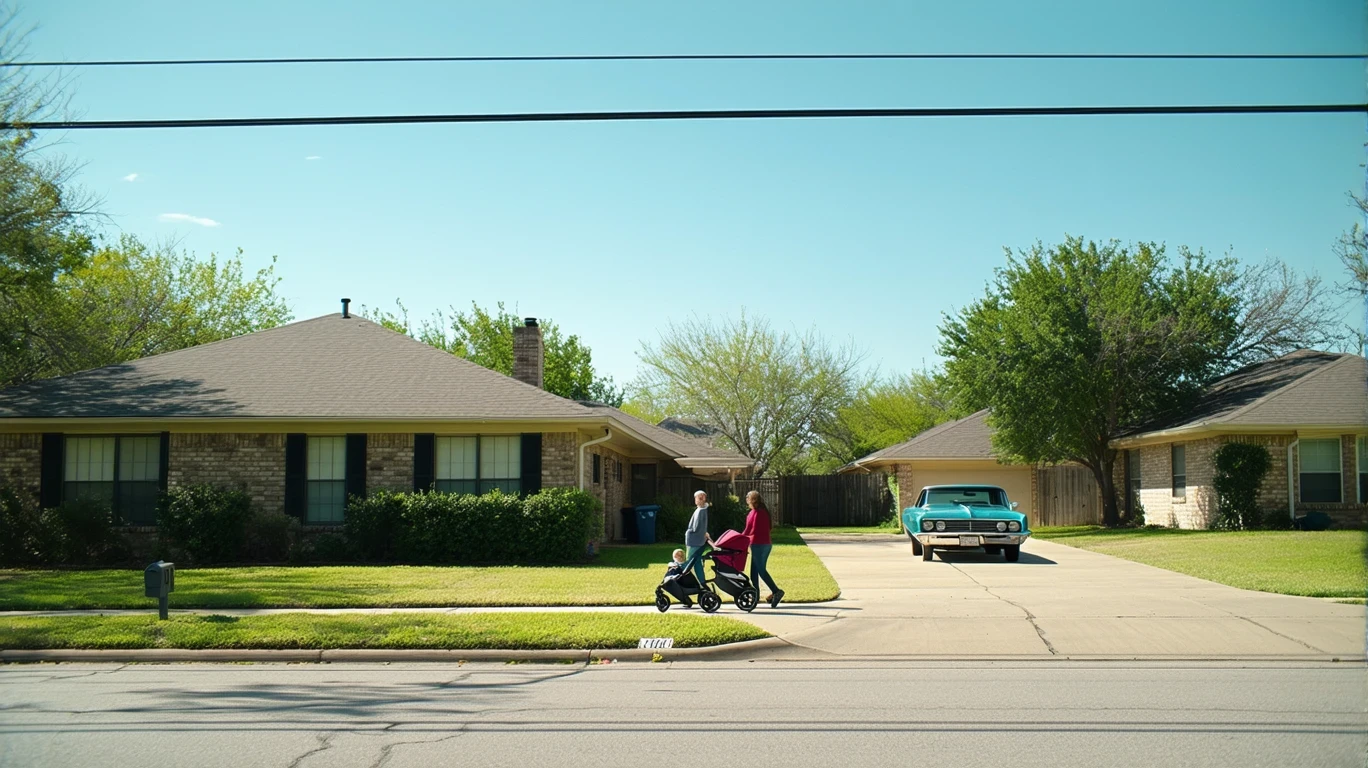
Texas operates without a state income tax, shifting revenue reliance onto property taxes and sales taxes. Both Boerne and Converse function within this framework, but the magnitude of property tax exposure diverges sharply due to home value differences. Boerne homeowners, facing a median home value of $398,500, carry higher annual property tax obligations than Converse homeowners at $216,100—even if effective tax rates remain comparable. This isn’t a rate difference; it’s a base difference. Higher assessed values produce higher absolute tax bills, and those bills recur annually regardless of income changes or household composition.
Sales taxes apply uniformly across both cities, affecting all households equally at the point of purchase. Renters in both markets avoid direct property tax exposure but absorb those costs indirectly through lease pricing, as landlords pass tax obligations into rent structures. The result: renters experience property tax pressure as a hidden component of monthly rent rather than a visible line item, while homeowners face it as a recurring, non-negotiable obligation that scales with home value and compounds over time.
HOA fees, trash collection, water, and sewer charges introduce additional variability. Boerne’s newer developments may bundle services into HOA fees, creating predictable monthly obligations but reducing household control over cost management. Converse’s older housing stock may rely more on city-provided services billed separately, introducing more variability but also more flexibility. Households planning to stay long-term in Boerne must account for the compounding effect of higher property taxes on total ownership cost, while Converse homeowners benefit from lower baseline exposure but must monitor for special assessments or deferred infrastructure costs in older neighborhoods.
Taxes and fees takeaway: Property tax exposure scales directly with home value, making Boerne homeowners more exposed to recurring tax obligations than Converse homeowners. Renters in both cities experience property taxes indirectly through rent pricing, with minimal differentiation. Long-term homeowners in Boerne face higher cumulative tax burdens, while Converse homeowners benefit from lower baseline exposure but must account for potential variability in city fees and special assessments. Sales taxes apply uniformly, affecting all households equally regardless of tenure or income.
Getting Around: Car Dependence vs Mixed Mobility
Boerne operates as a car-oriented environment with minimal pedestrian infrastructure relative to its road network. Sidewalks, crosswalks, and pedestrian pathways fall below density thresholds, and the city shows limited cycling infrastructure despite some bike presence in pockets. This structure makes car ownership effectively non-negotiable for most households: errands, commutes, and daily logistics all require driving. Households without reliable vehicles face significant friction in accessing groceries, healthcare, and employment. The time cost of car dependency remains low for those with vehicles, but the financial cost—gas, insurance, maintenance—becomes a fixed baseline obligation rather than a variable expense.
Converse shows a mixed mobility texture, with moderate pedestrian infrastructure supporting both walking and driving in parts of the city. The pedestrian-to-road ratio sits in the medium band, meaning some neighborhoods offer walkable access to nearby destinations, while others remain car-dependent. This doesn’t eliminate the need for a vehicle, but it introduces flexibility: households near walkable corridors can reduce car trips for certain errands, while those in less-connected areas experience friction similar to Boerne. The practical result: Converse offers slightly more mobility optionality, but car ownership remains the dominant mode for most residents.
Both cities share identical gas prices at $2.46/gal, eliminating fuel cost differentiation. Commute patterns, however, vary by household and employment location. Boerne’s car-oriented structure means every trip—work, school, groceries—requires driving, while Converse’s mixed texture allows some households to walk or bike for short errands, reducing total vehicle miles traveled. Families with multiple drivers face higher cumulative transportation costs in both cities, but Boerne’s lack of pedestrian alternatives makes those costs less compressible. Single adults and couples in Converse may find limited opportunities to reduce car dependency, while those in Boerne have no such option.
Transportation takeaway: Boerne’s car-oriented infrastructure makes vehicle ownership and usage non-negotiable, concentrating transportation costs into a fixed baseline for all households. Converse’s mixed mobility texture offers limited flexibility in parts of the city, allowing some households to reduce car trips for short errands. Gas prices remain identical, so differentiation emerges from infrastructure and trip frequency rather than fuel costs. Households prioritizing lower car dependency will find Converse slightly more accommodating, while those already planning to drive everywhere will experience similar friction in both cities.
Where Cost Pressure Concentrates Differently
Housing dominates the cost experience in Boerne, with the $398,500 median home value creating a steep entry barrier that shapes every downstream decision. Buyers need larger down payments, carry higher mortgage obligations, and face elevated property tax exposure that compounds annually. Renters avoid the entry barrier but gain no meaningful cost advantage over Converse, making the rental decision hinge on mobility preferences and lifestyle fit rather than monthly savings. Converse, by contrast, opens homeownership at $216,100, reducing front-loaded pressure and lowering ongoing property tax obligations. This doesn’t make Converse “cheaper overall”—it shifts where cost pressure shows up, favoring households with smaller savings reserves or lower debt capacity.
Utilities introduce more volatility in Converse due to older housing stock and less predictable insulation quality, while Boerne homeowners face higher baseline usage driven by larger floor plans. Both cities experience identical rate structures, so the difference emerges entirely from home characteristics rather than pricing. Families in larger Boerne homes will run higher absolute bills but with more predictability, while Converse households in older homes must budget for seasonal spikes that can’t be easily forecasted. Renters in both cities experience lower exposure overall, with minimal differentiation.
Transportation patterns matter more in Boerne, where car-oriented infrastructure makes vehicle ownership and usage non-negotiable. Every errand, commute, and logistics trip requires driving, concentrating transportation costs into a fixed baseline that households can’t compress. Converse’s mixed mobility texture offers limited flexibility in parts of the city, allowing some households to reduce car trips for short errands. This doesn’t eliminate the need for a vehicle, but it introduces optionality that Boerne lacks entirely. Households sensitive to car dependency will feel that difference daily, while those already planning to drive everywhere will experience similar friction in both cities.
Groceries and daily expenses behave nearly identically in both cities, driven by regional pricing and corridor-clustered access rather than city-specific factors. The decision isn’t about price—it’s about convenience, time cost, and proximity to commercial corridors. Families managing larger grocery volumes face similar absolute spending in both cities, but the structure of that spending depends more on household income and flexibility than on location. Taxes and fees scale with home value, making Boerne homeowners more exposed to recurring obligations, while Converse homeowners benefit from lower baseline exposure but must monitor for variability in city services and special assessments.
For households sensitive to housing entry barriers, Converse offers a structurally lower threshold. For those prioritizing newer construction and predictable utility costs, Boerne’s higher home values correlate with better building quality. For households seeking any degree of mobility flexibility, Converse’s mixed texture provides limited but real optionality. The better choice depends on which costs dominate the household: front-loaded entry pressure, ongoing fixed obligations, or daily logistics friction.
How the Same Income Feels in Boerne vs Converse
Single Adult
A single adult in Boerne faces higher housing entry costs if buying, but rental parity with Converse means the monthly obligation stays comparable. Car dependency becomes non-negotiable, making transportation a fixed baseline cost that can’t be reduced through walking or transit. Flexibility exists in dining out and discretionary spending, but grocery and utility costs remain predictable and manageable. In Converse, the same income opens homeownership more easily due to lower entry barriers, and mixed mobility texture allows limited car-trip reduction for nearby errands. The difference isn’t about total spending—it’s about whether housing entry or transportation flexibility matters more to the individual’s lifestyle and savings strategy.
Dual-Income Couple
A dual-income couple in Boerne can absorb higher housing entry costs more easily than a single earner, but the front-loaded pressure still requires larger savings reserves and higher debt capacity. Utilities scale with home size, and car dependency doubles vehicle-related costs across two commuters. Flexibility appears in dining, entertainment, and discretionary categories, but housing and transportation remain non-compressible. In Converse, the same household income stretches further at the entry point, reducing down payment pressure and lowering ongoing property tax exposure. Mixed mobility offers limited benefit for couples with two cars, but proximity to walkable corridors can reduce total vehicle miles for one partner. The decision hinges on whether the couple prioritizes lower entry barriers or accepts higher housing costs in exchange for newer construction and predictable utility exposure.
Family with Kids
Families in Boerne face the highest housing entry pressure, with larger homes required for space needs compounding the already-elevated median home value. Utilities scale with square footage, and car dependency extends to school drop-offs, extracurriculars, and errands, making transportation costs non-negotiable across multiple household members. Flexibility disappears quickly: housing, utilities, transportation, and groceries all become fixed obligations, leaving little room for discretionary spending. In Converse, lower housing entry costs open more options for families with limited savings, and smaller homes reduce baseline utility exposure. Mixed mobility provides minimal benefit for families managing school logistics and multiple errands, but lower property tax obligations create slightly more breathing room in the monthly budget. The difference isn’t about affordability in the abstract—it’s about whether the family can clear the entry barrier and sustain ongoing obligations without compressing every other category.
Decision Matrix: Which City Fits Which Household?
| Decision factor | If you’re sensitive to this… | Boerne tends to fit when… | Converse tends to fit when… |
|---|---|---|---|
| Housing entry + space needs | Down payment size, mortgage qualification, property tax exposure | You have larger savings reserves and prioritize newer construction with predictable maintenance costs | You need a lower entry barrier and can tolerate older housing stock with potential maintenance variability |
| Transportation dependence + commute friction | Car ownership costs, vehicle miles traveled, time spent driving | You already plan to drive everywhere and prioritize low commute times over mobility flexibility | You value limited walkability options for short errands and want to reduce total car trips where possible |
| Utility variability + home size exposure | Seasonal bill spikes, baseline usage, predictability | You prefer higher baseline costs with stable month-to-month bills in newer, larger homes | You can budget for seasonal volatility and prioritize lower baseline usage in smaller or older homes |
| Grocery strategy + convenience spending creep | Time cost of errands, proximity to commercial corridors, bulk buying | You accept car-dependent errands and plan grocery trips around major shopping corridors | You accept similar car-dependent errands but benefit from slightly more mixed-use pockets near home |
| Fees + friction costs (HOA, services, upkeep) | Recurring obligations, bundled services, special assessments | You prefer predictable HOA-bundled services and accept higher property tax obligations | You prioritize lower baseline property taxes and can manage variability in city fees or maintenance |
| Time budget (schedule flexibility, errands, logistics) | Coordination of school, work, errands, and household logistics | You have flexible schedules and can absorb car-dependent logistics without friction | You benefit from limited walkable errands in parts of town and value reduced total driving time |
Lifestyle Fit: Mobility, Amenities, and Daily Rhythms
Boerne’s car-oriented infrastructure shapes daily life around driving: errands, commutes, school drop-offs, and social activities all require a vehicle. The city offers present green space access with moderate park density and water features, providing outdoor recreation options for families and individuals who can drive to trailheads or parks. Low-rise building character and mixed residential-commercial land use create a suburban texture, but pedestrian infrastructure remains minimal. Households prioritizing newer construction, predictable utility costs, and low commute times will find Boerne’s structure accommodating, while those seeking walkable errands or transit alternatives will encounter friction.
Converse introduces limited mobility flexibility through its mixed texture, with moderate pedestrian infrastructure supporting walking in parts of the city. This doesn’t eliminate car dependency, but it allows some households to walk or bike for nearby errands, reducing total vehicle miles traveled. The city also offers present green space access with moderate park density and water features, similar to Boerne. Low-rise building character and mixed land use mirror Boerne’s suburban form, but the moderate pedestrian-to-road ratio creates pockets of walkability absent in Boerne. Households valuing lower housing entry costs and limited car-trip reduction will find Converse slightly more flexible, while those prioritizing newer homes and stable utility costs may prefer Boerne’s higher-value housing stock.
Both cities provide routine local healthcare access through clinics and pharmacies, but neither hosts a hospital facility. Families requiring frequent pediatric care or individuals managing chronic conditions must plan for longer trips to hospital services in the broader San Antonio metro. School density falls below thresholds in both cities, meaning families may face longer school commutes or limited public school options within immediate neighborhoods. Playground density also remains low, though both cities offer some family-oriented amenities. The lifestyle decision hinges less on amenity availability—which remains comparable—and more on mobility preferences, housing entry capacity, and tolerance for car-dependent logistics.
Quick facts: Both cities show corridor-clustered food and grocery access, requiring planned car trips for most households. Boerne’s unemployment rate of 3.3% sits slightly below Converse’s 3.8%, reflecting modest differences in local labor market tightness within the broader San Antonio metro economy.
Frequently Asked Questions
Is Boerne or Converse more affordable for first-time homebuyers in 2026?
Converse offers a structurally lower entry barrier for first-time buyers, with a median home value of $216,100 compared to Boerne’s $398,500. This reduces down payment requirements, lowers mortgage obligations, and decreases ongoing property tax exposure. Boerne’s higher home values appeal to buyers with larger savings reserves seeking newer construction and predictable maintenance costs, but the front-loaded pressure makes it less accessible for households with limited down payment capacity or tighter debt-to-income ratios.
How do utility costs compare between Boerne and Converse in 2026?
Both cities operate under identical utility rate structures—16.11¢/kWh for electricity and $30.71/MCF for natural gas—eliminating rate-based differentiation. Cost differences emerge from housing characteristics: Boerne’s higher median home value correlates with larger homes and higher baseline usage, while Converse’s older housing stock introduces more seasonal volatility due to insulation quality and HVAC age. Families in larger Boerne homes face higher absolute bills with more predictability, while Converse households must budget for less predictable summer spikes.
Which city requires more car dependency, Boerne or Converse?
Boerne operates as a car-oriented environment with minimal pedestrian infrastructure, making vehicle ownership non-negotiable for nearly all households. Converse shows a mixed mobility texture with moderate pedestrian infrastructure in parts of the city, allowing limited flexibility for short errands in walkable corridors. Both cities require cars for most daily logistics, but Converse offers slightly more optionality for households near mixed-use pockets, while Boerne provides no meaningful alternatives to driving.
Do renters save money choosing Converse over Boerne in 2026?
Renters face near-parity in monthly costs: $1,453 in Boerne versus $1,403 in Converse. The $50 difference reflects market noise rather than structural savings. The rental decision hinges on mobility preferences, proximity to employment, and tolerance for car dependency rather than monthly rent levels. Both cities draw from the same regional rental inventory and experience comparable lease renewal dynamics, making the choice about lifestyle fit rather than cost relief.
How do grocery and daily expenses differ between Boerne and Converse?
Grocery and daily expense costs behave nearly identically in both cities, driven by regional pricing and corridor-clustered access rather than city-specific factors. Both cities require car-based grocery trips, and both draw from the same San Antonio metro distribution networks. Price sensitivity depends more on household income and shopping strategy—discount retailers versus specialty stores, bulk buying versus frequent trips—than on location. Families managing larger grocery volumes face similar absolute spending in both cities, with differentiation emerging from convenience and time costs rather than price differences.
Conclusion
Boerne and Converse present distinct cost structures within the same regional economy, diverging primarily on housing entry barriers and mobility infrastructure. Boerne’s $398,500 median home value creates steep front-loaded pressure for buyers, while Converse opens homeownership at $216,100, reducing down payment requirements and lowering ongoing property tax exposure. Renters experience near-parity in monthly obligations, making the housing decision hinge on mobility preferences and lifestyle fit rather than rent levels. Utilities, groceries, and daily expenses behave nearly identically in both cities, driven by regional pricing and shared rate structures rather than city-specific factors. Transportation costs concentrate differently: Boerne’s car-oriented infrastructure makes vehicle ownership non-negotiable, while Converse’s mixed mobility texture offers limited flexibility for households near walkable corridors.
The better choice depends on which costs dominate your household in 2026. First-time buyers and households with smaller savings reserves will find Converse structurally more accessible, while those prioritizing newer construction and predictable utility costs may accept Boerne’s higher entry barrier. Families managing tight budgets must weigh Converse’s lower property tax exposure against Boerne’s more stable utility costs in larger, newer homes. Single adults and couples seeking any degree of mobility flexibility will benefit from Converse’s mixed texture, while those already planning to drive everywhere will experience similar friction in both cities. Neither city offers a universal cost advantage—each concentrates pressure differently, and the right fit emerges from understanding where your household’s spending flexibility begins and ends.
How this article was built: In addition to public economic data, this article incorporates location-based experiential signals derived from anonymized geographic patterns—such as access density, walkability, and land-use mix—to reflect how day-to-day living actually feels in Boerne and Converse.