
Blue Springs Transit Access Overview
| Transit Type | Coverage Area | Typical Access |
|---|---|---|
| Regional Bus Service | Select corridors | Limited frequency |
| Commuter Routes | Major employment centers | Peak hours primarily |
| Local Connections | Core areas | Moderate availability |
Transit coverage reflects service patterns as of 2026; availability varies significantly by neighborhood and time of day.
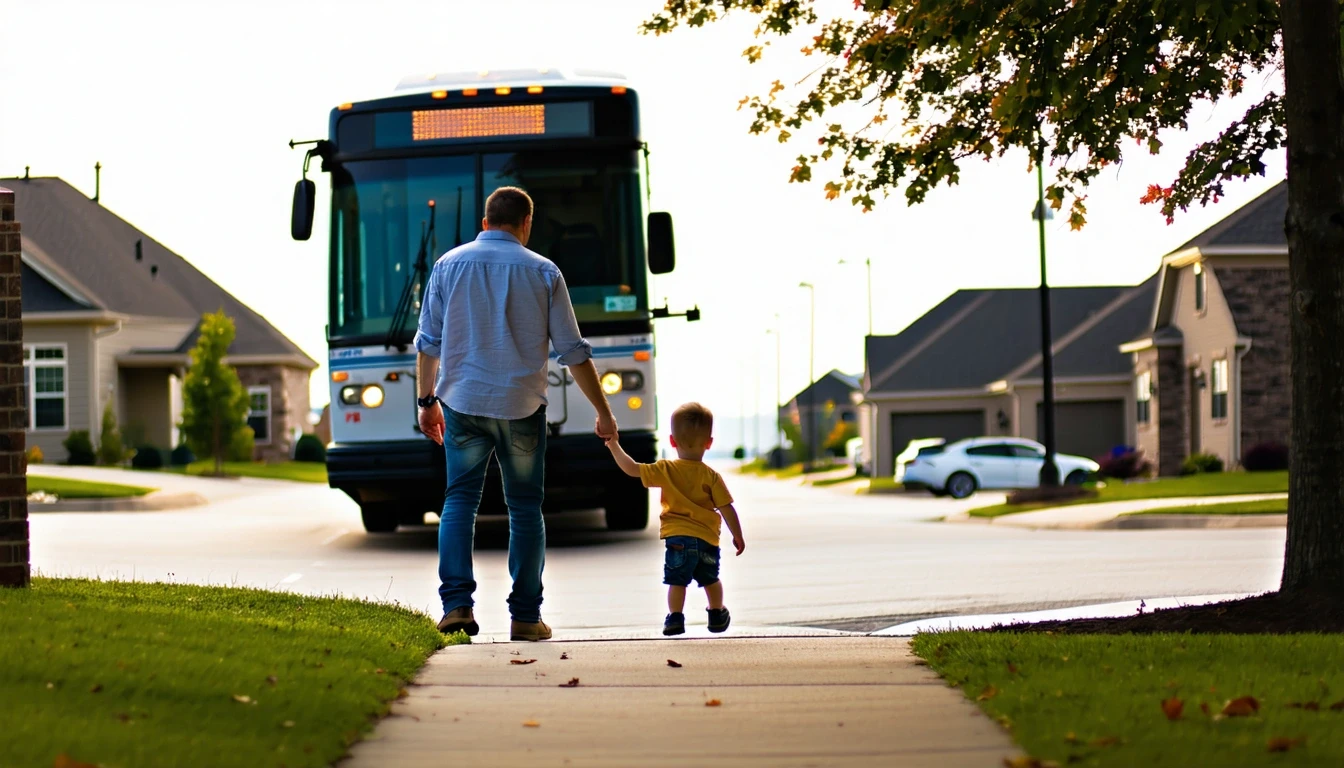
How People Get Around Blue Springs
Understanding transportation options in Blue Springs means recognizing that this Kansas City suburb was built around the car. The city’s low-rise residential neighborhoods spread across a relatively broad footprint, with commercial corridors clustered along major routes rather than woven throughout. Most households depend on personal vehicles for daily errands, work commutes, and family logistics—not because transit doesn’t exist, but because the city’s layout makes driving the most practical choice for the majority of residents.
Newcomers often assume that proximity to Kansas City guarantees robust transit access throughout the metro area. In practice, Blue Springs functions as a commuter suburb where public transportation plays a supporting role rather than anchoring daily mobility. The pedestrian infrastructure shows pockets of walkability—particularly in older residential sections—but these areas remain isolated rather than connected by continuous pedestrian networks. Grocery stores, schools, and medical clinics cluster along corridors that require intentional trips rather than spontaneous stops on foot.
What shapes your monthly budget in Blue Springs: where it breaks isn’t just the presence or absence of transit—it’s how the city’s spatial structure determines whether you can realistically build a life around anything other than a personal vehicle. For families managing multiple daily destinations, retirees coordinating medical appointments, or single professionals balancing work and errands, the car becomes the default not by preference but by necessity.
Public Transit Availability in Blue Springs
Public transit in Blue Springs often centers around systems such as RideKC, which provides regional bus connections linking the city to broader Kansas City employment and service hubs. Coverage exists, but it concentrates along specific corridors rather than blanketing residential neighborhoods. Bus stops appear most frequently near commercial zones and apartment complexes along major thoroughfares, leaving many single-family subdivisions without direct access.
Transit works best for residents living near these established routes and commuting to destinations that align with the existing network. Someone working in downtown Kansas City or at a major employer near a transit hub can make bus service functional, especially if their schedule accommodates limited frequency and longer travel times. The system serves as a lifeline for households without reliable vehicle access, but it doesn’t eliminate the friction that comes with car-free living in a suburb designed around driving.
Where transit falls short is in coverage density and service span. Evening and weekend service thins considerably, making it difficult to rely on buses for shift work, social activities, or errands outside traditional commuting hours. Neighborhoods on the city’s periphery—particularly newer subdivisions—often sit beyond practical walking distance to the nearest stop. For households juggling childcare pickups, grocery runs, and medical appointments across multiple locations, the time cost of transit dependence quickly becomes prohibitive.
Driving & Car Dependence Reality
Driving isn’t just common in Blue Springs—it’s structurally embedded in how daily life unfolds. The city’s development pattern favors separated land uses: residential subdivisions in one area, retail strips along highways, schools and parks distributed across zones that rarely overlap. Reaching any two destinations in a single trip almost always requires a car, and the pedestrian infrastructure that does exist rarely connects these zones in a way that supports walking or biking as primary transportation.
Parking is abundant and free in most contexts, which removes one of the friction points that makes car ownership costly in denser cities. Driveways, street parking, and large retail lots mean that finding a spot is rarely a concern. This abundance reinforces car dependence by making driving the path of least resistance. Households that might consider alternatives in a more constrained environment find little practical reason to do so here.
The tradeoff comes in the form of mandatory vehicle ownership and the exposure that creates. Every household member who works, attends school, or manages errands independently needs access to a car. That means insurance, maintenance, fuel, and the risk of unexpected repair costs—all of which become non-negotiable rather than optional. For single-income households or those with multiple drivers, this dependence shapes financial planning in ways that aren’t immediately visible when comparing rent or mortgage costs alone.
Commuting Patterns & Daily Mobility
Commuting in Blue Springs typically means driving to Kansas City or to employers scattered across the eastern metro. The average commute sits around 26 minutes, but that figure masks significant variation. Residents working locally—in retail, schools, or service industries within Blue Springs—often enjoy short, predictable drives. Those commuting to downtown Kansas City, Johnson County, or other metro employment centers face longer trips that stretch toward or beyond 40 minutes, depending on traffic and route.
The structure of daily mobility here isn’t just about the commute to work. It’s about the multi-stop reality of household logistics. Dropping kids at school, stopping for groceries, picking up prescriptions, and attending evening activities all require separate car trips because these destinations don’t cluster in walkable nodes. Households with two working adults and school-age children often find themselves coordinating vehicle access and managing overlapping schedules in ways that wouldn’t be necessary in a more compact environment.
Who benefits from this pattern? Households that value space, privacy, and the ability to control their own schedules without depending on transit timetables or shared infrastructure. The tradeoff is time spent in the car and the logistical complexity of managing multiple vehicles. For remote workers or retirees with flexible schedules, this friction is minimal. For families with rigid work hours and childcare obligations, it becomes a daily coordination challenge.
Who Transit Works For — and Who It Doesn’t
Transit in Blue Springs works best for single adults or couples without children, living near established bus routes, commuting to destinations well-served by the regional network, and maintaining schedules that align with peak service hours. It’s a narrow fit, but for those who meet these criteria, bus service can reduce or eliminate the need for a personal vehicle, particularly if they’re willing to combine transit with occasional rideshare or carpool arrangements for off-peak needs.
Renters in apartment complexes near commercial corridors—particularly those along major east-west routes—have the most realistic shot at transit-dependent living. These locations tend to offer closer proximity to grocery stores, pharmacies, and bus stops, reducing the distance gap that makes car-free life impractical elsewhere in the city. Even here, however, the system’s limited frequency and evening service create constraints that require careful planning and schedule flexibility.
Transit doesn’t work well for families managing school drop-offs, extracurricular activities, and multi-destination errands. It doesn’t work for shift workers whose hours fall outside peak service times. And it doesn’t work for residents in peripheral subdivisions where the nearest bus stop sits a mile or more away, accessible only by car. For these households—which represent the majority in Blue Springs—car ownership isn’t a lifestyle choice. It’s a structural requirement.
Transportation Tradeoffs in Blue Springs
Choosing between transit and driving in Blue Springs isn’t about comparing two equally viable options. It’s about understanding which tradeoffs you’re willing to accept. Driving offers control, flexibility, and the ability to manage complex household logistics without depending on schedules or routes determined by someone else. The cost is vehicle ownership, maintenance, insurance, and fuel—expenses that don’t disappear even when the car sits unused.
Transit offers lower direct costs and eliminates the exposure to sudden repair bills or insurance rate increases. The tradeoff is time, limited coverage, and reduced flexibility. A 20-minute drive becomes a 45-minute bus trip with a transfer. An evening errand that takes 30 minutes by car might require two hours and careful attention to the last departure time. For households with tight schedules or multiple daily obligations, these time costs often outweigh the financial savings.
The real decision isn’t whether transit exists—it does—but whether your household’s daily reality aligns with the structure of the available service. If your life fits within the corridors, schedules, and destinations that transit serves, it can work. If it doesn’t, driving becomes the only practical option, and the cost of transportation shifts from optional to mandatory.
FAQs About Transportation in Blue Springs (2026)
Is public transit usable for daily commuting in Blue Springs?
Public transit is usable for daily commuting if you live near an established bus route and work at a destination well-served by the regional network. Service concentrates along major corridors and connects to Kansas City employment centers, but frequency is limited and evening or weekend options thin considerably. For residents whose schedules and destinations align with the existing system, transit can function as a primary commute option. For most households, however, the time cost and coverage gaps make driving the more practical choice.
Do most people in Blue Springs rely on a car?
Yes. The vast majority of Blue Springs residents depend on personal vehicles for daily transportation. The city’s layout, with separated residential and commercial zones and limited pedestrian connectivity, makes car ownership a structural necessity rather than a preference. Even households with access to transit often maintain at least one vehicle to manage errands, family logistics, and trips that fall outside bus service hours or coverage areas.
Which areas of Blue Springs are easiest to live in without a car?
The easiest areas to live without a car are older residential neighborhoods near commercial corridors, particularly those with direct access to bus routes and within walking distance of grocery stores, pharmacies, and other daily-needs services. Apartment complexes along major east-west routes tend to offer the most realistic car-free or car-light living, though even these locations require careful planning and schedule flexibility. Peripheral subdivisions and newer developments generally sit too far from transit and services to support car-free living without significant friction.
How does commuting in Blue Springs compare to nearby cities?
Commuting in Blue Springs reflects typical suburban patterns for the Kansas City metro: car-dependent, with moderate drive times to regional employment centers. Compared to cities closer to downtown Kansas City, Blue Springs residents generally face longer commutes but benefit from less congestion and more predictable travel times. Compared to more rural communities farther east, Blue Springs offers better access to regional transit and shorter distances to metro jobs and services. The city occupies a middle position—suburban convenience with metro connectivity, but without the transit density or walkability of core urban areas.
How Transportation Fits Into the Cost of Living in Blue Springs
Transportation in Blue Springs isn’t just a line item—it’s a structural factor that shapes where you can live, how you manage daily logistics, and what financial exposure you carry. The city’s car-dependent layout means that vehicle ownership becomes a prerequisite for most households, and that dependence introduces costs that don’t scale neatly with income or housing choice. A family paying below-market rent still faces the same insurance, fuel, and maintenance expenses as a household in a more expensive home.
What matters most isn’t whether you can afford a car—it’s whether your household can absorb the volatility that comes with mandatory vehicle dependence. Unexpected repairs, insurance rate increases, and fuel price swings all hit harder when driving isn’t optional. For households with tight budgets or limited savings, this exposure creates financial risk that extends beyond the predictable monthly payment.
Understanding how transportation costs interact with housing, utilities, and other fixed expenses helps clarify the true cost of living in Blue Springs. The city’s layout and transit limitations mean that mobility isn’t a variable you can optimize away—it’s a fixed constraint that every household must plan around. For a fuller picture of how these costs combine and where your money actually goes each month, the monthly budget breakdown offers grounded context on how transportation fits into the broader financial reality of life here.
How this article was built: In addition to public economic data, this article incorporates location-based experiential signals derived from anonymized geographic patterns—such as access density, walkability, and land-use mix—to reflect how day-to-day living actually feels in Blue Springs, MO.