
When your summer electricity bill in Blue Diamond hits three or four times what you paid in March, it’s not a billing error—it’s the cost structure of living in the Mojave Desert. Understanding how utilities behave here means recognizing that cooling season doesn’t just raise costs; it dominates the entire annual utility picture for most households.
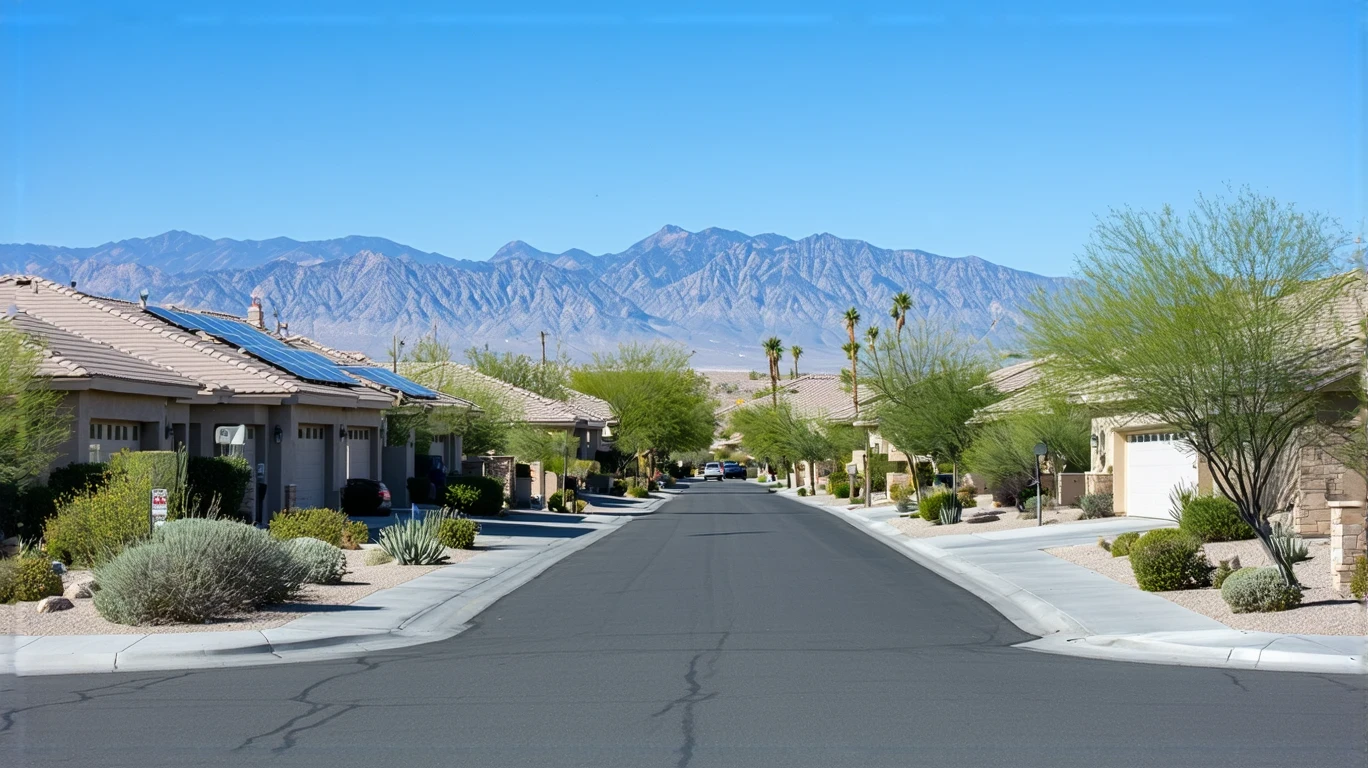
Understanding Utilities in Blue Diamond
Utility expenses in Blue Diamond represent a significant and often volatile portion of household budgets, typically ranking as the second-largest monthly obligation after housing. For residents and newcomers alike, grasping how these costs behave throughout the year is essential for financial planning and avoiding seasonal bill shock.
Core utilities generally include electricity, water, natural gas, trash collection, and recycling services. In Blue Diamond, the relative weight of each category differs markedly from national patterns due to the community’s desert location and extreme summer temperatures. What might be a secondary expense elsewhere—air conditioning—becomes the primary driver of utility volatility here.
For those moving to Blue Diamond, it’s important to understand that utility billing structures vary significantly between housing types. Single-family homeowners typically manage all utility accounts independently, giving them direct control but also full exposure to seasonal swings. Apartment renters may find some utilities included in rent or billed through property management, which can simplify budgeting but may obscure actual consumption patterns. The transition from a climate with balanced seasonal costs to one with extreme summer peaks often catches new residents off guard during their first July or August billing cycle.
Utilities at a Glance in Blue Diamond
The table below shows how core utility costs typically behave for a mid-size household in a single-family home in Blue Diamond. Where city-level prices are available in the data feed, they are shown directly. When exact figures are not provided, categories are described qualitatively to reflect how costs are structured and what drives variability.
| Utility Category | Cost Structure |
|---|---|
| Electricity | Usage-dependent; summer-dominant exposure |
| Water | Tiered pricing; conservation-sensitive |
| Natural Gas | Minimal winter use; heating-optional |
| Trash & Recycling | Often bundled with water or HOA |
| Total | Summer electricity drives seasonal swings |
“This table reflects utility cost structure for a mid-size household in a single-family home in Blue Diamond during 2026. Where exact figures are not provided in the IndexYard data feed, categories are described directionally to reflect how costs behave rather than a receipt-accurate total.”
Electricity operates as the most exposure-sensitive utility in Blue Diamond, driven far more by climate intensity and home efficiency than by base rates. During extended stretches of triple-digit heat from June through September, air conditioning runs nearly continuously in most homes, creating consumption patterns that dwarf spring and fall usage. Homes with older HVAC systems, poor insulation, or west-facing exposure face particularly steep summer bills.
Water costs in Blue Diamond reflect both desert scarcity and conservation priorities. Most providers use tiered rate structures that penalize higher consumption, making outdoor watering and pool maintenance significant cost factors. Even modest landscaping choices—choosing desert-adapted plants versus thirsty grass—can materially affect annual water expenses. The billing structure rewards households that adapt to the climate rather than fight it.
Natural gas plays a surprisingly minor role in Blue Diamond’s utility picture. With rare freezing nights and brief, mild winters, heating needs remain minimal for most of the year. Households primarily use gas for water heating and cooking, creating relatively stable and low monthly charges. This stands in sharp contrast to heating-dominant climates where winter gas bills rival summer electricity costs.
Trash and recycling services in Blue Diamond are often bundled with water billing or included in homeowners association fees, simplifying payment but sometimes obscuring the actual cost. For those paying separately, monthly fees tend to remain fixed regardless of season, providing one element of predictability in an otherwise volatile utility landscape.
Electricity is typically the most exposure-sensitive utility in Blue Diamond, driven more by climate and home efficiency than by base rates.
How Weather Impacts Utilities in Blue Diamond
Blue Diamond’s desert climate creates one of the most lopsided seasonal utility patterns in the country. Summer doesn’t just raise electricity costs—it transforms them. From late May through September, daytime temperatures regularly exceed 100°F, and overnight lows often remain in the 80s, preventing homes from cooling naturally. Air conditioning becomes non-negotiable for health and habitability, not comfort, and systems run for 12 to 16 hours daily during peak heat.
Many Blue Diamond households experience electricity bills in July and August that are three to four times higher than what they paid in March or November. This isn’t gradual seasonal variation; it’s a sharp summer spike that demands either significant budget flexibility or year-round equalized billing arrangements. Homes without adequate insulation, efficient HVAC systems, or strategic shading face even steeper increases, as older cooling systems struggle against relentless heat and poor building envelopes.
Winter, by contrast, offers substantial relief. With mild temperatures and rare cold snaps, heating needs remain minimal. Natural gas usage stays low, and electricity consumption drops as cooling systems sit idle for months. This seasonal asymmetry means that annual utility planning in Blue Diamond centers almost entirely on managing summer exposure rather than balancing heating and cooling costs as households do in temperate climates. The challenge isn’t weathering both extremes—it’s absorbing one massive seasonal surge.
How to Save on Utilities in Blue Diamond
Reducing day-to-day costs in Blue Diamond requires strategies tailored to the community’s cooling-dominant climate. Unlike regions where efficiency efforts spread across heating and cooling seasons, here the focus narrows sharply: controlling summer electricity consumption delivers the most meaningful impact on annual utility expenses. Small changes in how homes manage heat gain and cooling efficiency can materially reduce seasonal bill spikes.
Timing and technology matter significantly. Programmable or smart thermostats allow households to raise temperatures during unoccupied hours without sacrificing comfort when people are home, reducing runtime without requiring constant manual adjustment. Ceiling fans create perceived cooling that allows slightly higher thermostat settings, cutting compressor cycles. Attention to building envelope issues—sealing air leaks, adding attic insulation, installing reflective window film—addresses the root cause of cooling load rather than just treating symptoms.
Practical steps to lower utility exposure in Blue Diamond include:
- Enrolling in time-of-use or off-peak billing programs if your provider offers them, shifting discretionary electricity use to lower-rate hours
- Exploring solar panel incentives at the federal and state level, which can offset summer consumption when production peaks
- Upgrading to high-efficiency HVAC systems, particularly if current equipment is over 10 years old
- Planting shade trees on south and west exposures to reduce direct heat gain, though this requires years to deliver full benefit
- Replacing older appliances with ENERGY STAR models, especially water heaters and refrigerators that run continuously
- Checking whether your utility provider offers rebates for efficiency upgrades, including AC tune-ups, insulation improvements, or smart thermostat installation
- Converting to desert-adapted landscaping to reduce outdoor water use and eliminate the electricity cost of running irrigation systems
🏆 Tip: Check if your provider in Blue Diamond offers rebates for energy-efficient AC units or heating systems. Many utilities provide incentives specifically for cooling equipment upgrades, recognizing that improved efficiency benefits both households and grid stability during peak summer demand.
FAQs About Utility Costs in Blue Diamond
Why are utility bills so high in Blue Diamond during summer? Summer bills spike because air conditioning runs nearly continuously during months of triple-digit heat, creating electricity consumption that far exceeds other seasons. Homes in Blue Diamond face longer and more intense cooling seasons than most of the country, and overnight temperatures often stay warm enough to prevent natural cooling, forcing systems to work around the clock.
What is the average monthly electric bill for an apartment in Blue Diamond compared to a single-family home? Apartments generally see lower electricity costs than single-family homes due to smaller square footage, shared walls that reduce heat gain, and less exterior exposure. However, top-floor units or those with west-facing windows can still experience significant summer bills. Single-family homes, especially older or poorly insulated ones, face the highest seasonal swings due to greater cooling load and full exposure to desert heat.
Do HOAs in Blue Diamond usually include trash or water in their fees? Many homeowners associations in Blue Diamond do bundle trash, recycling, and sometimes water into monthly HOA dues, simplifying billing and ensuring consistent service across the community. However, this varies by neighborhood, and some HOAs cover only common-area services while leaving individual utility accounts to homeowners. It’s important to clarify what’s included before purchasing or renting.
How does seasonal weather affect monthly utility bills in Blue Diamond? Seasonal weather creates dramatic swings, with summer electricity bills often three to four times higher than spring or fall due to relentless cooling demands. Winter brings relief, as mild temperatures eliminate heating needs and allow households to operate with minimal gas and electricity use. The result is a highly asymmetric annual pattern where summer dominates total utility spending.
Does Blue Diamond offer incentives for solar panels or energy-efficient appliances? Federal tax credits for solar installations remain available in 2026, and Nevada has historically supported renewable energy adoption through net metering programs and state-level incentives. Local utility providers may also offer rebates for high-efficiency cooling systems, insulation upgrades, and smart home technology. Residents should verify current program availability directly with their utility provider, as incentives and eligibility requirements change periodically.
How Utilities Fit Into the Cost Structure in Blue Diamond
Utilities in Blue Diamond function as a significant volatility factor within household budgets, particularly due to the extreme summer electricity exposure that defines the local cost structure. While housing costs set the baseline financial obligation, utility bills introduce seasonal unpredictability that requires either substantial budget flexibility or proactive management strategies. The summer spike isn’t a minor adjustment—it’s a recurring financial event that households must plan for annually.
Understanding how utilities behave here helps clarify broader financial tradeoffs. Lower winter heating costs provide some offset, but the magnitude of summer cooling expenses typically exceeds any cold-weather savings. Water costs, driven by desert scarcity and tiered pricing, add another layer of consumption-sensitive variability. Together, these factors mean that monthly expenses in Blue Diamond shift more dramatically across the calendar than in temperate climates where heating and cooling costs balance out.
For a complete picture of how utilities interact with housing, transportation, and other major expense categories, the full monthly budget breakdown provides essential context. Utilities don’t exist in isolation—they’re one piece of a larger cost structure shaped by location, climate, and household choices. Exploring how all these elements fit together helps residents and newcomers make informed decisions about where to live, what housing to choose, and how to manage seasonal financial pressure effectively.
How this article was built: This article draws on regional utility patterns, desert climate characteristics, and typical billing structures for small Nevada communities near Las Vegas. In the absence of city-specific data, it reflects how utilities behave in similar desert locations with extreme summer heat and mild winters.