
What does it actually feel like to live in Blue Diamond, NV? Not the glossy version or the worst-case scenario — but the day-to-day emotional reality that shapes whether someone feels at home or restless. In a place this small and remote, sentiment isn’t subtle: people tend to either love the isolation or struggle against it. There’s rarely middle ground.
Blue Diamond sits at the edge of Red Rock Canyon, roughly 25 miles west of Las Vegas, with a population that barely registers in the hundreds. It’s unincorporated, rural, and deliberately quiet. The people who thrive here tend to value solitude, natural beauty, and distance from urban noise. The people who don’t often feel trapped by the lack of services, the long commute, and the absence of spontaneous convenience.
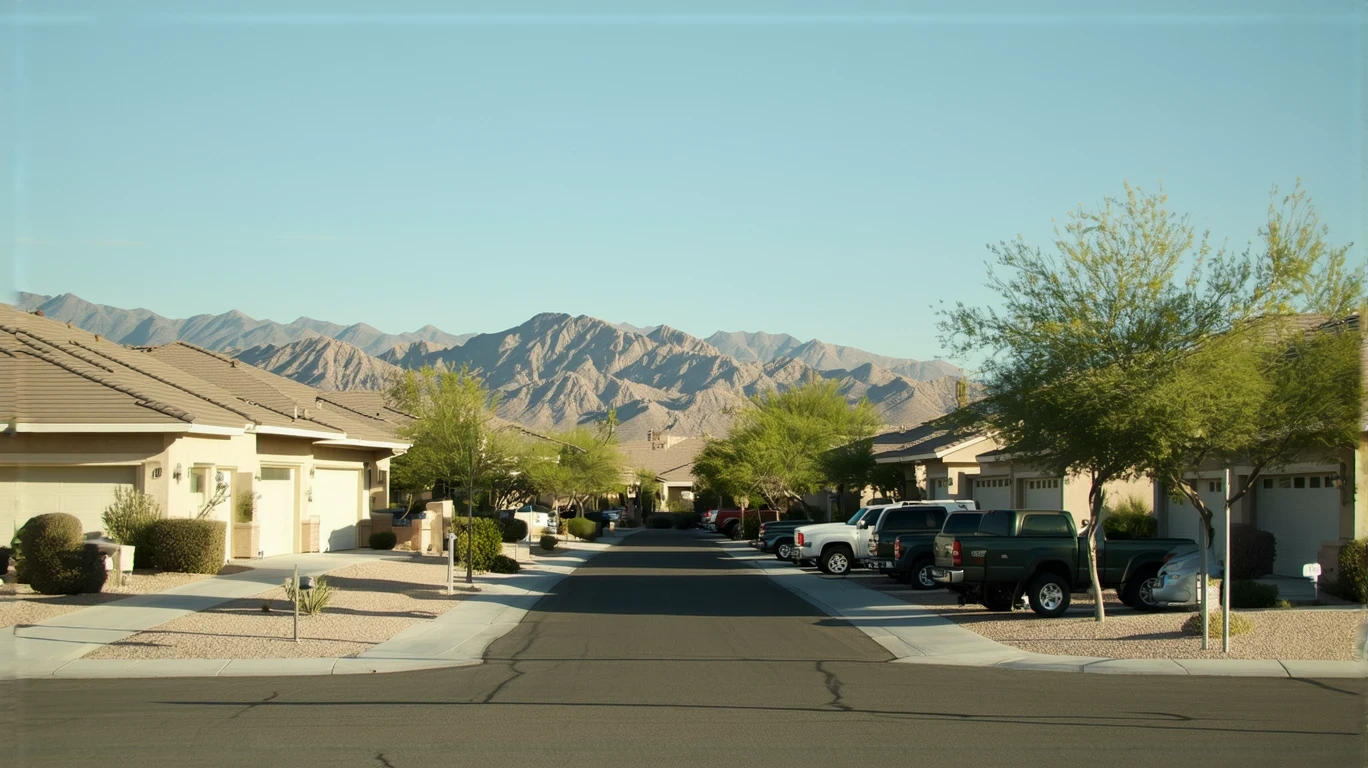
The Emotional Landscape of Blue Diamond
Blue Diamond’s vibe is defined by what it doesn’t have as much as what it does. There’s no grocery store, no gas station, no coffee shop. The nearest essentials are a 20-minute drive into the Las Vegas metro area. For some, that’s freedom — a buffer zone between work life and home life, a place where you can see stars and hear silence. For others, it’s friction: every errand becomes a planned expedition, every forgotten item a frustration.
The community is small enough that neighbors know each other, but not so insular that newcomers are shut out. There’s a shared understanding among residents that living here requires self-sufficiency and a tolerance for inconvenience. The tradeoff is access to some of the most stunning desert and canyon landscapes in the region, right outside your door.
People who feel aligned here tend to be outdoor enthusiasts, remote workers who don’t commute daily, retirees seeking peace, or families willing to trade convenience for space and natural beauty. People who feel friction tend to be those who underestimated the isolation, who need frequent access to services, or who commute to Las Vegas regularly and find the drive wearing over time.
Social Media Buzz in Blue Diamond
Blue Diamond doesn’t generate the kind of social media volume you’d see in a larger city, but the conversations that do emerge tend to revolve around a few recurring themes: pride in the natural setting, frustration with service gaps, and protectiveness over the community’s rural character.
On platforms like Facebook and in regional Nevada forums, residents often describe the experience in stark terms:
“You come here because you want to be left alone, and that’s exactly what you get — for better or worse.”
“It’s beautiful, but you have to be okay with driving 30 minutes for milk.”
“If you love hiking and quiet, this is paradise. If you need restaurants and nightlife, you’ll go crazy.”
The tone is rarely neutral. People either defend the lifestyle fiercely or warn others away. There’s little debate about what Blue Diamond is — the tension is whether that fits what you need.
Local News Tone
Blue Diamond doesn’t have its own local news outlet, so coverage tends to come from regional Las Vegas media or Clark County sources. When the community does appear, it’s usually in one of a few recurring frames:
- Gateway to Red Rock Canyon and outdoor recreation
- Rural enclave resisting development pressure
- Commuter challenges and infrastructure gaps
- Community efforts to preserve desert character
- Wildfire risk and emergency access concerns
The framing is rarely about growth or change in Blue Diamond itself — it’s more often about how the community relates to the expanding Las Vegas metro area and the natural landscape it borders. The tone tends to be respectful of the lifestyle choice, but also matter-of-fact about the tradeoffs.
Review-Based Public Perception
Blue Diamond doesn’t generate many reviews in the traditional sense — there are few businesses to rate — but when people describe the experience of living here on platforms like Google, Nextdoor-style forums, or relocation sites, a pattern emerges.
Positive sentiment clusters around:
- Unmatched access to Red Rock Canyon and desert trails
- Genuine quiet and dark skies
- Tight-knit, self-reliant community
- Escape from Las Vegas density and noise
Critical sentiment focuses on:
- Total lack of commercial services within the community
- Long drives for groceries, gas, healthcare, dining
- Commute burden for anyone working in Las Vegas
- Limited options for families with school-age children
- Extreme summer heat with minimal shade infrastructure
The mildly critical reviews often come from people who loved the idea of rural desert living but underestimated the logistical weight. The enthusiastic reviews come from people who knew exactly what they were signing up for and found it matched their expectations.
Comparison to Nearby Cities
| Aspect | Blue Diamond | Las Vegas | Pahrump |
|---|---|---|---|
| Overall Vibe | Isolated, nature-focused, self-sufficient | Dense, fast-paced, service-rich | Rural, sprawling, budget-conscious |
| Community Feel | Tight-knit, protective, small | Transient, diverse, anonymous | Independent, libertarian-leaning, spread out |
| Access to Services | Minimal — long drives required | Abundant — everything nearby | Basic services present, limited variety |
| Natural Beauty | Stunning desert and canyon access | Limited — urban environment | Open desert, less dramatic terrain |
| Lifestyle Fit | Outdoor lovers, remote workers, solitude seekers | Urban professionals, entertainment seekers, service workers | Retirees, budget-conscious families, off-grid enthusiasts |
Blue Diamond is not a compromise between Las Vegas and Pahrump — it’s a distinct choice. If you need urban energy and convenience, Las Vegas delivers that in full. If you want affordability and some rural character without total isolation, Pahrump offers more infrastructure. Blue Diamond is for people who want proximity to nature above nearly everything else, and who are willing to handle the logistical cost.
Las Vegas residents sometimes describe Blue Diamond as “where you go to disappear for the weekend.” Blue Diamond residents sometimes describe Las Vegas as “where we go when we have to.” The relationship is functional, not competitive.
What Locals Are Saying
“I moved here after 15 years in Las Vegas. The commute is long, but I only go in three days a week, and the peace I get at home is worth every mile.” — Remote worker, 30s
“We raised our kids here. It’s not easy — you drive a lot, and they don’t have friends next door. But they grew up hiking and knowing their neighbors. I wouldn’t trade that.” — Long-time resident, family with teens
“It’s beautiful, but I underestimated how much I’d miss just being able to grab dinner or run to the store. Everything is a project.” — Newcomer, early 40s
“If you’re retired and you love the outdoors, this is one of the best-kept secrets in Nevada. Just make sure you’re okay with driving to see a doctor.” — Retiree, 60s
“I thought I wanted total quiet, but after a year I realized I missed having options. It’s not the place — it’s just not my pace.” — Former resident, 20s
“People here look out for each other. It’s not performative — it’s just what you do when you’re this far out.” — Local, 50s
“The summer heat is no joke, and there’s no shade. If you’re not prepared for desert living, it’s going to be rough.” — Resident, 30s
Does Blue Diamond Feel Like a Good Fit?
Blue Diamond doesn’t try to be all things to all people. It’s a place with a clear identity: rural, remote, nature-adjacent, and self-reliant. The people who feel at home here tend to be those who value solitude, outdoor access, and distance from urban density more than they value convenience, variety, or spontaneous social options.
This tends to work for:
- Outdoor enthusiasts who want Red Rock Canyon as their backyard
- Remote workers or retirees who don’t commute daily
- People seeking genuine quiet and low population density
- Households willing to plan ahead and drive for services
This tends to frustrate:
- Anyone who commutes to Las Vegas five days a week
- People who need frequent access to dining, shopping, or entertainment
- Households with young children who want nearby schools and activities
- Anyone who underestimates the logistical cost of isolation
If you’re considering Blue Diamond, the question isn’t whether it’s a “happy” place — it’s whether the tradeoffs align with what you actually need. For the right person, it’s extraordinary. For the wrong fit, it’s exhausting. The community itself won’t change to meet you halfway — so the decision comes down to whether you’re ready to meet it where it is.
To understand the financial and logistical texture of life here, explore what a budget has to handle in Blue Diamond, or dig into housing tradeoffs and lifestyle requirements that shape day-to-day experience.
The perspectives shown reflect commonly expressed local sentiment and recurring themes in public discussion, rather than individual accounts.