
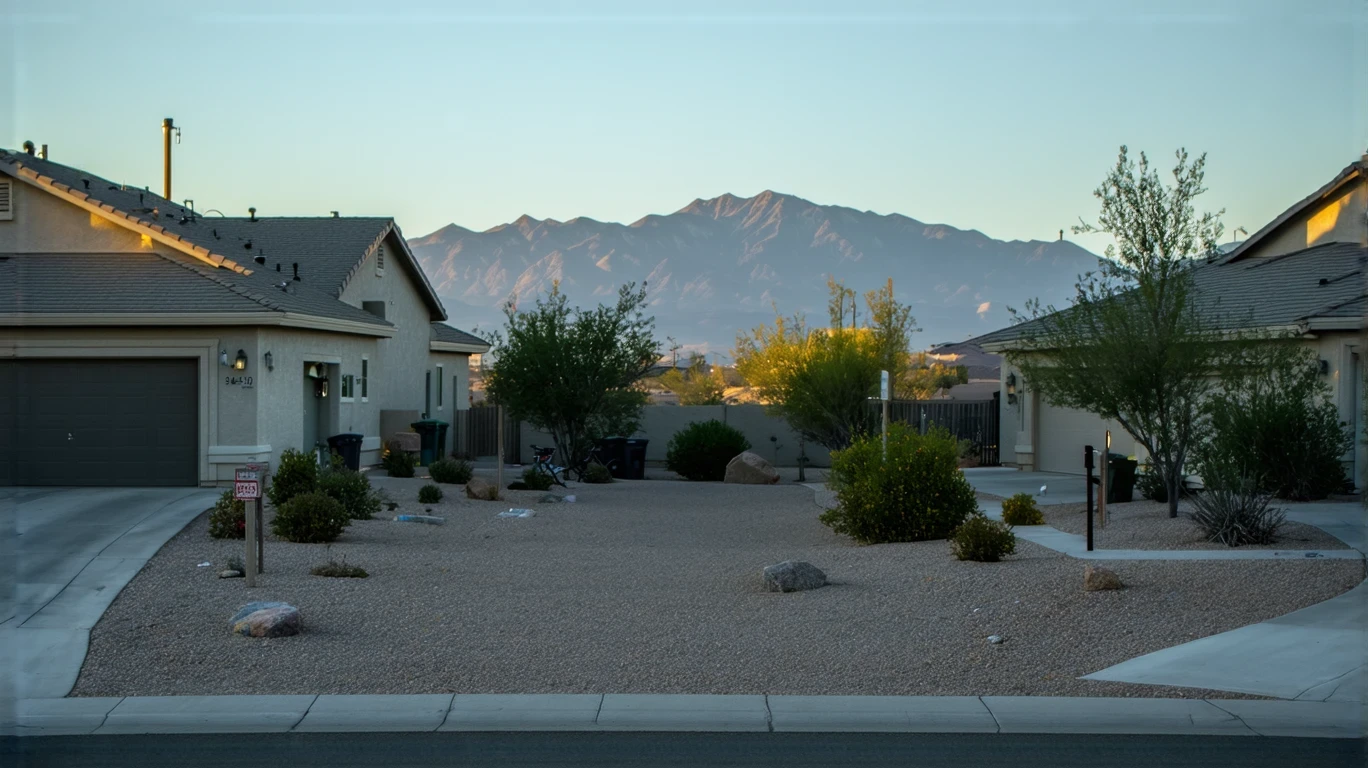
Blue Diamond’s median home value sits at $552,100—nearly $125,000 higher than Henderson’s $427,900—yet both cities share identical utility rates, gas prices, and regional price indices. The difference isn’t about one city being universally cheaper; it’s about where cost pressure concentrates and which households feel it most. Blue Diamond offers walkable pockets and low-density living but sparse grocery access and limited healthcare infrastructure. Henderson provides a mature rental market, lower housing entry barriers, and the amenities of a larger retirement-oriented community. For households deciding between these two Las Vegas metro neighbors in 2026, the better choice depends on whether you’re more exposed to housing entry costs, daily errands friction, or ongoing service access—not on which city costs less overall.
Both cities sit in the same regional economy, meaning macro factors like unemployment (5.8%) and price parity (RPP index 97) are identical. What differs is the structure of daily life: Blue Diamond’s pedestrian-friendly pockets exist alongside car-dependent errands infrastructure, while Henderson’s larger population base supports denser services and a visible rental market. Families prioritizing school access and medical proximity face different tradeoffs than couples seeking walkable neighborhoods with space. Singles managing tight budgets encounter different flexibility in each city’s housing market. This comparison explains how those structural differences translate into real household pressure—without declaring a winner or calculating total cost of living.
Housing Costs
Blue Diamond’s $552,100 median home value reflects a market dominated by single-family ownership in a low-density setting, with no rental data present in census records—a signal that rental inventory is limited or nearly absent. Henderson’s $427,900 median home value and $1,641 median monthly rent indicate a more diverse housing stock, including apartments, townhomes, and single-family options. The difference isn’t just entry price; it’s about what kind of housing is available and how that shapes who can move in.
For first-time buyers, Henderson’s lower median home value reduces the down payment barrier and may open access to starter homes or condos that don’t exist in Blue Diamond’s market. For renters, Henderson provides a clear path to non-ownership housing, while Blue Diamond effectively requires ownership or informal arrangements. Families seeking space may find Blue Diamond’s low-rise, spread-out character appealing—but only if they can clear the higher purchase threshold. Couples or singles who prefer renting for flexibility, or who aren’t ready to buy, face a structural barrier in Blue Diamond that doesn’t exist in Henderson.
Both cities share the same regional price environment (RPP 97), so the difference in home values reflects local supply, lot sizes, and housing form rather than metro-wide inflation. Blue Diamond’s higher values likely correspond to larger lots, more separation between homes, and limited new construction. Henderson’s lower values reflect a broader mix: denser neighborhoods, attached housing, and ongoing development that keeps inventory flowing. Property taxes, insurance, and maintenance costs scale with home value and type, meaning Blue Diamond homeowners face higher baseline obligations even before utilities or transportation enter the picture.
Housing takeaway: Blue Diamond fits households that can afford the higher entry cost and prefer ownership in a low-density, quiet setting. Henderson fits renters, first-time buyers, and households that need flexibility or lower upfront costs. The decision hinges on whether housing entry or housing availability is the bigger constraint.
Utilities and Energy Costs
Both cities share identical utility rates: 13.77¢/kWh for electricity and $14.46/MCF for natural gas. The difference in utility exposure comes from housing type, size, and age—not from the price per unit. Blue Diamond’s low-rise, single-family housing stock means larger conditioned spaces, more exterior wall exposure, and often older construction with less efficient insulation. Henderson’s mix of apartments, townhomes, and newer single-family builds means some households benefit from shared walls, smaller footprints, and modern efficiency standards.
In the Las Vegas metro’s desert climate, cooling dominates summer utility bills, with extended triple-digit heat driving air conditioning use from May through September. Heating needs are minimal but present during winter nights. A single-family home in Blue Diamond with 2,000+ square feet and older windows will experience higher cooling costs than a 1,200-square-foot apartment in Henderson with shared walls and newer HVAC. The rate is the same; the exposure surface is not. Households in larger homes face more volatility during peak summer months, while those in smaller or attached units see more predictable, moderate bills year-round.
Water and sewer costs, trash service, and other utility-adjacent fees vary by provider and housing type. Single-family homeowners in both cities typically pay separately for these services, while some Henderson apartment complexes or HOA communities may bundle water or trash into rent or dues. Blue Diamond’s limited density means fewer shared infrastructure efficiencies, so per-household costs for water delivery and waste management may run higher. Henderson’s larger population base supports more competitive service options and occasional municipal programs for efficiency upgrades or billing assistance.
Utility takeaway: Households in larger, detached homes—more common in Blue Diamond—face higher cooling exposure and less predictable summer bills. Households in smaller or attached housing—more available in Henderson—experience lower baseline usage and more stable costs. The decision depends on whether you’re more sensitive to volatility (favor Henderson’s housing mix) or willing to manage seasonal swings in exchange for space (favor Blue Diamond).
Groceries and Daily Expenses
Blue Diamond shows sparse food and grocery density, meaning fewer nearby options for staples, fresh produce, or everyday household goods. Residents typically drive to larger stores in nearby communities or make consolidated weekly trips rather than quick, frequent stops. Henderson, as a larger city with a mature population base, supports a denser network of grocery stores, including big-box retailers, regional chains, and neighborhood markets. The price per item—bread at $1.74/lb, eggs at $2.77/dozen, ground beef at $6.34/lb—is modeled identically for both cities using regional price parity, but how you shop and how often differs significantly.
In Blue Diamond, grocery shopping requires planning: fewer last-minute runs, more reliance on pantry staples, and less access to discount variety or specialty stores. Households that batch-cook, buy in bulk, or don’t mind driving 15–20 minutes for groceries adapt well. Households that prefer frequent small trips, need same-day ingredient access, or rely on walking to a corner store face friction. Henderson’s denser errands infrastructure means more flexibility: multiple stores within a few miles, competitive pricing across chains, and the option to comparison-shop or pick up forgotten items without a major detour.
Dining out and convenience spending follow similar patterns. Blue Diamond’s limited commercial density means fewer casual dining options, coffee shops, or takeout spots within walking or short driving distance. Households that cook at home and rarely eat out feel little impact. Households that rely on prepared food for time savings, or that treat dining out as a regular part of life, face either longer drives or higher costs when they do go out (since nearby options may be limited to higher-end or tourist-oriented establishments in the broader region). Henderson’s larger population supports a wider range of dining price points, from fast-casual chains to independent mom-and-pop spots, giving households more control over how much they spend on food outside the home.
Grocery and daily expenses takeaway: Blue Diamond fits households that plan ahead, cook at home, and don’t mind driving for errands. Henderson fits households that value convenience, frequent access, and the ability to adjust spending through store or restaurant choice. The difference is less about price per item and more about access friction and time cost.
Taxes and Fees
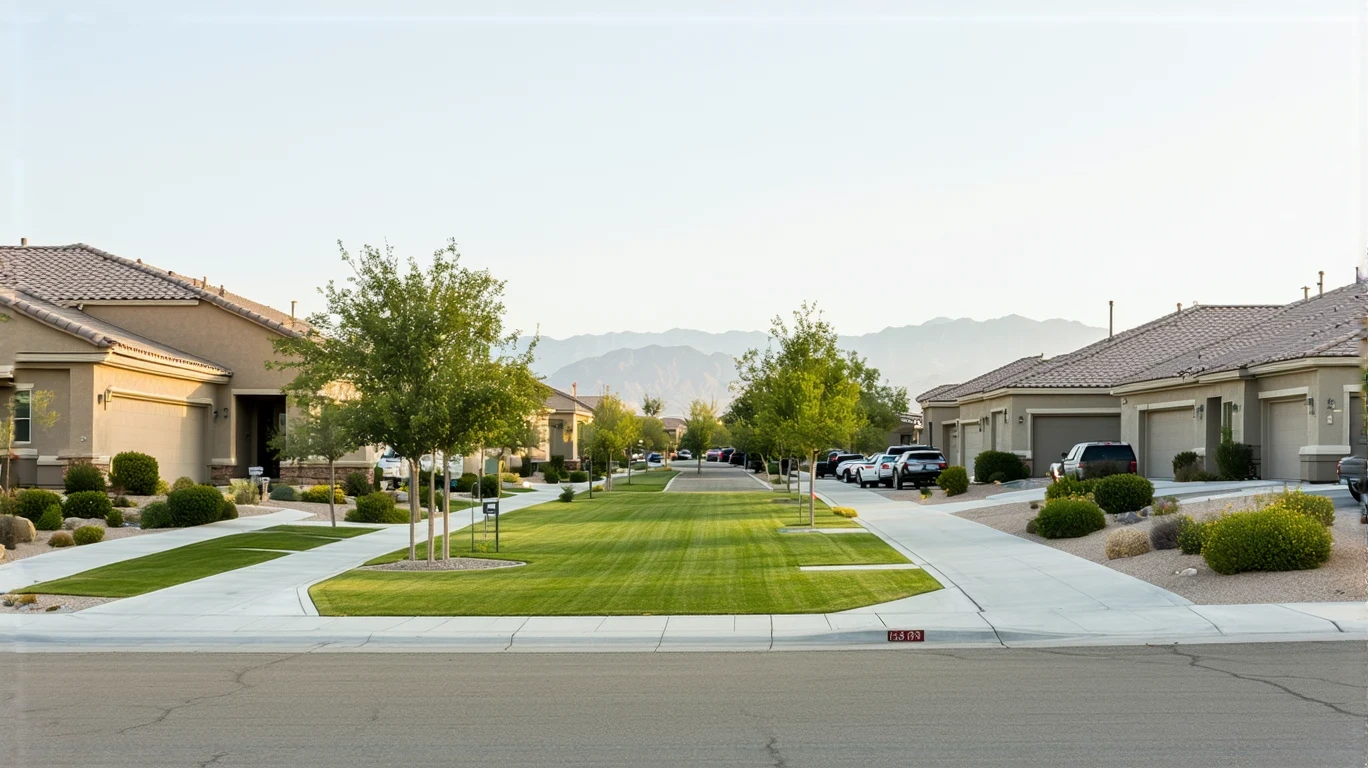
Nevada has no state income tax, so both Blue Diamond and Henderson residents avoid that burden entirely. The primary tax exposure comes from property taxes (for homeowners) and sales taxes (for everyone). Property taxes in Nevada are assessed at the county level, and both cities fall under Clark County jurisdiction, meaning the base rate structure is identical. However, effective tax bills differ because they’re calculated on assessed home values—and Blue Diamond’s higher median home value ($552,100 vs. $427,900) translates directly into higher annual property tax obligations for owners, even at the same rate.
Sales tax in the Las Vegas metro area hovers around 8.38%, applied to most goods and services but not groceries or prescription drugs. Because both cities share the same metro tax environment, the difference in sales tax burden comes from spending volume and habits, not rates. Households that spend more on taxable goods—furniture, electronics, dining out, entertainment—pay more in absolute terms, but the rate itself doesn’t favor one city over the other. The bigger distinction is whether your cost structure pushes you toward more taxable consumption (e.g., frequent dining out due to limited home cooking infrastructure) or less (e.g., bulk grocery trips and home meals).
Recurring fees—HOA dues, trash service, water/sewer billing, street maintenance assessments—vary more by neighborhood and housing type than by city. Blue Diamond’s low-density, single-family character means fewer HOA-managed communities, but when they exist, dues may cover road maintenance, landscaping, or shared amenities in a sparse area where municipal services are limited. Henderson’s larger population and denser development mean more HOA communities, ranging from minimal-fee single-family neighborhoods to amenity-heavy master-planned developments with pools, parks, and security. Renters in Henderson typically see these fees rolled into rent or avoided entirely, while Blue Diamond’s limited rental stock means most residents are owners directly exposed to these costs.
Taxes and fees takeaway: Blue Diamond homeowners face higher property tax bills due to higher home values, even at identical rates. Henderson offers more housing types that avoid or minimize HOA fees, and renters sidestep property tax exposure entirely. The decision depends on whether you’re more sensitive to ownership-related obligations (favor Henderson’s lower entry and more rental options) or whether you’re prepared to absorb higher property taxes in exchange for space and low density (favor Blue Diamond).
Transportation & Commute Reality
Both cities share the same $3.38/gallon gas price, so fuel cost differences come entirely from how much you drive and why. Blue Diamond’s sparse errands infrastructure and limited healthcare access mean residents drive more frequently for groceries, medical appointments, and services that aren’t available locally. Yet the city also shows walkable pockets with high pedestrian-to-road ratio and some bike infrastructure, suggesting that within certain neighborhoods, short trips—dog walks, neighbor visits, exercise loops—can happen on foot. The contradiction is real: you can walk your immediate area but must drive for nearly everything else.
Henderson’s larger size and denser population base typically support more services within shorter driving distances, reducing per-errand mileage. The city’s retirement-oriented character suggests a population less likely to commute daily to distant job centers, though younger working households certainly exist. Without specific commute data for either city, the qualitative difference is this: Blue Diamond residents more often drive out of their city for daily needs, while Henderson residents more often drive within their city or to nearby Las Vegas employment centers. Both patterns require a car, but the distance and frequency differ.
Public transit in the Las Vegas metro is limited compared to larger urban areas, and neither Blue Diamond nor Henderson offers rail service. Bus routes may serve parts of Henderson, particularly along major corridors, but Blue Diamond’s low density and distance from the urban core make transit effectively unavailable. Households that need or prefer to avoid car ownership face a structural barrier in Blue Diamond that’s only slightly less severe in Henderson. The real question isn’t whether you can live without a car—it’s whether you’re willing to drive more often for basics (Blue Diamond) or whether you value proximity to services that reduce trip frequency (Henderson).
Transportation takeaway: Blue Diamond requires a car and more frequent longer trips for errands and services, despite walkable internal streets. Henderson requires a car but offers shorter, more consolidated trips due to denser services. The decision depends on whether you’re more sensitive to per-trip distance and time (favor Henderson) or whether you value low-density walkability for non-errand movement and accept the driving tradeoff (favor Blue Diamond).
Cost Structure Comparison
Housing pressure dominates the cost experience in Blue Diamond, where the $552,100 median home value creates a steep entry barrier and effectively requires ownership due to sparse rental inventory. Henderson distributes pressure differently: lower home values ($427,900) and a visible rental market ($1,641/month) mean more households can access the city without a six-figure down payment, but competition for housing—especially affordable rentals—may be higher due to the larger population base. For first-time buyers and renters, Henderson offers more paths in; for established owners seeking space and quiet, Blue Diamond offers more separation at a higher price.
Utilities introduce similar exposure in both cities due to identical rates, but the housing stock determines who feels it most. Blue Diamond’s low-rise, detached homes mean larger cooling loads and more volatile summer bills, while Henderson’s mix of apartments and townhomes provides options for households seeking smaller, more predictable utility costs. Families in larger homes face higher baseline obligations regardless of city, but Henderson’s housing diversity gives them a choice Blue Diamond doesn’t offer. Households sensitive to utility volatility benefit from Henderson’s range of housing forms; households willing to manage seasonal swings in exchange for space fit Blue Diamond’s single-family character.
Daily errands and grocery access create the starkest lifestyle difference. Blue Diamond’s sparse food and grocery density means more driving, more planning, and less flexibility for last-minute needs. Henderson’s denser infrastructure means shorter trips, more store options, and the ability to adjust spending through choice. For households that cook at home and batch-shop, the difference is minor; for households that rely on convenience, frequent access, or dining out, Henderson reduces friction and time cost significantly.
Transportation patterns matter more in Blue Diamond, where residents drive out of the city for most services despite walkable internal streets. Henderson residents drive too, but shorter distances and more consolidated trips reduce fuel consumption and time spent in the car. Households with flexible schedules or remote work adapt well to Blue Diamond’s longer errands drives; households with tight time budgets, multiple errands per week, or daily commutes feel the friction more acutely.
The better choice depends on which costs dominate your household. If housing entry is your biggest constraint, Henderson’s lower values and rental options provide more access. If you can clear Blue Diamond’s higher purchase price and value space, quiet, and walkable internal streets, the tradeoff is fewer nearby services and more driving. If you’re sensitive to errands friction, time cost, or utility predictability, Henderson’s density and housing variety reduce exposure. If you prioritize low-density living and can absorb higher housing and transportation costs, Blue Diamond fits. Neither city is cheaper overall—they concentrate pressure in different places for different households.
How the Same Income Feels in Blue Diamond vs Henderson
Single Adult
For a single adult, housing becomes non-negotiable first: Blue Diamond requires ownership or informal arrangements due to sparse rentals, while Henderson offers studio and one-bedroom apartments that preserve flexibility. Transportation costs hit differently—Blue Diamond demands frequent longer drives for groceries and errands, while Henderson allows shorter, consolidated trips. Flexibility exists in dining and entertainment spending in Henderson due to more options at varied price points, but disappears in Blue Diamond where fewer nearby choices mean either cooking at home or driving farther for variety. The role of commute friction depends on work location: remote workers absorb Blue Diamond’s errands drives more easily, while daily commuters face compounding time and fuel costs.
Dual-Income Couple
For a dual-income couple, housing entry becomes the first decision point: Blue Diamond’s higher home values require more combined savings or higher incomes to qualify, while Henderson’s lower values and rental market provide more paths in. Flexibility exists in how much space to buy—Henderson offers townhomes and smaller single-family options that cost less to cool and maintain, while Blue Diamond’s market skews toward larger detached homes. Transportation pressure depends on whether both partners commute: if one or both work remotely, Blue Diamond’s errands friction is manageable; if both commute daily to Las Vegas, the time cost of living farther from services adds up. Predictability improves in Henderson due to denser errands access and more housing choices that limit utility volatility.
Family with Kids
For a family with kids, school access and healthcare proximity become non-negotiable first—Blue Diamond shows limited school density and no local clinics or hospitals, requiring drives for both routine and urgent care. Flexibility disappears in errands logistics: sparse grocery access means fewer quick trips, and limited dining or activity options mean more driving for weekend plans. Henderson’s denser infrastructure reduces the time cost of managing a household—shorter drives for groceries, school pickups, and medical appointments preserve schedule flexibility. The role of housing form matters: Blue Diamond offers space and quiet but requires absorbing higher purchase prices and utility exposure in larger homes, while Henderson provides more housing types that balance space needs with front-loaded costs and ongoing obligations.
Decision Matrix: Which City Fits Which Household?
| Decision factor | If you’re sensitive to this… | Blue Diamond tends to fit when… | Henderson tends to fit when… |
|---|---|---|---|
| Housing entry + space needs | Down payment size, rental availability, or flexibility to move | You can clear the higher purchase threshold and prioritize space and low density over rental options | You need lower entry costs, rental flexibility, or a range of housing types to match your budget |
| Transportation dependence + commute friction | Time spent driving, fuel costs, or frequency of errands trips | You work remotely or have a flexible schedule that absorbs longer drives for services | You commute daily, run frequent errands, or value shorter trips and consolidated service access |
| Utility variability + home size exposure | Summer cooling bills, predictability, or seasonal volatility | You’re prepared to manage higher cooling costs in larger detached homes during peak summer months | You prefer smaller or attached housing that limits utility exposure and provides more stable bills year-round |
| Grocery strategy + convenience spending creep | Access to stores, dining options, or ability to adjust spending through choice | You batch-shop, cook at home, and don’t mind driving 15–20 minutes for groceries or dining | You value frequent access, last-minute trips, or a range of dining and store options within short distances |
| Fees + friction costs (HOA, services, upkeep) | Ongoing obligations, predictability of dues, or bundled services | You’re buying in a low-density area with fewer HOA communities and accept higher property taxes on larger homes | You’re renting or buying in a community with varied HOA structures and want options to minimize or avoid fees |
| Time budget (schedule flexibility, errands, logistics) | How much time you spend managing household logistics versus working or leisure | You have schedule flexibility, work from home, or prioritize quiet and space over service proximity | You have a tight schedule, multiple errands per week, or need healthcare and school access within short drives |
Lifestyle Fit
Blue Diamond offers a quieter, low-density environment with walkable internal streets and mixed land use, but limited access to daily services, healthcare, and family infrastructure. The city’s pedestrian-friendly pockets allow for neighborhood walks, dog exercise, and casual outdoor movement without a car, yet nearly all errands—groceries, medical appointments, dining out—require driving to nearby communities. Water features provide some natural scenery, though park density remains low. The lifestyle fits households that value separation, space, and the ability to walk their immediate area, while accepting that most practical needs require a car trip. Blue Diamond’s median household income of $81,023 per year suggests a population that can absorb the higher housing entry costs and transportation friction.
Henderson, as a larger city with a retirement-oriented population, provides denser services, a visible rental market, and more housing variety. The city’s mature infrastructure supports a broader range of grocery stores, medical facilities, dining options, and recreational amenities within shorter driving distances. While not a walkable urban core, Henderson’s size and population base mean more consolidated errands and less time spent driving between services. The retirement city designation suggests a community with established parks, healthcare networks, and amenities tailored to older adults, though younger families and working professionals also live here. Henderson’s median household income of $85,311 per year reflects a slightly higher economic base, and the presence of rental housing ($1,641/month median rent) indicates a more diverse population by age and income level.
Both cities share the Las Vegas metro’s desert climate, with hot, dry summers and mild winters. Outdoor recreation in the broader region includes hiking, rock climbing, and access to Red Rock Canyon and Lake Mead, though neither city offers high park density within its borders. Blue Diamond’s proximity to Red Rock Canyon provides closer access to trailheads and natural landscapes, while Henderson’s larger size means more developed parks, sports fields, and community centers within city limits. Households that prioritize outdoor access for hiking and nature exploration may prefer Blue Diamond’s location; households that prioritize organized sports, playgrounds, and maintained green spaces may prefer Henderson’s infrastructure. Neither city offers significant public transit, so both require car ownership for work, errands, and recreation.
FAQ
Is Blue Diamond or Henderson cheaper for renters in 2026?
Henderson offers a visible rental market with a median rent of $1,641 per month, while Blue Diamond shows no rental data in census records, suggesting very limited or nonexistent rental inventory. Renters face a structural barrier in Blue Diamond that doesn’t exist in Henderson, making Henderson the more accessible option for non-owners regardless of price.
Which city has lower housing entry costs, Blue Diamond or Henderson?
Henderson’s median home value of $427,900 is nearly $125,000 lower than Blue Diamond’s $552,100, reducing the down payment and mortgage qualification threshold for buyers. Blue Diamond’s higher values reflect larger lots and low-density housing, but create a steeper entry barrier for first-time buyers or households with limited savings.
Do Blue Diamond and Henderson have the same utility rates in 2026?
Yes, both cities share identical electricity rates (13.77¢/kWh) and natural gas prices ($14.46/MCF) because they’re in the same metro area. The difference in utility costs comes from housing type and size: Blue Diamond’s larger detached homes typically cost more to cool in summer than Henderson’s mix of apartments, townhomes, and smaller single-family options.
Is it easier to run errands without a car in Blue Diamond or Henderson?
Neither city supports car-free living, but Henderson’s denser services mean shorter, more consolidated trips for groceries, dining, and household needs. Blue Diamond shows walkable internal streets but sparse food and grocery density, requiring longer drives to access most daily services. Households that value walkability for exercise or neighborhood movement may appreciate Blue Diamond’s pedestrian infrastructure, but both cities require a car for practical errands.
Which city fits families better, Blue Diamond or Henderson, in 2026?
Henderson offers denser school access, more healthcare facilities, and shorter drives for family logistics, making it easier to manage pickups, appointments, and activities. Blue Diamond shows limited school density and no local clinics or hospitals, requiring families to drive farther for education and medical care. Families that prioritize space and quiet may prefer Blue Diamond’s low-density character, but those sensitive to time cost and service access face less friction in Henderson.
Conclusion
Blue Diamond and Henderson sit in the same metro, share the same utility rates and gas prices, and face the same regional economic conditions—but they concentrate cost pressure in fundamentally different ways. Blue Diamond’s $552,100 median home value and sparse rental inventory create a high entry barrier that favors established owners seeking space, walkable internal streets, and low-density living. Henderson’s $427,900 median home value, visible rental market, and denser services reduce housing entry costs and errands friction, fitting renters, first-time buyers, and households managing tight time budgets. The decision isn’t about which city costs less overall; it’s about whether you’re more exposed to housing entry, daily logistics, or ongoing service access—and which tradeoffs your household can absorb.
For singles and couples prioritizing flexibility, lower entry costs, or frequent errands access, Henderson’s structure reduces friction and preserves options. For families needing school proximity, healthcare access, and time efficiency, Henderson’s density shortens drives and simplifies logistics. For households that can clear Blue Diamond’s higher purchase threshold and value quiet, space, and walkable neighborhoods—while accepting longer drives for groceries, medical care, and services—Blue Diamond offers a distinct lifestyle that Henderson’s larger population base doesn’t replicate. Both cities require a car, both face the same climate and utility rates, and both serve households in the Las Vegas metro. The better choice depends on where your household feels cost pressure most—and which city’s structure aligns with how you actually live.
How this article was built: In addition to public economic data, this article incorporates location-based experiential signals derived from anonymized geographic patterns—such as access density, walkability, and land-use mix—to reflect how day-to-day living actually feels in Blue Diamond, NV.