
Transportation Options & Commute Reality in Bloomington, MN (2026)
Transit Coverage & Average Ride Times
| Metric | Bloomington, MN |
|---|---|
| Average Commute Time | 21 minutes |
| Long Commute (60+ min) | 25.6% |
| Work From Home | 3.0% |
| Transit Type | Bus service (no rail) |
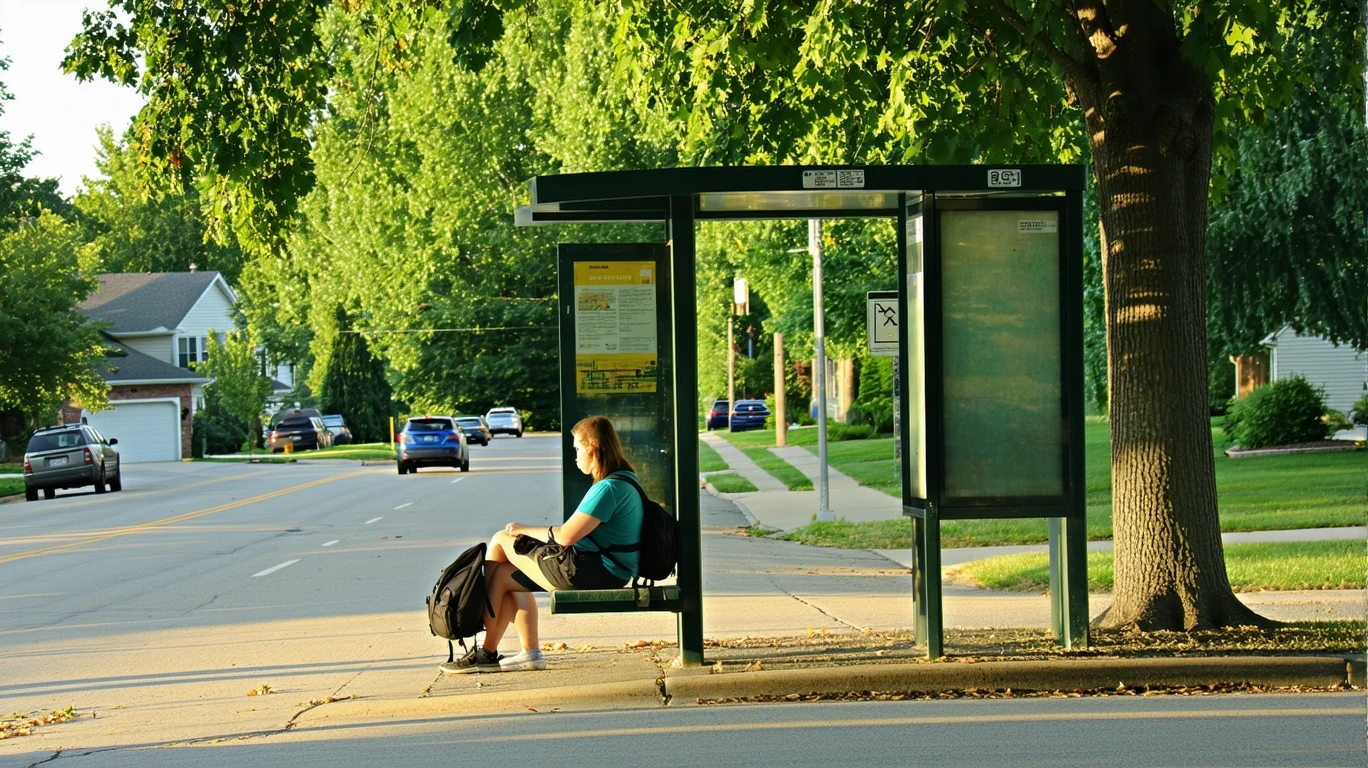
How People Get Around Bloomington
Public transit options in Bloomington exist, but the city’s transportation reality is defined by a car-first infrastructure with pockets of walkability scattered throughout. Most residents rely on personal vehicles for daily errands, work commutes, and family logistics, even in neighborhoods where sidewalks and bike lanes are present. The average commute sits at 21 minutes, which sounds manageable—but that figure masks significant variation. Over a quarter of workers face commutes longer than an hour, a pattern that reflects both the spread of employment centers across the Twin Cities metro and the practical limits of bus-only transit coverage.
Newcomers often assume Bloomington’s proximity to Minneapolis means easy access to regional transit. In practice, getting around depends heavily on where you live within the city and where you need to go. Walkable pockets near commercial corridors offer genuine pedestrian access and bike-friendly streets, but these areas represent nodes rather than a continuous network. Outside these zones, car dependency rises sharply. The city’s layout—a mix of residential subdivisions, retail corridors, and office parks—creates a mobility environment where transit works well for specific trips but rarely eliminates the need for a vehicle altogether.
Public Transit Availability in Bloomington
Public transit in Bloomington centers around bus service, with no rail stations within city limits. Systems such as Metro Transit provide connections to downtown Minneapolis, the Mall of America, and other regional employment hubs, but coverage is corridor-based rather than comprehensive. Bus routes tend to follow major arterials and commercial strips, serving riders who live or work near these lines. For residents in walkable pockets close to bus stops, transit can handle commutes to downtown or errands along well-served corridors. For everyone else, transit becomes a supplementary option rather than a primary mode.
Transit works best during weekday peak hours and for linear trips—home to downtown, for example, or apartment to retail job. It falls short for multi-stop errands, late-night shifts, weekend activities, and trips that require transfers or route changes. Families managing school drop-offs, grocery runs, and activity schedules find transit impractical for daily logistics. The corridor-clustered nature of food and grocery access means that even in denser areas, reaching multiple destinations in one outing often requires a car. Bus service exists and functions, but it doesn’t replace the flexibility and coverage that personal vehicles provide across most of Bloomington’s geography.
Driving & Car Dependence Reality
Driving is the default mode in Bloomington, not because transit is absent but because the city’s physical structure rewards car ownership. Parking is abundant and typically free at residential complexes, shopping centers, and office parks. Commutes by car offer predictability and control—no waiting for buses, no missed connections, no schedule constraints. For households with children, multiple jobs, or irregular hours, a vehicle isn’t a luxury; it’s the tool that makes daily life manageable.
Car dependence also reflects Bloomington’s role as a commuter suburb within a sprawling metro. Employment is distributed across the region, and many residents work outside the city limits. Even with relatively short average commute times, the one-in-four workers facing long commutes are almost exclusively driving. Sprawl and low-density residential zones mean that walking or biking to work is viable only for a small share of residents. The city’s more vertical building character and mixed land use create denser nodes, but these areas remain islands in a broader car-oriented landscape.
Commuting Patterns & Daily Mobility
Commuting in Bloomington typically follows a single-destination pattern: home to work, work to home. Multi-stop commutes—dropping kids at school, stopping for groceries, picking up a coworker—are common but almost always require a car. The 21-minute average commute reflects proximity to regional job centers, but it also reflects the dominance of driving. Transit users often face longer door-to-door times due to walking to stops, waiting, and transferring.
The low work-from-home percentage (3.0%) suggests that most Bloomington workers are commuting daily, and the high share of long commutes (25.6%) points to a subset of residents traveling well beyond the immediate metro core. These longer commutes are rarely compatible with bus schedules, especially for shift workers or those employed in suburban office parks without direct transit links. Proximity matters, but so does the structure of the trip. Residents who live near bus corridors and work downtown benefit from transit. Residents who live in residential subdivisions and work in another suburb do not.
Who Transit Works For — and Who It Doesn’t
Transit works for single commuters living in walkable pockets near major bus routes, especially those traveling to downtown Minneapolis or other well-served destinations. It works for renters in denser apartment complexes along commercial corridors, where errands and transit stops align. It works for households willing to structure their schedules around bus availability and accept the time tradeoff in exchange for lower transportation costs.
Transit doesn’t work for families managing multiple daily stops, for workers with irregular hours, or for residents in low-density neighborhoods far from bus lines. It doesn’t work for households that need to reach suburban job sites, medical appointments, or big-box stores outside corridor zones. The city’s notable bike infrastructure offers an alternative for some trips, but cycling alone rarely replaces a car for year-round, all-weather, multi-purpose mobility. Walkable pockets and mixed land use create genuine pedestrian access in parts of Bloomington, but these areas are the exception, not the rule.
Transportation Tradeoffs in Bloomington
Choosing transit over driving in Bloomington means trading flexibility for lower vehicle expenses. Bus service offers predictable routes and eliminates parking concerns, but it also means longer trip times, limited evening and weekend coverage, and reduced ability to handle spontaneous errands. Driving offers speed, convenience, and control, but it requires owning, insuring, fueling, and maintaining a vehicle—costs that accumulate regardless of how much you drive.
For households weighing these tradeoffs, the decision often hinges on proximity to transit corridors and the nature of daily obligations. A single professional living near a bus line and working downtown can realistically minimize car use. A family with school-age children, weekend activities, and jobs in different suburbs cannot. The city’s transportation structure doesn’t penalize car ownership, and it doesn’t reward transit dependence. It simply reflects a built environment where cars remain the most practical tool for most households, most of the time.
FAQs About Transportation in Bloomington (2026)
Is public transit usable for daily commuting in Bloomington?
Yes, but only for specific trip patterns. If you live near a bus corridor and commute to downtown Minneapolis or another well-served destination, transit can handle your daily commute. If you live in a residential subdivision, work in a suburban office park, or need to make multiple stops, transit becomes impractical. Bus service exists, but it’s not comprehensive enough to replace a car for most households.
Do most people in Bloomington rely on a car?
Yes. The city’s layout, low work-from-home rate, and corridor-based transit coverage mean that most residents drive for work, errands, and family logistics. Even in walkable pockets with good pedestrian infrastructure, car ownership remains common because transit doesn’t cover all destinations or schedules.
Which areas of Bloomington are easiest to live in without a car?
Walkable pockets near commercial corridors and bus routes offer the best chance of reducing car dependence. These areas combine pedestrian infrastructure, bike lanes, and transit access, making it possible to handle some errands and commutes without driving. However, even in these zones, most households still own at least one vehicle for trips that transit doesn’t serve.
How does commuting in Bloomington compare to nearby cities?
Bloomington’s 21-minute average commute is relatively short for the Twin Cities metro, reflecting proximity to major employment centers. However, the high share of long commutes (25.6%) and the reliance on bus-only transit mean that commuting experiences vary widely depending on where you live and work. Compared to cities with rail access, Bloomington offers fewer high-capacity transit options, which increases car dependence for most residents.
How Transportation Fits Into the Cost of Living in Bloomington
Transportation isn’t just a line item—it’s a structural factor that shapes where you can live, how much time you spend commuting, and how much flexibility you have in daily life. In Bloomington, the dominance of driving means that most households face ongoing vehicle costs: insurance, fuel, maintenance, and depreciation. Transit offers a lower-cost alternative for some trips, but it rarely eliminates the need for a car entirely. The city’s walkable pockets and notable bike infrastructure provide genuine mobility options in specific areas, but these zones represent a fraction of Bloomington’s geography.
For a fuller picture of how transportation expenses fit alongside housing, utilities, and other costs, see Your Monthly Budget in Bloomington: Where It Breaks. Understanding the tradeoffs between proximity, transit access, and car dependence helps clarify what transportation actually costs—not just in dollars, but in time, convenience, and daily logistics. Bloomington’s transportation reality is neither fully car-dependent nor genuinely transit-rich. It’s a hybrid system where most households drive most of the time, and transit works best for those who live and work along the right corridors.
How this article was built: In addition to public economic data, this article incorporates location-based experiential signals derived from anonymized geographic patterns—such as access density, walkability, and land-use mix—to reflect how day-to-day living actually feels in Bloomington, MN.
—