
Bloomfield Township sits in Oakland County as one of metro Detroit’s most established and affluent suburban communities. The median home value of $933,000 immediately signals that this is not a starter-home market—it’s a destination for households with significant income or accumulated wealth. With a median household income of $200,054 per year, the township attracts professionals, dual-income families, and retirees who prioritize space, schools, and neighborhood stability over urban density or budget flexibility.
Understanding housing costs here requires looking beyond the purchase price. Bloomfield Township’s market is shaped by decades of careful zoning, mature tree canopies, top-tier school districts, and proximity to both Detroit’s corporate corridors and northern Oakland County’s lakes and recreation. These factors don’t just raise prices—they change the entire cost structure of living here, from property taxes on high assessed values to maintenance expectations in neighborhoods where curb appeal matters. Whether you’re renting or buying, Bloomfield Township cost reality revolves around premium positioning and the tradeoffs that come with it.
How this article was built: In addition to public economic data, this article incorporates location-based experiential signals derived from anonymized geographic patterns—such as access density, walkability, and land-use mix—to reflect how day-to-day living actually feels in Bloomfield Township, MI.
The Housing Market in Bloomfield Township Today
Bloomfield Township’s housing market operates on scarcity and reputation. Unlike sprawling exurban developments where new construction constantly refreshes inventory, Bloomfield Township is largely built out. Most neighborhoods were established between the 1950s and 1990s, with large lots, setback requirements, and architectural consistency that preserve a suburban estate character. This means turnover is slow, and when homes do come to market, they compete on condition, location within the township, and school district access rather than price alone.
The $933,000 median home value reflects this dynamic. It’s not a market where modest ranches or starter colonials dominate—those exist, but they’re priced as teardown opportunities or renovation projects in desirable locations. Instead, the typical transaction involves a well-maintained or updated home on a half-acre or larger lot, often with four bedrooms, attached garage, and finishes that meet the expectations of buyers who’ve spent years building equity elsewhere.
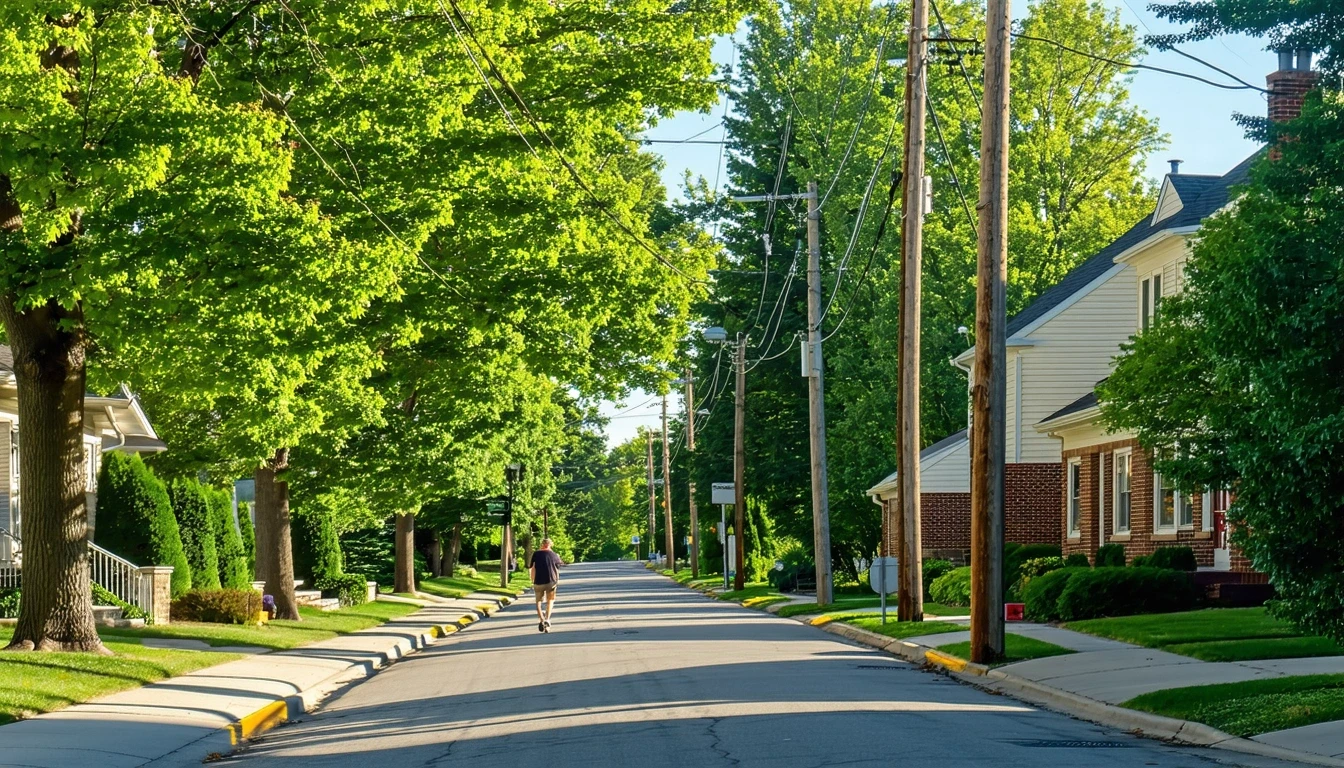
What newcomers often misunderstand is that Bloomfield Township isn’t a single market. The township includes distinct neighborhoods—some closer to Woodward Avenue’s commercial corridor, others backing onto golf courses or bordering Bloomfield Hills. Location within the township affects not just price but also walkability, errands accessibility, and exposure to traffic. The experiential texture of daily life varies: some pockets offer high pedestrian-to-road ratios with sidewalks, mature street trees, and nearby parks, while others require a car for every errand despite being technically “walkable” within the subdivision itself.
The broader Detroit metro context also matters. Bloomfield Township competes with neighboring communities like Birmingham, Troy, and Rochester Hills for the same buyer pool—households seeking low crime, strong schools, and freeway access without urban density. This competitive pressure keeps prices elevated even when regional economic conditions soften. The 3.6% unemployment rate and high median income locally suggest that demand remains strong, supported by professional employment in healthcare, finance, automotive engineering, and corporate services.
Renting in Bloomfield Township
Rental housing in Bloomfield Township is scarce and expensive, shaped by the township’s overwhelming owner-occupied character. Unlike urban cores or college towns where rental stock is purpose-built and plentiful, Bloomfield Township’s rental market consists primarily of single-family homes offered by individual landlords, older condo complexes, and a handful of luxury apartment developments near major intersections.
Because no median rent figure is available in the current data, renters should expect significant variation based on property type and location. A two-bedroom condo in an older complex near Telegraph Road will cost far less than a single-family rental in a subdivision near Cranbrook or the country clubs. Landlords here often price rentals to cover not just mortgage and taxes, but also lawn care, snow removal, and HOA fees—costs that reflect the township’s expectations for property upkeep.
Rental pressure comes from limited turnover and competition with buyers. In a market where most residents own, rental inventory doesn’t expand to meet demand the way it does in denser suburbs. This creates a structural imbalance: renters who need Bloomfield Township’s school district or commute access face fewer choices and less negotiating power. Lease renewals can be unpredictable, especially if a landlord decides to sell into a strong market or move back into the property themselves.
The township’s layout also affects rental experience. While some neighborhoods feature walkable pockets with sidewalks and nearby parks—supported by high pedestrian-to-road ratios and integrated green space access—errands and groceries are corridor-clustered along major roads like Woodward, Telegraph, and Maple. This means renters need a car for daily needs even if their immediate neighborhood feels pedestrian-friendly. Public transit exists (bus service is present), but it’s limited and not a practical substitute for car ownership in most cases.
Owning a Home in Bloomfield Township
Ownership in Bloomfield Township is a long-term commitment shaped by high entry costs and ongoing exposure to property taxes, maintenance, and community standards. The $933,000 median home value creates a significant down payment barrier, even for households with strong incomes. But once you’re in, ownership offers stability that renting cannot: fixed principal and interest, control over renovations and landscaping, and insulation from landlord decisions.
Property taxes in Bloomfield Township are a major ongoing cost, though no specific rate is provided in the current data. What matters is that taxes are assessed on high home values, meaning even modest millage rates translate to substantial annual bills. Michigan’s Proposal A caps annual assessment increases at 5% or inflation (whichever is lower) for existing owners, but when a home sells, it’s uncapped and reassessed at market value. This creates a reset risk: buyers inherit a new, higher tax basis that reflects current sale prices, not the seller’s legacy assessment.
Maintenance and upkeep expectations are also higher here than in less affluent suburbs. Homes are larger, often with mature landscaping, irrigation systems, and older mechanicals that require periodic replacement. The township’s character depends on well-kept properties—peeling paint, overgrown yards, or deferred roof repairs stand out and can draw neighborhood or HOA attention. Some subdivisions have active homeowners associations that enforce architectural guidelines, collect dues, and manage common areas. These add cost but also protect property values by maintaining uniformity and curb appeal.
Ownership also means navigating Bloomfield Township’s governance and regulatory environment. Zoning is protective, building permits are required for most exterior changes, and tree removal often requires approval. This isn’t necessarily restrictive, but it does mean you can’t treat your property as a blank canvas. The tradeoff is that your neighbors face the same rules, which preserves the established, cohesive look that supports home values over time.
One often-overlooked aspect of ownership here is the relationship between home size and operating costs. Larger homes mean higher heating and cooling bills during Michigan’s cold winters and warm, humid summers. Bloomfield Township experiences long heating seasons and extended cooling periods, and older homes—common in established neighborhoods—may lack modern insulation or efficient HVAC systems. Upgrading these systems reduces exposure to seasonal utility swings, but the upfront cost can be significant.
Apartment vs House in Bloomfield Township — Cost Behavior Comparison
The table below compares cost behavior between apartments and single-family houses in Bloomfield Township, focusing only on categories where local conditions create meaningful differences. Generic distinctions that apply everywhere are omitted.
| Expense Category | Apartment | House |
|---|---|---|
| Heating & Cooling | Lower exposure; smaller square footage and shared walls reduce seasonal swings | Dominant cost driver in winter and summer; older homes with poor insulation amplify exposure |
| Lawn & Snow | Typically included in rent or HOA; no direct cost or time burden | Required year-round; DIY saves money but demands time and equipment; professional services common in township |
| Property Taxes | Embedded in rent; landlord absorbs volatility and reassessment risk | Direct annual bill on high assessed values; uncapping at sale creates reset risk |
| Parking & Storage | Limited; often one assigned space, minimal garage or basement access | Two-car garage standard; basement and attic storage common in older homes |
| Errands Access | Often located near commercial corridors (Woodward, Telegraph); shorter drive to groceries and services | Residential subdivisions set back from main roads; car required for all errands despite walkable neighborhood streets |
Why these differences matter in Bloomfield Township: The township’s layout separates residential areas from commercial corridors, meaning houses in interior subdivisions trade errands convenience for larger lots and quieter streets. Heating and cooling exposure is amplified by Michigan’s climate and the prevalence of older, larger homes. Lawn and snow management is a year-round expectation tied to neighborhood standards, not just personal preference. Property tax exposure on houses is magnified by high home values and Michigan’s uncapping rule at sale.
Categories like water/sewer, internet, and basic maintenance were excluded because they don’t vary meaningfully by housing type in this market—both apartments and houses face similar rates and service options.
Utilities & Upkeep Differences
Utility and maintenance costs in Bloomfield Township are shaped by climate, housing age, and infrastructure expectations. Michigan’s long heating season and warm, humid summers create seasonal exposure that varies significantly between apartments and houses. Apartments benefit from smaller square footage and shared walls, which buffer temperature swings and reduce HVAC runtime. Houses—especially older, larger homes common in established neighborhoods—face higher heating and cooling bills, particularly if insulation, windows, or HVAC systems haven’t been updated.
Electricity rates in Michigan stand at 20.46¢/kWh, and natural gas is priced at $11.89/MCF. These rates are moderate, but consumption drives the bill. A 3,000-square-foot colonial with original windows and a 20-year-old furnace will see noticeably higher winter gas bills than a newer townhome with modern insulation and a high-efficiency furnace. Air conditioning dominates summer electricity usage, and homes with central air running continuously during July and August heat and humidity will see bills spike accordingly.
Lawn care and snow removal are year-round realities in Bloomfield Township, and the township’s character depends on well-kept properties. Homeowners can handle these tasks themselves, but many hire services—lawn mowing, fertilization, leaf removal in fall, and snow plowing or shoveling in winter. Professional services are common here and priced to reflect the township’s income levels and lot sizes. Apartment renters typically have these costs embedded in rent or covered by HOA fees, eliminating both the expense and the time burden.
Maintenance exposure also differs by housing type and age. Older homes in Bloomfield Township often feature mature trees, which add beauty and shade but require periodic trimming or removal when they threaten structures or power lines. Roofs, siding, and driveways age and need replacement on 15- to 30-year cycles. Water heaters, furnaces, and air conditioners fail and must be replaced, often at costs exceeding several thousand dollars. Apartments shift this risk to landlords, though deferred maintenance can affect livability and lease renewals.
One subtle but important factor is water and sewer infrastructure. Bloomfield Township is served by municipal systems, but homes on larger lots or in older subdivisions may have private wells or septic systems. These require periodic inspection, pumping, and eventual replacement—costs that don’t appear on monthly bills but can be significant when they arise.
Rent vs Buy: Long-Term Exposure in Bloomfield Township
The rent-versus-buy decision in Bloomfield Township is less about monthly payment math and more about risk tolerance, control, and long-term financial exposure. Renting offers flexibility and shifts property tax, maintenance, and market risk to the landlord. Buying locks in principal and interest but exposes you to property tax volatility, maintenance surprises, and the opportunity cost of capital tied up in a high-value asset.
Renters in Bloomfield Township face lease renewal uncertainty and limited inventory. Because the rental market is small and dominated by individual landlords, renewals can be unpredictable—landlords may raise rent to match market conditions, sell the property, or move back in. Renters also have no control over property condition, landscaping, or neighborhood governance. If a landlord defers maintenance or the HOA changes rules, renters absorb the consequences without a vote.
Owners gain control and predictability in exchange for higher upfront costs and ongoing exposure. Once you buy, your principal and interest are fixed (assuming a fixed-rate mortgage), and you control renovations, landscaping, and how the property is maintained. But property taxes can rise, especially after reassessment at sale, and Michigan’s uncapping rule means new buyers inherit a fresh tax basis tied to current market values. Over time, this can create a growing gap between legacy owners (protected by Proposal A caps) and recent buyers.
Maintenance and capital expenses are another long-term exposure. Roofs, HVAC systems, water heaters, and driveways don’t fail on a schedule, but they do fail. Owners need reserves to handle these costs when they arise, and in a market where homes are large and expectations are high, repairs and replacements are rarely cheap. Renters avoid this exposure entirely, though they may face rent increases if landlords pass through their own capital costs.
The township’s layout and infrastructure also affect long-term cost behavior. Homes in walkable pockets with nearby parks and sidewalks may hold value better than those in car-dependent subdivisions far from commercial corridors, especially as buyer preferences shift toward convenience and walkability. Integrated green space access and proximity to water features add quality-of-life value that supports premium pricing, but they also mean higher property taxes and HOA fees in some cases.
One final consideration is liquidity and transaction costs. Selling a home in Bloomfield Township involves realtor commissions, closing costs, and timing risk—if the market softens or inventory rises, you may wait months for a buyer. Renting allows you to leave with 30 or 60 days’ notice, though you forfeit any equity accumulation and remain exposed to rent increases or lease non-renewal.
FAQs About Housing Costs in Bloomfield Township
Why are home prices so high in Bloomfield Township compared to other Detroit suburbs?
Bloomfield Township’s high home values reflect decades of restrictive zoning, large lot sizes, top-tier school districts, and established neighborhoods with mature infrastructure. The township is largely built out, so inventory is limited and turnover is slow. Buyers compete for access to schools, low crime, and proximity to corporate employment centers, which keeps prices elevated even when regional conditions soften.
Is renting in Bloomfield Township a viable long-term option?
Renting is viable for households who value flexibility or can’t meet the high down payment barrier for ownership, but the rental market is small and expensive. Limited inventory and competition with buyers mean renters face fewer choices and less negotiating power. Lease renewals can be unpredictable, and landlords may raise rent or sell the property with little notice. Renting works best as a short- to medium-term strategy while building equity or evaluating neighborhoods.
How do property taxes in Bloomfield Township affect long-term ownership costs?
Property taxes are assessed on high home values, and Michigan’s uncapping rule means new buyers inherit a fresh tax basis tied to the sale price. Existing owners benefit from Proposal A caps that limit annual increases to 5% or inflation, but when you buy, that protection resets. Over time, this creates a growing tax burden that can outpace income growth, especially if home values continue to rise. Buyers should budget for taxes as a significant ongoing cost, not just a line item at closing.
What drives utility costs higher in Bloomfield Township compared to apartments in nearby cities?
Utility costs in Bloomfield Township are driven by home size, age, and Michigan’s climate. Larger homes with older insulation and HVAC systems face higher heating bills during long winters and higher cooling bills during humid summers. Electricity rates and natural gas prices are moderate, but consumption is the real cost driver. Apartments benefit from smaller square footage and shared walls, which buffer temperature swings and reduce runtime. Owners can lower exposure by upgrading insulation, windows, and mechanicals, but upfront costs are significant.
Does Bloomfield Township’s walkability affect housing costs or long-term value?
Walkability varies widely within Bloomfield Township. Some neighborhoods feature high pedestrian-to-road ratios, sidewalks, and nearby parks, while others require a car for every errand despite quiet, tree-lined streets. Homes in walkable pockets with integrated green space access may hold value better as buyer preferences shift toward convenience and quality of life. However, errands and groceries are corridor-clustered along major roads, so even walkable neighborhoods require a car for daily needs. This affects both cost of living and long-term appeal, especially for households trying to reduce car dependency.
Making Housing Choices in Bloomfield Township
Housing costs in Bloomfield Township are shaped by premium positioning, scarcity, and long-term exposure to taxes, maintenance, and market dynamics. The $933,000 median home value and $200,054 median household income define a market built for established, high-income households who prioritize space, schools, and neighborhood stability over affordability or urban convenience.
Renting offers flexibility and shifts risk to landlords, but inventory is limited and renewals are unpredictable. Ownership provides control and equity accumulation, but it requires significant capital, exposes you to property tax volatility, and demands ongoing investment in maintenance and upkeep. The decision depends less on monthly payment math and more on risk tolerance, liquidity needs, and how long you plan to stay.
For households evaluating Bloomfield Township, the key is understanding how local conditions—climate, layout, governance, and infrastructure—affect cost behavior over time. Walkable pockets, integrated green space, and proximity to commercial corridors add quality-of-life value but don’t eliminate car dependency. Older homes offer character and established neighborhoods but come with higher utility and maintenance exposure. New buyers face property tax uncapping, while legacy owners benefit from assessment caps that grow more valuable each year.
Ultimately, Bloomfield Township’s housing market rewards households who can absorb high entry costs and ongoing expenses in exchange for stability, space, and access to one of metro Detroit’s most established suburban communities. For those who fit, it’s a long-term investment in quality of life. For those who don’t, what a budget has to handle in Bloomfield Township may point toward more flexible or affordable alternatives nearby.