
Blaine sits in the northern Minneapolis–St. Paul metro, where home values hover just above $300,000 and median rent clears $1,600 per month. For households earning near the metro median, ownership is numerically accessible—but the cost structure beneath that entry point tells a more layered story. Property taxes, heating bills, and car dependency shape the ownership experience here in ways that don’t always surface during the home search. Renters face moderate baseline costs but limited transit options, which pushes transportation expenses higher than the lease alone suggests. This article unpacks what costs people most in Blaine, focusing on the structural differences between renting and owning, the role of climate and infrastructure, and how housing decisions play out over time in a suburb built around cars, parks, and commuter access.
How this article was built: In addition to public economic data, this article incorporates location-based experiential signals derived from anonymized geographic patterns—such as access density, walkability, and land-use mix—to reflect how day-to-day living actually feels in Blaine, MN.
The Housing Market in Blaine Today
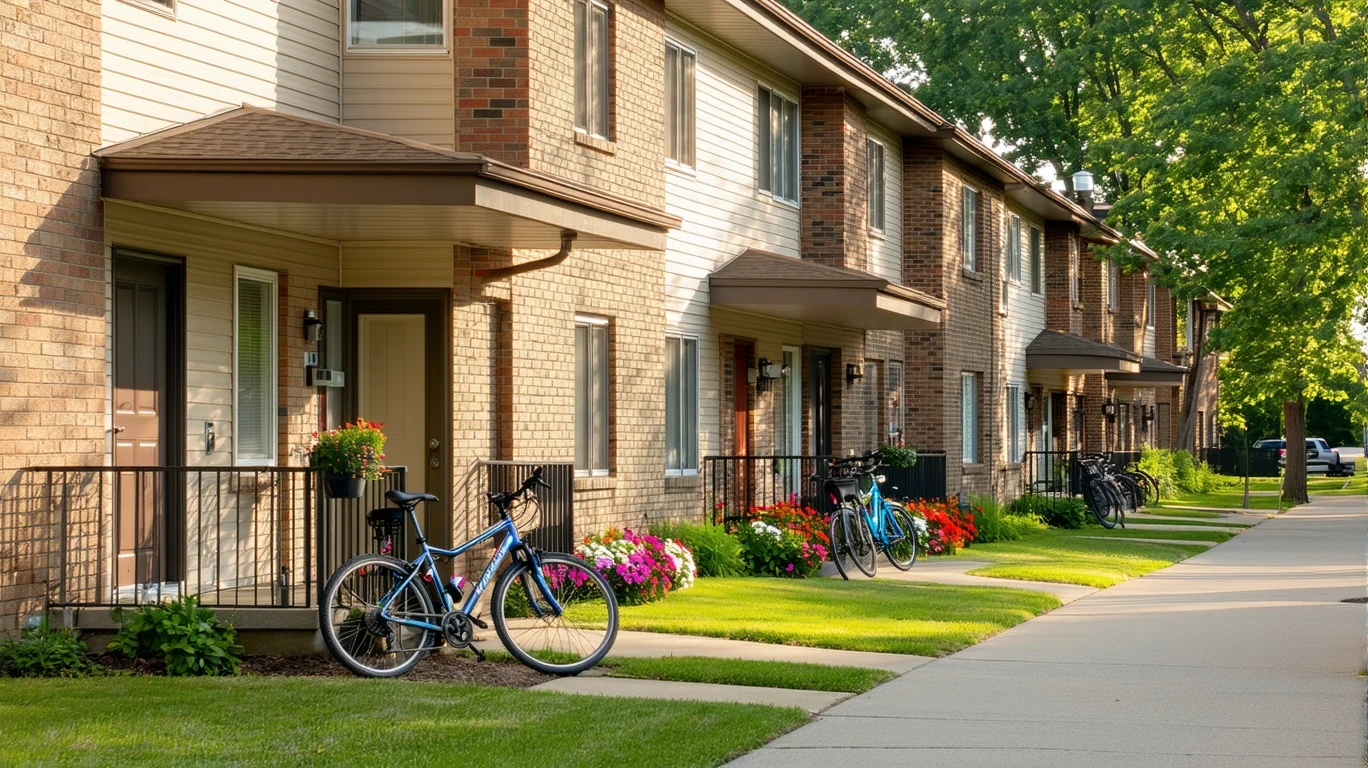
Blaine’s housing market reflects its role as a northern suburban anchor in the Twin Cities metro. The median home value of $303,800 positions it as a middle-tier option for buyers seeking space, parks, and a commute under 30 minutes. The city’s development pattern favors single-family homes and townhomes, with commercial corridors clustered rather than distributed evenly. This means errands require intentional planning—grocery runs and retail stops aren’t always walkable from residential blocks, even in neighborhoods with sidewalks and bike infrastructure. The median household income of $100,659 per year suggests that ownership is within reach for dual-income households, but the margin narrows quickly once heating costs, property taxes, and transportation are factored in.
What surprises newcomers most is the gap between Blaine’s suburban appearance and its infrastructure reality. The city has walkable pockets—areas where pedestrian-to-road ratios are high and bike lanes are present—but these don’t connect seamlessly across the city. Bus service exists, but rail transit does not, which means car ownership is functionally required for most households. This isn’t a flaw; it’s a design outcome. Blaine developed during an era when suburban growth prioritized space and vehicle access over density and transit. The result is a housing market where the sticker price looks reasonable, but the total cost of living depends heavily on how far you drive, how much you heat, and whether you’re prepared for the logistics of a car-dependent suburb.
Renting in Blaine
Median gross rent in Blaine is $1,635 per month, which includes base rent and typical utility contributions. For a metro suburb with strong park access and a 25-minute average commute, this figure is competitive—but it doesn’t capture the full cost of renting here. Most rental housing sits along commercial corridors or near major intersections, which means walkability to daily errands varies widely by address. If your building is near a grocery-anchored strip or a bus line, you gain some flexibility. If it’s tucked into a residential pocket, you’re driving for everything.
Renters in Blaine face moderate baseline housing costs but higher transportation exposure than renters in denser, transit-rich parts of the metro. Without rail service and with limited bus frequency, most renters own at least one car, which adds insurance, fuel, and maintenance to your monthly budget in Blaine. Gas prices average $2.59 per gallon, and the typical commuter covers 25 miles round trip daily. Over a month, that’s not negligible—especially in winter, when cold starts reduce fuel efficiency and heating costs climb.
Rental availability in Blaine tends to tighten during spring and summer, when job relocations and school-year planning drive demand. The city’s unemployment rate of 3.0% reflects a stable local economy, which supports rent stability but also limits turnover. If you’re searching for a lease, expect fewer options in winter and more competition in late spring. Landlords here typically require proof of income at 2.5 to 3 times monthly rent, which aligns with metro norms but can exclude single earners or households with variable income.
Owning a Home in Blaine
Ownership in Blaine starts with a median home value of $303,800, which translates to a manageable entry point for households earning near the metro median. But the cost of ownership here extends well beyond the mortgage. Property taxes in Minnesota are structured at the county and municipal level, and while specific rates aren’t provided in this analysis, buyers should expect annual tax bills that reflect both local services and school district funding. In northern suburbs, these bills often surprise first-time buyers who assume taxes will mirror their previous rental contributions.
Heating costs dominate the ownership experience in Blaine. Natural gas prices average $9.99 per thousand cubic feet (MCF), and electricity runs 16.37¢ per kilowatt-hour. During the long heating season—typically October through April—natural gas usage spikes, and homes without efficient furnaces or updated insulation face steep monthly bills. Unlike rental properties, where landlords sometimes absorb efficiency upgrades, homeowners carry the full cost of aging HVAC systems, leaky windows, and under-insulated attics. These aren’t optional expenses; they’re structural realities that shape the ownership budget.
Homeownership in Blaine also means navigating governance structures that vary by neighborhood. Some developments include homeowners associations (HOAs) that bundle services like snow removal, landscaping, and exterior maintenance. Others leave these tasks entirely to the owner. HOA fees, when present, add a recurring monthly cost that doesn’t build equity but does reduce the time and effort required to maintain a property through Minnesota winters. For buyers unfamiliar with northern climates, this tradeoff—paying for convenience versus managing snow, ice, and seasonal upkeep—often becomes clearer after the first winter.
Apartment vs House in Blaine — Cost Behavior Comparison
| Expense Category | Apartment | House |
|---|---|---|
| Heating Exposure | Lower; shared walls reduce heat loss, landlord often covers efficiency upgrades | Higher; standalone structure with greater surface area exposed to cold, owner responsible for all efficiency improvements |
| Transportation Dependency | Moderate; more likely to be near bus routes or commercial corridors | Higher; residential pockets often require driving for all errands |
| Outdoor Space Access | Limited to shared or public parks; Blaine’s high park density mitigates this | Private yard; significant advantage given Blaine’s green space culture |
| Winter Maintenance | Typically covered by landlord or property management | Owner handles snow removal, ice management, and seasonal exterior upkeep |
| Governance Predictability | Lease terms fixed; rent increases occur at renewal | Property taxes and HOA fees (if applicable) can shift annually; less predictable |
Why these categories matter in Blaine: The comparison above reflects cost behaviors that vary meaningfully in a northern, car-dependent suburb with strong park access and corridor-clustered errands. Heating exposure differs sharply between apartments and houses due to climate intensity and building design. Transportation dependency is shaped by Blaine’s infrastructure pattern, where residential blocks often lack walkable access to groceries or services. Outdoor space access is included because Blaine’s park density is exceptionally high, which reduces the disadvantage renters typically face in suburban markets. Winter maintenance and governance predictability are both driven by local climate and municipal structure. Categories like base rent or mortgage payments were excluded because they don’t vary in behavior—they’re simply different financing mechanisms.
Utilities & Upkeep Differences
Utility costs in Blaine are shaped by climate intensity, not just rates. Electricity at 16.37¢ per kilowatt-hour and natural gas at $9.99 per MCF are both moderate by regional standards, but the heating season here is long and demanding. Apartments benefit from shared walls and smaller square footage, which reduces heat loss and lowers gas consumption. Houses, especially older single-family homes, face much higher heating exposure. A poorly insulated house in Blaine can see natural gas usage spike noticeably during January and February cold snaps, when overnight lows regularly drop below zero.
Maintenance exposure also diverges sharply. Apartment dwellers rarely handle furnace servicing, water heater replacement, or roof repairs—those fall to the landlord. Homeowners carry all of it, and in Blaine’s climate, deferred maintenance compounds quickly. Frozen pipes, ice dams, and furnace failures aren’t rare; they’re predictable risks that require both upfront investment and ongoing vigilance. Homes with older HVAC systems or minimal attic insulation face the highest exposure, and efficiency upgrades—while beneficial—require capital that not all buyers budget for at purchase.
The difference isn’t just financial; it’s logistical. Renters can call a property manager when the heat goes out. Homeowners need to find a contractor, schedule service, and cover the bill. In winter, that urgency is real. Blaine’s infrastructure supports homeownership well—contractors are available, parts are accessible—but the responsibility shift from landlord to owner is more pronounced here than in milder climates where heating and cooling demands are less extreme.
Rent vs Buy: Long-Term Exposure in Blaine
The decision between renting and owning in Blaine isn’t primarily about monthly payment math—it’s about exposure, control, and predictability over time. Renters face lease renewals that can adjust rent based on market conditions, but they avoid property tax shifts, major maintenance events, and the risk of deferred repairs. Owners lock in a mortgage payment (if fixed-rate) but take on all other cost volatility: tax assessments, utility rate changes, furnace replacements, and the ongoing burden of winter upkeep.
In Blaine, ownership offers control over housing quality and outdoor space, which matters in a city where park access and private yards are central to the lifestyle. But that control comes with climate-driven costs that renters don’t face. A homeowner with an aging furnace and poor insulation will experience heating bills that climb as equipment efficiency declines. A renter in the same situation can request repairs or move at lease end. The tradeoff is between stability and flexibility: owners gain long-term housing security and the ability to improve their property, while renters retain mobility and avoid the capital risk of major systems failing.
Over time, ownership in Blaine rewards households that can absorb maintenance shocks and invest in efficiency. Renters benefit from predictable monthly obligations and the ability to relocate without transaction costs. Neither path is universally better; the fit depends on income stability, risk tolerance, and whether the household values control over cost or flexibility over commitment.
FAQs About Housing Costs in Blaine
Is Blaine affordable for first-time homebuyers?
Blaine’s median home value of $303,800 is accessible for dual-income households earning near the metro median, but affordability depends on more than the purchase price. Heating costs, property taxes, and car dependency add recurring expenses that narrow the margin. First-time buyers should budget for winter utility spikes and plan for furnace or insulation upgrades if buying an older home.
How does renting in Blaine compare to owning?
Renting offers lower upfront costs and insulation from maintenance shocks, but it doesn’t build equity and leaves you exposed to lease renewals. Owning provides stability and control but requires managing property taxes, heating expenses, and seasonal upkeep. In Blaine’s climate, the maintenance burden of ownership is more demanding than in milder regions.
What housing costs are highest in Blaine during winter?
Heating dominates winter expenses. Natural gas usage rises sharply from October through April, and homes with older furnaces or poor insulation face the steepest bills. Electricity costs also increase due to shorter daylight hours and the need for supplemental heating in poorly insulated spaces.
Does Blaine require a car for renters?
Functionally, yes. While bus service exists and some neighborhoods have walkable access to groceries, most renters need a car for commuting, errands, and winter mobility. The city’s infrastructure prioritizes vehicle access, and transit options are limited compared to denser parts of the metro.
Are property taxes in Blaine predictable?
Property taxes in Minnesota are set at the county and municipal level and can shift annually based on assessments and budget needs. Buyers should expect taxes to be a significant recurring cost and should verify current rates and assessment trends before purchasing.
Making Housing Choices in Blaine
Housing costs in Blaine are shaped by climate, infrastructure, and the city’s role as a suburban commuter anchor. Ownership is accessible for households earning near the metro median, but the total cost of owning—heating, taxes, maintenance, and transportation—requires careful planning. Renters face moderate baseline costs but higher car dependency, which shifts expenses from housing to transportation. The city’s excellent park access and walkable pockets add quality-of-life value, but errands and services remain corridor-clustered, which means most households drive daily regardless of tenure type.
The strongest fit for Blaine is dual-income households seeking space, outdoor access, and a manageable commute, who are prepared for the logistics and costs of a car-dependent suburb with a long heating season. Single earners and families prioritizing walkable school access or transit flexibility will find the city more challenging. If you’re evaluating Blaine, focus on the full cost structure—not just rent or mortgage—and consider how climate, commute, and infrastructure shape your day-to-day experience. For a broader look at how these factors interact, see what costs people most in Blaine and how housing fits into the larger financial picture. If you’re planning a move, understanding moving company costs and options can help you budget for the transition.