
Can you live in Bethesda without a car? It’s one of the first questions people ask when considering a move here, and the answer depends less on what you’re willing to sacrifice and more on where you land and how you structure daily life. Bethesda sits in the Washington DC metro area, a region known for its transit infrastructure, but the reality on the ground here is more textured than that reputation suggests. Some neighborhoods offer genuine walkability and bus access that makes car-free living possible—if you’re strategic. Others demand a vehicle for even the most basic errands. Understanding how people actually get around Bethesda means looking past the transit maps and into the friction points that shape daily mobility.
How People Get Around Bethesda
Bethesda’s transportation landscape is defined by a mix of pedestrian-friendly pockets and car-dependent sprawl. The pedestrian-to-road ratio in parts of the city exceeds what you’d find in many suburban areas, meaning sidewalks, crosswalks, and walking paths are present and usable in certain zones. But that infrastructure doesn’t tell the whole story. Food and grocery establishments are sparse relative to the population, falling below density thresholds that would make daily errands walkable for most residents. What this means in practice: you might live on a tree-lined street with good sidewalks and still need to drive to buy groceries or pick up a prescription.
The result is a city where walking works for some trips—getting to a park, visiting a neighbor, reaching a nearby bus stop—but not for the full range of household logistics. Bethesda’s layout supports both residential and commercial land use in close proximity, which helps, but the low density of essential services creates gaps that walking alone can’t bridge. For many households, the car remains the default, not because the streets are hostile to pedestrians, but because the destinations aren’t close enough or numerous enough to make car-free living practical.
Public Transit Availability in Bethesda
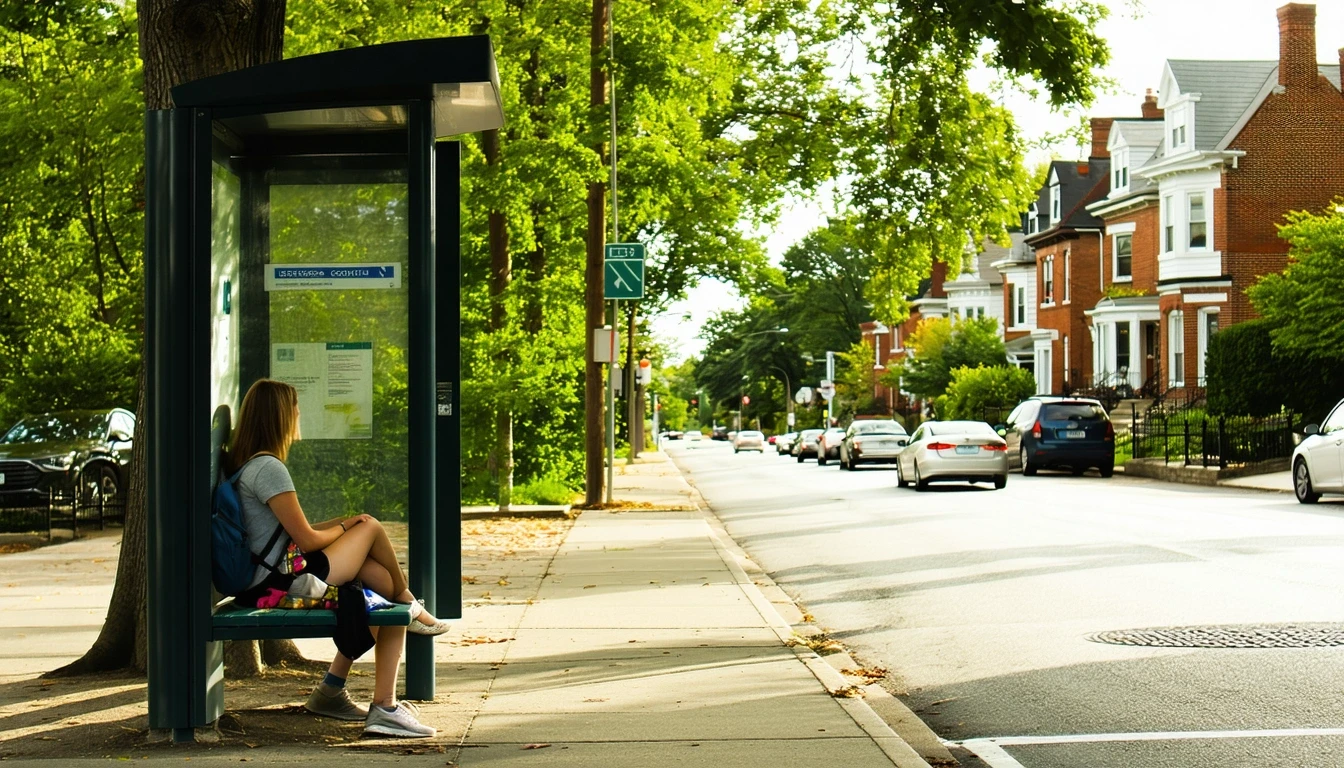
Public transit in Bethesda centers on bus service. There’s no rail station within city limits, which immediately limits the reach and speed of transit-dependent commutes. Bus stops are present throughout the area, and for residents who live near key corridors and work along routes that align with those lines, transit can be a viable option. But bus-only systems come with inherent constraints: longer travel times, less frequency, and limited coverage outside core routes.
Transit works best in Bethesda for people whose daily patterns align with existing bus corridors—commuters heading into DC, for example, or residents who work locally and can tolerate the planning burden that comes with less frequent service. It works less well for households that need to make multiple stops, travel during off-peak hours, or reach destinations that aren’t on the main lines. The absence of rail also means that longer commutes require either a transfer or a willingness to spend significantly more time in transit than you would behind the wheel.
For newcomers used to cities with dense rail networks, Bethesda’s transit reality can feel limiting. It’s not that the buses don’t run—they do. It’s that the system doesn’t offer the same level of spontaneity, speed, or coverage that rail provides. If your life fits the routes, transit is usable. If it doesn’t, you’ll feel the gap quickly.
Driving & Car Dependence Reality
Most people in Bethesda rely on a car, and the reasons go beyond preference. The sparse density of food and grocery options means that even households in walkable neighborhoods often drive for weekly shopping. Schools are spread out, with school density below thresholds that would allow most families to walk their kids to class. Clinics are present for routine healthcare, but the absence of a hospital within city limits means that more serious medical needs require a drive. Gas prices sit at $2.99 per gallon, which is neither a windfall nor a crisis, but it’s a cost that compounds when driving is non-negotiable.
Parking in Bethesda tends to be manageable in residential areas, though it can tighten in commercial zones during peak hours. The bigger issue isn’t finding a spot—it’s the structural reality that the city’s layout assumes car access. Errands that would take 20 minutes on foot in a denser city require a 10-minute drive here, not because the distance is vast, but because the destinations are scattered. For families, the car becomes the tool that makes daily life predictable: school drop-offs, grocery runs, weekend activities, medical appointments. Trying to do all of that on foot or by bus adds friction that most households aren’t willing to absorb.
Commuting Patterns & Daily Mobility
Commuting in Bethesda varies widely depending on where you work and how flexible your schedule is. For residents commuting into Washington DC or other nearby employment centers, the drive can be straightforward or congested depending on timing and route. The 2.7% unemployment rate suggests a strong local job market, but many residents still commute outside the city for work, which shifts the transportation calculus toward driving.
Single-destination commutes are easier to optimize—whether by car or bus—but multi-stop trips tilt heavily toward driving. Parents juggling school drop-offs, workers stopping for errands on the way home, or households managing medical appointments all face the same reality: day-to-day costs include not just the price of gas, but the time and planning burden that comes with limited transit flexibility. Bethesda’s mixed building heights and land-use patterns mean that some neighborhoods feel more urban and connected, while others read as purely suburban. Your commute experience will depend heavily on which pocket you’re in.
Who Transit Works For — and Who It Doesn’t
Transit in Bethesda works best for a narrow slice of residents: renters in walkable pockets who work along bus corridors, don’t have school-age children, and can either tolerate sparse grocery options or plan their shopping trips carefully. For this group, bus service offers a lower-cost alternative to car ownership, though it comes with tradeoffs in time and convenience.
Transit works less well—or not at all—for families with kids, given the limited school density and the logistics of managing multiple daily trips. It’s also a poor fit for households that need frequent access to groceries, healthcare beyond routine clinics, or destinations outside the main bus routes. Homeowners in less walkable areas face the steepest barriers to car-free living, as their neighborhoods often lack both pedestrian infrastructure and transit proximity.
The distinction isn’t about willingness to adapt—it’s about whether the city’s structure supports your household’s needs without a car. For some, it does. For most, it doesn’t.
Transportation Tradeoffs in Bethesda
Choosing between transit and driving in Bethesda isn’t just about cost—it’s about control, predictability, and how much friction you’re willing to absorb. Transit offers lower direct expenses and eliminates the need to manage a vehicle, but it requires living in the right location, working along the right routes, and accepting longer, less flexible travel times. Driving costs more in gas, insurance, and maintenance, but it delivers the flexibility to handle errands, appointments, and multi-stop trips without the planning burden.
For households that can make transit work, the tradeoff is often worth it, especially if housing in walkable areas aligns with their budget. But for families, workers with non-linear commutes, or anyone whose daily life doesn’t fit neatly into bus schedules, driving isn’t a luxury—it’s the baseline that makes everything else possible. The city’s sparse errands accessibility and limited transit options mean that the car-free life, while achievable for some, remains the exception rather than the rule.
FAQs About Transportation in Bethesda (2026)
Is public transit usable for daily commuting in Bethesda?
It can be, but only if your commute aligns with existing bus corridors and you’re willing to accept longer travel times compared to driving. There’s no rail service within city limits, so bus-only transit limits speed and flexibility. For residents working in DC or along main routes, it’s viable. For everyone else, it’s a stretch.
Do most people in Bethesda rely on a car?
Yes. The sparse density of grocery stores, schools, and other essential services makes driving the default for most households. Even in walkable neighborhoods, the car is often necessary for weekly errands and anything beyond short, local trips.
Which areas of Bethesda are easiest to live in without a car?
The walkable pockets near bus corridors offer the best shot at car-free living, especially for renters without school-age children. But even in those areas, sparse grocery and food options mean you’ll need to plan around errands or accept longer walks or bus rides to access daily necessities.
How does commuting in Bethesda compare to nearby cities?
Bethesda’s lack of rail transit puts it at a disadvantage compared to nearby areas with Metro access. Bus service is present, but it doesn’t offer the same speed or reach. For drivers, the experience is similar to other suburban areas in the DC metro—manageable outside peak hours, congested during rush periods.
Can families with kids get by without a car in Bethesda?
It’s difficult. School density is low, which means most families are driving for drop-offs and pickups. Add in the need for grocery runs, medical appointments, and extracurriculars, and the car becomes essential for managing the logistics of family life.
How Transportation Fits Into the Cost of Living in Bethesda
Transportation in Bethesda isn’t just a line item—it’s a structural factor that shapes where you can live, how much time you spend managing daily logistics, and what kind of flexibility you have in your routine. For households that can make transit work, the savings on car ownership can offset higher rent in walkable areas. For everyone else, driving is a necessary cost that compounds with gas at $2.99 per gallon, insurance, and maintenance.
The real cost isn’t just what you pay at the pump or for a bus pass—it’s the time and planning burden that comes with limited transit options and sparse errands accessibility. A month of expenses in Bethesda includes not just the direct costs of getting around, but the hidden friction of managing a city that assumes car access for most of daily life. Understanding that reality upfront helps you make smarter decisions about where to live, what to prioritize, and how to structure your household around the transportation options that actually exist here.
How this article was built: In addition to public economic data, this article incorporates location-based experiential signals derived from anonymized geographic patterns—such as access density, walkability, and land-use mix—to reflect how day-to-day living actually feels in Bethesda, MD.