
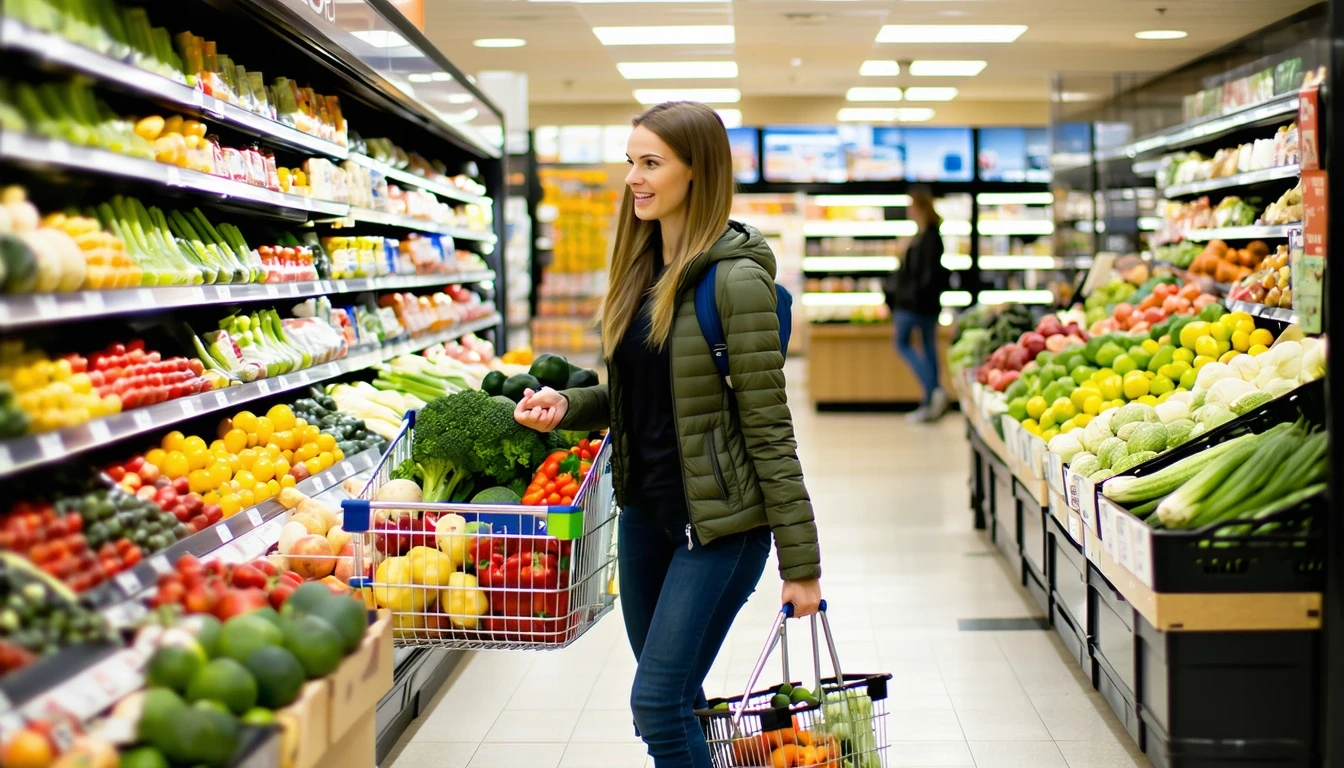
Can You Stay Under $100? The Grocery Challenge in Bethesda
Walk into any grocery store in Bethesda with a mental budget of $100 and see how far it stretches. For some households, that’s a week’s worth of staples—milk, eggs, chicken, rice, fresh produce. For others, especially families with teenagers or households managing dietary restrictions, that same $100 disappears before the cart is half full. The grocery challenge isn’t about extreme couponing or deprivation; it’s about understanding how food prices in Bethesda interact with household size, income flexibility, and the practical realities of where and how you shop. Bethesda sits in a region where the overall cost structure runs about 4% above the national baseline, and that premium touches every aisle—not dramatically, but persistently. The difference between feeling grocery costs as manageable or as a constant squeeze often comes down to how many mouths you’re feeding, how much planning bandwidth you have, and whether you’re locked into convenience or able to shop strategically across store tiers.
Grocery pressure in Bethesda isn’t uniform. A single professional earning a solid income might barely notice the incremental cost of organic greens or name-brand snacks. A family of four on a teacher-and-nurse household income, however, feels every dollar, every week. The regional price floor means that even discount-tier stores in Bethesda start from a higher baseline than their counterparts in lower-cost metros. That 4% regional adjustment doesn’t sound like much in isolation, but compounded across dozens of items every week, it adds up to a meaningful difference in how tightly households need to manage their food budgets. Understanding grocery costs here means recognizing that the pressure isn’t just about individual item prices—it’s about cumulative exposure, access friction, and the behavioral tradeoffs required to keep spending under control.
Grocery Price Signals in Bethesda (Illustrative)
Item-level prices offer a way to anchor expectations, even if they don’t capture the full complexity of any given shopping trip. The prices below are derived estimates based on national baselines adjusted for regional price parity—they illustrate how staple items tend to compare locally, not a complete shopping list or a guarantee of what you’ll pay at any specific store on any given week. These are reference points, not checkout predictions.
| Item | Illustrative Price |
|---|---|
| Bread (per pound) | $1.91/lb |
| Cheese (per pound) | $4.92/lb |
| Chicken (per pound) | $2.10/lb |
| Eggs (per dozen) | $2.82/dozen |
| Ground Beef (per pound) | $6.95/lb |
| Milk (per half-gallon) | $4.21/half-gallon |
| Rice (per pound) | $1.12/lb |
Derived estimate based on national baseline adjusted by regional price parity; not an observed local price.
These prices reflect the regional cost floor in Bethesda—not extreme, but consistently elevated. Ground beef at nearly $7 per pound and cheese approaching $5 per pound signal that protein and dairy represent meaningful line items for households cooking from scratch. Eggs and chicken remain relatively accessible, but even these everyday staples carry a modest premium compared to lower-cost metros. The cumulative effect matters more than any single item: a household buying two dozen eggs, several pounds of chicken, a gallon of milk, and a loaf of bread every week will feel that 4% regional adjustment as a persistent, low-grade pressure that never quite goes away. For families stretching each paycheck, these incremental differences determine whether grocery shopping feels manageable or like a weekly negotiation with the budget.
Store Choice and Price Sensitivity in Bethesda
Grocery pressure in Bethesda varies significantly by store tier, and understanding that variation is essential to managing food costs effectively. Discount-tier stores—no-frills formats focused on private-label staples and limited selection—offer the lowest baseline prices, but even here, the regional cost floor means you’re starting from a higher point than you would in a lower-cost metro. Mid-tier stores, the mainstream supermarkets where most households do the bulk of their shopping, balance selection and convenience with moderate pricing. Premium-tier stores—those emphasizing organic, specialty, or prepared foods—command a significant markup, and in Bethesda, that premium stacks on top of an already elevated regional baseline. The difference between shopping exclusively at a discount chain versus splitting trips between mid-tier and premium stores can represent a substantial shift in weekly spending, even if no single item feels prohibitively expensive.
Store tier choice isn’t just about price—it’s about access, time, and household priorities. In Bethesda, food and grocery establishment density falls below typical thresholds, meaning residents often need to drive to reach their preferred stores or consolidate trips to avoid burning time and fuel on multiple stops. That sparse accessibility reduces the practical ability to price-compare across stores on a weekly basis, making the choice of primary store more consequential. A household that defaults to a nearby mid-tier supermarket for convenience may pay meaningfully more over the course of a year than one willing to drive farther to a discount chain, but that tradeoff involves real costs in time, planning bandwidth, and transportation. For families with two working parents, limited schedule flexibility, or young children, the convenience premium isn’t optional—it’s the price of making grocery shopping logistically feasible. Singles and smaller households, by contrast, often have more flexibility to shop strategically, splitting trips between discount stores for staples and premium stores for occasional treats without the same cumulative pressure.
The regional price floor in Bethesda also means that even discount-tier stores don’t offer the same relief they might in lower-cost areas. A household accustomed to stretching a budget in a metro with a regional price parity closer to 95 or 100 will notice that the same strategies—buying store brands, avoiding prepared foods, sticking to sales—don’t yield the same savings here. The baseline is simply higher. That doesn’t make strategic shopping pointless, but it does mean that households need to recalibrate expectations. The goal isn’t to replicate the grocery bills they had elsewhere; it’s to minimize pressure within the cost structure that actually exists in Bethesda.
What Drives Grocery Pressure in Bethesda
Grocery pressure in Bethesda is shaped by the interaction of regional pricing, household composition, and access patterns. The 4% regional price premium applies broadly, affecting all store tiers and most categories, which means there’s no easy escape hatch—you can’t simply switch aisles or brands and make the premium disappear. Household size amplifies that pressure exponentially. A single person might absorb the incremental cost without much adjustment; a family of four or five feels it in every shopping trip. Each additional household member doesn’t just add proportionally to the grocery bill—it increases the complexity of meal planning, reduces flexibility to substitute cheaper ingredients, and makes it harder to avoid waste. Larger families also face more pressure to buy in bulk, which requires upfront capital and storage space, and to cook from scratch, which requires time and skill. These aren’t insurmountable challenges, but they represent real friction that smaller households simply don’t encounter.
Income interaction is another critical driver. Households earning well above the regional median—common in Bethesda’s professional and managerial workforce—experience grocery costs as a minor line item, easily absorbed within broader discretionary spending. For households closer to or below the regional median, however, grocery spending becomes a weekly negotiation, requiring active management, careful planning, and often uncomfortable tradeoffs between quality, convenience, and variety. The same $200 weekly grocery bill feels entirely different to a household earning $150,000 than it does to one earning $60,000, even though both are buying roughly the same items. That income sensitivity means grocery pressure in Bethesda is highly stratified—not everyone feels it, but those who do feel it acutely.
Sparse food and grocery density in Bethesda adds another layer of friction. With fewer stores per capita and lower establishment density, residents face longer average distances to their preferred shopping options and less competitive pressure among retailers. That sparsity doesn’t mean food deserts or genuine scarcity, but it does mean that price arbitrage—shopping at multiple stores to capture the best deals on different categories—requires more time, more driving, and more logistical coordination. For households already stretched thin on time and energy, that friction effectively locks them into a single primary store, limiting their ability to optimize spending. The result is that where money goes each month often reflects access constraints as much as preference.
Practical Ways People Manage Grocery Costs in Bethesda
Managing grocery costs in Bethesda requires behavioral strategies that reduce cumulative exposure without demanding extreme lifestyle changes. One of the most effective approaches is shifting the balance between discount-tier and mid-tier shopping. Households that do the bulk of their staple purchasing—rice, beans, pasta, canned goods, frozen vegetables, dairy, eggs—at discount chains and reserve mid-tier or premium stores for fresh produce, meat, and occasional specialty items can meaningfully reduce weekly spending without sacrificing meal quality. This approach requires some planning and an extra stop, but it leverages the price gap between store tiers where it matters most: on high-volume, frequently purchased items.
Cooking from scratch remains one of the most reliable ways to control grocery spending, particularly for protein-heavy meals. Pre-marinated meats, pre-cut vegetables, and prepared meal kits carry significant convenience premiums, and in Bethesda’s elevated cost environment, those premiums stack quickly. A household that buys whole chickens instead of boneless breasts, cooks dried beans instead of canned, and preps vegetables at home instead of buying pre-washed salad mixes will see lower per-meal costs, though the tradeoff is time and kitchen labor. For families with two working parents, that tradeoff isn’t always feasible on weeknights, but even partial adoption—cooking from scratch on weekends, batch-prepping staples, using a slow cooker—can reduce reliance on convenience items during the week.
Seasonal awareness also helps, though it requires attention and flexibility. Produce prices fluctuate with supply cycles, and households that adjust their buying patterns to favor in-season fruits and vegetables can avoid the premium charged for out-of-season or imported items. This doesn’t mean abandoning favorite foods entirely, but it does mean recognizing that strawberries in January and asparagus in October cost more than they do in their natural growing seasons. Similarly, paying attention to weekly sales and loss leaders—items stores price aggressively to draw traffic—allows households to stock up on non-perishables when prices dip and avoid paying full price on frequently used items.
Finally, waste reduction matters more in a higher-cost environment. A household that routinely discards spoiled produce, expired dairy, or forgotten leftovers is effectively paying the regional price premium twice—once at purchase and again in the trash. Meal planning, proper storage, and intentional use of leftovers don’t eliminate grocery costs, but they ensure that every dollar spent actually feeds the household rather than the compost bin.
Groceries vs. Eating Out in Bethesda
The tradeoff between cooking at home and eating out is one of the most consequential decisions households make when managing food costs, and in Bethesda, that tradeoff is shaped by both elevated grocery prices and a dining scene that reflects the area’s affluent professional base. Cooking at home remains substantially cheaper on a per-meal basis, even accounting for the regional price premium on groceries, but the gap narrows when convenience, time, and opportunity costs are factored in. A household that eats out frequently—whether at sit-down restaurants, fast-casual chains, or takeout—will see food spending rise quickly, but a household that never eats out may find the time and energy cost of constant meal prep unsustainable, particularly during busy work weeks or when managing multiple schedules.
The key is recognizing that eating out isn’t a binary choice—it’s a spectrum. A household that reserves dining out for weekends, special occasions, or nights when cooking simply isn’t feasible can enjoy the convenience and social value of restaurant meals without letting food spending spiral. Conversely, a household that defaults to takeout or delivery multiple times per week will find that even modest per-meal costs compound into a significant monthly expense, often exceeding what they spend on groceries. In Bethesda, where both grocery and dining costs reflect the regional price premium, the households that manage food spending most effectively are those that treat eating out as a deliberate choice rather than a default convenience.
FAQs About Grocery Costs in Bethesda (2026)
Is it cheaper to shop in bulk in Bethesda? Bulk shopping can reduce per-unit costs, particularly for non-perishables, dry goods, and frozen items, but it requires upfront capital and storage space. In Bethesda’s elevated cost environment, bulk purchasing offers meaningful savings for larger households that can use high-volume items before they spoil, but smaller households may find that bulk sizes lead to waste, negating the per-unit savings.
Which stores in Bethesda are best for low prices? Discount-tier grocery chains generally offer the lowest baseline prices, focusing on private-label staples and limited selection. Mid-tier supermarkets balance price and convenience, while premium-tier stores emphasize organic, specialty, and prepared foods at higher price points. The best choice depends on household priorities—discount stores work well for staple-heavy shopping, while mid-tier stores offer broader selection for households willing to pay a modest premium for convenience.
How much more do organic items cost in Bethesda? Organic products typically carry a premium over conventional equivalents, and in Bethesda, that premium stacks on top of the regional price floor. The markup varies by category—organic produce and dairy tend to show the largest gaps—but households prioritizing organic options should expect meaningfully higher grocery bills. Strategic organic purchasing, focusing on high-priority items rather than converting the entire cart, can help manage costs.
How do grocery costs for households in Bethesda tend to compare to nearby cities? Bethesda’s regional price parity of 104 places it slightly above the national baseline, meaning grocery costs run modestly higher than in lower-cost metros but remain comparable to other affluent suburban areas in the Washington, D.C. region. Households moving from lower-cost areas may notice the difference, particularly on high-volume staples, while those coming from higher-cost metros may find Bethesda’s grocery prices relatively manageable.
How do households in Bethesda think about grocery spending when cooking at home? Households that cook at home regularly tend to view grocery spending as a controllable expense, one where planning, store choice, and waste reduction can meaningfully influence outcomes. The regional price premium means that even disciplined shoppers pay more than they might elsewhere, but the tradeoff—control over ingredients, portion sizes, and meal timing—remains valuable for families managing tight budgets or specific dietary needs.
Does Bethesda’s sparse grocery density affect how people shop? Yes. With food and grocery establishment density below typical thresholds, residents often need to drive farther to reach their preferred stores or consolidate trips to avoid excessive travel time. That sparsity reduces the practical ability to price-compare across multiple stores on a weekly basis, making the choice of primary store more consequential and increasing the convenience premium for households with limited time or schedule flexibility.
Can you really stay under $100 per grocery trip in Bethesda? For a single person or couple buying primarily staples at a discount-tier store, staying under $100 per trip is feasible, though it requires discipline and planning. For larger families or households buying a mix of fresh produce, meat, and convenience items at mid-tier or premium stores, $100 disappears quickly. The challenge isn’t about extreme frugality—it’s about understanding how household size, store tier, and item selection interact to drive cumulative spending.
How Groceries Fit Into the Cost of Living in Bethesda
Grocery costs in Bethesda represent a meaningful but not dominant share of household spending, particularly when compared to housing and utilities. For most households, groceries are the third or fourth largest expense category, behind rent or mortgage, transportation, and often childcare or healthcare. That positioning means grocery pressure rarely determines whether a household can afford to live in Bethesda, but it does influence how tightly budgets need to be managed and how much financial margin households have for discretionary spending or savings. A household spending $800 per month on groceries in Bethesda isn’t facing a crisis, but it is committing a meaningful share of income to food, and that commitment limits flexibility elsewhere.
Understanding how grocery costs interact with other expenses is essential for realistic financial planning. A household that secures affordable housing but underestimates grocery spending may find itself squeezed on other fronts—less able to absorb utility volatility, less able to save for emergencies, less able to manage transportation costs. Conversely, a household that overestimates grocery pressure and cuts too aggressively may sacrifice meal quality, nutrition, or the social value of shared meals in ways that erode quality of life. The goal isn’t to minimize grocery spending at all costs; it’s to find a sustainable balance that reflects household priorities, income constraints, and the broader cost structure of living in Bethesda. For a complete picture of how groceries fit into monthly expenses, including housing, utilities, and transportation, see the full breakdown in A Month of Expenses in Bethesda: What It Feels Like.
Grocery costs in Bethesda are manageable for most households, but they require active management, realistic expectations, and a willingness to make strategic tradeoffs between convenience, quality, and price. The regional price premium is real, but it’s not prohibitive, and households that understand how store choice, household size, and behavioral strategies interact can keep food spending under control without sacrificing the ability to eat well. The key is recognizing that grocery pressure isn’t uniform—it’s shaped by income, access, and household composition—and that the strategies that work for one household may not work for another. Confidence in managing grocery costs comes from understanding the local cost structure, knowing where flexibility exists, and making deliberate choices that align with both budget constraints and quality-of-life priorities.
How this article was built: In addition to public economic data, this article incorporates location-based experiential signals derived from anonymized geographic patterns—such as access density, walkability, and land-use mix—to reflect how day-to-day living actually feels in Bethesda, MD.