
Imagine you’re weighing a job offer that would put you in Berwyn—decent salary, reasonable title, but you’re stuck on one question: will it actually feel comfortable here, or will you be counting pennies every month? You’ve seen the median income figure ($71,300 per year), glanced at rent averages ($1,106 per month), and tried plugging numbers into a cost-of-living calculator. But the output feels sterile, disconnected from the real question: does your income give you room to breathe, or does it just cover the basics?
This article doesn’t hand you a magic number. Instead, it explains how income pressure actually works in Berwyn—where it shows up first, which households feel it most, and what separates “getting by” from “living comfortably.” Because comfort isn’t a formula. It’s the space between your earnings and the daily friction of keeping up.
What “Living Comfortably” Means in Berwyn
Comfortable living in Berwyn isn’t about luxury—it’s about predictability and choice. It means your housing doesn’t dominate your paycheck. It means a cold snap in January doesn’t trigger budget panic. It means you can grab groceries without mapping the cheapest store, and you’re not calculating whether a 30-minute commute is worth the gas money every single week.
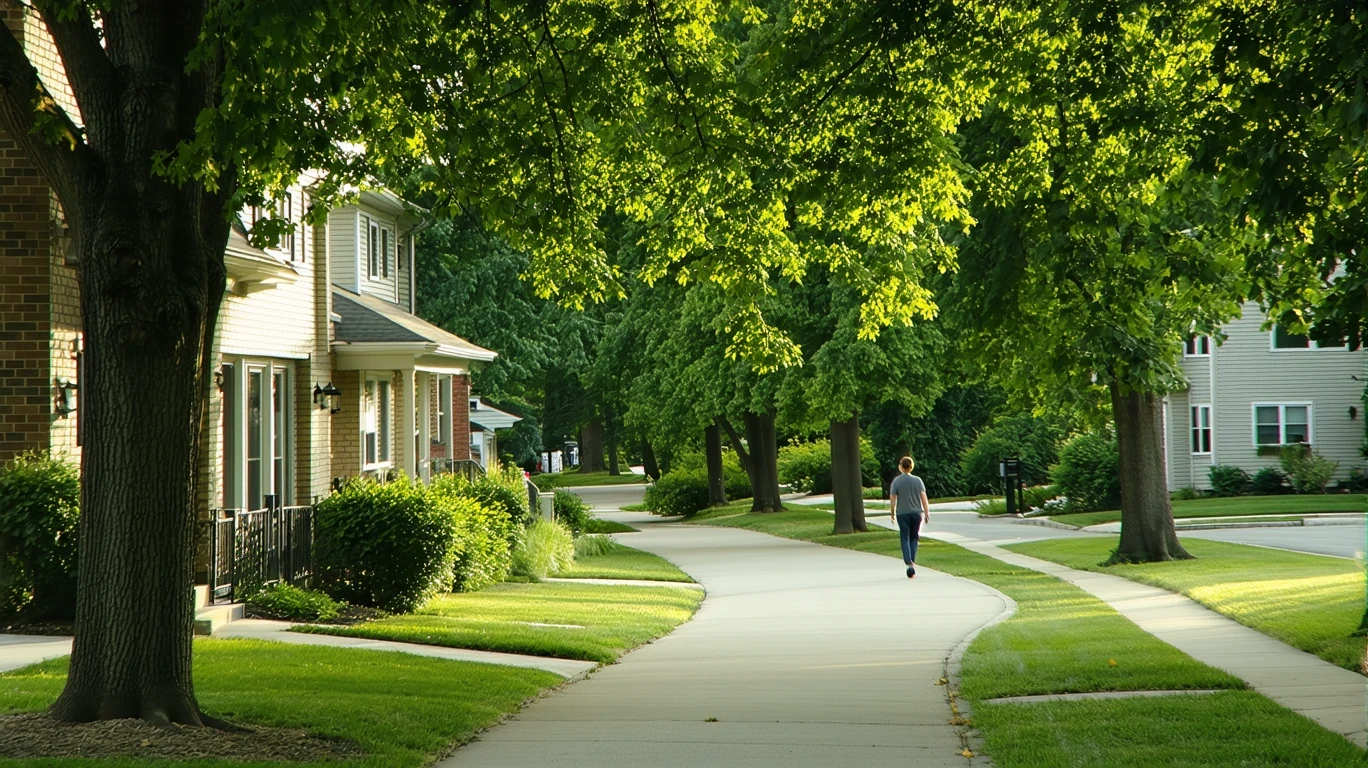
Berwyn sits in the Chicago metro, where regional price levels run about 3% above the national baseline. That’s not crushing, but it’s enough to tighten margins for households near the median income. The city’s walkable pockets and high density of grocery and food options mean daily errands don’t require constant driving—a meaningful advantage that reduces both cost and time friction. Parks are plentiful, schools and playgrounds are well-distributed, and the urban form mixes residential and commercial land use, so you’re not trapped in a purely car-dependent routine.
But comfort also depends on what you expect. If you’re used to new construction, private outdoor space, and minimal commute times, Berwyn’s older housing stock, mixed building heights, and 30-minute average commute might feel like compromises. If you value walkability, access to green space, and a strong sense of place structure, those same features become assets.
Where Income Pressure Shows Up First
Income pressure in Berwyn doesn’t announce itself with one big expense—it accumulates across several predictable friction points.
Housing tradeoffs: The median home value is $272,900, and median rent is $1,106 per month. For a household earning $71,300 annually, rent consumes a meaningful share of gross income before utilities, transportation, or food enter the picture. Homeownership shifts the pressure toward property taxes, maintenance, and the reality that older housing stock often means higher upkeep costs and less energy efficiency. You’re not priced out, but you’re also not floating comfortably unless your income exceeds the median by a reasonable margin.
Utility volatility: Berwyn winters are long and cold—current temperatures of 6°F that feel like -7°F aren’t outliers, they’re seasonal reality. Natural gas at $15.48 per MCF and electricity at 18.31¢/kWh mean heating months create noticeable bill swings. Cooling season is shorter but still present. If your housing is older or poorly insulated, utility costs don’t stay predictable—they spike, and that variability pressures households without cushion.
Transportation time vs. money: The average commute is 30 minutes, and 52.7% of workers face long commutes. Only 9.9% work from home. Gas prices at $2.98 per gallon aren’t extreme, but when commuting is near-universal and time-intensive, the question becomes whether you optimize for a shorter, pricier commute or a longer, cheaper one. Berwyn’s bus service and walkable errands infrastructure help reduce car dependency for daily tasks, but most workers still drive to jobs outside the city. That creates a persistent drain on both time and money.
Family-specific pressure: Berwyn offers strong family infrastructure—schools and playgrounds are well-distributed, and park density is high. But families also face the steepest housing pressure. A couple can split rent or mortgage costs and potentially manage with one car given the walkable errands environment. A family with kids needs more space, more rooms, and more logistical capacity—all of which cost more and reduce flexibility.
How the Same Income Feels Different by Household
Households at similar income levels often experience very different pressure depending on size, structure, and how they use Berwyn’s infrastructure.
Single adults: A single person earning near or slightly above the median faces lower absolute housing costs—rent for a one-bedroom or studio is more manageable than for a family-sized unit. Berwyn’s broadly accessible grocery and food options mean errands don’t require constant driving, and the walkable pockets reduce the need for a car in daily routines. But the 30-minute commute still eats time, and utility swings in winter still hit. Comfort arrives when income allows for housing choice (neighborhood preference, not just availability) and enough margin that a high heating bill doesn’t force cutbacks elsewhere.
Couples: Dual income changes everything. Two earners can absorb rent or mortgage costs more easily, and Berwyn’s infrastructure supports one-car households in many cases—one partner might drive to work while the other uses bus service or walks for errands, thanks to the mixed land use and high errands accessibility. Utility costs spread across two incomes feel less volatile. Comfort for couples often hinges on whether both partners have stable work and whether they’re willing to trade some space or modernity for financial breathing room.
families: Families face the most tension. Berwyn’s strong school and playground infrastructure matters—it’s a genuine asset that reduces the need to pay premiums for access to family-oriented amenities. The integrated green space and park density mean kids have places to play without driving across town. But families also need more housing, which costs more. They’re more likely to own, which means property taxes, maintenance, and the reality that older homes demand more upkeep. Long commutes become harder to sustain when school schedules, pickups, and extracurriculars add logistical layers. Comfort for families requires income well above the median—not because Berwyn is prohibitively expensive, but because the margin for error shrinks fast when you’re managing multiple people, multiple needs, and limited time.
The Comfort Threshold (Qualitative)
The comfort threshold in Berwyn isn’t a number—it’s the point where your income stops dictating every decision.
Below that line, you’re managing tradeoffs constantly. You’re choosing between a shorter commute and lower rent. You’re watching the thermostat in January. You’re deciding whether to replace an aging appliance now or wait and hope it lasts another year. You’re not in crisis, but you’re also not relaxed.
Above that line, choices expand. You can prioritize neighborhood over price. You can absorb a high utility month without reworking your budget. You can save, not just survive. You’re not wealthy, but you’re not grinding either.
For most households, that threshold sits above the median income—how far above depends on household size and expectations. A single adult might cross it with a modest raise. A family might need dual incomes significantly above the median to feel genuinely comfortable, especially if they’re factoring in homeownership, older housing upkeep, and the time cost of long commutes.
Why Online Cost Calculators Get Berwyn Wrong
Cost calculators fail because they treat expenses as static and universal. They’ll tell you what the median rent is, but they won’t explain how Berwyn’s walkable errands infrastructure reduces your need for a second car—or how that advantage disappears if your job is 40 minutes away in a suburb with no transit. They’ll list the electricity rate, but they won’t capture how an older, poorly insulated house turns a cold winter into a budget event.
Calculators also ignore lifestyle fit. They assume everyone values the same things. But Berwyn’s mixed building heights, land-use diversity, and strong park access matter intensely to some households and barely register for others. If you want new construction and private outdoor space, Berwyn’s housing stock will feel like a compromise no matter what the numbers say. If you value walkability and access to daily errands without driving, the city’s infrastructure delivers something many suburbs don’t.
People feel surprised after moving because they optimized for totals instead of texture. They saw the rent number and assumed it told the whole story. It didn’t.
How to Judge Whether Your Income Fits Berwyn
Instead of asking “Is my income enough?”, ask these:
- How sensitive are you to housing tradeoffs? Can you live in an older building with less modern finishes if it means better walkability and lower cost? Or do you need newer construction and private outdoor space to feel settled?
- Can you absorb seasonal utility swings? Berwyn winters are cold and heating costs fluctuate. If a $100–$150 spike in a winter month would force you to cut back elsewhere, your income margin is thin.
- Is time or money your limiting factor? The average commute is 30 minutes, and most workers drive. If your job is far and your schedule is tight, that time cost might outweigh any rent savings. If you have flexibility or work from home occasionally, Berwyn’s walkable errands infrastructure becomes a bigger advantage.
- How much flexibility do you expect month to month? Comfort isn’t just covering bills—it’s having room for variability. Can you handle an unexpected car repair, a higher-than-usual gas bill, or a needed home repair without stress?
- Does Berwyn’s infrastructure match how you live? If you value parks, walkable errands, and access to schools and playgrounds, Berwyn delivers. If you need cutting-edge amenities, rapid transit, or a purely car-free lifestyle, the city’s bus-only transit and suburban structure might feel limiting.
FAQs About Living Comfortably in Berwyn
Is the median household income enough to live comfortably in Berwyn?
For some households, yes—but it depends on size and expectations. A single adult or couple near the median can manage, especially if they use Berwyn’s walkable infrastructure to reduce car dependency. Families face tighter margins unless income exceeds the median, particularly if they’re buying a home or managing long commutes.
What’s the biggest financial surprise people face after moving to Berwyn?
Winter heating costs and commute time. The cold season is long, and older housing stock often means higher utility bills than expected. The 30-minute average commute also understates the reality for the 52.7% of workers facing long commutes—that’s time and gas money that adds up fast.
Can you live in Berwyn without a car?
Partially. Berwyn’s high grocery and food density, walkable pockets, and bus service mean daily errands are manageable without driving. But most jobs are outside the city, and only 9.9% of workers are remote. You’ll likely need a car for work, but you might get by with one vehicle instead of two if your household structure allows it.
How does Berwyn compare to other Chicago suburbs for affordability?
Berwyn sits in the middle—not the cheapest, not the priciest. What distinguishes it is infrastructure: the walkability, errands accessibility, and park density are stronger than in many car-dependent suburbs. That reduces some costs but doesn’t eliminate the core pressures of housing, utilities, and commuting.
What income level makes Berwyn feel genuinely comfortable, not just manageable?
There’s no single number, but comfort typically requires income above the median—how far above depends on household size. A single adult might feel comfortable at 10–20% above the median. A family might need dual incomes significantly higher, especially if they’re buying a home and managing the logistical complexity of school schedules and long commutes.
How this article was built: In addition to public economic data, this article incorporates location-based experiential signals derived from anonymized geographic patterns—such as access density, walkability, and land-use mix—to reflect how day-to-day living actually feels in Berwyn, IL.
Berwyn can work well for some households—but only if expectations match reality. The city offers genuine infrastructure advantages in walkability, errands access, and family amenities. But it also demands that you navigate older housing, cold winters, and commute pressure. Comfort isn’t guaranteed by hitting a certain income—it’s earned by aligning what you earn with how you actually live.