
Berwyn sits just west of Chicago’s city limits, close enough to share the metro’s housing pressure but far enough to offer a different cost structure. The median home value here is $272,900, and median rent runs $1,106 per month—figures that reflect both proximity to the city and the character of an older, established suburb. With a median household income of $71,300 per year, Berwyn’s housing market operates in a zone where ownership is accessible but not automatic, and where renting remains a rational long-term choice for many households.
What distinguishes Berwyn from other Chicago-area suburbs is not just price, but the way the built environment shapes daily costs. The city’s pedestrian infrastructure density exceeds typical suburban thresholds, and both food and grocery establishment density are high—meaning many residents can run errands on foot or by bus rather than defaulting to car trips. Park density is integrated throughout the city, and both schools and playgrounds meet moderate density thresholds, making Berwyn a strong fit for families who want infrastructure without paying for a newer, more car-dependent suburb. These structural features don’t eliminate housing costs, but they do change the total cost profile of living here, especially for households that would otherwise face high transportation or convenience expenses elsewhere.
This article explains how housing costs behave in Berwyn—not what you can afford, but what you’re exposed to, and how that exposure changes depending on whether you rent or own, live in an apartment or a house, and how long you stay.
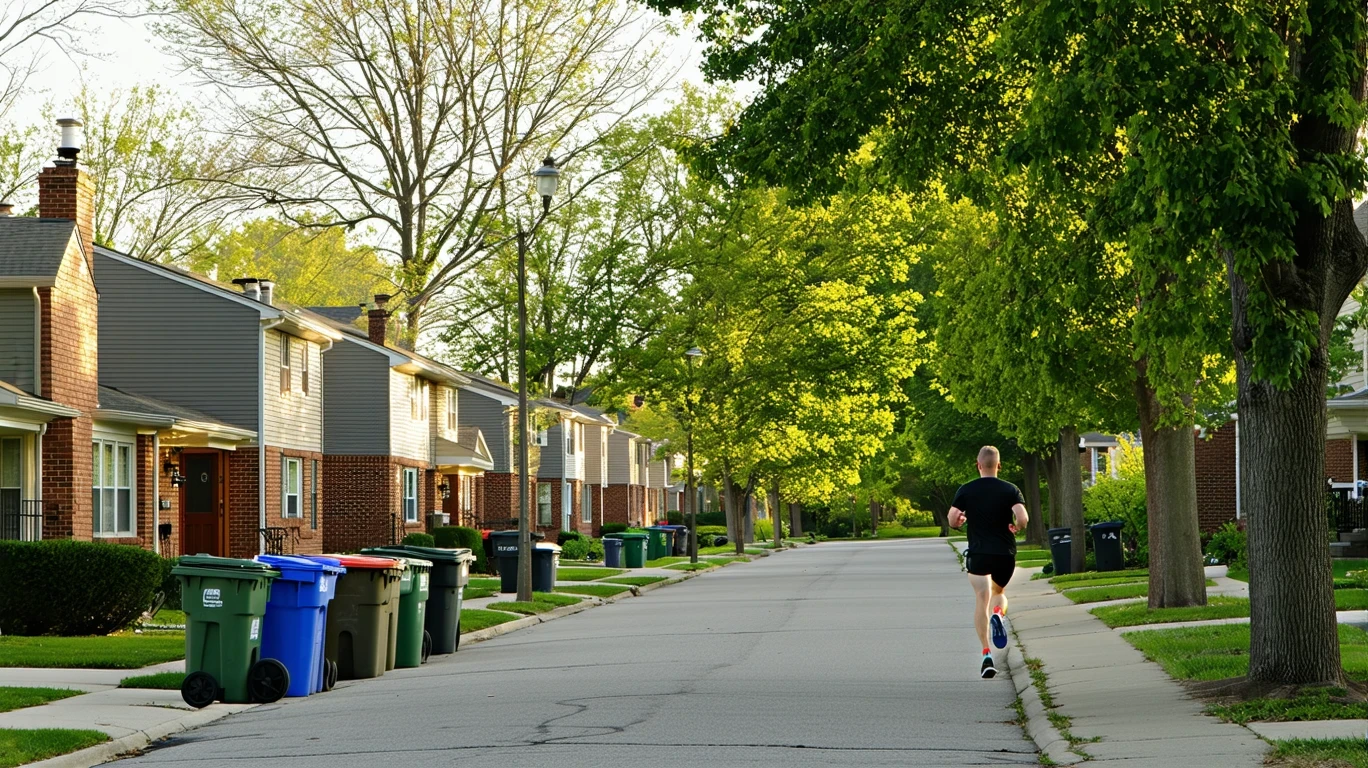
The Housing Market in Berwyn Today
Berwyn’s housing market is shaped by three forces: its location within the Chicago metro, its older housing stock, and its walkable, mixed-use character. The city developed primarily in the early-to-mid 20th century, and much of the housing reflects that era—bungalows, two-flats, and low-rise apartment buildings rather than newer subdivisions or high-rises. This creates a market where home values are moderate relative to the metro, but where maintenance, heating, and renovation costs can be higher than in newer suburbs.
Proximity to Chicago drives demand from commuters, particularly those working in the city but seeking lower housing pressure than they’d face in closer-in neighborhoods. The average commute here is 30 minutes, and 52.7% of workers have what’s classified as a long commute, reflecting the reality that many Berwyn residents are trading distance for affordability or space. Only 9.9% work from home, which means most households are still navigating the time-versus-cost tradeoff that defines much of the metro.
What newcomers often misunderstand is that Berwyn is not a low-cost alternative to Chicago—it’s a different cost structure. You’re not escaping metro-level expenses; you’re shifting them. Rent and ownership costs are lower than in the city, but you’re taking on exposure to property taxes, heating bills, and the maintenance burden of older housing. In exchange, you gain access to a walkable street grid, strong errands accessibility, and integrated park space—features that reduce other costs and improve day-to-day logistics, especially for families.
Renting in Berwyn
At $1,106 per month, median rent in Berwyn reflects the city’s position as a commuter suburb with established infrastructure. This figure represents gross rent, meaning it typically includes some utilities or services, though the specifics vary widely by building age, landlord, and unit type. Renters in older two-flats or walk-up buildings may face separate utility billing and higher heating costs during the cold months, while those in managed apartment complexes may see more bundled pricing but less control over efficiency upgrades.
Rental pressure here is driven by proximity to Chicago and by the fact that Berwyn offers a level of walkability and errands access that’s uncommon in comparably priced suburbs. Because grocery density and food establishment density both exceed high thresholds, renters can often meet daily needs without a car or with minimal driving—a meaningful cost advantage in a metro where car ownership, insurance, and parking can add hundreds of dollars per month. The bus network is present and functional, though rail access is limited, so renters who commute to the city will likely rely on bus-to-rail connections or driving to a transit hub.
Rental availability tends to be tighter in walkable pockets near commercial corridors, where the pedestrian-to-road ratio is highest and errands are most accessible. Renters who prioritize car-free or car-light living will find Berwyn more accommodating than many suburbs, but those expecting the density or transit frequency of the city itself will need to adjust expectations. The rental experience here is defined by tradeoffs: you’re not paying city-level rent, but you’re also not getting city-level transit or the anonymity of a large apartment tower.
Owning a Home in Berwyn
At $272,900, the median home value in Berwyn positions ownership as accessible for households earning near or above the city’s median income of $71,300, though affordability depends heavily on down payment, debt load, and tolerance for maintenance exposure. Ownership here means taking on the full cost structure of an older suburb: property taxes, heating bills, and the ongoing need to maintain or update systems in homes that may be 50 to 100 years old.
Property taxes in Illinois are structured at the county and municipal level, and while no specific rate is provided in the data, Cook County’s tax environment is widely understood to be among the highest in the state. Owners in Berwyn should expect property taxes to represent a significant share of monthly housing costs—often rivaling or exceeding the principal and interest portion of a mortgage payment. This is not unique to Berwyn, but it is a defining feature of ownership in this part of the metro, and it’s a cost that rises over time regardless of whether you’ve paid off your mortgage.
Maintenance exposure is higher here than in newer suburbs because the housing stock is older. Roofs, furnaces, windows, and plumbing systems in early-20th-century homes have shorter remaining lifespans and higher replacement costs than in recently built housing. Heating costs are also more volatile in older homes, particularly during extended cold periods—current conditions show temperatures at 6°F with a feels-like temperature of -7°F, a reminder that winter heating is not a minor line item in Berwyn. Natural gas is priced at $15.48 per MCF, and electricity runs 18.31¢ per kWh, both of which are relevant when heating systems cycle frequently or when older homes lack modern insulation.
Ownership in Berwyn is a fit for households who value control, stability, and the ability to invest in a property over time. It’s a poor fit for those expecting rapid appreciation, minimal maintenance, or low property tax exposure. The value proposition here is not financial optimization—it’s the ability to live in a walkable, family-friendly suburb with strong infrastructure, at a price point that’s lower than closer-in alternatives.
Apartment vs House in Berwyn — Cost Behavior Comparison
The table below reflects only the cost categories that behave meaningfully differently in Berwyn depending on whether you live in an apartment or a house. Rows are included only where local factors—such as climate, housing stock age, or governance—create a distinction worth explaining. Generic differences that apply everywhere have been omitted.
| Expense Category | Apartment | House |
|---|---|---|
| Heating (Winter) | Lower exposure; shared walls reduce heat loss, though older buildings may lack efficient systems | Higher exposure; standalone structures lose heat faster, and older homes often have outdated insulation and furnaces |
| Property Tax | Indirect; embedded in rent, not separately billed or controllable | Direct and rising; billed separately, often exceeds $400–$500/month in Cook County suburbs |
| Maintenance & Repairs | Landlord responsibility; tenant exposure limited to appliance issues or tenant-caused damage | Owner responsibility; older housing stock increases frequency and cost of roof, HVAC, plumbing, and window replacement |
| HOA or Condo Fees | Common in managed buildings; may bundle exterior maintenance, trash, or water | Rare in single-family homes; most houses have no HOA, meaning no monthly fee but also no shared cost pooling |
Why these categories? Heating exposure is included because Berwyn experiences long, cold winters, and the city’s older housing stock amplifies the cost difference between apartments and houses. Property tax is included because Illinois’ structure makes it a dominant cost for owners, but invisible to renters. Maintenance is included because housing age drives frequency and cost. HOA fees are included because they’re common in Berwyn’s apartment buildings but rare in its single-family housing, creating a structural cost difference that affects monthly expenses.
Categories like basic utilities (electricity, water) and internet are omitted because they don’t vary meaningfully by housing type in Berwyn—both apartments and houses face similar rates and usage patterns for these services.
Utilities & Upkeep Differences
Utility and maintenance exposure in Berwyn is shaped by two factors: the intensity of the heating season and the age of the housing stock. These aren’t abstract risks—they’re recurring costs that differ sharply depending on whether you live in an apartment or a house, and whether your building or home has been updated.
Winter heating is the dominant utility cost. With extended periods of freezing temperatures and wind chill pushing feels-like temperatures well below zero, heating systems in Berwyn run frequently from November through March. Apartments benefit from shared walls and smaller square footage, which reduces heat loss and lowers gas or electric heating bills. Houses, especially older bungalows and two-story homes, lose heat faster and often rely on aging furnaces that cycle more often and less efficiently. Natural gas is the primary heating fuel in the region, priced at $15.48 per MCF, and a cold winter can push monthly heating costs into a range that meaningfully affects household budgets.
Electricity, priced at 18.31¢ per kWh, is less volatile but still significant, particularly in homes with electric heating supplements, older appliances, or poor insulation. Apartments in managed buildings may include some utilities in rent, which shifts the cost but doesn’t eliminate it—it’s simply embedded in the rent price rather than billed separately.
Maintenance exposure is higher in houses because the housing stock is older and because owners bear the full cost of repairs. Roofs, furnaces, water heaters, and windows in early-20th-century homes are often near or past the end of their useful lives, and replacement costs are not trivial. Apartment renters are insulated from most of this exposure, though they may face delays in getting repairs completed or may live with older, less efficient systems because landlords defer upgrades.
The upkeep difference between apartments and houses in Berwyn is not just financial—it’s also a difference in control and predictability. Apartment renters have less control but more predictability; house owners have more control but face lumpy, unpredictable expenses that require either cash reserves or financing.
Rent vs Buy: Long-Term Exposure in Berwyn
The decision to rent or buy in Berwyn is not primarily a financial optimization problem—it’s a question of which cost structure fits your household’s risk tolerance, time horizon, and need for control. Both paths have exposure; the exposures are just different.
Renters face volatility in the form of rent increases, which are driven by metro-wide demand, landlord decisions, and the condition of the local rental market. Rent can rise annually, and tenants have limited ability to control or predict those increases. However, renters are insulated from property tax increases, major maintenance costs, and the long-term risk of owning an aging asset in a market that may not appreciate quickly. When heating costs spike or a furnace fails, it’s the landlord’s problem, not the tenant’s.
Owners face a different set of exposures. Property taxes in Cook County suburbs are high and tend to rise over time, driven by municipal budget needs, school funding, and assessment cycles. These increases are not optional, and they persist even after a mortgage is paid off. Maintenance costs are lumpy and unpredictable—roofs, HVAC systems, and water heaters don’t fail on a schedule, and replacement costs can run into thousands of dollars. Heating exposure is also higher for owners, particularly those in older, less-efficient homes, because they bear the full cost of keeping the house warm during extended cold periods.
What owners gain is stability in the largest component of housing cost—the mortgage payment—and control over the property. They can invest in efficiency upgrades, refinance if rates drop, and avoid the risk of being forced to move due to rent increases or landlord decisions. Over time, they also build equity, though in a moderate-appreciation market like Berwyn, that equity accumulates slowly and should not be counted on as a wealth-building strategy in the near term.
The long-term cost difference between renting and owning in Berwyn is not a simple calculation. It depends on how long you stay, how much you value control, how well you manage maintenance, and how property taxes and rent both evolve over time. Renters who stay for many years may pay more in total than owners, but they also avoid the risk of major repairs, tax increases, and market stagnation. Owners who stay for decades will likely come out ahead financially, but only if they can absorb the volatility and lumpiness of ownership costs without financial strain.
FAQs About Housing Costs in Berwyn
Is Berwyn, IL affordable for renters compared to Chicago?
Berwyn’s median rent of $1,106 per month is lower than in many Chicago neighborhoods, particularly those close to the Loop or along the lakefront. However, affordability depends on your income, commute tolerance, and whether you need a car. Berwyn offers strong walkability and errands access, which can reduce transportation costs, but transit to the city relies on bus connections, which add time. Renters who value lower rent and can tolerate a longer commute will find Berwyn more affordable; those who need fast, frequent transit access may find the time cost offsets the rent savings.
What drives property taxes in Berwyn, IL?
Property taxes in Berwyn are set by Cook County, local municipalities, school districts, and other taxing bodies. Illinois relies heavily on property taxes to fund schools and services, and Cook County’s rates are among the highest in the state. Owners should expect property taxes to represent a large share of monthly housing costs—often comparable to or exceeding the mortgage principal and interest. These taxes tend to rise over time, driven by budget needs and assessment cycles, and they do not go away when the mortgage is paid off.
Are older homes in Berwyn more expensive to maintain?
Yes. Much of Berwyn’s housing stock was built in the early-to-mid 20th century, and older homes typically require more frequent and costly maintenance than newer construction. Roofs, furnaces, plumbing, and windows have finite lifespans, and replacement costs are significant. Older homes also tend to be less energy-efficient, which increases heating costs during Berwyn’s cold winters. Buyers should budget for both routine maintenance and the likelihood of major system replacements within the first few years of ownership.
Does Berwyn’s walkability reduce overall housing costs?
Indirectly, yes. Berwyn’s high pedestrian infrastructure density and strong grocery and food establishment access mean that many households can meet daily needs without a car or with minimal driving. This reduces transportation costs—gas, insurance, parking, and vehicle maintenance—which can offset higher rent or ownership costs. For families, the presence of schools, playgrounds, and parks within walking distance also reduces the need for driving children to activities, which saves both time and money. Walkability doesn’t lower rent or home prices, but it does lower the total cost of living in Berwyn compared to car-dependent suburbs.
Is buying a home in Berwyn a good investment?
Berwyn is not a high-appreciation market. Home values here reflect the city’s role as an established, moderate-cost suburb rather than a rapidly growing or gentrifying area. Buyers should expect slow, steady appreciation rather than rapid gains. The value of ownership in Berwyn is not primarily financial—it’s the stability, control, and access to a walkable, family-friendly community at a price point that’s lower than closer-in alternatives. If your goal is wealth-building through real estate, Berwyn is not the strongest choice. If your goal is stable housing in a functional, infrastructure-rich suburb, it’s a reasonable fit.
Making Housing Choices in Berwyn
Housing costs in Berwyn are shaped by proximity to Chicago, the age and character of the housing stock, and the city’s walkable, mixed-use structure. Rent and home values are moderate relative to the metro, but ownership comes with high property tax exposure, significant maintenance costs, and heating bills that spike during the long winter months. Renters face less volatility in maintenance and taxes, but more uncertainty in rent increases and less control over their housing situation.
The households that fit best in Berwyn are those who value infrastructure—walkability, errands access, parks, schools—and who can absorb the cost structure that comes with an older suburb. Families with children benefit from the strong presence of schools and playgrounds, and from the ability to meet daily needs on foot or by bus. Commuters to Chicago benefit from lower housing costs than they’d face closer in, though they pay for that savings in time and transit complexity.
The households that struggle in Berwyn are those expecting rapid home appreciation, low property taxes, or minimal maintenance. This is not a low-cost suburb, and it’s not a high-growth market. It’s a place where housing costs are moderate but persistent, where ownership requires active management, and where the value proposition is lifestyle and infrastructure rather than financial optimization.
For more on how housing costs fit into the broader picture of living in Berwyn, see Where Your Money Goes in Berwyn. If you’re planning a move and weighing logistics, Pods vs trucks: which move is best for you? offers a practical breakdown of moving options and costs.
How this article was built: In addition to public economic data, this article incorporates location-based experiential signals derived from anonymized geographic patterns—such as access density, walkability, and land-use mix—to reflect how day-to-day living actually feels in Berwyn, IL.