
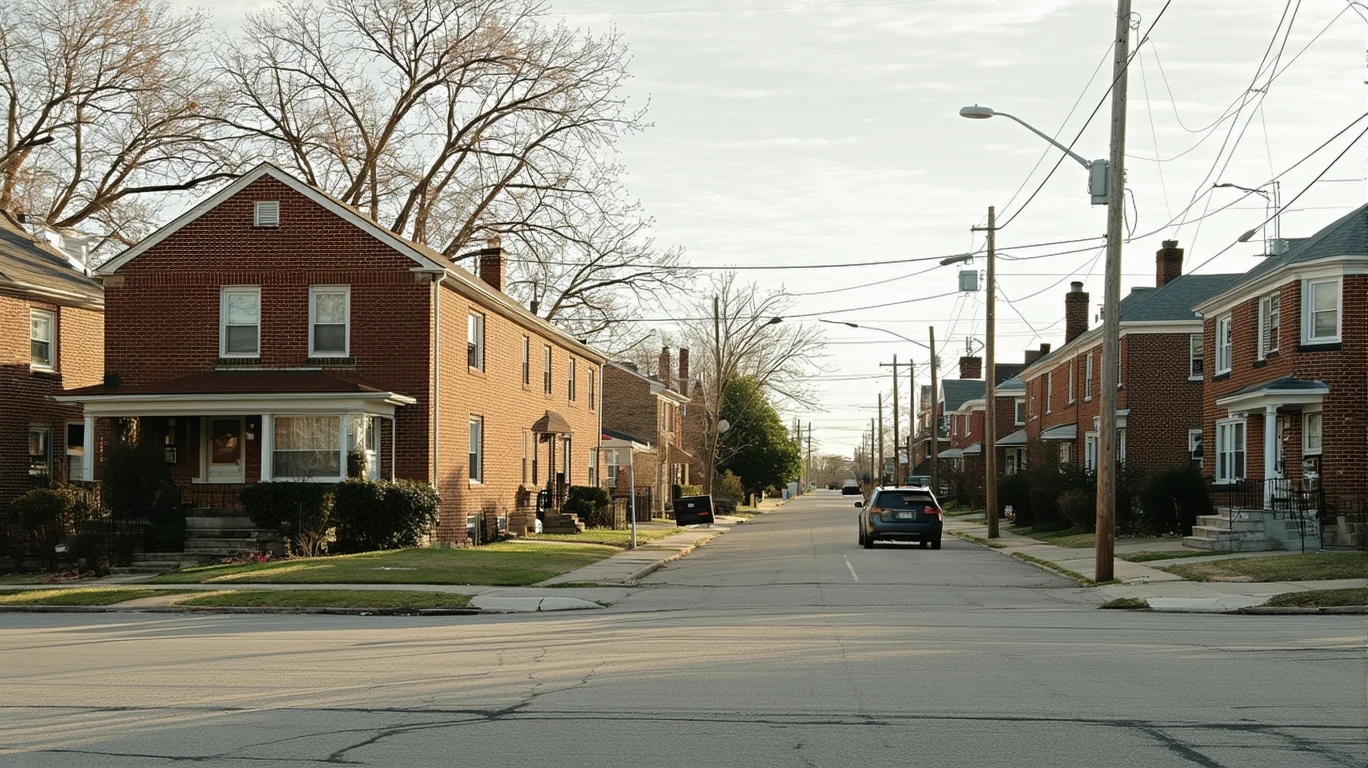
Berwyn: Higher home prices, walkable errands, integrated parks, strong family infrastructure, bus transit.
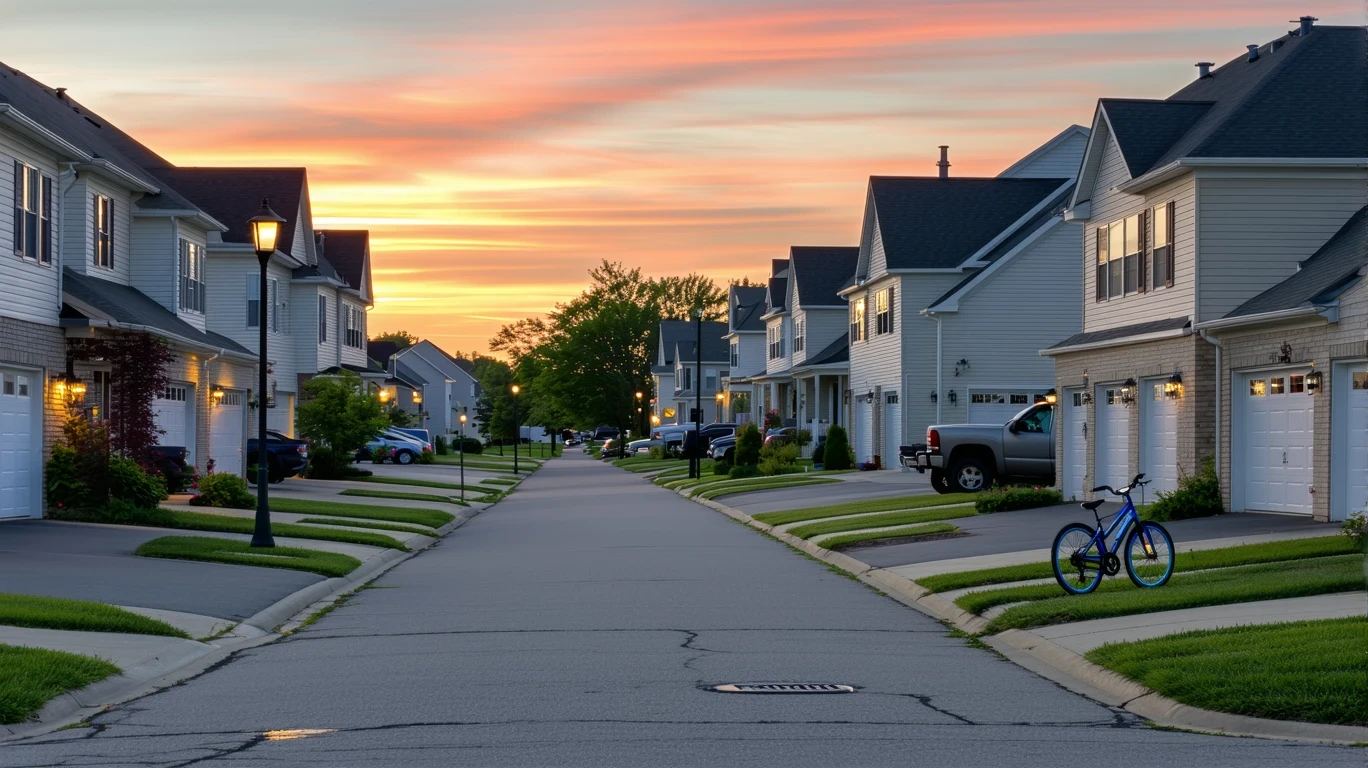
Joliet: Lower home entry, higher rent, car-dependent, fewer walkable amenities, higher median income.
Both: Same regional price level, similar utility rates, comparable commute times, long heating seasons.
Berwyn and Joliet sit roughly 30 miles apart in the Chicago metro, but they operate on different cost structures. Berwyn, a mature inner-ring suburb west of the city, concentrates cost pressure in housing entry but rewards that investment with walkable access to groceries, parks, and schools. Joliet, a larger outer-ring city to the southwest, offers lower home prices but higher rents and requires more driving for daily errands. The decision between them isn’t about which is cheaper overall—it’s about which cost pressures a household can absorb and which conveniences matter most in 2026.
For families prioritizing walkability, school access, and park density, Berwyn’s higher home values may feel justified by reduced transportation friction and integrated amenities. For dual-income households with longer commutes and higher earnings, Joliet’s lower entry barrier and car-oriented layout may align better with their logistics. Single adults and couples sensitive to rent volatility or car dependence will find the tradeoffs starkly different between the two cities.
Housing Costs in Berwyn vs Joliet
Berwyn’s median home value sits at $272,900, while Joliet’s is $233,800—a structural difference that shapes entry barriers for buyers. Berwyn’s housing stock reflects its dense, walkable layout: smaller lots, older construction, and proximity to transit corridors. Joliet’s lower home prices correspond to a more sprawling footprint, where single-family homes on larger parcels dominate the market. For first-time buyers, Joliet’s lower entry threshold may ease down payment pressure, but Berwyn’s higher home values often come with access to amenities that reduce ongoing transportation and convenience costs.
Renters face a different calculus. Berwyn’s median gross rent is $1,106 per month, while Joliet’s is $1,174—a reversal of the ownership pattern. Joliet’s higher rent may reflect newer apartment construction or tighter rental inventory relative to demand. Berwyn’s lower rent aligns with its older housing stock and higher density, where smaller units and walk-up buildings keep monthly obligations more predictable. For renters prioritizing stability and walkable errands, Berwyn’s rent structure pairs well with reduced car dependence. For renters in Joliet, the higher monthly rent may be offset by access to newer units or larger floor plans, but car ownership becomes non-negotiable.
The housing decision hinges on whether a household values lower entry costs or lower ongoing friction. Berwyn’s higher home prices act as a front-loaded cost that unlocks walkable infrastructure, integrated parks, and strong family amenities. Joliet’s lower home prices reduce the barrier to ownership but shift cost pressure to transportation, utilities in larger homes, and time spent managing errands across a car-dependent layout.
| Housing Type | Berwyn | Joliet |
|---|---|---|
| Median Home Value | $272,900 | $233,800 |
| Median Gross Rent | $1,106/month | $1,174/month |
| Typical Housing Form | Older construction, smaller lots, walkable blocks | Newer construction, larger parcels, car-oriented |
Housing Takeaway: First-time buyers face lower entry costs in Joliet, but Berwyn’s higher home values correspond to denser infrastructure that reduces transportation and errands friction. Renters in Berwyn experience lower monthly obligations and walkable access; renters in Joliet pay more but may access newer units in a car-dependent layout. Families prioritizing school density and park access may find Berwyn’s housing premium justified by reduced logistics complexity.
Utilities and Energy Costs
Electricity rates are nearly identical: Berwyn at 18.31¢/kWh and Joliet at 18.74¢/kWh. Natural gas prices are the same at $15.48/MCF. The difference in utility exposure comes from housing stock, home size, and seasonal intensity. Berwyn’s older, denser housing stock—often smaller single-family homes or multi-unit buildings—tends to concentrate heating and cooling loads in more compact spaces. Joliet’s newer, larger single-family homes on bigger lots introduce more square footage to heat in winter and cool during the extended Midwest summer.
Both cities endure long heating seasons with cold, snowy winters and hot, humid summers that drive cooling demand. Households in larger Joliet homes may see higher baseline usage during peak months, even at similar rates, because of the additional space and often less-efficient older HVAC systems in some neighborhoods. Berwyn’s mixed building heights and denser blocks can create some insulation advantages in multi-unit buildings, where shared walls reduce heat loss. Single-family homeowners in Berwyn, however, face similar exposure to those in Joliet if the home is older and lacks modern weatherization.
Utility cost exposure varies by household size and home age. Single adults or couples in smaller Berwyn apartments may experience lower baseline usage and more predictable bills. Families in larger Joliet homes face higher seasonal swings, especially if the home was built before modern efficiency standards. Households in either city can reduce volatility through programmable thermostats, weatherization, and off-peak usage strategies, but the structural difference remains: Joliet’s larger homes amplify seasonal exposure, while Berwyn’s denser housing stock moderates it for many residents.
Utility Takeaway: Rates are nearly identical, but home size and housing stock drive exposure differences. Households in larger Joliet homes face higher seasonal volatility due to square footage and heating/cooling loads. Berwyn’s denser, smaller housing stock moderates baseline usage for many residents, though older single-family homes in either city introduce similar weatherization challenges. Families managing larger spaces should expect higher utility swings in Joliet; singles and couples in compact Berwyn units gain predictability.
Groceries and Daily Expenses
Both cities share the same regional price parity index (103), meaning grocery staples and everyday items reflect similar baseline pricing. The difference lies in access density and how that shapes spending habits. Berwyn’s food and grocery establishment density exceeds high thresholds, meaning residents can walk or take short trips to multiple options—discount grocers, ethnic markets, and corner stores—without defaulting to a single big-box trip. Joliet’s car-oriented layout concentrates grocery shopping into fewer, larger trips, often to big-box stores or regional chains that require driving.
Households sensitive to convenience spending may find Berwyn’s walkable errands reduce the temptation to over-purchase or rely on prepared foods. The ability to stop at a nearby grocer on the way home from work or school lowers the friction of restocking staples and reduces food waste. In Joliet, the need to drive for groceries often leads to bulk purchasing, which can introduce waste or impulse buys. Dining out and takeout access also differ: Berwyn’s mixed-use blocks support more casual dining and coffee shops within walking distance, while Joliet’s layout requires driving to most restaurants, which can reduce frequency but increase per-trip spending.
For single adults, Berwyn’s walkable grocery access aligns well with smaller, more frequent shopping trips. Couples managing dual schedules may appreciate the flexibility of quick errands without car dependency. Families with larger grocery volumes may find Joliet’s big-box access more efficient for bulk staples, but the car requirement and longer trips introduce time costs that Berwyn’s density avoids. Price sensitivity matters less than access friction: both cities reflect similar pricing, but the logistics of getting to the store and managing inventory differ sharply.
Groceries Takeaway: Pricing is regionally similar, but access structure drives spending behavior. Berwyn’s high grocery density supports frequent, walkable trips that reduce waste and convenience spending creep. Joliet’s car-dependent layout favors bulk purchasing at big-box stores, which can introduce impulse buys and time costs. Families managing large volumes may prefer Joliet’s efficiency; singles and couples benefit from Berwyn’s low-friction errands.
Taxes and Fees
Property taxes in both cities reflect Illinois’ reliance on local levies to fund schools, infrastructure, and services. Berwyn’s higher median home value means homeowners face higher absolute property tax bills, even if rates are comparable. Joliet’s lower home prices reduce the base for taxation, which can ease the annual burden for new buyers. However, property tax exposure is less about the rate and more about predictability: both cities are subject to Illinois’ periodic reassessment cycles, which can introduce volatility for long-term residents.
Sales taxes apply similarly across the Chicago metro, though local add-ons for specific services or districts can vary. Households in either city should expect similar taxation on everyday purchases, dining, and goods. Recurring fees—trash collection, water, sewer—are often billed separately and vary by provider and service tier. Berwyn’s denser layout may bundle some services through municipal contracts, while Joliet’s sprawl can introduce more variability depending on neighborhood or subdivision.
Homeowners planning to stay several years should consider how property tax exposure compounds over time. Berwyn’s higher home values mean larger annual bills, but the walkable infrastructure and amenities may justify that cost for households prioritizing reduced transportation and errands friction. Joliet’s lower property tax base offers near-term savings, but the need for car ownership, larger utility bills, and time spent managing logistics can offset those gains. Renters in either city are insulated from direct property tax volatility, but landlords typically pass through some portion of tax increases via rent adjustments.
Taxes and Fees Takeaway: Berwyn’s higher home values translate to higher property tax bills, but the walkable infrastructure may justify that cost for households valuing reduced friction. Joliet’s lower home prices ease property tax exposure, but car dependency and larger homes shift cost pressure elsewhere. Long-term homeowners should weigh front-loaded tax obligations against ongoing transportation and utility savings. Renters face similar sales tax exposure, with rent volatility more tied to local housing supply than tax structure.
Transportation and Commute Reality
Average commute times are nearly identical: 30 minutes in Berwyn, 29 minutes in Joliet. But the structure of those commutes differs sharply. Berwyn’s walkable blocks and bus transit allow some residents to reduce car dependence for errands, even if the work commute requires driving or transit into Chicago. Only 9.9% of Berwyn workers work from home, and 52.7% face long commutes—suggesting many residents are tied to jobs in the broader metro. Joliet’s 12.5% work-from-home rate is slightly higher, and 45.0% face long commutes, but the car-oriented layout means nearly every trip—work, errands, school runs—requires driving.
Gas prices are nearly identical: $2.98/gal in Berwyn, $2.91/gal in Joliet. The cost difference comes from miles driven, not fuel price. Households in Berwyn can walk to groceries, parks, and schools, reducing daily vehicle miles traveled. Households in Joliet must drive for nearly every errand, compounding fuel costs and vehicle wear over time. For families managing multiple daily trips—school drop-offs, after-school activities, grocery runs—the car dependence in Joliet introduces both cash costs and time costs that Berwyn’s density avoids.
Transit access also differs. Berwyn has bus service, which provides some connectivity to Chicago and nearby suburbs, though frequency and coverage vary. Joliet lacks the same transit density, making car ownership non-negotiable for most households. Single adults or couples who can structure their lives around walkable errands in Berwyn may reduce or eliminate the need for a second vehicle. Families in Joliet should budget for multiple cars and the associated insurance, maintenance, and fuel costs.
Cost Structure Comparison
Housing pressure concentrates differently in each city. Berwyn front-loads cost in higher home values, but that investment unlocks walkable errands, integrated parks, and strong family infrastructure that reduce ongoing friction. Joliet offers lower home entry but shifts cost pressure to higher rent for renters, larger utility bills for homeowners, and mandatory car dependence for all households. The decision isn’t about which city is cheaper—it’s about which cost structure aligns with a household’s income, schedule, and priorities.
Utilities introduce more volatility in Joliet due to larger home sizes and the square footage that must be heated and cooled during the extended Midwest seasons. Berwyn’s denser housing stock moderates baseline usage for many residents, though older single-family homes in either city face similar weatherization challenges. Households managing larger spaces should expect higher seasonal swings in Joliet; those in compact Berwyn units gain predictability.
Daily living costs—groceries, errands, convenience spending—are shaped more by access friction than by pricing. Berwyn’s high grocery density supports frequent, walkable trips that reduce waste and impulse buys. Joliet’s car-dependent layout favors bulk purchasing at big-box stores, which can introduce time costs and over-purchasing. Families managing large grocery volumes may find Joliet’s big-box access efficient, but singles and couples benefit from Berwyn’s low-friction errands.
Transportation patterns matter more in Joliet, where car ownership is non-negotiable and every trip requires driving. Berwyn’s walkable blocks and bus transit allow some households to reduce vehicle miles traveled, which lowers fuel costs, maintenance, and the need for multiple cars. For families managing school runs, activities, and errands, the time cost of driving in Joliet compounds the cash cost. For households in Berwyn, the ability to walk or bus for many trips reduces both.
Households sensitive to housing entry barriers may prefer Joliet’s lower home prices, but they must absorb higher rent if renting, higher transportation costs, and larger utility bills. Households sensitive to ongoing friction—time spent driving, managing errands, coordinating logistics—may find Berwyn’s higher home values justified by the reduced complexity. The better choice depends on which costs dominate the household: front-loaded housing investment or ongoing transportation and time costs.
How the Same Income Feels in Berwyn vs Joliet
Single Adult
In Berwyn, a single adult can structure life around walkable errands, reducing or eliminating the need for a car and the associated insurance, fuel, and maintenance costs. Rent is lower, and bus transit provides some connectivity to jobs and social activities in Chicago. In Joliet, higher rent and mandatory car ownership become non-negotiable costs that consume a larger share of income before discretionary spending begins. The flexibility to walk for groceries or coffee in Berwyn creates breathing room; the need to drive everywhere in Joliet tightens the budget and adds time friction to every errand.
Dual-Income Couple
In Berwyn, a couple can share one car if schedules align, using walkable errands and bus transit to reduce the need for a second vehicle. Lower rent and integrated amenities mean more income remains flexible for savings or lifestyle spending. In Joliet, two cars become necessary for most couples, and higher rent plus larger utility bills in a single-family home shift cost pressure toward fixed obligations. The predictability of walkable errands in Berwyn reduces planning burden; the car dependence in Joliet introduces coordination costs and time spent managing logistics across a sprawling layout.
Family with Kids
In Berwyn, families benefit from strong school density, integrated parks, and walkable access to groceries and activities, which reduces the need for constant driving and simplifies daily logistics. Higher home values act as a front-loaded cost, but the reduced transportation friction and access to family infrastructure create long-term savings in time and cash. In Joliet, lower home prices ease entry, but families must absorb higher ongoing costs: multiple cars, larger utility bills, and time spent driving kids to school, activities, and errands. The cost structure in Joliet favors households with higher income and car-dependent commutes; the cost structure in Berwyn favors households prioritizing walkability and reduced logistics complexity.
Decision Matrix: Which City Fits Which Household?
| Decision Factor | If You’re Sensitive to This… | Berwyn Tends to Fit When… | Joliet Tends to Fit When… |
|---|---|---|---|
| Housing entry + space needs | Down payment size, monthly rent, home size flexibility | You prioritize walkable access over lower entry cost and can absorb higher home values | You need lower entry barriers and larger homes, even if rent is higher |
| Transportation dependence + commute friction | Car ownership costs, fuel, time spent driving, transit viability | You can reduce car dependence through walkable errands and bus transit | You already own multiple cars and commute patterns justify car-oriented layout |
| Utility variability + home size exposure | Seasonal bill swings, heating/cooling costs, home square footage | You prefer smaller, denser housing that moderates baseline usage | You need larger homes and can absorb higher seasonal utility swings |
| Grocery strategy + convenience spending creep | Frequency of trips, bulk vs fresh shopping, impulse buying, food waste | You value frequent, walkable trips that reduce waste and over-purchasing | You prefer bulk shopping at big-box stores and can manage larger inventories |
| Fees + friction costs (HOA, services, upkeep) | Property taxes, recurring fees, service bundling, long-term tax exposure | You can absorb higher property taxes in exchange for walkable infrastructure | You prioritize lower property tax base and can manage unbundled services |
| Time budget (schedule flexibility, errands, logistics) | Coordination burden, driving time, errands friction, household logistics | You value reduced logistics complexity and walkable access to daily needs | You have schedule flexibility and car access aligns with household routines |
Lifestyle Fit Beyond the Numbers
Berwyn’s walkable blocks, integrated parks, and strong family infrastructure create a lifestyle centered on proximity and reduced friction. Residents can walk to groceries, schools, and parks, which simplifies daily logistics and reduces the time spent coordinating errands. The mixed building heights and dense commercial corridors support casual dining, coffee shops, and neighborhood retail within short distances. For families prioritizing school access and outdoor space, Berwyn’s park density and playground availability exceed high thresholds, meaning kids can walk or bike to green space without requiring a parent to drive.
Joliet’s car-oriented layout and larger homes appeal to households prioritizing space and lower entry costs. The sprawling footprint means more square footage per dollar, but it also means every trip—work, school, groceries, activities—requires driving. Families with multiple kids and busy schedules may find the larger homes and yards in Joliet accommodate their needs, but the time cost of managing logistics across a car-dependent layout compounds daily. For households with higher incomes and car-dependent commutes into Chicago or nearby employment centers, Joliet’s lower home prices and newer construction may align well with their priorities.
Commute times are nearly identical, but the texture of daily life differs sharply. Berwyn’s bus transit and walkable errands allow some residents to reduce vehicle miles traveled, which lowers fuel costs and vehicle wear. Joliet’s lack of transit density and sprawling layout make car ownership non-negotiable, which introduces fixed costs—insurance, maintenance, fuel—that Berwyn households can sometimes avoid. For single adults or couples who value walkability and can structure their lives around transit and errands on foot, Berwyn offers a lifestyle that reduces both cash costs and time friction. For families needing space and already committed to car ownership, Joliet’s lower home prices and larger parcels may justify the higher ongoing costs.
Berwyn Quick Facts: Walkable errands, integrated parks, strong family infrastructure, bus transit, mixed building heights.
Joliet Quick Facts: Lower home entry, larger parcels, car-dependent layout, higher median income, newer construction in some neighborhoods.
Frequently Asked Questions
Is Berwyn or Joliet cheaper for renters in 2026?
Berwyn’s median gross rent is $1,106 per month, while Joliet’s is $1,174. Berwyn offers lower monthly rent and walkable access to groceries and transit, which can reduce transportation costs. Joliet’s higher rent may reflect newer units or larger floor plans, but car ownership becomes non-negotiable, adding insurance, fuel, and maintenance costs. Renters prioritizing stability and walkable errands may find Berwyn’s lower rent and reduced car dependence more predictable. Renters in Joliet should budget for higher rent and mandatory vehicle costs.
Which city has lower home prices, Berwyn or Joliet, in 2026?
Joliet’s median home value is $233,800, compared to Berwyn’s $272,900. Joliet offers a lower entry barrier for first-time buyers, but the car-oriented layout and larger homes introduce higher ongoing costs—utilities, transportation, and time spent managing errands. Berwyn’s higher home values correspond to walkable infrastructure, integrated parks, and strong family amenities that reduce transportation friction and daily logistics complexity. The decision hinges on whether a household values lower entry costs or lower ongoing friction.
How do utility costs compare between Berwyn and Joliet in 2026?
Electricity rates are nearly identical: 18.31¢/kWh in Berwyn, 18.74¢/kWh in Joliet. Natural gas prices are the same at $15.48/MCF. The difference comes from home size and housing stock. Joliet’s larger single-family homes introduce higher baseline usage during heating and cooling seasons. Berwyn’s denser, smaller housing stock moderates usage for many residents, though older single-family homes in either city face similar weatherization challenges. Families in larger Joliet homes should expect higher seasonal swings; singles and couples in compact Berwyn units gain predictability.
Do I need a car to live in Berwyn or Joliet in 2026?
Berwyn’s walkable blocks and bus transit allow some residents to reduce or eliminate car dependence for errands, though most work commutes still require driving or transit into Chicago. Joliet’s car-oriented layout makes vehicle ownership non-negotiable for nearly every trip—work, groceries, school, activities. Single adults or couples in Berwyn may manage with one car or none if schedules align with transit and walkable errands. Families in Joliet should budget for multiple cars and the associated insurance, fuel, and maintenance costs.
Which city is better for families with kids, Berwyn or Joliet, in 2026?
Berwyn offers strong family infrastructure: school density and playground density both meet medium thresholds, and park density exceeds high thresholds, meaning kids can walk or bike to green space and schools. The walkable layout reduces the need for constant driving and simplifies daily logistics. Joliet’s lower home prices and larger parcels appeal to families needing space, but the car-dependent layout requires driving for school, activities, and errands, which introduces time costs and coordination burden. Families prioritizing walkability and integrated amenities may prefer Berwyn; families prioritizing space and lower entry costs may prefer Joliet.
Final Verdict: Which City Fits Your Household?
Berwyn and Joliet don’t compete on total cost—they offer different cost structures that fit different households. Berwyn front-loads cost in higher home values but rewards that investment with walkable errands, integrated parks, strong family infrastructure, and reduced transportation friction. Joliet offers lower home entry but shifts cost pressure to higher rent for renters, mandatory car ownership for all households, and larger utility bills for homeowners in sprawling single-family homes. The decision depends on which costs a household can absorb and which conveniences matter most.
For families prioritizing school access, park density, and walkable daily life, Berwyn’s higher home values may feel justified by the reduced logistics complexity and lower ongoing transportation costs. For dual-income households with car-dependent commutes and higher earnings, Joliet’s lower entry barrier and larger homes may align better with their needs, even if ongoing costs—rent, utilities, fuel—run higher. Single adults and couples sensitive to rent volatility or car dependence will find the tradeoffs starkly different: Berwyn offers lower rent and walkable access, while Joliet requires higher rent and mandatory vehicle ownership. Neither city is universally cheaper—each fits households whose priorities align with its cost structure.
How this article was built: In addition to public economic data, this article incorporates location-based experiential signals derived from anonymized geographic patterns—such as access density, walkability, and land-use mix—to reflect how day-to-day living actually feels in Berwyn, IL.