

Median rent in Bolingbrook runs $1,658 per month—nearly 50% higher than Berwyn’s $1,106—yet both cities sit in the same metro and share similar home values. That gap tells you everything about how cost pressure distributes differently across renters, owners, and commuters in these two Chicago-area suburbs in 2026.
Berwyn and Bolingbrook attract different households for structural reasons. Berwyn offers older housing stock, substantial pedestrian infrastructure, and dense access to groceries and parks—ideal for households prioritizing walkability and urban texture. Bolingbrook skews newer, more car-oriented, and appeals to higher-income families seeking predictable commutes and modern housing. The decision isn’t about which city costs less overall; it’s about which cost pressures dominate your household and which tradeoffs you’re equipped to manage.
This article breaks down where money gets spent, where volatility shows up, and which households feel cost differences most acutely. We’ll compare housing entry barriers, utility exposure, transportation dependence, grocery access, taxes, and lifestyle fit—focusing on mechanisms, not totals, so you can identify which city aligns with your financial structure and daily routines.
Housing Costs
Berwyn’s median home value sits at $272,900, while Bolingbrook’s reaches $276,400—a negligible difference that makes ownership entry barriers nearly identical. For buyers, the upfront cost to enter either market feels similar, though what you get for that price differs. Berwyn’s housing stock skews older, with more mixed building types and walkable street grids. Bolingbrook offers newer construction, larger lots, and subdivisions designed around car access. Ownership pressure in both cities concentrates in property taxes, maintenance, and utility exposure tied to home age and size, not in the purchase price itself.
Renters face a starkly different reality. Berwyn’s median gross rent of $1,106 per month reflects a market with older apartment stock, smaller units, and less turnover. Bolingbrook’s $1,658 per month median rent signals newer buildings, larger floor plans, and higher landlord expectations. That $552 monthly gap represents ongoing obligation, not a one-time hurdle. Renters in Bolingbrook experience more predictable unit quality but less flexibility to absorb rent increases. Renters in Berwyn trade unit age and variability for lower baseline exposure and more room to adjust spending elsewhere.
First-time buyers face similar entry costs in both cities, but renters and cost-sensitive households feel Bolingbrook’s rental premium immediately. Families prioritizing space and modern amenities may accept Bolingbrook’s higher rent as a tradeoff for newer housing and car-friendly layouts. Single adults and couples seeking lower fixed costs and walkable access to errands will find Berwyn’s rental market less punishing. The difference isn’t about affordability in the abstract—it’s about whether your household can absorb higher ongoing rent or prefers to redirect that cash toward transportation, utilities, or discretionary spending.
| Housing Type | Berwyn | Bolingbrook |
|---|---|---|
| Median Home Value | $272,900 | $276,400 |
| Median Gross Rent | $1,106/month | $1,658/month |
| Typical Housing Stock | Older, mixed building types, walkable grids | Newer construction, larger lots, car-oriented subdivisions |
Housing takeaway: Ownership entry costs align closely, but renters in Bolingbrook face significantly higher ongoing obligations. Households sensitive to monthly rent exposure or prioritizing walkable access will find Berwyn’s rental market less restrictive. Buyers choosing between the two should focus on home age, utility efficiency, and property tax trajectories rather than purchase price alone.
Utilities and Energy Costs
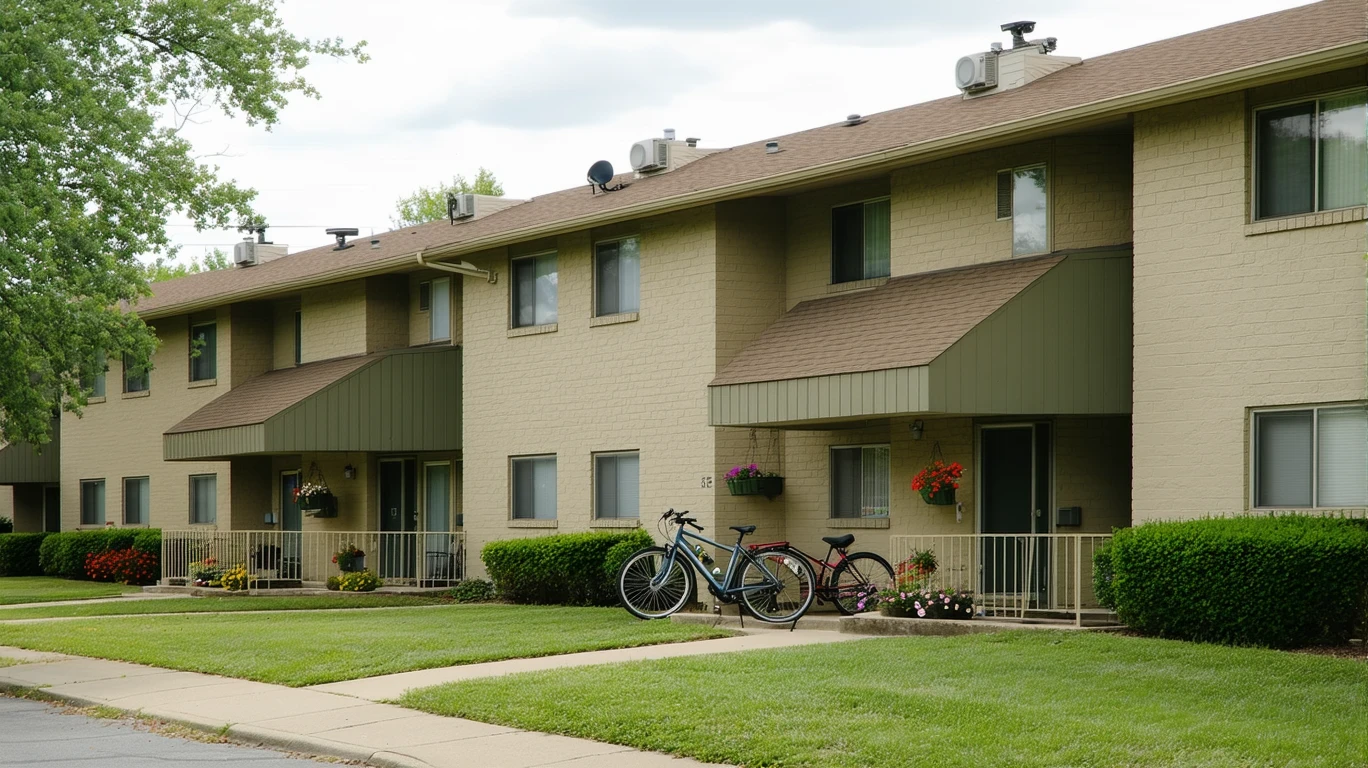
Electricity rates in Berwyn run 18.31¢/kWh, while Bolingbrook’s sit slightly higher at 18.74¢/kWh—a difference too small to drive meaningful cost variation. Both cities share the same natural gas price of $15.48/MCF, reflecting their position in the same regional energy market. The real utility cost difference comes from housing stock age, building size, and seasonal exposure, not from rate structures.
Berwyn’s older housing stock introduces more utility volatility. Homes built decades ago often lack modern insulation, efficient HVAC systems, and sealed windows, which amplifies heating costs during Chicago’s long, cold winters. Smaller apartments and multi-family buildings in Berwyn benefit from shared walls and reduced exterior surface area, which moderates heating exposure for renters. Single-family homeowners in Berwyn face higher seasonal swings, especially in older bungalows and two-flats where heating dominates winter bills and cooling spikes during summer heat.
Bolingbrook’s newer construction reduces baseline utility volatility. Modern homes built in the past two decades typically include better insulation, programmable thermostats, and energy-efficient appliances, which flatten seasonal peaks and improve predictability. Larger single-family homes in Bolingbrook still experience higher absolute usage due to square footage, but the cost per degree of comfort tends to be lower than in Berwyn’s older stock. Families in Bolingbrook can expect more stable monthly utility bills, while Berwyn households—especially those in older homes—should budget for sharper winter and summer spikes.
Utility exposure varies most by household size and home type. Single adults in Berwyn apartments benefit from low baseline usage and shared-wall efficiency, though older buildings may lack individual climate control. Couples and families in Bolingbrook’s single-family homes face higher absolute bills but gain control over heating and cooling zones, which can reduce waste. Renters in both cities should ask about utility billing structures and whether landlords cover heat or water, as those arrangements shift exposure significantly. Homeowners should prioritize home age and insulation quality over rate differences when evaluating long-term utility costs.
Utility takeaway: Rate differences between Berwyn and Bolingbrook are negligible, but housing stock age drives real cost variation. Households in Berwyn’s older homes experience more seasonal volatility, while Bolingbrook’s newer construction offers more predictable bills. Renters in smaller Berwyn units may see lower baseline costs, while Bolingbrook families trade higher usage for better efficiency and control.
Groceries and Daily Expenses
Both Berwyn and Bolingbrook share the same regional price parity index of 103, meaning grocery prices reflect similar baseline costs adjusted for the Chicago metro. Derived estimates for staples like bread, chicken, and eggs show minimal variation between the two cities—differences measured in pennies per pound rather than dollars per trip. The real grocery cost difference comes from access patterns, store density, and how much convenience spending creeps into weekly routines.
Berwyn’s high food and grocery establishment density—confirmed by experiential signals showing food density and grocery density both exceeding high thresholds—means residents can walk or take short drives to multiple options. Dense access reduces the need for bulk shopping trips and allows households to shop more frequently for fresh items, which can lower food waste and improve price flexibility. The walkable street grid and mixed land use in Berwyn also support quick errands on foot, reducing the temptation to add convenience purchases during longer car-based shopping trips. Single adults and couples in Berwyn can manage grocery costs with minimal planning, relying on proximity rather than stockpiling.
Bolingbrook’s car-oriented layout and newer suburban form push grocery shopping toward larger, less frequent trips. Without the same density of neighborhood stores, households in Bolingbrook tend to drive to big-box retailers or chain supermarkets, which encourages bulk buying and increases the risk of impulse purchases. Families managing larger volumes may benefit from warehouse club access and predictable pricing, but the car dependency adds friction—gas, time, and the psychological cost of planning around driving. Convenience spending in Bolingbrook often shows up in drive-through coffee, takeout, and prepared foods purchased during commutes or errands, which compounds over time.
Grocery pressure differs most by household size and schedule flexibility. Single adults in Berwyn can walk to groceries and avoid the planning burden of bulk trips, keeping costs lean and responsive to actual need. Families in Bolingbrook benefit from predictable big-box pricing but face higher exposure to convenience spending and the hidden costs of car-dependent errands. Couples in either city can adapt, but those prioritizing spontaneity and walkable access will find Berwyn’s density reduces friction, while those comfortable with planned, car-based shopping will find Bolingbrook’s layout familiar and efficient.
Grocery takeaway: Baseline grocery prices align closely, but access patterns shape cost behavior. Berwyn’s dense, walkable grocery access reduces planning burden and convenience spending creep, while Bolingbrook’s car-oriented layout favors bulk shopping and introduces more friction costs. Households sensitive to time, spontaneity, and walkability will feel the difference more than those focused purely on per-item pricing.
Taxes and Fees
Property taxes in both Berwyn and Bolingbrook reflect Illinois’ reliance on local property levies to fund schools, infrastructure, and municipal services. Without verbatim tax rate data in the input feed, we can only describe the structural reality: homeowners in both cities face ongoing property tax obligations that rise with assessed home values and local budget needs. Berwyn’s older housing stock and established neighborhoods may experience steadier assessments, while Bolingbrook’s newer developments and growing infrastructure needs can introduce more variability in tax trajectories over time.
Sales taxes in the Chicago metro apply broadly, with minimal variation between Berwyn and Bolingbrook. Both cities levy local sales taxes on top of state and county rates, affecting purchases of goods, dining, and some services. The impact falls harder on households that spend more locally—families eating out frequently, buying household goods, or making large purchases. Renters and homeowners alike feel sales tax pressure, though it’s distributed across daily transactions rather than concentrated in a single bill.
Recurring fees differ more by housing type than by city. Homeowners in Bolingbrook’s newer subdivisions may encounter HOA fees that bundle landscaping, snow removal, or shared amenities, which can add predictability but also introduce non-negotiable monthly costs. Berwyn’s older housing stock includes fewer HOA-governed properties, though multi-family buildings may have condo association fees. Trash collection, water, and sewer fees vary by provider and housing arrangement in both cities—some landlords bundle these into rent, while homeowners pay directly. Parking fees, permit costs, and special assessments can appear in either city depending on neighborhood and housing type.
Tax and fee exposure varies most by tenure and housing choice. Homeowners in both cities face property taxes as the dominant ongoing obligation, with Bolingbrook’s potential HOA fees adding a second layer of predictability or restriction depending on household preference. Renters avoid direct property tax exposure but may see it reflected in rent increases over time. Long-term residents in Berwyn benefit from established tax structures, while recent movers to Bolingbrook should verify HOA obligations and assess whether bundled services align with their needs or simply add fixed costs.
Tax and fee takeaway: Property taxes dominate homeowner obligations in both cities, with Bolingbrook’s newer developments potentially introducing more HOA fees and service bundling. Renters in both cities avoid direct property tax bills but remain exposed to sales taxes and utility fees. Households planning to stay several years should prioritize understanding property tax trends and HOA structures over one-time purchase price differences.
Transportation & Commute Reality
Berwyn and Bolingbrook share the same average commute time of 30 minutes, but the experience behind that number differs sharply. Berwyn’s 52.7% of workers face commutes over 45 minutes, compared to just 21.1% in Bolingbrook—a gap that reveals how commute friction concentrates differently. Berwyn’s higher long-commute percentage reflects its position as an older, inner-ring suburb where workers often travel into Chicago or across the metro for jobs. Bolingbrook’s lower long-commute share suggests more localized employment or reverse-commute patterns that avoid the worst congestion.
Work-from-home rates tell a complementary story. Bolingbrook’s 12.3% remote work share exceeds Berwyn’s 9.9%, indicating a workforce with more flexibility to avoid commutes entirely. That difference may seem small, but it compounds over time—households in Bolingbrook gain more control over when and how often they drive, which reduces exposure to gas price swings and vehicle wear. Berwyn’s lower remote work share means more households remain locked into daily commutes, amplifying the impact of traffic, transit delays, and fuel costs.
Gas prices sit at $2.98/gallon in Berwyn and $2.91/gallon in Bolingbrook—a seven-cent difference too small to matter for most households. What matters more is how often you drive and whether you have alternatives. Berwyn’s experiential signals confirm bus service presence but no rail, meaning transit exists but with limited reach. The city’s walkable pockets and high pedestrian-to-road ratio allow some households to reduce car dependence for errands, though commuting into Chicago or across the metro still requires driving or navigating bus transfers. Bolingbrook lacks the same walkable infrastructure, making car ownership functionally required for both commutes and daily errands.
Transportation pressure differs most by commute destination and household schedule. Workers commuting into Chicago from Berwyn face longer, more friction-heavy trips but can sometimes rely on bus connections or carpooling. Bolingbrook households benefit from shorter commutes on average and more remote work flexibility, though the lack of walkable errands means every trip—groceries, school drop-offs, appointments—requires a car. Single adults in Berwyn can sometimes reduce car dependence for errands, while families in Bolingbrook should budget for multi-car households and the ongoing costs of fuel, insurance, and maintenance.
Cost Structure Comparison
Housing pressure in Berwyn and Bolingbrook diverges sharply for renters but aligns closely for buyers. Ownership entry costs sit nearly identical, making the choice between the two cities less about purchase price and more about what you get for that price—older, walkable housing stock in Berwyn versus newer, car-oriented construction in Bolingbrook. Renters face a different reality entirely: Bolingbrook’s median rent runs $552 higher per month, a gap that represents ongoing obligation rather than a one-time hurdle. Households sensitive to monthly rent exposure or prioritizing lower fixed costs will feel Berwyn’s rental market as less restrictive, while those seeking newer units and predictable quality may accept Bolingbrook’s premium as a tradeoff for modern amenities.
Utilities introduce more volatility in Berwyn due to older housing stock, though rate differences between the two cities remain negligible. Berwyn’s older homes—especially single-family bungalows and two-flats—amplify seasonal heating and cooling costs, creating sharper winter and summer spikes. Bolingbrook’s newer construction flattens those peaks, offering more predictable monthly bills even as absolute usage rises with larger square footage. Renters in Berwyn’s smaller, multi-family units benefit from shared-wall efficiency and lower baseline exposure, while Bolingbrook families trade higher usage for better insulation and control. The difference matters most for households managing tight monthly budgets or those unable to absorb seasonal swings.
Daily living costs—groceries, errands, and convenience spending—show minimal price variation but diverge sharply in access patterns. Berwyn’s dense, walkable grocery access reduces the planning burden and limits convenience spending creep, allowing households to shop frequently and responsively. Bolingbrook’s car-oriented layout pushes shopping toward larger, less frequent trips, which encourages bulk buying and increases exposure to impulse purchases and drive-through convenience spending. Families comfortable with planned, car-based shopping will find Bolingbrook’s layout efficient, while single adults and couples prioritizing spontaneity and walkable access will feel Berwyn’s density as a cost-saving friction reducer.
Transportation patterns matter more in Bolingbrook for daily errands and more in Berwyn for long commutes. Berwyn’s higher long-commute percentage and lower remote work share mean more households remain locked into daily drives or bus transfers, amplifying exposure to traffic friction and fuel costs. Bolingbrook’s shorter average commutes and higher remote work flexibility reduce commute pressure, though the lack of walkable infrastructure makes car ownership non-negotiable for every household task. Households with flexible schedules or remote work options will find Bolingbrook’s layout manageable, while those commuting into Chicago or relying on transit will face more friction in Berwyn despite its walkable errands access.
The better choice depends on which costs dominate your household. Renters sensitive to monthly obligations and walkable access will find Berwyn’s lower rent and dense errands infrastructure easier to manage. Families prioritizing newer housing, predictable utility bills, and shorter commutes may prefer Bolingbrook despite higher rent and car dependence. For homeowners, the decision is less about price and more about predictability—Berwyn’s older stock introduces more utility volatility and maintenance exposure, while Bolingbrook’s newer construction offers stability at the cost of higher HOA fees and fixed service bundles. Households sensitive to upfront rent costs, seasonal utility swings, or commute friction should weigh those exposures carefully, as they compound differently depending on tenure, household size, and daily routines.
How the Same Income Feels in Berwyn vs Bolingbrook
Single Adult
In Berwyn, rent becomes the first non-negotiable cost, but the lower baseline leaves more room for flexibility in transportation and discretionary spending. Walkable grocery access and bus service reduce the need for a car, though long commutes into Chicago or across the metro can still dominate time and energy. In Bolingbrook, higher rent consumes more of the monthly budget upfront, and car ownership shifts from optional to required—gas, insurance, and maintenance become fixed costs before groceries or savings enter the picture. The tradeoff is predictability: Bolingbrook’s newer housing and shorter commutes reduce volatility, while Berwyn’s older stock and longer commutes introduce more seasonal and logistical friction.
Dual-Income Couple
In Berwyn, housing costs remain manageable for couples, and walkable errands reduce the need for constant car trips, freeing up time and cash for dining out or weekend activities. The challenge appears in commute friction—if both partners work across the metro, the time cost compounds quickly, even if transit or carpooling remains viable. In Bolingbrook, higher rent and dual-car dependence front-load fixed costs, but shorter commutes and remote work flexibility create more predictable schedules and lower ongoing friction. Couples in Bolingbrook gain control over their time budget, while those in Berwyn trade lower rent for more logistical complexity around commuting and parking.
Family with Kids
In Berwyn, families benefit from lower rent and strong family infrastructure—schools and playgrounds meet density thresholds, and integrated parks provide accessible outdoor space without requiring long drives. Utility volatility in older homes becomes more noticeable with larger households, and the lack of rail transit limits commute options for working parents. In Bolingbrook, higher rent and larger homes increase baseline housing and utility costs, but newer construction reduces seasonal spikes and maintenance surprises. Car dependence becomes non-negotiable for school drop-offs, errands, and activities, which adds ongoing transportation costs but also simplifies logistics in a layout designed around driving. Families prioritizing walkable parks and lower fixed costs may find Berwyn’s infrastructure more forgiving, while those seeking predictable bills and car-friendly routines will feel more stable in Bolingbrook.
Decision Matrix: Which City Fits Which Household?
| Decision factor | If you’re sensitive to this… | Berwyn tends to fit when… | Bolingbrook tends to fit when… |
|---|---|---|---|
| Housing entry + space needs | Monthly rent exposure and walkable access | You prioritize lower ongoing rent and can accept older housing stock | You prefer newer construction and can absorb higher rent for predictable quality |
| Transportation dependence + commute friction | Long commutes and car ownership costs | You can navigate bus service and benefit from walkable errands despite longer commutes | You value shorter commutes and remote work flexibility despite car dependence |
| Utility variability + home size exposure | Seasonal bill spikes and heating/cooling costs | You can manage volatility in older homes or rent smaller units with shared-wall efficiency | You prefer predictable bills and benefit from modern insulation in larger homes |
| Grocery strategy + convenience spending creep | Planning burden and impulse purchase exposure | You value dense, walkable grocery access and frequent, responsive shopping | You’re comfortable with planned, car-based bulk shopping and big-box efficiency |
| Fees + friction costs (HOA, services, upkeep) | Fixed monthly obligations and service bundling | You prefer fewer HOA fees and more control over maintenance and services | You accept HOA fees as a tradeoff for bundled services and newer infrastructure |
| Time budget (schedule flexibility, errands, logistics) | Commute time and errand friction | You can absorb longer commutes in exchange for walkable daily errands and lower rent | You prioritize shorter commutes and remote work flexibility despite car-dependent errands |
Lifestyle Fit
Berwyn’s walkable pockets and dense errands accessibility create a lifestyle where daily tasks—groceries, coffee, parks—happen on foot or with short drives. The city’s pedestrian-to-road ratio exceeds high thresholds, meaning sidewalks, crosswalks, and pedestrian paths integrate deeply into the street grid. Families benefit from strong infrastructure: schools and playgrounds meet density thresholds, and park access exceeds high benchmarks, with water features adding variety to outdoor options. The urban form mixes residential and commercial land use, which supports neighborhood-level errands and reduces the need to drive across town for basics. Berwyn’s experiential signals confirm bus service presence, though the lack of rail limits transit reach for longer commutes. The lifestyle fits households prioritizing walkability, urban texture, and proximity to Chicago’s inner-ring culture, though older housing stock and longer commutes introduce tradeoffs.
Bolingbrook’s newer suburban layout centers around car access and planned residential subdivisions. Without the same walkable infrastructure or mixed land use, daily errands require driving, and the lifestyle assumes multi-car households. The city’s lower long-commute percentage and higher remote work share suggest a workforce with more schedule flexibility and localized employment, which reduces commute friction compared to Berwyn. Families seeking modern housing, predictable utility bills, and car-friendly logistics will find Bolingbrook’s layout familiar and efficient. The tradeoff is reduced spontaneity—every trip, whether for groceries, school, or recreation, requires planning around driving and parking.
Lifestyle differences indirectly affect costs in both cities. Berwyn’s walkability lowers transportation expenses for households that can reduce car dependence, though older housing stock raises utility and maintenance exposure. Bolingbrook’s newer construction lowers utility bills and reduces maintenance surprises, but car dependence adds ongoing fuel, insurance, and vehicle costs that compound over time. Berwyn’s integrated parks and broadly accessible groceries mean families can manage outdoor recreation and daily errands without long drives, while Bolingbrook’s layout assumes car trips for nearly every household task. The lifestyle fit question isn’t about which city costs less—it’s about whether your household thrives with walkable spontaneity or prefers car-based predictability.
Quick facts: Berwyn’s pedestrian infrastructure density and mixed land use support walkable daily routines, while Bolingbrook’s newer housing and car-oriented layout favor predictable commutes and modern amenities. Berwyn’s park density exceeds high thresholds, offering integrated outdoor access, while Bolingbrook’s lower long-commute percentage reflects more localized employment and remote work flexibility.
Frequently Asked Questions
Is Berwyn or Bolingbrook cheaper for renters in 2026?
Berwyn’s median gross rent of $1,106 per month runs significantly lower than Bolingbrook’s $1,658, making Berwyn less restrictive for renters managing tight monthly budgets. The difference isn’t just about baseline cost—Berwyn’s older rental stock and walkable errands access reduce the need for car ownership, while Bolingbrook’s higher rent comes with newer units and car-dependent logistics. Renters prioritizing lower fixed costs and walkable access will find Berwyn easier to manage, while those seeking modern amenities and predictable unit quality may accept Bolingbrook’s premium.
Which city has lower utility costs, Berwyn or Bolingbrook, in 2026?
Electricity and natural gas rates differ negligibly between Berwyn and Bolingbrook, but utility cost behavior diverges due to housing stock age. Berwyn’s older homes introduce more seasonal volatility, with sharper heating spikes in winter and cooling costs in summer. Bolingbrook’s newer construction flattens those peaks, offering more predictable monthly bills even as larger homes increase absolute usage. Renters in Berwyn’s smaller units benefit from shared-wall efficiency, while Bolingbrook families trade higher usage for better insulation and control.
How do commute costs compare between Berwyn and Bolingbrook in 2026?
Both cities share a 30-minute average commute, but Berwyn’s 52.7% long-commute percentage means more workers face trips over 45 minutes, amplifying exposure to traffic friction and fuel costs. Bolingbrook’s 21.1% long-commute share and higher remote work rate (12.3% vs 9.9%) suggest more schedule flexibility and shorter trips. Gas prices differ by just seven cents per gallon, so the real cost difference comes from how often you drive and whether you have alternatives. Berwyn’s bus service and walkable errands reduce car dependence for some households, while Bolingbrook’s car-oriented layout makes vehicle ownership non-negotiable.
Are groceries more expensive in Berwyn or Bolingbrook in 2026?
Baseline grocery prices align closely—both cities share the same regional price parity index of 103, and derived estimates for staples like bread, chicken, and eggs show minimal variation. The difference appears in access patterns and convenience spending. Berwyn’s dense, walkable grocery access allows frequent, responsive shopping and reduces impulse purchases tied to long car trips. Bolingbrook’s car-oriented layout pushes shopping toward bulk trips at big-box stores, which can introduce convenience spending creep through drive-through coffee, takeout, and prepared foods. Households sensitive to planning burden and spontaneity will feel the difference more than those focused purely on per-item pricing.
Which city is better for families, Berwyn or Bolingbrook, in 2026?
Families face different tradeoffs in each city. Berwyn offers lower rent, strong family infrastructure (schools and playgrounds meet density thresholds), and integrated parks with high accessibility, but older housing stock introduces utility volatility and longer commutes for working parents. Bolingbrook provides newer homes, predictable utility bills, and shorter commutes, but higher rent and car dependence front-load fixed costs. Families prioritizing walkable parks, lower rent, and urban texture may find Berwyn’s infrastructure more forgiving, while those seeking modern housing, car-friendly logistics, and schedule flexibility will feel more stable in Bolingbrook.
Conclusion
Berwyn and Bolingbrook sit in the same metro, share similar home values, and face comparable utility rates—but cost pressure distributes differently depending