
Nearly one in five Bensalem residents is over 65, a proportion that has climbed steadily as retirees discover this Philadelphia suburb’s blend of accessibility, affordability, and regional connection. But does Bensalem’s infrastructure actually support the daily realities of retirement—or does it demand more driving, planning, and compromise than many expect?
Bensalem offers a retirement experience shaped by its role as a suburban connector within the greater Philadelphia metro. It’s not a self-contained retirement enclave, but rather a place where retirees gain proximity to world-class medical centers, regional transit options, and moderate housing costs—while accepting that daily errands, healthcare visits, and social activities often require intentional planning and reliable transportation. For retirees who value access over walkability, and regional connection over village-scale convenience, Bensalem presents a compelling case. For those expecting everything within a few blocks, it may feel more fragmented than ideal.
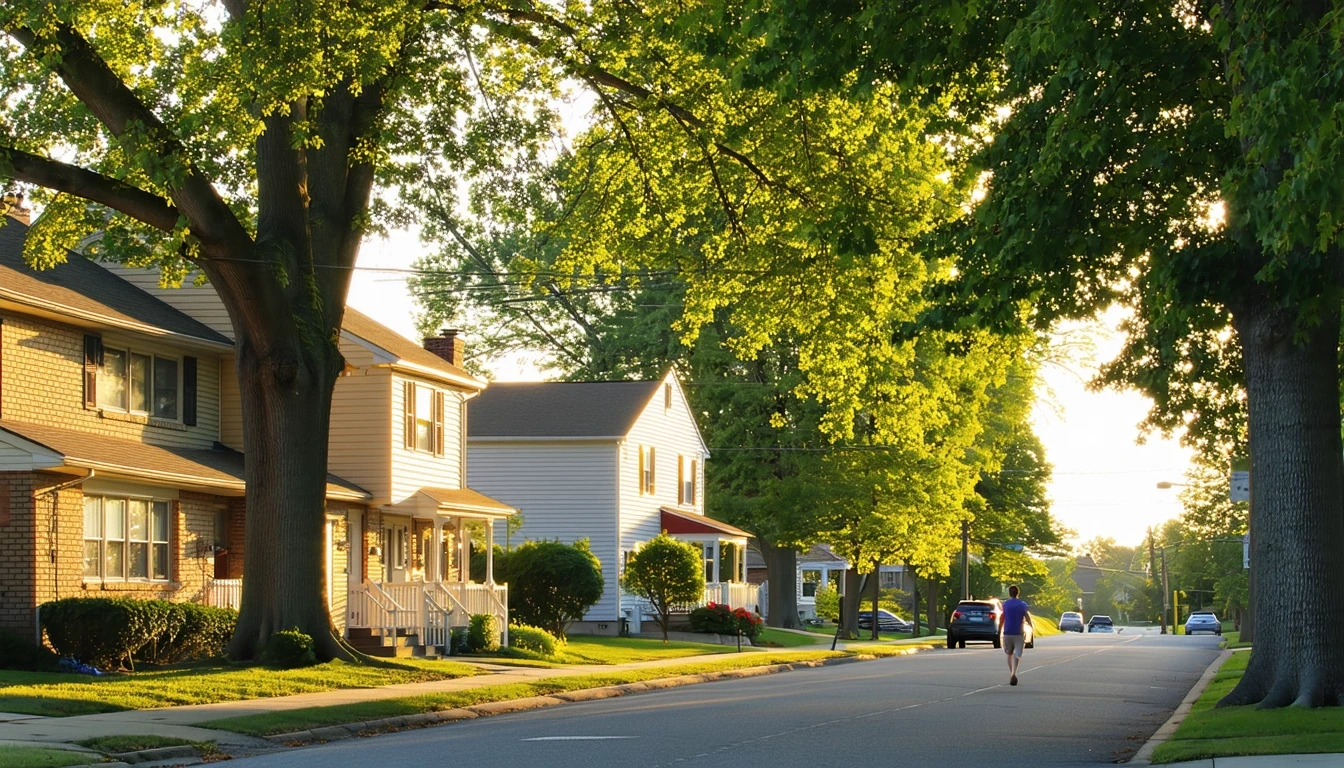
Why Retirees Choose Bensalem
Bensalem’s appeal to retirees rests on three pillars: regional healthcare access, transit connectivity, and housing costs that remain below Philadelphia proper while staying within reach of its resources. The median home value of $327,600 positions Bensalem as a middle-ground option—more affordable than Center City or the Main Line, yet still requiring substantial equity or income to enter the market. For retirees downsizing from higher-cost areas or those with established home equity, this can work. For those on fixed incomes without housing wealth, the entry point may feel steep.
The presence of rail transit is a significant advantage, particularly for retirees planning for a future where driving becomes less desirable or feasible. Many suburban Philadelphia communities lack this option entirely, leaving aging residents car-dependent with few alternatives. In Bensalem, the ability to reach Philadelphia’s medical campuses, cultural institutions, and family connections without driving extends independence and reduces the anxiety that accompanies declining driving confidence.
Climate plays a quieter but persistent role in retirement decisions. Bensalem experiences a full Mid-Atlantic seasonal cycle: humid summers that demand air conditioning, cold winters that require heating, and transitional seasons that offer genuine outdoor comfort. For retirees with arthritis or respiratory conditions, this variability matters. The extended cooling season drives up summer electricity bills, while winter heating—whether gas or electric—adds another layer of cost exposure. Neither season is extreme by national standards, but both require active household management and can strain budgets that assume mild, low-intervention weather year-round.
Retirement suitability score: 72/100. Bensalem earns points for transit access, regional healthcare proximity, and moderate costs relative to the metro core. It loses ground on walkability for daily errands, the absence of a local hospital, and a cost structure that remains above the national baseline (RPP index of 104). Retirees who arrive with cars, mobility, and a plan to access Philadelphia’s resources will find Bensalem functional and connected. Those expecting a self-contained, walkable retirement village may find it requires more logistical effort than anticipated.
Healthcare Access for Seniors
Bensalem’s healthcare landscape is defined by what it has—and what it requires you to travel for. The township supports a network of clinics and outpatient facilities that handle routine primary care, physical therapy, and specialist follow-ups. Pharmacies are present and accessible, making prescription management straightforward for retirees with reliable transportation. This infrastructure works well for stable, maintenance-phase healthcare: annual checkups, chronic disease management, minor injuries, and preventive care.
What Bensalem does not have is a hospital within its immediate boundaries. For emergency care, inpatient procedures, or specialist consultations that require hospital-based resources, retirees travel to nearby facilities in the broader Philadelphia metro. This is not unusual for a suburban township, but it does mean that healthcare access operates on a regional model rather than a neighborhood one. Drive times to major medical centers range from 15 to 30 minutes depending on traffic and destination, which is manageable in non-emergency situations but introduces friction for households dealing with frequent appointments, post-surgical follow-ups, or conditions requiring close monitoring.
The advantage of this model is proximity to some of the nation’s top-ranked hospital systems. Philadelphia’s academic medical centers offer specialized care in cardiology, oncology, orthopedics, and neurology that few standalone community hospitals can match. Retirees with complex or progressive conditions benefit from this access, provided they can navigate the logistics of getting there. For couples where one partner is the primary driver, a health event that sidelines that driver can suddenly make the regional model feel precarious.
Medicare acceptance is widespread across the area’s providers, and Medicare Advantage plans typically include the major Philadelphia health systems in their networks. Retirees should verify that their specific plan covers their preferred specialists and facilities, as network configurations vary. Prescription drug coverage through Medicare Part D works seamlessly with local pharmacies, and mail-order options are available for maintenance medications. The key variable is not coverage, but transportation: healthcare access in Bensalem assumes you can get to where the care is delivered.
Senior-Friendly Amenities and Services
Bensalem’s amenities reflect its mixed-density, corridor-based development pattern. Grocery stores, pharmacies, and retail clusters are concentrated along main roads rather than distributed evenly across neighborhoods. For retirees who drive, this layout is navigable—errands can be consolidated into a single trip, and parking is typically abundant. For those who don’t drive, or who prefer not to, the experience becomes more complex. Grocery delivery services operate in the area and can reduce the need for frequent trips, but they introduce cost and require comfort with online ordering systems.
The township supports recreational programming and community spaces, though these are not always within walking distance of residential areas. Senior centers and adult day programs exist, but participation often requires a car or coordination with transportation services. This is where Bensalem’s transit access becomes relevant: while rail service connects to Philadelphia, local bus routes and senior shuttle services provide options for retirees who need to reach nearby amenities without driving. These services require advance planning and may not operate on evenings or weekends, but they exist—a meaningful distinction from communities where no alternative to driving is available.
Libraries, community colleges, and lifelong learning opportunities are accessible within the broader metro area, and many programs have shifted to hybrid or online formats that reduce the need for travel. Retirees interested in staying intellectually engaged will find options, though the experience is less spontaneous than in denser urban settings where cultural institutions are a short walk away.
Shopping accessibility follows the same corridor-clustered pattern. National chains and regional grocers are present, and most retirees will recognize familiar names. Meal programs, including Meals on Wheels and senior nutrition sites, operate in the area and provide both nutritional support and social connection for eligible participants. These programs are income- and need-based, so not all retirees will qualify, but they represent an important safety net for those who do.
Cost of Living for Retirees
Retirement living in Bensalem operates above the national cost baseline, with a regional price parity index of 104 indicating that goods and services cost roughly 4% more than the U.S. average. This isn’t Philadelphia-level expense, but it’s not Midwest affordability either. For retirees on fixed incomes, this baseline matters—it means every category of spending, from groceries to utilities to services, carries a modest but persistent premium.
Housing represents the largest fixed cost for most retirees. The median home value of $327,600 reflects a market that has appreciated significantly over the past decade, leaving retirees who purchased years ago with substantial equity, while those entering now face higher entry costs. For retirees who own outright, the primary ongoing expense is property tax, which in Pennsylvania is set at the local level and can vary significantly by municipality. Bensalem’s property tax rate is moderate relative to some neighboring townships, but Pennsylvania does not offer a broad-based homestead exemption for seniors, meaning most retirees pay the standard rate regardless of age or income. Some relief programs exist for low-income seniors, but eligibility is narrow and benefits are limited.
For retirees who rent, the median gross rent of $1,432 per month represents a significant share of a typical Social Security benefit. A single retiree receiving an average benefit of around $1,900 per month would see more than 75% of that income go to rent alone, leaving little room for other expenses. This math improves for couples or retirees with pension income, but it underscores the importance of housing wealth or supplemental income in making Bensalem’s cost structure work on a retirement budget.
Utilities add another layer of cost exposure. Electricity rates of 20.49¢/kWh are above the national average, and Bensalem’s climate demands both cooling and heating across the year. Summer air conditioning and winter heating (whether electric or natural gas at $18.43/MCF) create seasonal peaks that retirees must budget for. A well-insulated home with efficient HVAC systems will fare better, but older housing stock—common in the area—may drive higher usage and less predictable bills. Retirees in condos or townhomes may benefit from shared walls that reduce heating and cooling loads, though condo fees introduce their own fixed costs.
Transportation costs depend heavily on driving patterns. Gasoline at $3.03/gal is moderate, but the real cost driver is how often retirees need to drive. In a place where errands, healthcare, and social activities are corridor-clustered rather than walkable, car ownership becomes functionally necessary for most households. This means not just fuel, but insurance, maintenance, registration, and eventual replacement—all of which add up over time. Retirees who can reduce driving frequency through delivery services, ride-sharing, or transit options will see lower transportation costs, but those who rely on a car for every errand will find it a persistent expense.
Pennsylvania’s tax treatment of retirement income is relatively favorable compared to some states. Social Security benefits are not taxed at the state level, and pension income may qualify for exclusions depending on age and income level. However, Pennsylvania does impose a flat income tax on other retirement income, including distributions from 401(k)s and IRAs. Retirees should model their specific tax situation, as the impact varies widely based on income sources and total withdrawals.
Monthly Retirement Budget in Bensalem
Here’s what a typical monthly retirement budget might look like in Bensalem:
| Category | Modest Lifestyle | Comfortable Lifestyle |
|---|---|---|
| Housing (owned, property tax + insurance) | $600 | $800 |
| Utilities (electric, gas, water, internet) | $250 | $300 |
| Groceries | $350 | $500 |
| Transportation (car payment/maintenance, gas, insurance) | $400 | $600 |
| Healthcare (Medicare supplement, prescriptions, co-pays) | $400 | $600 |
| Entertainment & Dining | $200 | $400 |
| Miscellaneous (clothing, personal care, home maintenance) | $200 | $300 |
| Total | $2,400 | $3,500 |
Estimates based on average senior spending patterns and local costs. Figures assume owned home; renters should substitute median rent of $1,432 for housing line. Does not include long-term care, major medical events, or travel.
Community and Social Opportunities
Building a social life in Bensalem requires intention. The township’s mixed-density layout and corridor-based development mean that spontaneous, walk-to community interactions are less common than in denser urban neighborhoods or purpose-built retirement communities. Retirees who thrive here tend to be joiners—people who seek out groups, volunteer opportunities, and structured activities rather than waiting for community to come to them.
Senior groups and recreational programs exist, often organized through township recreation departments, libraries, or faith communities. These provide opportunities for exercise classes, hobby groups, and social gatherings, though participation typically requires transportation and advance registration. For retirees who enjoy structure and scheduled activities, this model works well. For those who prefer informal, drop-in socializing, it may feel more effortful.
Volunteer opportunities are available through local nonprofits, schools, and regional organizations. Many retirees find that volunteering provides both social connection and a sense of purpose, particularly in the early years of retirement when the transition from work can feel abrupt. The Philadelphia metro area offers a wide range of causes and organizations, so retirees with specific interests—whether environmental, educational, or service-oriented—can usually find a fit.
Faith communities are well-represented across denominations and provide not just worship opportunities but also social networks, support groups, and service projects. For retirees who are religiously active, these communities often become a primary source of connection and mutual aid. For those who are not, secular alternatives exist but may require more active searching.
Cultural activities and seasonal events are more concentrated in Philadelphia proper, but Bensalem’s transit access makes these reachable without driving into the city. Museums, theaters, concerts, and festivals are all within range for retirees willing to plan ahead and navigate public transit or arrange rides. This access is a significant advantage over more isolated suburban or rural areas, but it’s not the same as having cultural amenities at the neighborhood level.
Proximity to family is often a deciding factor for retirees choosing Bensalem. The township’s location within the Philadelphia metro makes it accessible for adult children and grandchildren living in the region, and the presence of rail transit and major highways simplifies visits from out-of-town relatives. For retirees whose primary goal is staying near family, Bensalem’s connectivity is a strong asset.
Aging in Place Considerations
Aging in place in Bensalem is feasible for retirees who plan ahead and adapt their homes and routines as needs change. The township’s housing stock includes a mix of single-family homes, townhomes, and condos, each with different implications for accessibility and maintenance. Single-family homes offer space and privacy but require ongoing upkeep—lawn care, snow removal, exterior maintenance—that can become burdensome as mobility declines. Townhomes and condos shift some of that burden to associations, though condo fees add a fixed monthly cost.
Home modification services—ramps, grab bars, stairlifts, widened doorways—are available through regional contractors, though costs vary widely and are typically out-of-pocket unless covered by long-term care insurance or Medicaid waiver programs. Retirees planning to age in place should budget for these modifications and consider them sooner rather than later, as installing a grab bar is easier and cheaper than recovering from a fall.
In-home care availability is strong in the Philadelphia metro, with agencies providing everything from a few hours of companionship per week to 24-hour skilled nursing. Costs are significant—often $25 to $35 per hour for non-medical aides, and higher for licensed nurses—but the infrastructure exists. For retirees with long-term care insurance, these services may be partially covered. For those without, the expense can quickly deplete savings.
Assisted living and memory care facilities operate in and around Bensalem, offering options for retirees who reach a point where independent living is no longer safe or practical. Costs for assisted living in the Philadelphia metro typically range from $4,000 to $7,000 per month depending on level of care and facility amenities. Memory care costs are higher. These figures are not in the budget table above because they represent a transition out of independent living, but retirees should be aware that this expense may eventually become necessary.
Walkability for daily needs is limited in much of Bensalem. The mixed pedestrian infrastructure supports walking in some areas, but the corridor-clustered layout of services means that most errands require either a car or advance planning for transit or delivery. For retirees who lose the ability to drive, this becomes a significant constraint. Families should discuss transportation plans early—whether that means relying on family members, paid services, or eventually relocating to a more walkable setting or a facility with transportation included.
Seasonal challenges are real but manageable. Winter snow and ice create fall risks, particularly for retirees with balance or mobility issues. Driveways and sidewalks need clearing, which requires either physical effort or paid services. Summer heat and humidity can be oppressive for retirees with cardiovascular or respiratory conditions, making air conditioning not a luxury but a necessity. Both seasons demand active management and add to the cost and effort of daily life.
Emergency services in Bensalem are responsive, but the absence of a local hospital means that serious medical emergencies involve transport to a regional facility. For retirees with conditions that may require rapid intervention—stroke, heart attack, severe trauma—this transport time is a factor to consider. It’s not a dealbreaker, but it’s part of the risk profile of living in a suburban township rather than adjacent to a major medical center.
How this article was built: In addition to public economic data, this article incorporates location-based experiential signals derived from anonymized geographic patterns—such as access density, walkability, and land-use mix—to reflect how day-to-day living actually feels in Bensalem, PA.
FAQs About Retirement in Bensalem
What’s the average cost of retirement in Bensalem?
A modest retirement lifestyle in Bensalem typically requires around $2,400 per month for a homeowner, covering property taxes, utilities, groceries, transportation, healthcare, and basic discretionary spending. A more comfortable lifestyle with additional dining, travel, and entertainment runs closer to $3,500 per month. Renters should add the median rent of $1,432 per month to these figures. These estimates assume Medicare coverage and do not include long-term care or major medical expenses.
How good is healthcare access for seniors?
Bensalem offers strong access to routine and outpatient care through local clinics, physical therapy centers, and pharmacies. However, there is no hospital within the township itself, so emergency care and inpatient services require travel to nearby facilities in the Philadelphia metro—typically 15 to 30 minutes away. For retirees with complex or specialist needs, proximity to Philadelphia’s top-ranked hospital systems is a significant advantage, but it assumes reliable transportation and the ability to navigate a regional healthcare model.
Are there active senior communities?
Bensalem supports senior programming through township recreation departments, libraries, and faith communities, but it is not structured as a self-contained retirement village. Social opportunities exist, but they require retirees to seek them out and typically involve transportation to reach activity sites. For retirees who enjoy structured programs and are comfortable driving or arranging rides, the options are adequate. For those expecting walkable, spontaneous community interaction, Bensalem may feel more fragmented.
What are the tax implications of retiring in PA?
Pennsylvania does not tax Social Security benefits, which is a significant advantage for retirees whose primary income is Social Security. Pension income may qualify for partial exclusions depending on age and income level. However, Pennsylvania does impose a flat income tax on distributions from 401(k)s, IRAs, and other retirement accounts. Property taxes are set locally and do not include a broad senior exemption, though low-income seniors may qualify for limited relief programs. Retirees should model their specific tax situation based on their income sources.
Making the Move: Is Bensalem Right for Your Retirement?
Bensalem works best for retirees who value regional access over neighborhood self-sufficiency. If your priorities include proximity to world-class healthcare, the ability to reach Philadelphia’s cultural and social resources, and day-to-day costs that remain below the urban core, Bensalem delivers. If you expect to walk to groceries, spontaneously meet neighbors, or access a hospital within minutes, you may find it requires more adaptation than anticipated.
The township’s rail transit is a genuine asset, particularly for retirees planning for a future where driving becomes less desirable. The presence of clinics and pharmacies supports routine healthcare, though the absence of a local hospital means that serious medical events involve regional coordination. Housing pressure is moderate—higher than the national baseline but lower than Philadelphia proper—and the cost structure overall reflects a suburban metro market rather than a low-cost retirement haven.
Retirees who thrive in Bensalem tend to be planners: people who batch errands, schedule appointments, join groups, and build routines that work within the township’s corridor-based layout. They’re comfortable driving or arranging alternatives, and they see proximity to Philadelphia as an opportunity rather than a hassle. Retirees who struggle tend to be those who expected a walkable, self-contained village or who underestimated the logistical effort required to access services and community.
Before committing, spend time in Bensalem during different seasons. Drive the routes you’d take to groceries, healthcare, and social activities. Test the transit system if you plan to use it. Talk to current residents about what works and what doesn’t. Visit during a summer heat wave and a winter snowstorm to understand what seasonal management actually feels like. Retirement is long, and the place you choose will shape your daily experience for years—sometimes decades. Make sure Bensalem’s tradeoffs align with your priorities, not just your budget.