
“We moved to Bensalem for the schools, but stayed for the neighbors.”
That sentiment captures something essential about life here: Bensalem isn’t trying to be the most exciting place in the Philadelphia metro—it’s trying to be the most functional. And for many households, that’s exactly the fit they’re looking for. But for others, the same qualities that make Bensalem feel stable and practical can also make it feel a little flat.
Understanding whether Bensalem feels like home depends less on what the town offers and more on what you’re hoping to escape—or find.
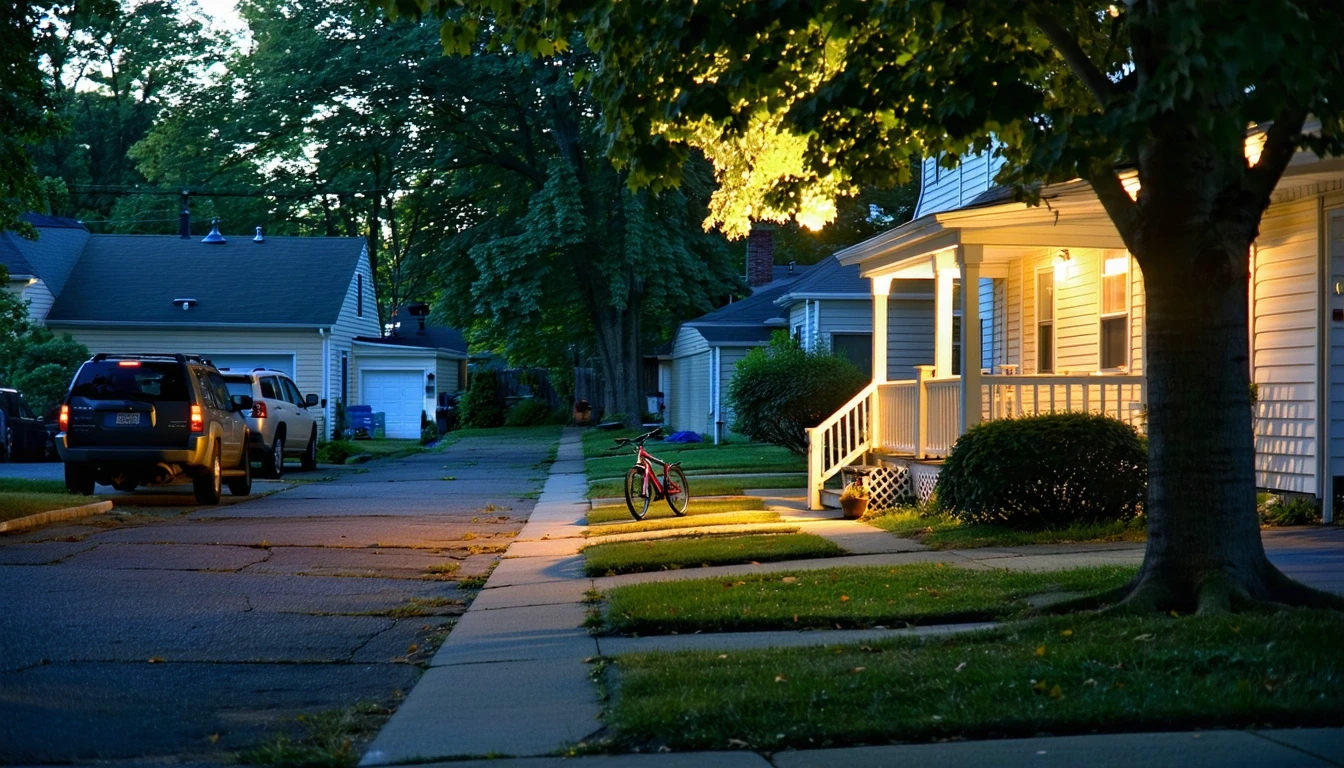
The Emotional Landscape of Bensalem
Bensalem sits in an interesting middle ground: it’s suburban enough to feel calm and spacious, but close enough to Philadelphia that the city’s energy is always within reach. The town has rail transit access, which is uncommon for suburbs of this type, and that creates a real advantage for commuters who want to avoid the daily grind of highway traffic. Grocery stores and food options cluster along main corridors rather than spreading evenly across neighborhoods, which means errands require a bit of planning—but once you know your routes, the rhythm becomes second nature.
The building landscape reflects this transitional character. You’ll find a mix of low-rise residential streets and pockets of commercial activity, with both older homes and newer developments sharing space. It’s not a place designed for spontaneous strolls to coffee shops, but it’s also not purely car-dependent sprawl. Pedestrian infrastructure exists in patches, and families with school-age children find that schools are accessible, even if playgrounds and informal gathering spots feel less abundant.
What tends to work here: households that value order, proximity to work, and the ability to access Philadelphia when they want to—without living in it full-time. What tends to frustrate: people who want their daily life to feel textured, walkable, and socially spontaneous without getting in the car.
What People Are Talking About Online
In local Facebook groups and broader Philadelphia-area forums, Bensalem discussions tend to center on a few recurring themes: commute strategies, school quality, where to shop, and the tension between growth and character. The tone is rarely celebratory, but it’s also rarely harsh—it’s more pragmatic than passionate.
“It’s not the kind of place you brag about, but it’s the kind of place that works,” one commenter noted. “You’re close to everything without being in the middle of anything.”
Another common thread: the sense that Bensalem is defined more by what it’s near than what it contains. “We’re twenty minutes from the city, fifteen from the mall, ten from family—it’s all about location math,” someone else explained. That logic appeals to people optimizing for convenience, but it can feel hollow to those hoping for a stronger sense of place.
There’s also a protective streak when outsiders dismiss Bensalem as “just another suburb.” Long-time residents push back, pointing to the town’s diversity, its accessibility, and the fact that it offers a quality of life that doesn’t require a six-figure income. But even in that defense, there’s an acknowledgment: Bensalem isn’t trying to compete with trendier towns. It’s playing a different game.
How Local Coverage Frames the Town
Local news and community coverage in Bensalem tends to focus on infrastructure, development, and the ongoing negotiation between growth and preservation. Headlines don’t typically announce dramatic shifts—they reflect steady, incremental change:
- “New Retail Arrives as Residents Debate Traffic Impact”
- “Community Weighs Convenience Against Suburban Character”
- “Schools Remain Draw for Families Relocating from the City”
- “Transit Access Keeps Bensalem Competitive for Commuters”
- “Residents Discuss What ‘Neighborhood Feel’ Means Here”
The framing is rarely urgent, but it’s not sleepy either. There’s a sense that Bensalem is in transition—not from bad to good, but from one kind of suburban identity to another. Some residents welcome that evolution; others worry it erodes what made the town appealing in the first place.
Review-Based Impressions
On platforms like Google Reviews, Yelp, and Nextdoor-style forums, Bensalem’s public perception splits along predictable lines: people who wanted suburban functionality tend to be satisfied, while those who expected charm or walkability feel let down.
Positive reviews emphasize convenience: “Everything you need is here or five minutes away.” “Good schools, safe streets, easy commute.” “It’s not fancy, but it’s solid.” These comments come mostly from families and retirees who value stability and access over atmosphere.
Neutral-to-critical reviews focus on what’s missing: “It’s fine if you drive everywhere, but don’t expect to walk to dinner.” “Feels more like a pass-through than a destination.” “You’re always going somewhere else for the fun part.” These tend to come from younger professionals, remote workers, or people relocating from denser areas who underestimated how much they’d miss spontaneous social options.
Neighborhood variation exists, but it’s subtle. Newer planned sections feel more polished and family-oriented; older pockets have more character but less uniformity. Neither feels dramatically better or worse—just different flavors of the same suburban logic.
How Bensalem Compares to Nearby Towns
| Aspect | Bensalem | Levittown | Bristol |
|---|---|---|---|
| Overall Vibe | Practical, commuter-friendly, transitional | Established suburban, family-focused, quieter | Riverfront character, older feel, more walkable core |
| Transit Access | Rail available—uncommon suburban advantage | Bus-dependent, car-primary | Limited transit, more car-reliant |
| Errands & Amenities | Corridor-clustered, requires planning | Spread out, very car-dependent | Walkable downtown core, limited variety |
| Community Feel | Functional over social, neighbor-dependent | Tight-knit blocks, slower pace | Small-town identity, historic pride |
Bensalem sits between Levittown’s deep suburban calm and Bristol’s small-town character. If you want the most predictable, family-centered suburban experience, Levittown edges ahead. If you want a stronger sense of place and don’t mind older infrastructure, Bristol offers more texture. Bensalem splits the difference: it’s more connected than Levittown, more convenient than Bristol, but less distinctive than either.
The choice comes down to priorities. Bensalem works best for people who value access and flexibility over identity and atmosphere. It’s the town you choose when you want to be near everything without committing to any one thing.
Voices from the Community
“I thought I’d miss the city more, but honestly, having the train option makes all the difference. I can go in when I want, but I don’t have to deal with it every day.” — Young professional, renting near transit
“It’s a good place to raise kids if you’re okay being the one who drives them everywhere. There’s not a lot they can do on their own, but the schools are solid and the neighborhoods feel safe.” — Parent of two, homeowner
“Bensalem gets a bad rap, but I think people just don’t understand what it’s for. It’s not trying to be cute. It’s trying to be useful. And it is.” — Long-time resident
“I moved here thinking it would feel like a community, but it’s more like a collection of people who happen to live near each other. Everyone’s polite, but it’s not warm.” — Newcomer from a smaller town
“For retirees, it’s great. You’ve got housing that’s manageable, healthcare nearby, and you’re not isolated. I don’t need nightlife—I need a pharmacy and a grocery store I can get to easily.” — Retiree, downsized from larger home
“If you work from home and don’t have kids, Bensalem can feel kind of empty. There’s not much to do unless you drive somewhere, and after a while, that gets old.” — Remote worker, early 30s
“It’s not the most exciting place, but that’s kind of the point. We wanted boring. We wanted predictable. And we got it.” — Family who relocated from Philadelphia
Does Bensalem Feel Like a Good Fit?
Bensalem doesn’t ask you to fall in love with it. It asks you to decide whether its tradeoffs align with your priorities.
This tends to work for households that value access over atmosphere—people who want to be near Philadelphia without living in it, who prioritize school quality and safety over walkability, and who don’t mind driving to get what they need. Families with young children, retirees seeking stability, and commuters who want rail access without urban density often find Bensalem delivers exactly what they’re looking for.
This tends to frustrate people who want their daily environment to feel textured, spontaneous, and socially rich. If you’re hoping to walk to dinner, bump into neighbors at the coffee shop, or feel a strong sense of place identity, Bensalem will likely feel flat. It’s a town that rewards planning and optimization, not serendipity.
The question isn’t whether Bensalem is a “happy” place—it’s whether the life it enables matches the life you want to live. If you’re drawn to order, convenience, and proximity to opportunity, Bensalem makes sense. If you’re drawn to character, texture, and a strong sense of “hereness,” you’ll probably keep looking.
To explore how these qualities translate into day-to-day expenses, check out your monthly budget in Bensalem. And if you’re weighing Bensalem against other options, understanding the full picture of what you’re trading can help clarify whether this practical, commuter-friendly suburb is the right fit for your household.
How this article was built: In addition to public economic data, this article incorporates location-based experiential signals derived from anonymized geographic patterns—such as access density, walkability, and land-use mix—to reflect how day-to-day living actually feels in Bensalem, PA.
The perspectives shown reflect commonly expressed local sentiment and recurring themes in public discussion, rather than individual accounts.