
Transit Coverage & Ride Context in Bellevue
| Transit Type | Coverage Pattern | Best For |
|---|---|---|
| Light Rail | Downtown core, limited stations | Seattle commuters, core residents |
| Bus Network | Major corridors, peak hours | Corridor residents, flexible schedules |
| Bike Infrastructure | Substantial in core areas | Short trips, recreation, last-mile connections |
Note: Coverage reflects infrastructure presence, not service frequency or pricing.
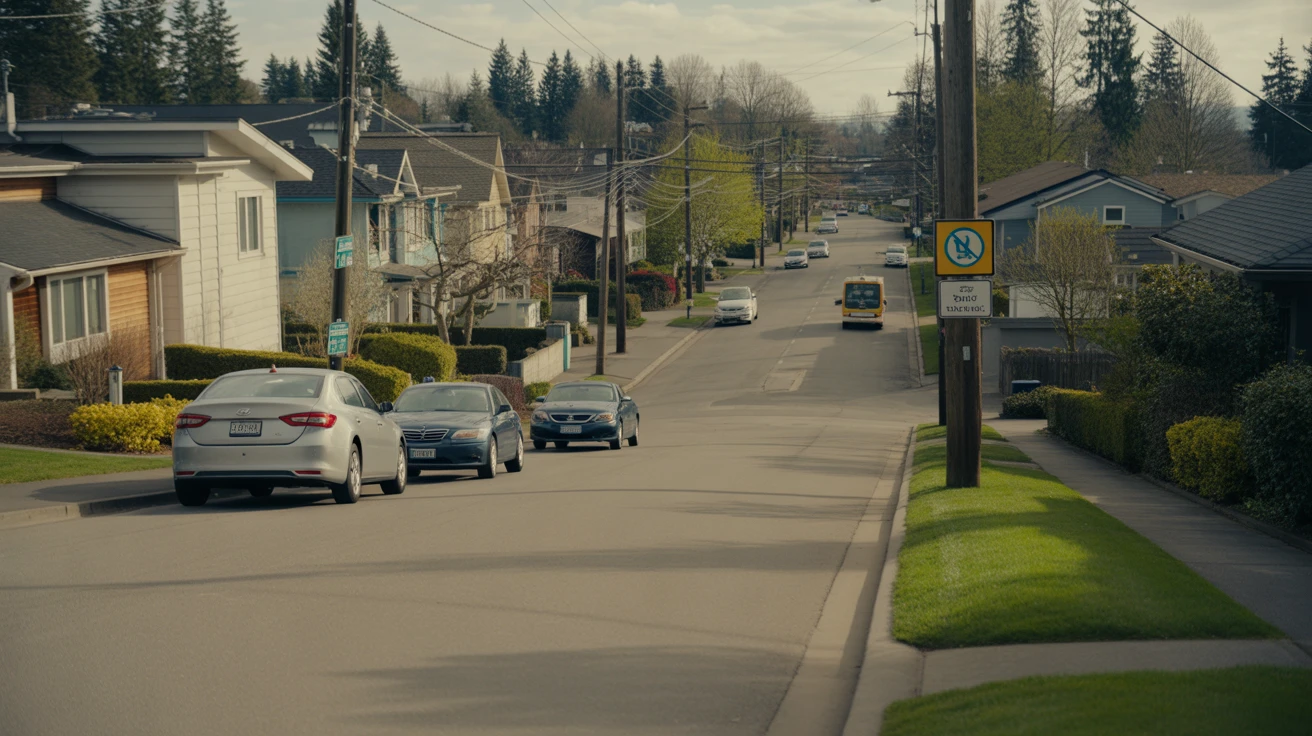
How People Get Around Bellevue
Understanding transportation options in Bellevue means recognizing that this city operates as a hybrid environment: it has genuine transit infrastructure in its core, but most neighborhoods still expect residents to own a car. Bellevue isn’t a place where you can assume transit will get you everywhere, but it’s also not a sprawling suburb where public transportation is purely theoretical. The city’s pedestrian-to-road ratio exceeds typical suburban thresholds, and rail service connects downtown Bellevue to Seattle and other regional destinations. That combination creates real transit viability for some households—but only if they live and work in the right corridors.
Newcomers often misjudge Bellevue’s transportation reality in one of two ways: either they assume it’s fully car-dependent because it’s an Eastside suburb, or they expect Seattle-level transit coverage across the entire city. Neither is accurate. Bellevue has invested heavily in walkability and transit access in its downtown core, and those investments show up in daily life. But move a few miles out, and the infrastructure thins quickly. The result is a city where your transportation experience depends almost entirely on where you live and where you need to go.
The dominant mobility pattern here is car-first with transit as a viable supplement in core areas. Most households own at least one vehicle, and many own two. But unlike purely car-dependent suburbs, Bellevue’s layout supports mixed-mode transportation for residents who live near downtown or along major transit corridors. You can walk to errands, bike to nearby destinations, and take the train to Seattle—if your home and routine align with that infrastructure. Outside those zones, driving becomes the default for nearly everything.
Public Transit Availability in Bellevue
Public transit in Bellevue often centers around systems such as Sound Transit’s Link light rail and King County Metro bus service, though coverage varies significantly by area. The light rail extension into downtown Bellevue has fundamentally changed commuting options for residents who live or work near its stations. Rail service provides a direct, predictable connection to Seattle, the University of Washington, and Sea-Tac Airport—eliminating the variability that comes with driving across the floating bridges during peak hours.
But rail access is geographically limited. If you don’t live within walking or biking distance of a station, you’ll need to drive to a park-and-ride or rely on bus connections, which reintroduces the scheduling friction that rail avoids. Bus service in Bellevue tends to work best along major corridors like Bellevue Way, NE 8th Street, and 148th Avenue, where routes run frequently enough to support spontaneous trips. Outside those corridors, service becomes sparse, and wait times stretch long enough that most residents default to driving instead.
Transit works well in Bellevue when your origin and destination both sit on the network’s strong points: downtown Bellevue, downtown Seattle, or neighborhoods along high-frequency bus routes. It falls short when you need to reach dispersed suburban destinations, run multi-stop errands, or travel outside peak commute windows. Late-night and weekend service is lighter, and coverage gaps mean that many residential neighborhoods—especially single-family areas in the hills or along the lake—are effectively car-dependent even if they’re technically within the transit service area.
Driving & Car Dependence Reality
For most Bellevue households, driving isn’t optional—it’s structural. The city’s layout includes plenty of walkable pockets, but those pockets don’t connect seamlessly to each other or to every daily destination. Grocery stores, schools, medical offices, and recreational facilities are spread across a geography that assumes car access. Even residents who live in transit-rich areas often find themselves driving for errands that require hauling goods, picking up kids, or reaching destinations outside the core.
Parking in Bellevue is generally abundant and free in most neighborhoods, which removes one of the friction points that discourages driving in denser cities. Downtown Bellevue has paid parking in commercial areas, but residential neighborhoods almost universally include driveways, garages, or street parking. That ease of parking reinforces car dependence: there’s no penalty for driving, and often no practical alternative.
The tradeoff comes down to flexibility versus predictability. Driving gives you control over timing, routing, and cargo capacity, which matters when you’re managing a household, coordinating schedules, or living outside the transit core. But it also exposes you to bridge traffic, highway congestion, and the unpredictability of peak-hour travel across Lake Washington. Residents who commute to Seattle by car often face significant variability in travel time depending on when they leave and which route they take.
Commuting Patterns & Daily Mobility
Commuting in Bellevue breaks into three broad patterns: residents who work locally and rarely leave the Eastside, residents who commute to Seattle or other regional job centers, and residents who work from home or maintain flexible schedules. Each group experiences transportation differently, and the city’s infrastructure serves them unevenly.
Local commuters—those who work in Bellevue or nearby Eastside cities like Redmond or Kirkland—often drive because their routes don’t align with transit corridors. Eastside-to-Eastside trips are harder to complete on transit than Eastside-to-Seattle trips, even though the distances are shorter. The bus network is designed primarily to move people across the lake, not laterally along the Eastside, so driving becomes the fastest and most reliable option for intra-regional commutes.
Seattle commuters have the most viable transit options, especially if they live near a light rail station. Rail service eliminates bridge traffic uncertainty and provides a fixed travel time that makes schedule planning easier. But rail access is geographically limited, and many Bellevue residents still drive to Seattle because their home or workplace doesn’t sit near a station. Those who drive face the reality of bridge congestion, parking costs in Seattle, and the time variability that comes with peak-hour traffic.
Remote workers and flexible-schedule households benefit most from Bellevue’s walkable core and local amenities. If you’re not commuting daily, proximity to grocery stores, parks, and services matters more than transit access to Seattle. These households often choose neighborhoods based on walkability and quality of life rather than commute logistics, and they experience Bellevue as a more pedestrian-friendly place than daily commuters do.
Who Transit Works For — and Who It Doesn’t
Transit in Bellevue works best for single commuters or couples without children who live in or near downtown and work in Seattle or another rail-accessible location. For this group, the light rail provides a genuine alternative to car ownership—or at least reduces the need for a second vehicle. The predictability and speed of rail service make it competitive with driving, and the ability to avoid parking costs in Seattle adds financial value even though this article doesn’t calculate those savings.
Renters in downtown Bellevue or along major bus corridors also benefit from transit access, especially if they’re willing to structure their lives around the network’s coverage. Younger professionals, graduate students, and households prioritizing walkability over space often find that Bellevue’s core offers enough transit, bike, and pedestrian infrastructure to support a car-light lifestyle—though not a fully car-free one.
Transit doesn’t work well for families with school-age children, households managing complex logistics, or residents living in peripheral neighborhoods. School runs, activity shuttling, and multi-stop errands require the flexibility that only a car provides. Peripheral neighborhoods—especially single-family areas in the hills, along the lake, or in the city’s southern and eastern sections—are too far from transit corridors to make bus or rail a practical daily option. For these households, car ownership isn’t a choice; it’s a requirement.
Homeowners in Bellevue are more likely to be car-dependent than renters, not because of tenure type but because homeownership in Bellevue skews toward single-family neighborhoods that sit outside the transit core. The areas where transit works best—downtown, near rail stations—are dominated by apartments and condos, while the areas where families buy homes are dominated by car-oriented infrastructure.
Transportation Tradeoffs in Bellevue
The central tradeoff in Bellevue’s transportation landscape is between housing choice and mobility flexibility. If you prioritize transit access, you’ll likely live in a denser, more expensive part of the city with less space and fewer single-family options. If you prioritize space, yards, and neighborhood character, you’ll almost certainly need a car—and probably two.
Transit offers predictability and eliminates the stress of bridge traffic, but it limits where you can live and where you can easily go. Driving offers geographic freedom and logistical flexibility, but it exposes you to congestion, variability, and the time cost of navigating a region where peak-hour travel is unpredictable. Neither mode is universally better; the right choice depends on your household structure, work location, and daily routine.
Bellevue’s bike infrastructure adds a third option for short trips and recreational travel, especially in the core. The city’s bike-to-road ratio exceeds typical suburban levels, meaning that cycling is a viable way to reach nearby destinations if you live in the right area. But bike infrastructure doesn’t extend uniformly across the city, and cycling remains a supplement to driving or transit rather than a standalone transportation mode for most households.
The broader tradeoff is between time and control. Transit saves you from driving but requires you to adapt your schedule to the network’s coverage and timing. Driving gives you control but exposes you to congestion and variability. Bellevue’s transportation reality rewards households who can align their housing, work, and daily routines with the infrastructure that exists—and penalizes those who can’t.
FAQs About Transportation in Bellevue (2026)
Is public transit usable for daily commuting in Bellevue?
Yes, but only if your home and workplace both align with the transit network’s strong points. Light rail service to Seattle is fast and predictable for residents near downtown Bellevue stations, and bus service works well along major corridors during peak hours. Outside those areas, transit becomes less practical, and most residents default to driving.
Do most people in Bellevue rely on a car?
Yes. Even though Bellevue has genuine transit infrastructure, most households own at least one vehicle, and many own two. The city’s layout assumes car access for errands, school runs, and trips outside the core. Transit is a viable supplement for some residents, but it’s rarely a complete replacement for driving.
Which areas of Bellevue are easiest to live in without a car?
Downtown Bellevue and neighborhoods within walking or biking distance of light rail stations offer the most car-light viability. These areas have high pedestrian infrastructure density, access to rail service, and enough local amenities to support daily life without constant driving. Peripheral neighborhoods and single-family areas are much harder to navigate without a vehicle.
How does commuting in Bellevue compare to nearby cities?
Bellevue sits between Seattle’s transit-rich urban core and the more car-dependent suburbs farther east. It has better transit access than cities like Sammamish or Issaquah but less coverage than Seattle. Commuting to Seattle from Bellevue is easier than commuting from most other Eastside cities, especially if you live near a rail station. Lateral commutes across the Eastside are harder to complete on transit regardless of where you start.
Can you bike for transportation in Bellevue, or is it just recreational?
Biking is viable for short trips and last-mile connections in Bellevue’s core, where bike infrastructure is notably present. The city’s bike-to-road ratio supports practical cycling, not just recreation. But bike infrastructure doesn’t extend uniformly across the city, and most households still rely on cars for longer trips, errands, or travel outside the core.
How Transportation Fits Into the Cost of Living in Bellevue
Transportation in Bellevue isn’t primarily a budget line—it’s a structural factor that shapes where you can live, how you spend your time, and what tradeoffs you accept. The decision to rely on transit versus owning a car affects housing choice, commute predictability, and daily logistics more than it affects monthly expenses. Households who can align their routines with Bellevue’s transit infrastructure gain predictability and reduce their exposure to congestion. Those who can’t face the time cost and logistical complexity of car dependence, even if the financial cost isn’t prohibitive.
The real cost of transportation in Bellevue shows up in your monthly budget, where vehicle ownership, fuel, insurance, and parking interact with housing and other fixed expenses. But the decision about how to get around precedes the budget calculation. It’s a question of fit: does your household structure, work location, and daily routine align with the infrastructure that exists? If it does, Bellevue offers genuine transit viability and walkable access that most suburban cities lack. If it doesn’t, you’ll need a car—and the transportation landscape will feel much more like a typical Eastside suburb than a transit-oriented city.
For newcomers evaluating Bellevue, the transportation question comes down to geography and priorities. If you value transit access and walkability, focus your housing search on downtown Bellevue and neighborhoods near light rail stations. If you prioritize space, yards, and single-family character, accept that car ownership will be necessary and plan accordingly. Bellevue rewards households who choose housing and transportation as a package, not as separate decisions.
How this article was built: In addition to public economic data, this article incorporates location-based experiential signals derived from anonymized geographic patterns—such as access density, walkability, and land-use mix—to reflect how day-to-day living actually feels in Bellevue, WA.