

Beaverton and Hillsboro sit just miles apart in the Portland metro, share the same utility providers, and pull from the same regional job market. Yet the cost experience in each city diverges sharply—not because one is universally cheaper, but because housing structure, transportation infrastructure, and income baselines create different pressure points for different households. In 2026, choosing between these two cities means deciding which costs you’re equipped to absorb upfront and which you’d rather distribute over time.
For renters, the decision hinges on whether you prioritize lower monthly obligations or access to transit and walkable errands. For buyers, it’s about whether you can afford a higher entry price in exchange for long-term transportation savings, or whether a lower purchase price with higher ongoing car dependence fits your household better. Families, singles, and dual-income couples all face different tradeoffs depending on how they move, shop, and structure their days.
This comparison explains where cost pressure concentrates in each city, how the same income feels different depending on your household type, and which structural factors—not just prices—determine fit.
Housing Costs
Beaverton’s median home value sits at $494,700, while Hillsboro’s is $452,300—a difference that matters most at the point of purchase. Buyers in Beaverton face a higher entry barrier, requiring larger down payments and higher monthly mortgage obligations before property taxes and insurance. Hillsboro’s lower median home value reduces that upfront capital requirement, making ownership more accessible for first-time buyers or households stretching to enter the market.
For renters, the dynamic reverses. Beaverton’s median gross rent is $1,663 per month, compared to Hillsboro’s $1,797 per month. That $134 monthly difference compounds over a year, creating higher ongoing exposure in Hillsboro for households that rent long-term. The rental premium in Hillsboro may reflect newer construction, larger units, or proximity to major employers, but it also means renters carry more fixed monthly obligation regardless of household size or income flexibility.
The housing stock in Beaverton includes more mixed-height buildings and integrated land use, which supports a wider range of unit types—studios, one-bedrooms, and smaller footprints that can lower rent for singles or couples. Hillsboro’s housing market, with less available experiential data, may skew toward single-family rentals or larger apartments that command higher rents even when the home purchase price is lower.
| Housing Type | Beaverton | Hillsboro |
|---|---|---|
| Median Home Value | $494,700 | $452,300 |
| Median Gross Rent | $1,663/month | $1,797/month |
These differences create distinct exposure profiles. Renters in Hillsboro face higher ongoing monthly pressure but avoid the capital requirement of ownership. Renters in Beaverton pay less each month but may compete for units in walkable neighborhoods where inventory is tighter. Buyers in Beaverton absorb more upfront cost but may reduce transportation expenses over time due to transit access and walkable errands. Buyers in Hillsboro enter the market with less capital but may need to budget for higher car dependence and commuting costs.
Housing takeaway: Beaverton’s housing costs are front-loaded, favoring households with capital who value transit access and walkability. Hillsboro’s housing costs are more accessible upfront for buyers but create higher ongoing rent exposure and likely require more reliance on personal vehicles, shifting cost pressure toward transportation over time.
Utilities and Energy Costs
Beaverton and Hillsboro share identical utility rate structures—16.16¢/kWh for electricity and $16.82/MCF for natural gas—because both cities draw from the same regional providers in the Portland metro. This means the difference in utility exposure comes not from rates, but from housing type, building age, and how households use space.
Older single-family homes in either city tend to experience higher heating costs during the extended cool season typical of western Oregon. Homes built before modern insulation standards may see natural gas usage climb in winter months, while newer construction—more common in recent Hillsboro developments—often includes better envelope performance and more efficient HVAC systems. Apartments and townhomes, more prevalent in Beaverton’s mixed-height neighborhoods, generally show lower baseline usage due to shared walls and smaller conditioned square footage.
Cooling costs remain modest in both cities due to the region’s temperate summer climate, but households in larger single-family homes still face higher electricity usage for ventilation, water heating, and baseline appliance load. Families with multiple occupants, home offices, or all-day HVAC use will see higher bills regardless of city, but the housing stock difference means Beaverton households in smaller units may avoid some of that exposure entirely.
Utility cost volatility in both cities is driven more by household behavior and housing form than by rate differences. A family in a 2,000-square-foot home will face similar heating and cooling exposure whether they’re in Beaverton or Hillsboro, but a single adult in a one-bedroom apartment in Beaverton may see significantly lower usage simply due to unit size and shared building infrastructure.
Utility takeaway: Utility rates are identical, so exposure differences come from housing type and size. Beaverton’s mixed housing stock offers more opportunities to reduce usage through smaller units, while Hillsboro’s newer single-family homes may offer better efficiency but higher baseline usage due to larger square footage. Households sensitive to ongoing utility volatility should prioritize housing form over city choice.
Groceries and Daily Expenses
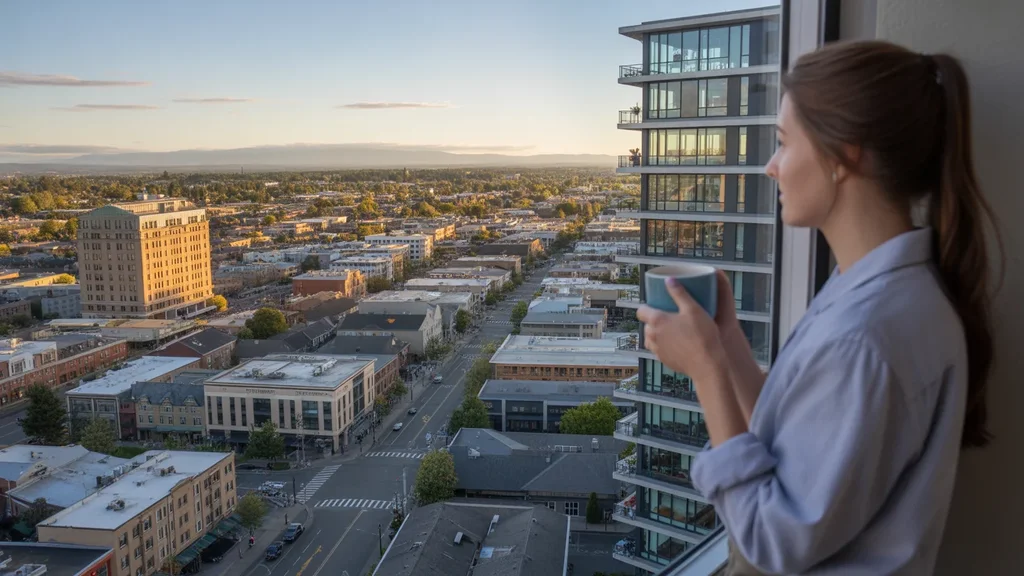
Grocery prices in Beaverton and Hillsboro are functionally identical—both cities share the same regional price parity index of 107, meaning staple costs like bread, eggs, and chicken track closely across the metro. The difference in daily spending pressure comes not from prices, but from how households access food and how often convenience spending creeps into the budget.
Beaverton’s high food and grocery establishment density—exceeding the high threshold in the experiential data—means residents can walk or bike to multiple grocery options, discount chains, and specialty stores without relying on a car for every trip. This reduces the friction cost of comparison shopping, makes it easier to avoid last-minute convenience store markups, and supports meal planning that relies on frequent small trips rather than bulk purchasing. Singles and couples benefit most from this access pattern, as they can buy fresh ingredients in smaller quantities without the logistical burden of a weekly big-box run.
Hillsboro lacks comparable experiential data on grocery density, but the higher median household income—$98,891 per year compared to Beaverton’s $88,899 per year—suggests a different household composition and spending pattern. Higher-income households may prioritize convenience over price sensitivity, leading to more frequent dining out, prepared meal purchases, and delivery service use. This shifts daily spending pressure away from grocery staples and toward discretionary food spending, which compounds faster than staple inflation.
Families managing larger grocery volumes in either city face similar staple costs, but the ability to walk to multiple stores in Beaverton reduces the time cost of price comparison and makes it easier to avoid impulse purchases during long car-dependent shopping trips. In Hillsboro, households may rely more on single large grocery runs, which can increase cart totals and reduce flexibility to adjust spending week-to-week.
Groceries takeaway: Staple prices are nearly identical, but Beaverton’s walkable grocery access reduces friction costs and supports price-sensitive shopping strategies. Hillsboro’s higher income baseline and less dense grocery infrastructure may lead to higher convenience spending and more reliance on car-dependent bulk shopping, which increases both time cost and discretionary food spending.
Taxes and Fees
Oregon has no state sales tax, so neither Beaverton nor Hillsboro imposes consumption-based taxes on groceries, clothing, or everyday purchases. This eliminates one layer of cost variability common in other states, but it also means both cities rely more heavily on property taxes and local service fees to fund infrastructure, schools, and public services.
Property tax exposure in both cities depends on assessed home value, local levies, and school district funding measures. Beaverton’s higher median home value—$494,700—means homeowners face higher absolute property tax bills even if the millage rate is similar to Hillsboro’s. Hillsboro’s lower median home value—$452,300—reduces that annual obligation, but buyers should verify whether recent bond measures or urban renewal districts have shifted the effective rate in specific neighborhoods.
Renters in both cities don’t pay property taxes directly, but landlords pass those costs through in rent. Beaverton’s lower median rent may reflect older housing stock with lower assessed values, while Hillsboro’s higher rent may include newer construction with higher tax assessments. Either way, renters experience property tax pressure indirectly, embedded in monthly rent rather than as a separate annual bill.
Local fees—trash collection, water, sewer, stormwater management—are structured similarly in both cities, though specific rates vary by provider and service area. Homeowners in either city should budget for these recurring fees, which can add $100–$200 per month depending on household size and usage. Renters may see some of these fees bundled into rent or charged separately, depending on lease terms.
Taxes and fees takeaway: Both cities avoid sales tax but rely on property taxes, which create higher exposure for Beaverton homeowners due to higher home values. Hillsboro’s lower home values reduce annual property tax bills, but renters in Hillsboro face higher monthly rent that may already embed those costs. Long-term homeowners in either city should plan for property tax increases tied to assessed value growth, while renters should expect landlords to pass through tax and fee changes at lease renewal.
Transportation & Commute Reality
Commute times in Beaverton and Hillsboro are nearly identical—24 minutes in Beaverton and 23 minutes in Hillsboro—but the structure of those commutes differs significantly. Beaverton’s rail transit presence and high pedestrian-to-road ratio mean residents can choose between driving, taking light rail, biking, or walking for many trips. Hillsboro lacks comparable experiential transit data, suggesting more reliance on personal vehicles for commuting and errands.
Beaverton’s 4.9% work-from-home rate is lower than Hillsboro’s 6.8%, and 34.7% of Beaverton workers face long commutes compared to 30.9% in Hillsboro. These patterns suggest that Beaverton residents may commute more frequently but have more options for how they make those trips, while Hillsboro residents may work from home more often or face shorter drives when they do commute.
Gas prices are identical—$3.34/gal—so the cost difference comes from how many miles households drive and whether they can substitute transit, biking, or walking for some trips. Beaverton’s notable bike infrastructure and rail access reduce the need for a second car in many households, which lowers insurance, maintenance, and registration costs over time. Hillsboro households may need to budget for higher car dependence, especially if both adults in a dual-income household commute to different job sites.
The time cost of commuting also matters. Beaverton’s walkable pockets and transit options mean residents can run errands on foot or by bike without adding car trips to their day, reducing both fuel costs and the cognitive load of trip chaining. Hillsboro’s commute patterns, with less available transit data, likely require more intentional trip planning and higher reliance on driving for both work and daily errands.
Cost Structure Comparison
Housing dominates the cost experience in both cities, but the pressure shows up differently. Beaverton front-loads cost through higher home values, requiring more capital upfront but offering lower rent for those who don’t buy. Hillsboro reduces the entry barrier for ownership but creates higher ongoing rent exposure and likely requires more transportation spending due to less transit infrastructure.
Utilities introduce similar exposure in both cities due to identical rate structures, but Beaverton’s mixed housing stock—with more apartments and smaller units—gives households more options to reduce baseline usage. Hillsboro’s newer single-family homes may offer better efficiency, but larger square footage increases heating and cooling costs regardless of construction quality.
Daily living costs—groceries, errands, convenience spending—are shaped more by access patterns than prices. Beaverton’s broadly accessible food and grocery density reduces friction costs and supports price-sensitive shopping strategies, while Hillsboro’s higher income baseline and less dense infrastructure may lead to more convenience spending and reliance on car-dependent bulk shopping.
Transportation patterns matter more in Hillsboro, where the lack of rail transit and lower pedestrian infrastructure likely requires higher car dependence. Beaverton’s rail access, bike infrastructure, and walkable pockets reduce the need for a second car in many households, shifting cost pressure away from transportation and toward housing.
The better choice depends on which costs dominate your household. Households sensitive to upfront capital requirements may prefer Hillsboro’s lower home values, even if it means higher rent or more car dependence. Households sensitive to ongoing monthly obligations may prefer Beaverton’s lower rent and transit access, even if it means competing for housing in walkable neighborhoods or absorbing a higher purchase price.
How the Same Income Feels in Beaverton vs Hillsboro
Single Adult
Housing becomes non-negotiable first, but the structure differs. In Beaverton, lower rent and walkable grocery access create flexibility in transportation and food spending, allowing a single adult to avoid car ownership or reduce driving significantly. In Hillsboro, higher rent and more car dependence lock in higher fixed costs early, leaving less room to adjust spending month-to-month. Beaverton offers more control over discretionary costs through transit and bike access, while Hillsboro requires more upfront commitment to car expenses and higher rent.
Dual-Income Couple
Transportation flexibility disappears faster in Hillsboro, where two commutes to different job sites likely require two cars, adding insurance, maintenance, and fuel costs that compound over time. In Beaverton, rail transit and bike infrastructure may allow one partner to commute without a car, reducing fixed transportation costs and freeing up income for housing or savings. Hillsboro’s higher median income suggests dual-income households can absorb higher rent and car costs, but Beaverton’s structure rewards households that prioritize transit access and walkability over vehicle convenience.
Family with Kids
Childcare, school proximity, and errands become non-negotiable, and the time cost of logistics matters as much as the cash cost. Beaverton’s strong family infrastructure—schools and playgrounds meeting density thresholds—and walkable errands reduce the need to drive kids to every activity, lowering both fuel costs and schedule friction. Hillsboro’s lower home values make ownership more accessible for families, but higher car dependence and less dense infrastructure increase the time and money spent on daily logistics, especially for families managing multiple school or activity schedules.
Decision Matrix: Which City Fits Which Household?
| Decision factor | If you’re sensitive to this… | Beaverton tends to fit when… | Hillsboro tends to fit when… |
|---|---|---|---|
| Housing entry + space needs | You need to minimize upfront capital or maximize space per dollar | You can absorb higher purchase price in exchange for lower rent or transit access | You prioritize lower home values and larger single-family layouts over walkability |
| Transportation dependence + commute friction | You want to avoid second-car costs or reduce driving frequency | You value rail access, bike infrastructure, and walkable errands over car convenience | You prefer driving flexibility and can budget for higher car dependence |
| Utility variability + home size exposure | You want predictable bills or smaller baseline usage | You choose smaller units or apartments to reduce heating and cooling costs | You prioritize newer construction efficiency in larger single-family homes |
| Grocery strategy + convenience spending creep | You want to comparison shop easily or avoid impulse purchases | You benefit from walkable access to multiple stores and price-sensitive shopping | You prefer bulk shopping and can absorb higher convenience spending |
| Fees + friction costs (HOA, services, upkeep) | You want to minimize recurring service fees or avoid bundled costs | You choose older housing stock with lower assessed values and fewer HOA fees | You accept higher rent or newer construction with embedded service costs |
| Time budget (schedule flexibility, errands, logistics) | You need to reduce trip chaining or manage complex household schedules | You value walkable errands, rail access, and reduced driving for daily tasks | You can absorb more driving time and prefer car-based logistics flexibility |
Lifestyle Fit
Beaverton and Hillsboro both sit in the Portland metro, sharing access to the same regional job market, outdoor recreation, and cultural amenities, but the day-to-day experience of living in each city diverges based on how you move and what you prioritize. Beaverton’s rail transit, walkable pockets, and integrated park access create a lifestyle where errands, exercise, and commuting can happen without a car for many households. Hillsboro’s newer housing stock, higher work-from-home rate, and lower long-commute percentage suggest a more car-dependent but potentially more flexible work-life pattern.
Outdoor access in Beaverton is integrated throughout the city, with park density exceeding high thresholds and water features present, making it easier to incorporate green space into daily routines without driving to trailheads or regional parks. Hillsboro’s outdoor amenities are less documented in the available data, but the city’s proximity to the Tualatin Valley and regional trail systems means residents still have access to hiking, biking, and nature—just with more reliance on driving to reach those spaces.
Family-oriented amenities in Beaverton—schools and playgrounds meeting density thresholds—support households with kids who want to walk to parks or schools rather than drive. Hillsboro’s family infrastructure is less documented, but the city’s lower home values and larger single-family layouts may appeal to families prioritizing space and yard access over walkability. Both cities offer access to the same school districts and regional family activities, but the logistics of getting there differ based on transit access and neighborhood density.
Beaverton’s average commute: 24 minutes | Hillsboro’s average commute: 23 minutes
Beaverton work-from-home rate: 4.9% | Hillsboro work-from-home rate: 6.8%
Common Questions About Beaverton vs Hillsboro in 2026
Is Beaverton or Hillsboro cheaper for renters in 2026?
Beaverton offers lower median rent at $1,663 per month compared to Hillsboro’s $1,797 per month, creating less ongoing monthly pressure for renters. However, Beaverton’s walkable neighborhoods may have tighter rental inventory, while Hillsboro’s higher rent may reflect newer construction or larger units. The better choice depends on whether you prioritize lower monthly rent or access to newer housing stock.
Which city has lower upfront costs for homebuyers, Beaverton or Hillsboro?
Hillsboro’s median home value of $452,300 is lower than Beaverton’s $494,700, reducing the down payment and upfront capital required to enter the ownership market. Beaverton’s higher home values create a steeper entry barrier but may offer long-term transportation savings due to rail access and walkability. First-time buyers sensitive to upfront capital requirements may find Hillsboro more accessible.
Do Beaverton and Hillsboro have the same utility costs in 2026?
Yes, both cities share identical electricity rates at 16.16¢/kWh and natural gas prices at $16.82/MCF because they draw from the same regional providers. The difference in utility exposure comes from housing type and size—Beaverton’s mixed housing stock offers more smaller units with lower baseline usage, while Hillsboro’s newer single-family homes may offer better efficiency but higher usage due to larger square footage.
How does transportation cost differ between Beaverton and Hillsboro?
Gas prices are identical at $3.34/gal, but Beaverton’s rail transit, bike infrastructure, and walkable errands reduce the need for a second car in many households. Hillsboro lacks comparable transit data, suggesting more reliance on personal vehicles for commuting and errands. Households that can reduce car dependence in Beaverton may see lower insurance, maintenance, and fuel costs over time, while Hillsboro households should budget for higher car reliance.
Which city is better for families, Beaverton or Hillsboro, based on cost structure?
Beaverton offers strong family infrastructure with schools and playgrounds meeting density thresholds, plus walkable errands that reduce the time and cost of daily logistics. Hillsboro’s lower home values make ownership more accessible for families, but higher car dependence and less dense infrastructure increase the time and money spent on school runs, activities, and errands. Families that prioritize walkability and transit access may prefer Beaverton, while families that prioritize larger homes and yard space may prefer Hillsboro.
Conclusion
Beaverton and Hillsboro don’t offer a simple “cheaper vs more expensive” comparison—they offer different cost structures that fit different households. Beaverton front-loads cost through higher home values but reduces ongoing rent and transportation expenses through rail access, bike infrastructure, and walkable errands. Hillsboro lowers the entry barrier for ownership and offers higher median incomes, but creates higher rent exposure and more reliance on car-dependent logistics.
For renters, Beaverton’s lower monthly rent and transit access reduce ongoing fixed costs, while Hillsboro’s higher rent may reflect newer construction or larger units. For buyers, Hillsboro’s lower home values make ownership more accessible upfront, while Beaverton’s higher home values require more capital but may reduce transportation costs over time. Families, singles, and dual-income couples all face different tradeoffs depending on how they move, shop, and manage daily logistics.
How this article was built: In addition to public economic data, this article incorporates location-based experiential signals derived from anonymized geographic patterns—such as access density, walkability, and land-use mix—to reflect how day-to-day living actually feels in Beaverton, OR.