
It’s 6:45 a.m. on a Tuesday, and Maria is standing at the bus stop on Beaumont Avenue, transit card ready. The regional shuttle pulls up right on time, and she steps aboard, settling into a window seat as the bus begins its route toward the Inland Empire’s employment centers. For Maria, who works a steady shift at a distribution facility along the I-10 corridor, this routine works. Her schedule aligns with the bus timetable, her workplace sits near a stop, and she’s traded the stress of daily driving for the predictability of a fixed route. But Maria also knows she’s in the minority. Most of her neighbors in Beaumont drive—because for most trips, most schedules, and most destinations, that’s the only practical option.
Understanding transportation options in Beaumont means recognizing a fundamental reality: this is a car-oriented community where transit plays a supporting role, not a leading one. The city’s layout, infrastructure, and relationship to surrounding employment centers all reinforce driving as the default. That doesn’t mean public transit is absent—bus service exists, and for specific commute patterns it can work—but it does mean that newcomers expecting urban-style transit coverage or walkable errand access will need to recalibrate quickly.
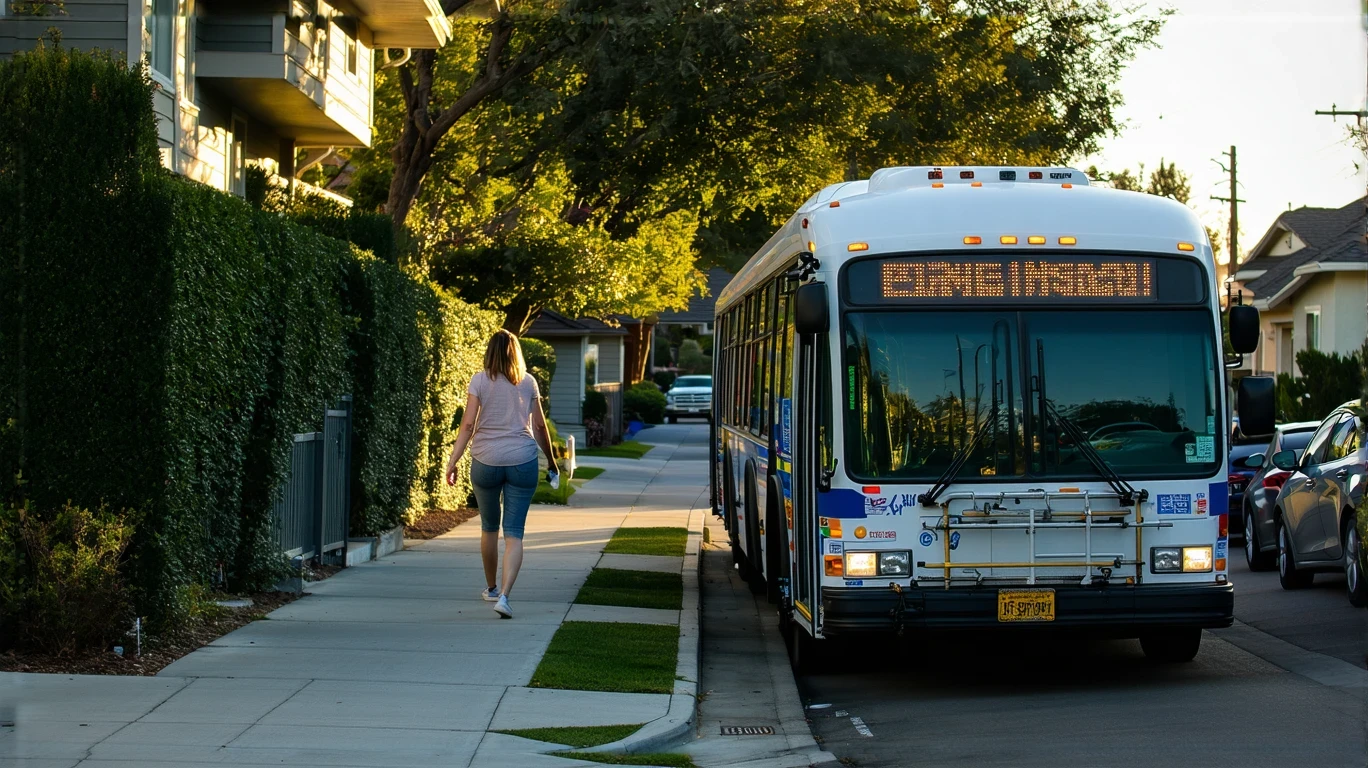
How People Get Around Beaumont
Beaumont sits in the Pass Area of Riverside County, positioned between the densely developed western Inland Empire and the desert communities to the east. It’s a suburban city that grew rapidly in the 2000s, and its street network reflects that: wide arterials, residential subdivisions set back from main roads, and commercial development clustered along key corridors like Beaumont Avenue and Cherry Valley Boulevard. This layout creates a mobility environment where driving is not just convenient—it’s structurally embedded.
The pedestrian network is sparse. Sidewalks exist in newer developments, but they often lead to cul-de-sacs rather than connecting to schools, parks, or shopping. Bike infrastructure is present in pockets, but the ratio of bike lanes to roadways remains low, and the distances between daily destinations make cycling a recreational choice more than a practical one for most residents. What this means in practice is that even short trips—picking up groceries, dropping kids at school, getting to a doctor’s appointment—typically require a car.
Public transit does operate in Beaumont, primarily through regional bus service that links the city to neighboring communities and employment hubs. But the service is designed for commuters with predictable schedules and destinations along fixed routes, not for the kind of flexible, multi-stop trips that define daily household logistics. If your life fits the bus schedule and your destinations align with the route map, transit can work. If not, you’ll find yourself planning around a car.
Public Transit Availability in Beaumont
Public transit in Beaumont often centers around systems such as Beaumont Transit and connections to regional services like Riverside Transit Agency (RTA) routes. These services provide links to key destinations in the Inland Empire, including Riverside, San Bernardino, and employment centers along the I-10 corridor. For residents commuting to stable job sites in these areas, the bus can offer a viable alternative to daily driving—particularly for those looking to avoid freeway congestion and the wear of long solo commutes.
Where transit works best is along the main corridors. Beaumont Avenue, for example, sees more frequent service and connects to commercial districts and transfer points. Residents living within walking distance of these routes—and whose work or school destinations are also near stops—can build routines around the bus. The service is most practical for single-destination trips: home to work, work to home, with minimal deviation.
Where transit falls short is in coverage and flexibility. Beaumont’s residential subdivisions sprawl across a wide area, and many neighborhoods sit far from bus lines. Late-night and weekend service is limited, which creates gaps for shift workers, service industry employees, and anyone whose schedule doesn’t align with standard commuting hours. Multi-stop errands—picking up a prescription, stopping for groceries, swinging by the bank—become logistically difficult without a car. And because food and grocery options in Beaumont cluster along corridors rather than being broadly distributed, even residents near bus lines may find themselves walking significant distances with bags in hand.
The transit system isn’t designed to replace car ownership. It’s designed to supplement it, offering a commute option for those whose circumstances allow them to use it. That’s a meaningful distinction, and it shapes who benefits and who doesn’t.
Driving & Car Dependence Reality
In Beaumont, driving isn’t just the most common way to get around—it’s the baseline assumption. The city’s infrastructure prioritizes vehicle access: wide streets, ample parking at shopping centers, and residential layouts that funnel traffic onto a few main arteries. For most households, the question isn’t whether to own a car, but whether one vehicle is enough or if a second (or third) is necessary.
Car dependence here is a function of geography and design. Beaumont’s commercial activity concentrates along a handful of corridors, and residential neighborhoods branch off into subdivisions that don’t interconnect well. That means even nearby destinations often require driving because there’s no direct pedestrian or bike route. Schools, parks, and shopping centers are rarely within a comfortable walk, and the summer heat—often reaching triple digits—makes longer walks or bike rides physically taxing for much of the year.
Parking is rarely a problem. Unlike denser urban centers where parking adds cost and complexity, Beaumont offers abundant free parking at most destinations. Driveways are standard, and street parking is typically available in residential areas. This removes one of the friction points that might otherwise push residents toward transit or alternative transportation.
The tradeoff is exposure to driving costs and time. Beaumont’s average commute is 36 minutes, and more than half of workers face long commutes—a reflection of the fact that many residents travel outside the city for employment. That means daily time behind the wheel, exposure to fuel price swings, and the ongoing costs of vehicle maintenance and insurance. For households with multiple workers or complex schedules, the logistics can become a significant part of daily life.
Commuting Patterns & Daily Mobility
Commuting in Beaumont is shaped by the city’s role as a residential community within a larger regional economy. Many residents work in Riverside, San Bernardino, or other Inland Empire job centers, which means the morning and evening commutes often involve freeway travel—primarily along I-10 or CA-60. These routes can be congested, particularly during peak hours, and the combination of distance and traffic contributes to the longer-than-average commute times.
For single-job households where one or both adults work standard hours at a fixed location, the commute becomes routine. It’s predictable, and residents build their schedules around it. But for households with more complex logistics—parents managing school drop-offs and pickups, workers with variable shifts, or families juggling multiple jobs—the lack of transit flexibility and pedestrian connectivity creates friction. Every trip requires a car, every schedule conflict requires coordination, and every errand adds time and planning.
About 17.3% of Beaumont workers work from home, which is slightly above the national baseline and reflects the broader shift toward remote work in recent years. For these households, the daily commute disappears entirely, and the calculus of transportation shifts. Proximity to employment centers becomes less critical, and the focus moves to access for errands, recreation, and occasional trips. But for the majority who still commute, the structure of Beaumont’s transportation network means driving remains non-negotiable.
Who Transit Works For—and Who It Doesn’t
Public transit in Beaumont is not a universal solution. It works for a specific subset of residents whose circumstances align with what the system offers: fixed routes, limited schedules, and service concentrated along main corridors.
Transit works best for solo commuters with stable schedules and destinations near bus stops. If you work a consistent shift at a warehouse, hospital, or office along the I-10 corridor, and you live within reasonable walking distance of a Beaumont bus line, the system can provide a reliable, lower-stress alternative to driving. It also works for residents who don’t own a car by choice or necessity and who are willing to structure their lives around the limitations of the service—planning trips in advance, combining errands into single outings, and accepting that some destinations simply won’t be accessible by bus.
Transit does not work well for families with children, especially those managing school schedules, extracurriculars, and multi-stop errands. It’s not practical for shift workers whose hours fall outside standard service times. It’s not viable for residents living in peripheral subdivisions far from bus lines. And it’s not flexible enough for households that need to make spontaneous trips, handle emergencies, or manage complex logistics across multiple locations.
Renters living near Beaumont Avenue or other serviced corridors have better access to transit than homeowners in outlying neighborhoods, but even proximity doesn’t eliminate the core limitations: infrequent service, limited coverage, and a system designed for linear commutes rather than the web of daily trips most households navigate.
Transportation Tradeoffs in Beaumont
Choosing between transit and driving in Beaumont isn’t really a choice for most residents—it’s a constraint imposed by the city’s infrastructure. But for those who do have the option, the tradeoffs are clear.
Driving offers control, flexibility, and speed. You leave when you want, stop where you need to, and adjust on the fly. You’re not dependent on schedules, and you’re not limited by route maps. For households managing kids, groceries, and unpredictable schedules, that flexibility is essential. The cost is exposure: to fuel prices, to maintenance, to traffic, and to the time spent behind the wheel.
Transit offers predictability and removes some of the stress of daily driving—no freeway merges, no parking hunts, no wear on your own vehicle. But it requires structure. Your life has to fit the bus schedule, your destinations have to align with the routes, and you have to accept that some trips simply won’t be possible. For the right commuter, that tradeoff is worth it. For most households, it’s not.
The deeper tradeoff is between housing cost and transportation burden. Beaumont’s relative affordability compared to coastal or central Inland Empire cities makes it an attractive option for buyers and renters, but that affordability often comes with longer commutes and greater car dependence. You’re trading lower housing payments for higher transportation exposure—not just in dollars, but in time and logistics.
FAQs About Transportation in Beaumont (2026)
Is public transit usable for daily commuting in Beaumont?
Public transit in Beaumont is usable for specific commute patterns—primarily solo commuters with fixed schedules and destinations along regional bus routes. If your job is near a stop and your hours align with service times, the bus can work. But for most residents, especially those with variable schedules or multi-stop trips, driving remains the practical default.
Do most people in Beaumont rely on a car?
Yes. Beaumont’s infrastructure is car-oriented, with sparse pedestrian networks and limited transit coverage. The majority of residents drive for work, errands, and daily logistics. Even households near bus lines often find that a car is necessary for flexibility and access.
Which areas of Beaumont are easiest to live in without a car?
Areas near Beaumont Avenue and other main corridors with bus service offer the best chance of reducing car dependence, but even in these areas, transit is most practical for single-destination commutes rather than daily errands. Living without a car in Beaumont requires careful planning and acceptance of limited access.
How does commuting in Beaumont compare to nearby cities?
Beaumont’s average commute time of 36 minutes reflects its role as a residential community within the broader Inland Empire. Many residents commute to Riverside, San Bernardino, or other regional job centers, which means longer travel times compared to cities with more localized employment. The tradeoff is typically lower housing costs in exchange for greater commute exposure.
Does Beaumont have bike infrastructure for commuting?
Bike infrastructure exists in pockets, but the overall ratio of bike lanes to roadways is low, and the distances between residential areas and key destinations make cycling impractical for most commutes. Biking in Beaumont is more common for recreation than for daily transportation.
How Transportation Fits Into the Cost of Living in Beaumont
Transportation in Beaumont isn’t just about how you get from one place to another—it’s a structural factor that shapes where you can live, how you spend your time, and what kind of flexibility you have in daily life. The city’s car-oriented design means that for most households, vehicle ownership is not optional. That creates ongoing exposure: to fuel prices, to maintenance schedules, to insurance premiums, and to the time cost of commuting.
For families, the transportation burden often compounds. Two working adults may mean two cars. Kids in school or activities may mean additional trips. Errands that could be combined in a walkable neighborhood require separate car trips here. The result is that transportation becomes one of the largest and least flexible parts of the household budget—not because Beaumont is unusually expensive, but because the structure of the city makes driving unavoidable.
For a fuller picture of how transportation costs interact with housing, utilities, and other expenses, see the Monthly Spending in Beaumont: The Real Pressure Points article, which breaks down where money goes and how different household types experience financial pressure.
The reality is that Beaumont rewards residents who can absorb the time and cost of car dependence in exchange for more affordable housing. If your work allows remote flexibility, if your household can manage with one vehicle, or if your commute destinations align with available transit, the tradeoff can work in your favor. But if you’re expecting urban-style mobility—walkable errands, frequent transit, or car-optional living—Beaumont will require a significant adjustment. The city’s transportation structure is what it is, and understanding that upfront is the first step toward making it work.
How this article was built: In addition to public economic data, this article incorporates location-based experiential signals derived from anonymized geographic patterns—such as access density, walkability, and land-use mix—to reflect how day-to-day living actually feels in Beaumont, CA.