
Beaumont is considered moderately priced in 2026, with a median home value of $428,100 and median rent of $1,437 per month. The value proposition depends on housing entry cost versus car dependence, with transportation exposure and seasonal utility swings shaping household budgets more than day-to-day prices.
You’re scrolling through rental listings, comparing mortgage calculators, and trying to figure out what your life will actually cost in Beaumont. The numbers are there, but they don’t tell you what really drives expenses—or where the surprises hide. This breakdown cuts through the noise and maps the cost structure that shapes daily life here.
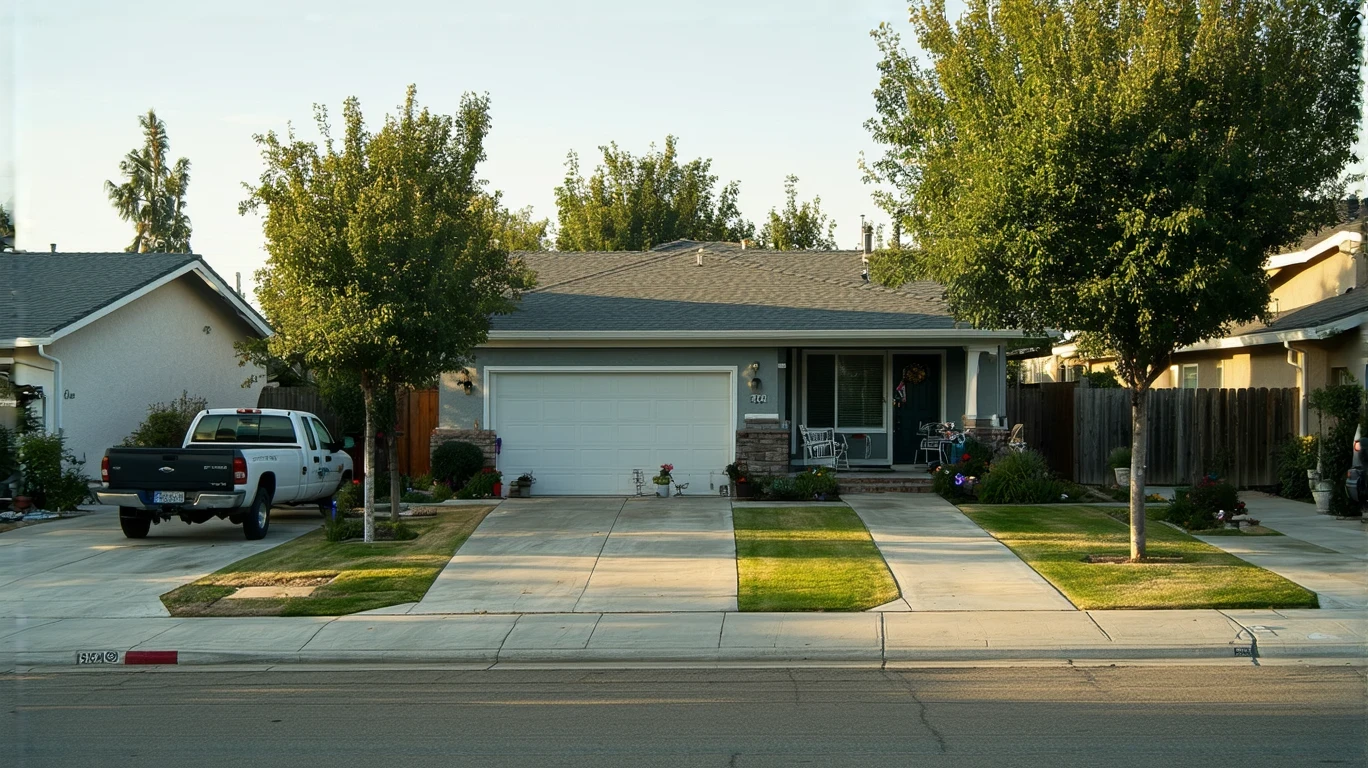
Overall Cost of Living Snapshot
Beaumont sits in the Inland Empire with a regional price parity index of 100, meaning costs align closely with the national baseline. But that average masks the real story: housing dominates the cost structure, while getting around and seasonal utility swings create secondary pressure points that vary sharply by household type.
The median household income is $102,469 per year, and the unemployment rate stands at 5.3%. These figures frame the economic backdrop, but they don’t determine affordability—what matters more is how housing entry costs, car dependency, and energy exposure interact with your specific situation.
Compared to coastal California metros, Beaumont offers lower housing entry costs. But the tradeoff is clear: this is a car-oriented city where errands require planning and driving, transit isn’t viable for most trips, and commutes average 36 minutes. Over half of workers (56.8%) face long commutes, while only 17.3% work from home.
Driver verdict: Housing affordability pulls people in, but transportation costs and commute time push back. The city rewards those who can absorb car dependency and tolerate distance from job centers, while penalizing households that need walkable access or frequent transit.
Housing Costs (Primary Driver)
Housing is the single largest cost factor in Beaumont. The median home value of $428,100 positions the city as accessible compared to Los Angeles or Orange County, but it still requires substantial upfront capital and long-term financial commitment. The median gross rent of $1,437 per month offers an alternative entry point, though rental inventory tends to be more limited in ownership-oriented suburban markets like this one.
For buyers, the question isn’t just the purchase price—it’s property taxes, insurance (which can be volatile in California), maintenance, and HOA fees if applicable. For renters, the question is whether the rental stock matches household needs and whether landlords pass through cost increases over time.
The city’s building character is mixed, with average building levels in the medium range and both residential and commercial land use present. This suggests a blend of single-family homes and some multifamily or mixed-use development, though the overall texture remains suburban.
Conclusion: Beaumont is an ownership-oriented city with rental options. Buyers gain access to relatively affordable entry compared to coastal metros, while renters face moderate costs but fewer choices. This is not a transitional city—it’s a place where people settle, own, and stay.
| Housing Type | Cost Anchor | What That Buys You |
|---|---|---|
| Median Home Value | $428,100 | Suburban ownership with commute tradeoff |
| Median Rent | $1,437/month | Moderate rental cost, limited walkable access |
Utilities & Energy Risk
Electricity in Beaumont costs 33.60¢ per kWh, and natural gas is priced at $21.94 per MCF (roughly equivalent to 100 therms). These are the baseline rates, but the real exposure comes from how much you use—and that’s driven by climate.
Beaumont experiences triple-digit summer heat, which means air conditioning dominates warm-season electricity bills. For illustrative context, a household using 1,000 kWh per month would face a baseline electricity cost of around $336 before fees and taxes. Winter heating needs are lighter, but gas usage can still add meaningful costs during cooler months—illustratively, 1 MCF per month would cost about $22 before fees.
The key risk here isn’t the rate—it’s the intensity and duration of cooling season. Homes with poor insulation, older HVAC systems, or west-facing exposure will see sharply higher bills. Renters have less control over efficiency upgrades, while owners can invest in insulation, smart thermostats, and other measures to reduce exposure.
Risk classification: Moderate. Utility costs are predictable in direction but variable in magnitude. Summer bills will be noticeably higher than winter, and households that can’t manage cooling efficiently will feel the pressure.
Groceries & Daily Costs
Grocery prices in Beaumont align closely with the national baseline, adjusted for regional price parity. Items like bread ($1.79/lb), chicken ($2.04/lb), and rice ($1.06/lb) reflect moderate pricing, while ground beef ($6.54/lb) and cheese ($4.72/lb) sit at higher points. Eggs cost $2.86 per dozen, and milk runs $4.00 per half-gallon.
These prices don’t create dramatic cost pressure on their own, but they add up over time—especially for larger households or those with specific dietary needs. The bigger factor is access: food and grocery options are corridor-clustered, meaning errands require driving and planning rather than quick walks. This isn’t a city where you can pop out for a missing ingredient; you’re making deliberate trips, often consolidating errands to minimize drive time.
For households used to walkable neighborhoods or dense retail, this shift in logistics can feel like a hidden cost—not in dollars, but in time and convenience.
Transportation Reality
Transportation is where Beaumont’s cost structure diverges sharply from denser metros. The average commute is 36 minutes, and over half of workers face long commutes. Only 17.3% work from home, meaning most residents are driving daily—often significant distances.
Gas prices sit at $4.25 per gallon, which is elevated compared to national averages but typical for California. The real cost isn’t the price per gallon—it’s the volume of driving required. Beaumont has car-oriented mobility texture with minimal pedestrian infrastructure, and transit is limited to bus service. Cycling infrastructure exists in pockets but doesn’t serve as a primary transportation mode for most residents.
This means most households need at least one vehicle, and many need two. Beyond fuel, that’s insurance, maintenance, registration, and depreciation—all recurring exposures that don’t show up in a single line item but compound over time.
Transportation is a structural cost here, not a discretionary one. If you don’t have a car, your access to work, errands, and services collapses. If you have a long commute, your fuel and time costs rise sharply. This isn’t a city that rewards car-free or car-light living.
Cost Exposure Profiles
Cost exposure in Beaumont is shaped by three primary factors: housing entry versus long-term ownership, transportation dependence, and utility volatility. The city rewards certain household structures and penalizes others—not through explicit barriers, but through the way costs accumulate and interact.
Low-exposure profile: Homeowners with paid-off or low-cost mortgages, short commutes or remote work, and energy-efficient homes face the lightest cost pressure. Their main recurring costs are property taxes, insurance, maintenance, and utilities—all manageable with planning and control.
High-exposure profile: Renters with long commutes, multiple vehicles, and older or poorly insulated homes face compounding pressure. Rent renewals, fuel costs, and summer utility spikes create volatility, and there’s limited ability to reduce exposure through efficiency investments or location changes.
The gap between these profiles is wide. Beaumont doesn’t have a single “cost of living”—it has a cost structure that distributes pressure unevenly based on housing tenure, commute length, vehicle count, and home efficiency. Understanding where you fall in that structure is more useful than knowing the median rent or average gas price.
Frequently Asked Questions
Is Beaumont more affordable than Riverside in 2026? Beaumont tends to offer lower housing entry costs than Riverside, but the tradeoff is longer commutes and greater car dependency. The affordability advantage depends on whether you’re willing to absorb transportation costs and distance from job centers.
What does a typical cost profile look like in Beaumont? Most households face moderate housing costs, high transportation exposure due to car dependency and long commutes, and seasonal utility swings driven by summer cooling needs. The profile skews toward ownership rather than renting, and toward suburban rather than urban living patterns.
Do utilities cost more in Beaumont than nearby areas? Utility rates are comparable to other Inland Empire cities, but actual bills vary widely based on home efficiency and cooling needs. Summer electricity costs are the primary driver, and older homes or those with poor insulation will see sharply higher bills.
What costs tend to surprise newcomers in Beaumont? Transportation costs often surprise people—not just fuel, but the time and logistics of car-dependent errands, long commutes, and the need for multiple vehicles in many households. Summer utility bills can also be higher than expected if you’re not used to extended cooling seasons.
Are property taxes higher in Beaumont than Redlands? Property tax rates in California are governed by Proposition 13, so the effective rate is similar across cities. The difference comes from assessed home values—higher-priced homes generate higher tax bills, but the rate structure itself is consistent.
Is Beaumont a good value compared to coastal California cities? Beaumont offers significantly lower housing entry costs than coastal metros like Los Angeles, San Diego, or Orange County. The tradeoff is car dependency, longer commutes, and less access to walkable amenities or transit. It’s a good value if those tradeoffs align with your priorities.
How does healthcare access affect costs in Beaumont? Beaumont has clinics and pharmacies for routine care, but no hospital within city limits. This means some medical needs require travel to nearby cities, which adds time and transportation costs. For households with frequent medical needs, this can be a meaningful friction point.
What’s the biggest cost lever households can control in Beaumont? Transportation is the biggest controllable lever—commute length, vehicle count, and fuel efficiency all directly affect recurring costs. Housing efficiency is the second lever, particularly for cooling costs during summer. Both require upfront decisions (where you live, what you drive, what you buy or rent) rather than month-to-month adjustments.
How this article was built: In addition to public economic data, this article incorporates location-based experiential signals derived from anonymized geographic patterns—such as access density, walkability, and land-use mix—to reflect how day-to-day living actually feels in Beaumont, CA.