
“It’s the kind of place where you get space to breathe, but you’re not totally cut off—there are pockets where you can actually walk to grab coffee or hit the park without getting in the car every single time.”
That sentiment captures a lot of what people say about living in Battle Ground: it offers suburban calm and elbow room, but it’s not the stereotypical car-dependent sprawl some might expect. With median household income around $94,360 and median home values at $415,500, Battle Ground attracts families and commuters looking for affordability relative to the Portland metro, combined with a small-town feel that still offers some walkable texture and accessible errands.
But does it feel like home? That depends entirely on what you’re trading up for—and what you’re willing to give up.
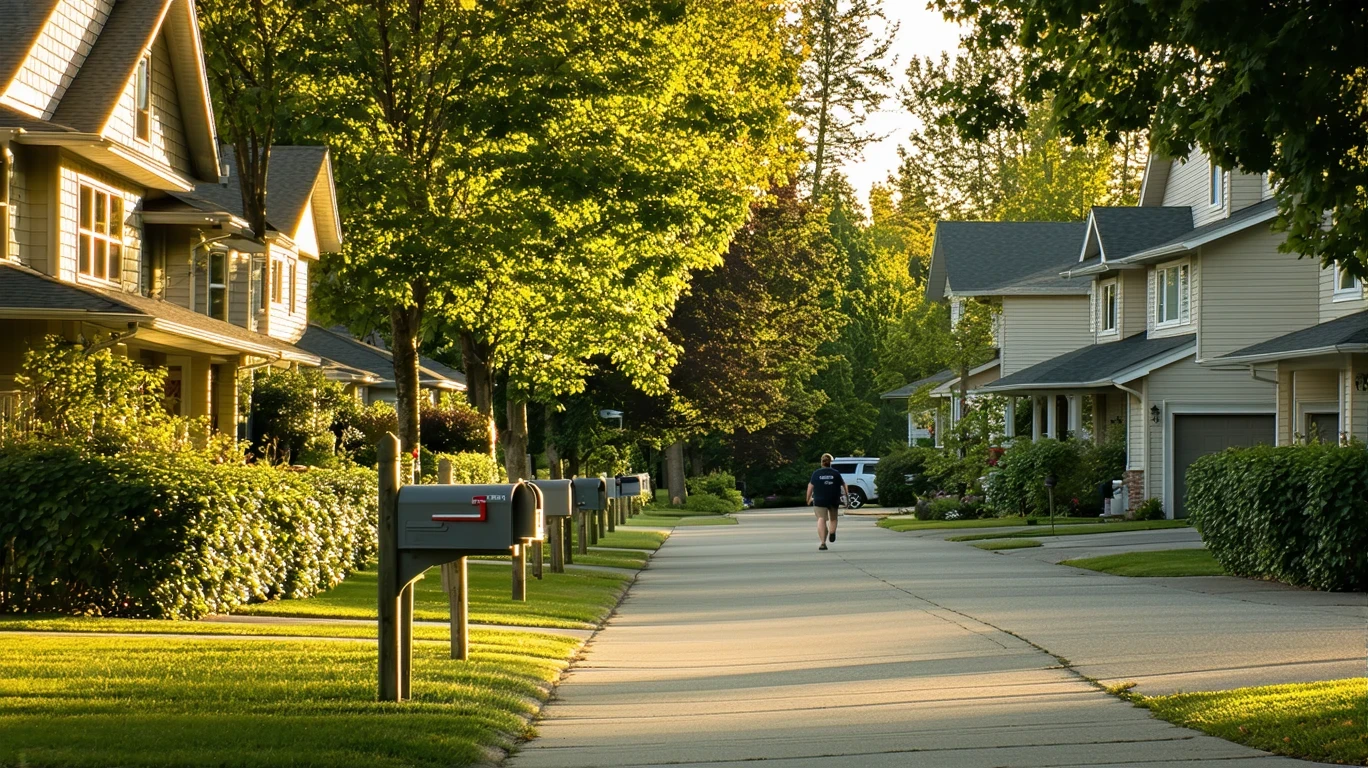
What Battle Ground Feels Like: The Emotional Landscape
Battle Ground sits in a sweet spot for people who want suburban space without total isolation. The city has integrated green space, with parks woven throughout and water features that add to the outdoor appeal. For households that value being able to step outside and access trails, playgrounds, or open areas without a drive, that infrastructure feels like a win.
At the same time, this is a place where housing tradeoffs show up in daily logistics. Nearly half of workers face long commutes—49.3% spend significant time getting to job centers, most likely Portland. That time-versus-distance tension is a recurring theme: people love the space and the relative affordability, but they feel the pull of the commute in both time and fuel costs, especially with gas hovering around $3.80 per gallon.
The city’s structure also creates interesting contrasts. There are walkable pockets where pedestrian infrastructure is strong relative to the road network, and cycling infrastructure is notably present. Food and grocery density exceeds high thresholds, meaning errands are broadly accessible in parts of town. But transit is bus-only, and for households that can’t or don’t want to drive, that limitation becomes a friction point quickly.
People who thrive here tend to be those who appreciate a quieter pace, value outdoor access, and don’t mind driving when needed. People who struggle tend to be those who want urban texture, expect frequent transit, or need a wider range of amenities within walking distance at all times.
Social Media Buzz in Battle Ground
Online, Battle Ground residents often talk about the city in terms of what it isn’t: it’s not Vancouver’s density, it’s not Portland’s chaos, and it’s not as isolated as some of the smaller towns further north. That framing—defining the city by its position between extremes—comes up a lot.
Common discussion themes include:
- Growth and change: Longtime residents express protectiveness over the small-town character, while newcomers appreciate the arrival of new grocery options and parks.
- Commute fatigue: The drive to Portland or Vancouver job centers is a frequent topic, with people weighing whether the space and cost savings justify the time on the road.
- Outdoor pride: Parks, trails, and green space earn consistent praise—people feel like they can actually use the outdoors here without fighting for parking or dealing with crowds.
- Amenity gaps: The lack of certain retail, dining variety, and entertainment options gets mentioned, but often with a shrug: “You drive to Vancouver for that stuff.”
“We moved here for the yard and the quiet, and we got both. But yeah, if you want sushi or a bookstore, you’re getting back in the car.”
“I love that my kids can bike to school and we can walk to the park. It’s not everywhere, but where it works, it really works.”
“The commute is brutal some days, but I couldn’t afford a house like this closer in. You pick your trade.”
The tone is pragmatic, not bitter—people seem to understand what they signed up for, even if they occasionally wish for more convenience.
Local News Tone
Local coverage of Battle Ground tends to frame the city through the lens of transition: a town that’s growing, adding infrastructure, and negotiating what it wants to become. The tone is rarely alarmist, but it’s not boosterish either—it’s observational, focused on how change lands in a community that values its identity.
Recurring topic buckets include:
- “New Development Brings Amenities—and Questions About Character”
- “Commuters Weigh Time vs. Space in Housing Decisions”
- “Parks and Trails Expand as Outdoor Access Becomes a Draw”
- “Schools See Enrollment Shifts as Families Move In”
- “Residents Debate What ‘Small-Town Feel’ Means as Population Grows”
The framing reflects a community that’s self-aware: people know Battle Ground is changing, and the conversation is less about stopping growth and more about managing it in a way that doesn’t erase what people moved here for in the first place.
Review-Based Public Perception
On platforms like Google, Yelp, and Nextdoor, Battle Ground earns praise for what it does well—and mild frustration for what it doesn’t offer.
What people tend to appreciate:
- Safe, quiet neighborhoods with space between homes
- Access to parks and outdoor areas without crowding
- Friendly, community-oriented feel in older pockets
- Grocery and everyday errands accessible in many areas
- Good fit for families who want suburban stability
What people tend to critique:
- Limited dining and entertainment variety
- Commute length to major job centers
- Bus-only transit limits options for non-drivers
- Some newer areas feel generic or lack character
- Healthcare access is routine-local only; no hospital in town
Expectation matching is key. People who wanted a quiet suburban base with proximity to Portland tend to feel satisfied. People who expected more walkable urban texture or transit viability tend to feel let down. The city delivers on space, safety, and outdoor access—but it doesn’t pretend to be something it’s not.
Comparison to Nearby Cities
| Dimension | Battle Ground | Vancouver, WA | Camas, WA |
|---|---|---|---|
| Overall Vibe | Suburban calm with walkable pockets | Denser, more urban-adjacent feel | Polished, family-focused, outdoorsy |
| Walkability | Present in pockets, car-oriented baseline | More consistent walkable areas | Mixed; newer areas less walkable |
| Transit Access | Bus-only service | Better bus coverage, closer to Portland | Limited transit, car-dependent |
| Commute Burden | Long commutes common | Shorter commutes to Portland | Moderate; some local employment |
| Amenity Variety | Everyday errands accessible, limited dining/entertainment | More retail, dining, and services | Boutique feel, less variety than Vancouver |
| Outdoor Access | Integrated parks and green space | Good park access, more urban | Exceptional trails and natural areas |
If you prioritize space, affordability relative to closer-in suburbs, and strong outdoor access, Battle Ground offers a compelling mix. If you need shorter commutes, more transit options, or greater amenity variety, Vancouver might feel more practical. If you want a more polished suburban environment with premium outdoor recreation and don’t mind paying for it, Camas could be a better fit.
None of these cities is objectively “better”—they’re solving for different priorities. Battle Ground works best for people who value breathing room and are willing to drive when they need more.
What Locals Are Saying
“We moved here from Portland three years ago, and honestly, it’s been great for our kids. They can bike around the neighborhood, we’re close to parks, and the schools feel manageable. The commute is rough, but we couldn’t have afforded a house with a yard closer in.” — Family with young children
“I work remotely, so the commute thing doesn’t hit me. For me, Battle Ground is perfect—I get space, quiet, and I can still get to Portland or Vancouver when I want to. It’s not exciting, but that’s kind of the point.” — Remote worker, early 30s
“It’s fine if you have a car and a flexible schedule. If you’re trying to rely on the bus or walk everywhere, you’re going to have a hard time. It’s just not set up for that.” — Renter without a car
“I’ve lived here for 20 years, and it’s changed a lot. More people, more traffic, more cookie-cutter developments. But it’s still quieter than Vancouver, and people still know their neighbors. I hope it stays that way.” — Long-time homeowner
“The parks here are legit. We’re out hiking or biking most weekends, and we don’t have to drive an hour to find a trail. That was a big reason we picked Battle Ground over some of the other suburbs.” — Couple in their 40s
“I wish there were more restaurants and things to do locally. We end up driving to Vancouver or Portland a lot, which kind of defeats the purpose of living somewhere ‘quieter.’ But the day-to-day costs are lower, so I guess it balances out.” — Young professional, late 20s
“It’s a good place to raise a family if you want them to have space and safety. It’s not flashy, and it’s not going to wow anyone, but it does what it’s supposed to do.” — Parent of school-aged kids
Does Battle Ground Feel Like a Good Fit?
Battle Ground doesn’t try to be everything to everyone, and that clarity is part of its appeal. It works well for families and remote workers who want suburban space, outdoor access, and a quieter pace without total isolation. The presence of walkable pockets, accessible groceries, and integrated green space means it’s not a one-dimensional car suburb—there’s texture here if you know where to find it.
But it’s not a fit for everyone. If you’re transit-dependent, need urban amenities within walking distance, or want to minimize your commute to Portland, Battle Ground will feel limiting. The bus-only transit, long commute percentages, and gaps in local healthcare and entertainment options are real tradeoffs, not minor inconveniences.
The people who thrive here are those who see the city as a base—a place to come home to, not a place that provides everything on-site. They’re comfortable driving when needed, they value space over density, and they appreciate the outdoor access and community feel that Battle Ground offers.
If that sounds like alignment, Battle Ground might feel like home. If it sounds like compromise, it’s worth exploring what else is out there. Understanding quality of life factors and how they map to your daily routines can help clarify whether this city’s tradeoffs work for you—or whether you’d be better served by a different suburb in the metro.
How this article was built: In addition to public economic data, this article incorporates location-based experiential signals derived from anonymized geographic patterns—such as access density, walkability, and land-use mix—to reflect how day-to-day living actually feels in Battle Ground, WA.
The perspectives shown reflect commonly expressed local sentiment and recurring themes in public discussion, rather than individual accounts.