
Battle Ground sits in the Portland metro orbit, close enough to feel the pull of the city but far enough to offer space, quiet, and a different pace. The median household income here is $94,360 per year, and housing costs reflect both the appeal and the tradeoffs: the median home value is $415,500, and median rent runs $1,456 per month. For many households, the question isn’t whether Battle Ground is affordable in theory—it’s whether their income and expectations can absorb the specific pressures this place creates.
Comfortable living here isn’t about hitting a magic number. It’s about understanding where your money goes, what you’re trading for space and access, and whether the rhythm of daily life here matches how you want to spend your time and energy. Some households thrive in Battle Ground; others find the tradeoffs harder than expected. The difference often comes down to how well income aligns with lifestyle expectations, not just how much you earn.
What “Living Comfortably” Means in Battle Ground
Comfort in Battle Ground is less about luxury and more about margin—the ability to cover housing, handle seasonal utility swings, absorb transportation time or costs, and still have room to breathe financially. It means not being forced into constant tradeoffs between paying bills and maintaining quality of life. For some, that means owning a home with a yard and accepting a longer commute. For others, it means renting closer to errands and green space, prioritizing time over square footage.
The Pacific Northwest climate shapes expectations around comfort, too. Summers are warm and dry, winters are cool and damp, and heating and cooling costs shift with the seasons. A comfortable household here can absorb those swings without rearranging spending each month. Dining out, recreation, and social life are part of the equation, but they’re secondary to the big three: housing, transportation, and utilities. If those are under control, comfort becomes possible. If they’re not, everything else tightens.
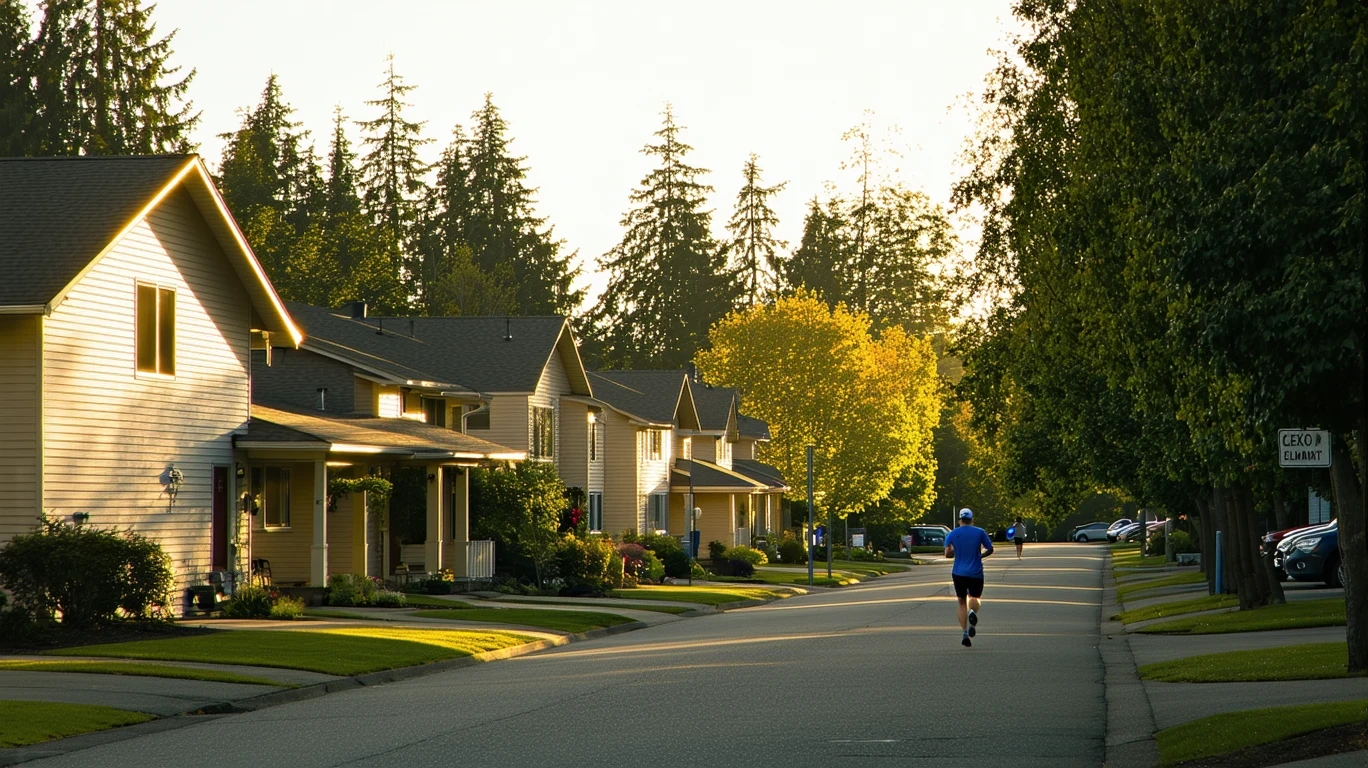
Comfort is also contextual. Battle Ground offers integrated green space access, broadly accessible errands, and walkable pockets in some areas—features that reduce logistical friction and improve daily quality of life without adding cost. Households that value those dimensions often find comfort here easier to achieve than in places where every errand requires a car and every outing requires planning.
Where Income Pressure Shows Up First
Housing is the dominant cost pressure in Battle Ground. Whether you’re buying or renting, a significant share of income goes toward securing space. Homeownership at the median value requires substantial upfront capital and ongoing costs—property taxes, insurance, and maintenance—that don’t pause when other expenses rise. Renting offers flexibility but less control over cost increases, and at the median rent level, a single income can feel stretched, especially for those without a partner or roommate to share the load.
Transportation pressure is less about fuel costs and more about time. Nearly half of workers here—49.3%—face long commutes, and the average commute is 30 minutes. Only 8.7% work from home. That means most households are spending significant time on the road, and that time compounds. It affects childcare logistics, limits flexibility, and reduces the hours available for everything else. Gas prices in Battle Ground run $3.80 per gallon, which adds up for households making daily trips, but the bigger cost is often the time itself—time that can’t be spent at home, with family, or on rest.
Utility costs shift with the seasons. Electricity rates are 14.06¢ per kWh, and natural gas runs $24.71 per MCF. Heating dominates in winter, cooling in summer, and households without efficient systems or weatherproofing face higher exposure. The variability creates pressure for households operating close to their income limits, where a $50 or $100 swing in a utility bill can force other tradeoffs.
For families, pressure also shows up in logistics. School infrastructure is present, but playground density is low, meaning recreational options for young children may require more planning or travel. Healthcare access is routine-local—clinics and pharmacies are available, but hospital care requires leaving town. That’s manageable for most households, but it adds friction for families with young children or anyone managing chronic conditions.
How the Same Income Feels Different by Household
Households at similar income levels often experience very different pressure depending on size, structure, and priorities. A single adult earning near the median may find housing costs steep relative to solo income, but errands accessibility and walkable pockets in some areas reduce the need for constant car use. Transit is bus-only, which limits flexibility but can work for those whose routines align with service. The biggest challenge is often housing—finding a rental or home that fits a single income without forcing other sacrifices.
Couples benefit from dual income, which eases housing pressure and creates more margin for savings or discretionary spending. But if both partners work outside Battle Ground, the commute burden doubles, and coordinating schedules around long commutes can erode the time advantage that drew them here in the first place. Couples without children often find Battle Ground comfortable, especially if they value green space access and a quieter pace over urban density.
Families face the most complex tradeoffs. Housing costs are significant, and space needs are higher. School infrastructure is present, which supports families with school-age children, but low playground density means younger children may need more structured activities or travel for recreation. Green space access is strong, which helps, but long commutes affect family time—parents spending an hour or more on the road each day have less time for homework help, meals, or evening routines. Healthcare access is routine-local, meaning non-emergency care is available, but anything more serious requires a trip to a larger facility. For families, comfort depends heavily on whether both parents work, how flexible their schedules are, and whether they can absorb the time and logistical costs without constant stress.
The Comfort Threshold (Qualitative)
The comfort threshold in Battle Ground isn’t a number—it’s the point where choices expand and tradeoffs ease. It’s when housing no longer dictates every other decision, when a utility bill spike doesn’t force cuts elsewhere, when transportation time feels manageable rather than punishing. It’s when saving becomes plausible, not just aspirational, and when discretionary spending—dining out, recreation, small luxuries—doesn’t trigger guilt or budget panic.
For some households, that threshold arrives when dual incomes cover housing and transportation with margin to spare. For others, it’s when housing is locked in at a predictable cost (whether through a fixed mortgage or a stable rental situation), reducing month-to-month volatility. For families, it often hinges on whether one parent can work part-time or from home, reducing commute burden and childcare complexity.
Comfort also depends on expectations. Households that value space, quiet, and green access often find Battle Ground delivers well on those dimensions, even if income is moderate. Households that expect urban-level transit, walkability everywhere, or hospital-level healthcare nearby may feel the gaps more acutely, regardless of income. The threshold isn’t universal—it’s personal, shaped by what you’re willing to trade and what you’re not.
Why Online Cost Calculators Get Battle Ground Wrong
Most cost-of-living calculators reduce Battle Ground to a set of averages: median rent, typical utilities, estimated transportation. They spit out a total and call it done. But totals don’t explain how life actually feels here. They don’t capture the time cost of long commutes, the logistical ease of broadly accessible errands, or the seasonal swings in utility bills. They don’t account for the fact that walkable pockets exist in some areas but not others, or that healthcare access is routine-local rather than comprehensive.
Calculators also assume lifestyle uniformity—that everyone drives the same amount, uses the same amount of electricity, and values the same things. In reality, a household that works from home and prioritizes green space will experience Battle Ground very differently from a household with two commuters and young children. The former may find costs manageable and quality of life high; the latter may feel squeezed by time and logistics, even at the same income level.
People feel surprised after moving because the totals didn’t prepare them for the texture of daily life. They didn’t expect the commute to feel so long, or the lack of hospital access to matter, or the grocery density to make errands so much easier than where they came from. The numbers were accurate, but the experience wasn’t what the numbers implied. That’s why calculators mislead—they answer the wrong question. The right question isn’t “How much does it cost?” It’s “How will my income and priorities fit the way life actually works here?”
How to Judge Whether Your Income Fits Battle Ground
Instead of asking whether you earn enough, ask whether your income can absorb the specific pressures Battle Ground creates—and whether the tradeoffs align with what you value. Here are the questions that matter:
- Can you handle housing costs without forcing other sacrifices? If rent or mortgage payments leave little margin, every other cost becomes a source of stress. Comfort starts with housing that doesn’t dominate your budget.
- How sensitive are you to commute time? If you’re working outside Battle Ground and long commutes drain your energy or limit family time, that’s a cost no salary fully offsets. If you work from home or locally, the time advantage is significant.
- Can you absorb seasonal utility swings? If a $75 or $100 increase in a winter heating bill or summer cooling bill would force cuts elsewhere, you’re operating close to your limit. Comfort requires margin for variability.
- Do you value errands accessibility and green space? Battle Ground delivers well on both—broadly accessible errands reduce daily friction, and integrated green space access improves quality of life without added cost. If those matter to you, they’re part of the value equation.
- How much healthcare access do you need? Routine care is available locally, but hospital access requires travel. For most households, that’s manageable. For families with young children or anyone managing chronic conditions, it’s a factor worth weighing.
- Is time or money your limiting factor? If you have income but no time, long commutes and logistical complexity will erode quality of life. If you have time but limited income, Battle Ground’s errands accessibility and green space access offer value without requiring high spending.
There’s no pass or fail here—just clarity about whether your income, priorities, and tolerance for tradeoffs align with how Battle Ground actually works.
FAQs About Living Comfortably in Battle Ground
Is $94,360 enough to live comfortably in Battle Ground?
It depends on household size, structure, and expectations. For a dual-income couple without children, it often provides solid margin. For a single adult or a family with one earner, housing costs can feel steep, and comfort depends on whether other expenses—transportation, utilities, childcare—are manageable. The median income here reflects what many households earn, not necessarily what’s required for comfort.
How much of my income will go toward housing?
That depends on whether you’re renting or buying, and what type of housing you’re targeting. At the median rent of $1,456 per month, a household earning the median income would spend roughly 18% of gross monthly income on rent—well within traditional affordability guidelines. Homeownership at the median value requires more upfront capital and ongoing costs, and the share of income depends heavily on down payment, interest rates, and property taxes. The key question isn’t the percentage—it’s whether housing leaves enough margin for everything else.
Can I live in Battle Ground without a car?
It’s difficult for most households. Transit is bus-only, and while errands are broadly accessible in some areas, walkable pockets are limited and not evenly distributed. Bike infrastructure is notable, which helps for some trips, but most households rely on cars for commuting, especially given that nearly half of workers face long commutes. A car-free lifestyle is possible for some, but it requires careful housing selection and alignment with transit routes.
What’s the biggest financial surprise people face after moving here?
For many, it’s the time cost of commuting. The numbers—30-minute average, 49.3% long commutes—don’t fully convey how that time compounds. It affects childcare logistics, limits flexibility, and reduces the hours available for everything else. The second surprise is often seasonal utility variability—households accustomed to stable bills can be caught off guard by heating costs in winter or cooling costs in summer, especially in homes without efficient systems.
Is Battle Ground a good fit for families on a single income?
It’s challenging but not impossible. Housing costs are significant, and a single income limits margin for variability. School infrastructure is present, which helps, but low playground density and routine-local healthcare access add logistical complexity. Families on a single income often need to prioritize carefully—choosing housing that fits the budget, minimizing commute burden, and planning around the gaps in infrastructure. For some, the green space access and quieter pace make it worth the tradeoffs. For others, the financial and logistical pressure outweighs the benefits.
How this article was built: In addition to public economic data, this article incorporates location-based experiential signals derived from anonymized geographic patterns—such as access density, walkability, and land-use mix—to reflect how day-to-day living actually feels in Battle Ground, WA.
Battle Ground can work well for some households—but only if expectations match reality. The income you bring matters less than whether it can absorb the pressures this place creates, and whether the tradeoffs align with what you value. Comfort here isn’t guaranteed by earnings alone. It’s built by understanding where your money goes, what you’re trading for space and access, and whether the rhythm of daily life here fits how you want to live.