
“I thought I could bike to the store when I moved here — the neighborhood looked walkable enough. But once you’re actually living it, you realize the car is non-negotiable.” That’s the reality many newcomers to Avon face: a suburban layout that offers pockets of pedestrian infrastructure but doesn’t connect them into a car-free lifestyle. Understanding transportation options in Avon means recognizing how the city’s structure shapes daily movement, commute patterns, and household logistics.
How People Get Around Avon
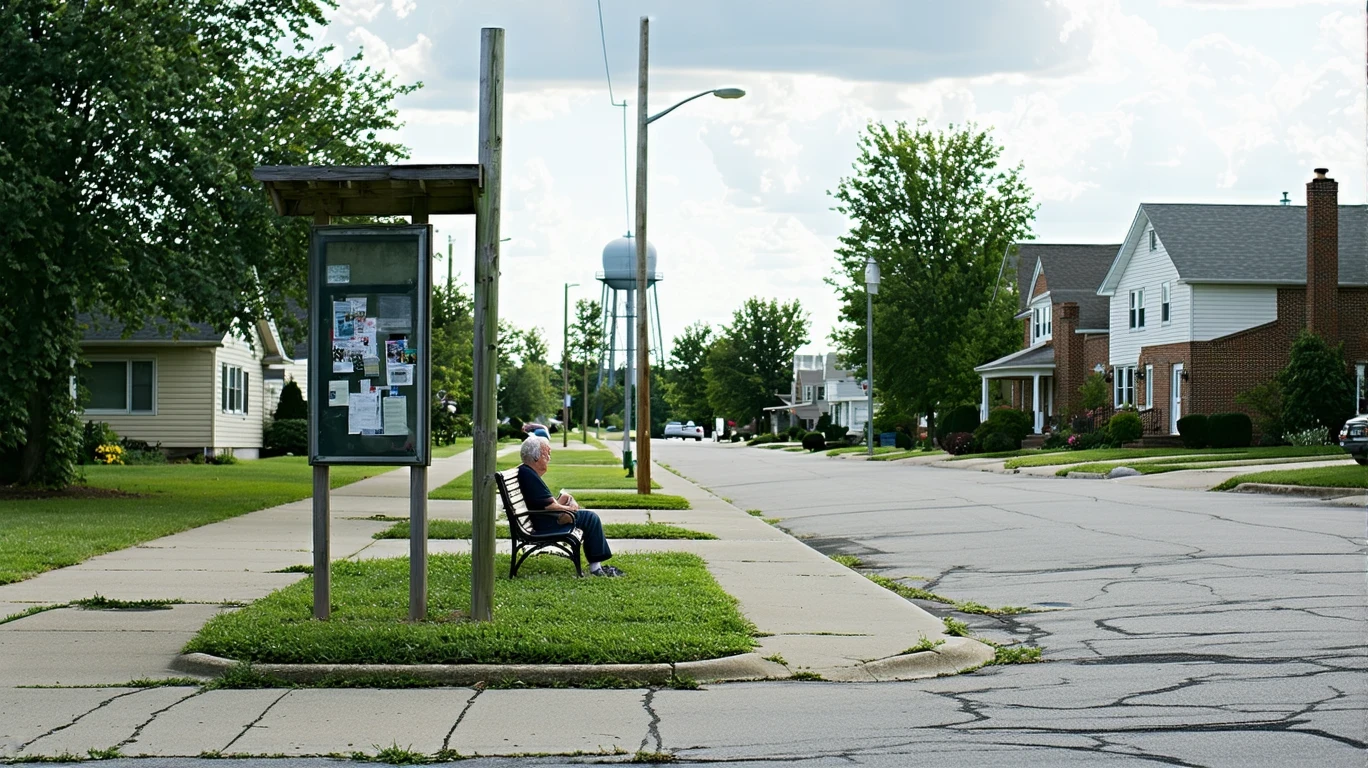
Avon operates as a car-first suburb. The city’s low-rise, mixed-use character supports some walkability within neighborhoods — pedestrian infrastructure exists at levels higher than many comparable suburbs — but those walkable zones don’t extend to the places people need to reach daily. Grocery density sits below thresholds that would support routine errands on foot, and food options, while present, cluster in ways that require intentional trips rather than spontaneous stops.
What newcomers often misunderstand is that Avon’s walkable pockets are real but isolated. You might stroll your own street comfortably, but getting to work, school, or the supermarket almost always means driving. The city’s design reflects its role as a bedroom community within the Indianapolis metro area: it prioritizes residential comfort and space over transit connectivity or errand density.
Public Transit Availability in Avon
Public transit does not play a meaningful role in Avon’s transportation landscape. No bus stops, rail stations, or structured transit services were detected at levels that would indicate usable infrastructure. For residents accustomed to cities where transit shapes daily routines, this absence is a fundamental shift.
Avon’s suburban form — spread-out development, low-density residential zones, and car-oriented commercial corridors — doesn’t support the ridership or coverage that transit systems require to function reliably. Even if regional services exist nearby, they don’t penetrate Avon’s neighborhoods in ways that make them practical for daily commuting or errands.
This isn’t a gap in service; it’s a structural reality. Avon was built around the assumption that households own and rely on personal vehicles.
Driving & Car Dependence Reality
Driving isn’t optional in Avon — it’s the default. The city’s layout, errand accessibility, and lack of transit infrastructure mean that nearly every household task requires a car. Grocery runs, school drop-offs, commuting to work, and accessing healthcare all assume vehicle ownership.
Parking is abundant and rarely a friction point. Streets, shopping centers, and residential developments accommodate cars without the congestion or scarcity common in denser cities. This makes driving predictable and low-stress, but it also locks households into the fixed costs of vehicle ownership: insurance, maintenance, registration, and fuel at $2.77 per gallon.
For families, this structure offers flexibility — multiple errands can be chained together efficiently, and commutes to Indianapolis or nearby employment centers are straightforward. But for households without reliable access to a car, Avon becomes logistically difficult. The city’s infrastructure doesn’t offer fallback options.
Commuting Patterns & Daily Mobility
Avon functions as a commuter suburb, and most employed residents travel outside city limits for work. The city sits within the Indianapolis metro area, and its residential character reflects that role: people live here for space, schools, and relative affordability, then commute elsewhere for employment.
Commutes tend to be car-based and structured around highway access. Because Avon lacks internal employment density and transit alternatives, households plan their days around driving. Multi-stop errands — dropping kids at school, commuting to work, picking up groceries — are common, and the car becomes the organizing tool for daily logistics.
For remote workers or those with flexible schedules, Avon’s low-density layout offers breathing room without sacrificing access to Indianapolis. But for households with rigid commute schedules and limited vehicle access, the city’s transportation structure adds friction rather than reducing it.
Who Transit Works For — and Who It Doesn’t
Transit doesn’t work for anyone in Avon, because it doesn’t exist at a functional level. This isn’t a matter of coverage gaps or service hours — it’s a baseline absence of infrastructure.
Households that rely on public transportation for daily mobility will find Avon incompatible with their needs. Renters without cars, older adults who no longer drive, and families managing tight budgets around a single vehicle all face logistical barriers that Avon’s infrastructure doesn’t address.
Conversely, car-owning households — especially families prioritizing space, yard access, and suburban schools — benefit from Avon’s design. The city rewards those who can absorb the fixed costs of driving and use personal vehicles to navigate its spread-out geography.
Transportation Tradeoffs in Avon
Choosing Avon means choosing car dependence. The tradeoff is straightforward: you gain residential space, lower housing pressure compared to urban cores, and access to family-oriented infrastructure, but you lose transportation flexibility.
Driving in Avon is predictable. Traffic is manageable, parking is available, and commutes are structured around highway access rather than congestion or unpredictable delays. But predictability comes at the cost of control — you can’t opt out of driving, and you can’t reduce transportation exposure by switching to transit or walking for routine errands.
For households evaluating Avon, the question isn’t whether transit is convenient — it’s whether car ownership fits comfortably into monthly expenses. If vehicle costs are manageable, Avon’s layout works. If they’re not, the city’s transportation structure becomes a barrier rather than a feature.
FAQs About Transportation in Avon (2026)
Is public transit usable for daily commuting in Avon?
No. Avon lacks the transit infrastructure necessary for daily commuting. No bus routes, rail stations, or structured services operate at levels that would support routine travel. Residents rely on personal vehicles for nearly all trips.
Do most people in Avon rely on a car?
Yes. Avon’s suburban layout, sparse errand accessibility, and absence of transit options make car ownership the default for nearly all households. Walking and biking exist within neighborhoods but don’t extend to daily errands or commuting.
Which areas of Avon are easiest to live in without a car?
None. While some neighborhoods feature pedestrian-friendly streets, grocery access and transit infrastructure remain insufficient to support car-free living anywhere in the city. Even walkable pockets require driving for routine needs.
How does commuting in Avon compare to nearby cities?
Avon functions as a bedroom community within the Indianapolis metro area. Commutes are typically car-based and directed toward employment centers outside city limits. Compared to denser suburbs or urban neighborhoods with transit access, Avon offers less flexibility but more predictable driving conditions.
What transportation costs should I expect in Avon?
Expect to own and maintain at least one vehicle per driving-age adult. Costs include fuel (currently $2.77 per gallon), insurance, registration, and maintenance. Because transit isn’t an option and errands require driving, transportation becomes a fixed household expense rather than a variable one.
How Transportation Fits Into the Cost of Living in Avon
Transportation in Avon isn’t a line item you optimize — it’s a structural factor that shapes where you live, how you organize your day, and what housing tradeoffs make sense. Car dependence is baked into the city’s geography, and households that can absorb vehicle ownership costs gain access to Avon’s suburban advantages: space, lower housing pressure, and family-oriented infrastructure.
But transportation also limits flexibility. You can’t reduce driving exposure by switching to transit, and you can’t walk to the grocery store on a whim. The city rewards households that treat the car as a non-negotiable tool and penalizes those who can’t.
If you’re evaluating Avon, start by confirming that vehicle costs fit comfortably into your household budget. Then consider how commuting, errands, and daily logistics will structure your time. Avon works when driving feels like a feature, not a burden.
How this article was built: In addition to public economic data, this article incorporates location-based experiential signals derived from anonymized geographic patterns—such as access density, walkability, and land-use mix—to reflect how day-to-day living actually feels in Avon, IN.