
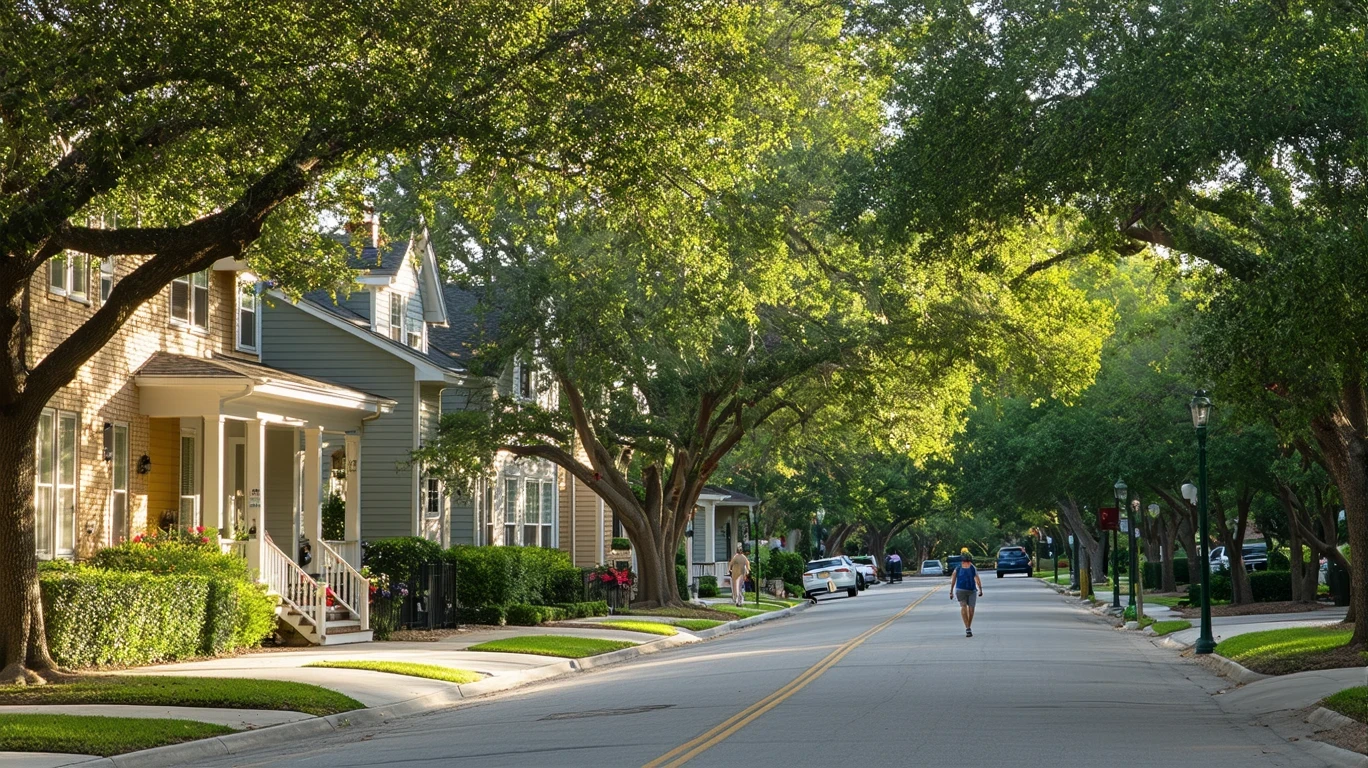
Why Students Choose Austin
What makes Austin one of the most sought-after college towns in Texas? For students weighing their options, Austin delivers a rare combination: genuine transit infrastructure, bike-friendly streets, walkable neighborhoods packed with food and grocery options, and a mixed-use urban fabric that lets you live, study, and socialize without constantly jumping in a car. It’s a city that’s built its reputation on live music, tech jobs, and a creative energy that spills into every coffee shop and taco stand—and that vibe isn’t just marketing. It’s woven into the day-to-day structure of how the city actually works.
Austin earns a student-friendliness score of 88 out of 100, reflecting its confirmed status as a college city with infrastructure to match. Rail transit and a notable bike network give students real alternatives to car ownership. Food and grocery density exceeds high thresholds across the city, meaning your late-night snack run or weekly grocery haul doesn’t require a vehicle or a long trek. Parks and green spaces are integrated throughout, and the urban form mixes residential and commercial uses in ways that support the kind of spontaneous, walkable lifestyle students crave. Whether you’re commuting to campus, meeting friends for study sessions, or exploring the city’s legendary food scene, Austin’s layout reduces friction and maximizes access.
The city’s appeal isn’t just about amenities—it’s about opportunity. Austin’s low unemployment rate of 3.5% signals a healthy job market for part-time work, internships, and post-graduation prospects. The tech sector, creative industries, and service economy all create pathways for students to earn while they learn. And with integrated green spaces, water features, and a social scene that spans from campus events to downtown venues, Austin offers the kind of college experience that extends well beyond the classroom.
Housing Options for Students in Austin
Austin’s rental market reflects its status as both a college town and a growing metro. The citywide median gross rent sits at $1,549 per month, but that figure represents the overall market—single-occupancy units, families, professionals. For students, the game changes entirely when you factor in shared housing. A two-bedroom apartment split between roommates, or a three-bedroom house divided among a small group, can bring per-person costs down to a much more manageable range, often between $600 and $900 per month depending on location and amenities.
Purpose-built student housing complexes cluster near major campuses, offering furnished units, utilities-included packages, and lease terms that align with the academic calendar. These properties often include amenities like study lounges, fitness centers, and shuttle services, but they come at a premium. Off-campus rentals—whether traditional apartments or houses rented by the room—tend to offer more flexibility and sometimes better value, especially if you’re willing to handle your own utilities and furnishings. Lease terms typically run 12 months, though some landlords near campus offer 9- or 10-month leases to match the school year. Expect to pay a security deposit equal to one month’s rent, and budget for application fees and potential co-signer requirements if you’re a first-time renter.
Austin’s mixed-use urban form and vertical building character mean student housing isn’t confined to a single neighborhood. Walkable pockets near campus, along transit corridors, and in denser parts of the city all support car-free or car-light living. Roommate-finding resources range from university housing boards to local Facebook groups and apps designed to match students by lifestyle and budget. The key is starting your search early—Austin’s rental market moves quickly, especially in the months leading up to fall semester.
Getting Around: Transportation and Campus Access
One of Austin’s standout features for students is its genuine transit infrastructure. The city has rail service, which is rare among mid-sized college towns and opens up car-free commuting options that actually work. Bus routes connect campus areas to residential neighborhoods, grocery stores, and entertainment districts, and many students qualify for discounted or free transit passes through their university. If you’re living near a rail line or along a major bus corridor, you can realistically skip car ownership and the costs that come with it—insurance, parking permits, maintenance, and gas at $2.41 per gallon.
Austin also boasts notable bike infrastructure, with bike-to-road ratios that exceed high thresholds. Dedicated bike lanes, multi-use paths, and a relatively flat terrain in many student-heavy areas make cycling a practical daily option, not just a weekend activity. Plenty of students rely on bikes as their primary transportation, especially when combined with occasional ride-sharing for longer trips or late-night outings. The city’s walkable pockets—areas where pedestrian-to-road ratios are high—mean that in the right neighborhood, you can handle errands, grab food, and get to class on foot without feeling like you’re constantly battling car traffic.
That said, car necessity depends heavily on where you live and study. If your campus is on the outskirts or your housing is in a less connected neighborhood, a car becomes more useful. Parking availability varies—some student housing includes a spot, while others charge $50 to $150 per month for a reserved space. Campus parking permits can be expensive and competitive. For students without a car, ride-sharing fills the gaps for grocery runs, airport trips, or nights out in areas not well-served by transit. The average commute time in Austin is 25 minutes, but students living strategically near campus or transit can often beat that significantly.
Student Cost of Living in Austin
Living as a student in Austin means navigating a cost structure that’s shaped more by your choices—shared housing, cooking at home, transit versus car—than by the city’s overall price level. Austin’s regional price parity index sits at 98, meaning costs track close to the national average. But the texture of student expenses is all about leverage: every decision to split rent, bike instead of drive, or cook instead of order out shifts your monthly reality.
A frugal student budget built around shared housing, home cooking, and minimal discretionary spending might land between $1,000 and $1,400 per month. That assumes splitting a two- or three-bedroom apartment, keeping your share of rent around $700, cooking most meals, using transit and a bike for transportation, and limiting entertainment to free or low-cost campus events and outdoor activities. A moderate budget—with a bit more breathing room for eating out, occasional ride-shares, a gym membership, and regular social outings—typically runs $1,600 to $2,000 per month. A comfortable budget that includes solo or premium housing, frequent dining out, a car, and an active social life can easily push $2,500 or higher.
Food costs vary widely based on habits. Groceries for a student cooking at home might run $200 to $350 per month, supported by Austin’s broadly accessible food and grocery density—you’re rarely far from a supermarket, corner store, or farmers market. Dining out, on the other hand, adds up quickly, though Austin’s taco trucks, food halls, and student-friendly spots offer plenty of affordable options. Many students find a hybrid approach works best: cooking staples at home and budgeting for a few meals out each week. Textbooks and course materials can swing from nearly free (used books, digital rentals, open-source texts) to several hundred dollars per semester depending on your program.
Part-time work is a key piece of the puzzle for many students. Austin’s 3.5% unemployment rate reflects a healthy job market, and opportunities range from on-campus positions (library, dining services, tutoring) to off-campus retail, food service, and gig work. Typical student wages hover around $12 to $16 per hour, with some specialized roles or internships paying more. Even 10 to 15 hours per week can meaningfully offset rent, groceries, or discretionary spending, and many students find that working locally builds both income and professional networks.
Monthly Student Budget in Austin
Here’s what a typical monthly student budget might look like in Austin:
| Expense Category | Shared Housing | Solo Living |
|---|---|---|
| Housing (rent + utilities) | $700–$900 | $1,200–$1,600 |
| Food (groceries + dining out) | $250–$400 | $300–$500 |
| Transportation (transit/bike/car) | $50–$150 | $100–$300 |
| Textbooks & supplies | $50–$100 | $50–$100 |
| Entertainment & social | $100–$200 | $150–$300 |
| Personal care & misc. | $75–$150 | $100–$200 |
| Total | $1,225–$1,900 | $1,900–$3,000 |
Estimates based on average student spending patterns and local costs. Figures are illustrative and exclude tuition, fees, and insurance.
Student-Friendly Amenities and Services
Austin’s infrastructure for student life extends well beyond campus borders. The city’s broadly accessible food and grocery density means you’re never far from a quick meal, a coffee shop with Wi-Fi, or a supermarket for restocking your fridge. Study spaces proliferate—campus libraries, public libraries, independent coffee shops, and co-working spaces all cater to students who need a change of scenery or a quiet corner during finals week. Many coffee shops offer student discounts or loyalty programs, and the culture of working remotely in cafes is deeply embedded in Austin’s identity.
Recreational opportunities are abundant, thanks to Austin’s integrated green spaces and water features. Parks with trails, sports fields, and waterfront access provide free or low-cost outlets for exercise, relaxation, and socializing. On-campus gyms and recreation centers typically offer robust facilities, and some students supplement with off-campus climbing gyms, yoga studios, or fitness classes. Student organizations span every interest—academic clubs, cultural groups, intramural sports, volunteer networks, and creative collectives—creating built-in social infrastructure for newcomers.
Healthcare access is solid, with hospital facilities and pharmacies present throughout the city. Most universities operate student health centers that provide primary care, mental health counseling, and wellness services at reduced or no cost. For needs beyond campus resources, Austin’s healthcare infrastructure includes clinics and specialty providers accessible by transit. Mental health resources, in particular, have expanded in recent years, with both campus-based and community options available. Many local businesses offer student discounts—everything from movie theaters and music venues to restaurants and retail—so it pays to carry your student ID and ask.
Social Scene and Nightlife in Austin
Austin’s reputation as a live music capital isn’t just hype—it’s a lived reality that shapes the social landscape for students. On any given night, you can catch local bands, open mics, DJ sets, and touring acts across dozens of venues, many of which offer student discounts or free entry on certain nights. The city’s festival calendar is packed year-round, from South by Southwest (SXSW) to Austin City Limits (ACL), and students often find ways to volunteer, work, or snag discounted passes to participate in these major cultural events.
Campus life itself provides a dense social network. Student organizations host events ranging from cultural celebrations and guest lectures to game nights and outdoor adventures. Intramural sports leagues are popular and accessible, offering everything from flag football and soccer to ultimate frisbee and kickball. Greek life is present but not dominant, and plenty of students build their social circles through clubs, classes, part-time jobs, and shared housing. The dating scene is active and diverse, supported by both campus events and the broader city’s social infrastructure—bars, coffee shops, parks, and music venues all serve as natural meeting points.
Nightlife options cater to a range of ages and interests. For students under 21, all-ages music venues, late-night diners, bowling alleys, and outdoor hangouts provide social outlets. Once you’re of age, Austin’s bar and club scene opens up, concentrated in areas like downtown, South Congress, and East Austin. The city’s mixed-use urban form means entertainment districts are often walkable or accessible by transit, reducing the need to drive after a night out. Ride-sharing is common and relatively affordable for group trips, and many students develop regular haunts—favorite taco spots, dive bars, coffee shops—that become part of their Austin identity.
Safety and Practical Considerations
Safety is a multi-layered consideration for students, encompassing both campus-specific measures and broader city dynamics. Most universities in Austin maintain active campus security departments with 24/7 patrols, emergency call boxes, and escort services for students walking alone at night. Campus safety apps and alert systems keep students informed of incidents and provide direct lines to security. Off-campus, safety varies by neighborhood, and students are encouraged to research areas before signing a lease—visiting at different times of day, talking to current residents, and checking local crime maps.
Austin’s walkable pockets and transit infrastructure support safer transportation options by reducing reliance on late-night driving or walking long distances alone. Bike lights, well-lit paths, and busy streets all contribute to a sense of security, though common-sense precautions—locking bikes, avoiding isolated areas at night, traveling in groups—remain important. Emergency services, including hospitals and urgent care clinics, are accessible throughout the city, and response times are generally reliable.
Academic support services are a critical but often underutilized resource. Tutoring centers, writing labs, and peer study groups help students navigate challenging coursework, and many universities offer free or low-cost access to these services. Career services provide resume reviews, interview prep, and connections to internships and job opportunities—particularly valuable in Austin’s active tech and creative sectors. Internship opportunities abound, from startups and established tech companies to nonprofits, government agencies, and media organizations, giving students a chance to build experience and professional networks while still in school.
What Drives the Day-to-Day Student Experience in Austin
Living as a student in Austin means navigating a city where the built environment actively supports—or complicates—your daily routines. Because Austin has rail transit, notable bike infrastructure, and walkable pockets with high pedestrian-to-road ratios, students who position themselves near campus or along transit corridors can realistically go car-free. That’s not just a cost decision—it’s a lifestyle shift. Without a car, you’re not dealing with parking headaches, insurance bills, or the constant calculation of whether a trip is “worth” the gas and hassle. Instead, you’re hopping on a bike, catching a train, or walking to the grocery store that’s a few blocks away because the city’s food and grocery density makes that possible.
The mixed-use urban form—where residential and commercial land uses sit side by side—means your apartment, your favorite taco spot, the library, and the park can all exist within a tight radius. That density reduces the friction of daily errands and social plans. You’re not spending 20 minutes driving to meet a friend for coffee; you’re walking five minutes down the street. The integrated green spaces and water features aren’t just scenic—they’re functional. They’re where you go to decompress between classes, meet up for a study session outdoors, or blow off steam with a run or a bike ride. For students managing tight schedules and tighter budgets, that kind of accessibility translates directly into time saved and stress reduced.
How this article was built: In addition to public economic data, this article incorporates location-based experiential signals derived from anonymized geographic patterns—such as access density, walkability, and land-use mix—to reflect how day-to-day living actually feels in Austin, TX.
FAQs About Student Life in Austin
What’s the average cost of student living in Austin?
For students in shared housing who cook at home and use transit or bikes, monthly costs typically range from $1,200 to $1,900. Solo living or a car-dependent lifestyle can push that to $2,000 to $3,000 or more. The biggest levers are housing arrangements and transportation choices.
How safe is it for students to live off-campus in Austin?
Safety varies by neighborhood, but many off-campus areas near universities are well-populated with students and have active community networks. Campus security services often extend support to off-campus students, and Austin’s walkable pockets and transit options reduce the need for isolated late-night travel. Research neighborhoods carefully, visit at different times, and trust your instincts.
Are there good part-time job opportunities for students in Austin?
Yes. Austin’s 3.5% unemployment rate reflects a healthy job market, and students find work in retail, food service, on-campus positions, tutoring, and gig economy roles. The tech and creative sectors also offer internships and part-time opportunities that can build both income and career experience. Typical wages range from $12 to $16 per hour, with some roles paying more.
What’s the social scene like for college students in Austin?
Austin’s social scene is vibrant and diverse, driven by live music, festivals, outdoor activities, and a dense network of student organizations. Campus events, intramural sports, and Greek life provide on-campus options, while the city’s music venues, bars, coffee shops, and parks offer endless off-campus opportunities. The mixed-use urban form and transit infrastructure make it easy to explore without a car, and the city’s creative energy attracts students who want more than just a traditional college town experience.
Making the Decision: Is Austin Right for Your College Years?
Austin offers a compelling package for students: genuine transit infrastructure, bike-friendly streets, walkable neighborhoods packed with food and amenities, integrated green spaces, and a social scene that extends well beyond campus. The city’s confirmed status as a college town means the infrastructure—housing, jobs, services—is built with students in mind. The regional price level sits near the national average, and the real cost control comes from smart choices: shared housing, cooking at home, using transit and bikes, and taking advantage of student discounts and free activities.
The potential drawbacks are real but manageable. If you’re living far from campus or transit lines, a car becomes more necessary, and that shifts the budget significantly. The rental market moves quickly, so early planning is essential. And while Austin’s job market is strong, balancing work and school requires discipline and time management. But for students who value access, opportunity, and a city that feels alive—where you can bike to class, catch a show on a Tuesday night, and find your people in a coffee shop or a park—Austin delivers.
If you’re weighing your options, start by mapping out your daily life: Where will you live? How will you get to campus? What does your monthly budget realistically look like? Visit Austin if you can, explore different neighborhoods, and talk to current students about what works and what doesn’t. The city rewards students who engage with it fully—who take advantage of the transit, the bike lanes, the parks, the music, and the community. If that sounds like the college experience you’re after, Austin is worth serious consideration. And once you understand the cost structure and how to navigate it, you’ll be positioned to make the most of your time here.