
Austin’s housing market operates under a cost structure that catches many newcomers off guard—not because prices are hidden, but because the ongoing expenses of ownership here don’t behave like they do in other states. Property taxes in Texas function as a primary revenue mechanism for local government, which means homeowners face annual tax bills that reset based on appraised value, not purchase price. That’s a fundamentally different exposure than rent, which resets at lease renewal but doesn’t compound with home appreciation. For buyers, it means the cost of staying in a house can rise even when the mortgage doesn’t. For renters, it means weighing a known monthly figure against the uncertainty of ownership’s long tail.
This article explains how housing costs actually work in Austin—what drives rent, what ownership entails beyond the mortgage, and how the structure of each option shapes financial exposure over time. It’s not about affordability thresholds or income math. It’s about understanding which costs are predictable, which are volatile, and how Austin’s market, climate, and infrastructure change the equation.
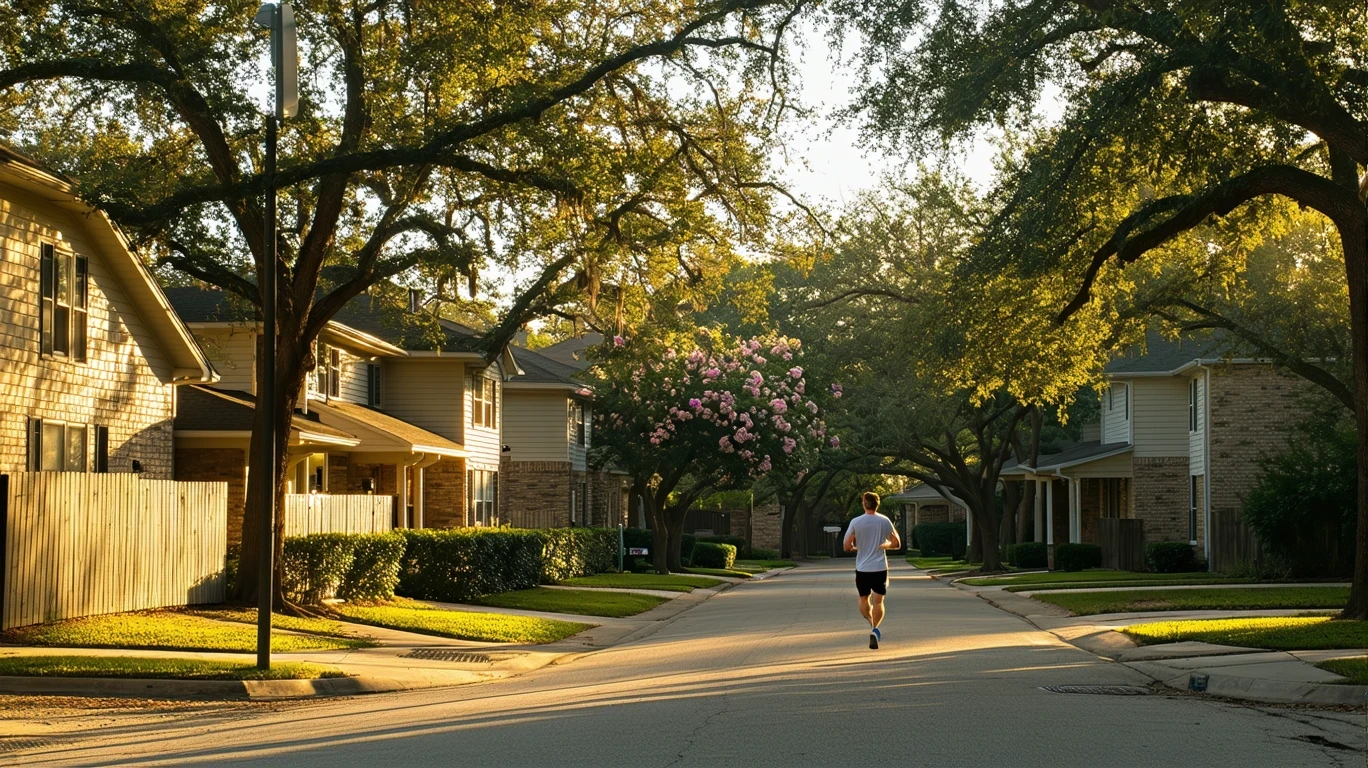
The Housing Market in Austin Today
Austin’s housing market is shaped by sustained population growth, a diversified economy anchored by technology and state government, and a development pattern that blends urban density with suburban sprawl. The median home value sits at $461,500, which places Austin well above the national median and reflects years of demand outpacing supply. That figure isn’t just a price tag—it’s a signal of how much capital gets locked into ownership here, and how much property tax exposure a buyer inherits.
The rental market mirrors that pressure. Median gross rent is $1,549 per month, a baseline that reflects competition for housing in a city where the unemployment rate is low (3.5%) and household income is relatively strong ($86,556 per year at the median). But rent isn’t uniform across Austin. Proximity to downtown, access to transit, and neighborhood walkability all create premiums. Renters who prioritize car-light living or short commutes pay more per square foot than those willing to drive farther or live in less connected areas.
What surprises people isn’t that Austin is expensive—it’s that the cost structure penalizes immobility. Renters face annual increases tied to market pressure. Owners face tax reappraisals tied to home value growth. Both groups are exposed to climate-driven utility swings in a city where triple-digit summer heat dominates cooling costs. The housing market here doesn’t reward “set it and forget it” thinking. It rewards understanding which costs you can control and which you can’t.
Renting in Austin
Renting in Austin means accepting a high baseline cost in exchange for flexibility and insulation from ownership’s long-term exposures. At $1,549 per month for the median rental, a household is paying for housing without taking on property tax risk, maintenance unpredictability, or the capital lock-in that comes with a down payment. That’s not a small tradeoff. In a state where property taxes adjust with appraised value, renters avoid the compounding cost growth that owners face when home values rise.
But rent isn’t static. Lease renewals in Austin often bring increases, especially in neighborhoods with strong job access, walkability, or transit connections. The city’s urban form creates pockets of density where errands, parks, and rail service are broadly accessible—features that reduce day-to-day logistical friction and command higher rent. Renters who prioritize car-light living or short commutes to central employment hubs pay a premium for that convenience. Those willing to live farther out or in less connected areas face lower rent but higher transportation costs and time burdens.
The rental experience also varies by housing type. Apartment living in Austin often includes bundled water, trash, and sometimes basic cable, which simplifies budgeting but obscures the true cost of utilities. Single-family rentals, more common in suburban areas, typically pass all utilities to the tenant, which means exposure to the same cooling and heating volatility that owners face. Renters in older housing stock or poorly insulated units can see summer electric bills spike during extended heat, even if rent itself stays predictable.
Renting fits households that value mobility, avoid capital risk, or can’t yet absorb the upfront and ongoing costs of ownership. It’s not a fallback—it’s a deliberate choice to prioritize liquidity and predictability over equity accumulation and long-term cost control.
Owning a Home in Austin
Ownership in Austin starts with a $461,500 median home value, but that’s just the entry cost. The ongoing expenses—property taxes, insurance, maintenance, and utilities—define the real cost of staying in the house. Unlike rent, which resets annually at a known interval, ownership costs compound and shift with factors outside the buyer’s control: appraised value growth, storm severity, aging systems, and regulatory changes.
Property taxes in Texas are the dominant long-term exposure. Because the state has no income tax, local governments rely heavily on property taxes to fund schools, infrastructure, and services. Appraisals adjust regularly, and when home values rise, tax bills follow. That’s not a one-time cost—it’s an annual reset that grows with the market. Buyers who purchase at $461,500 today should expect their tax obligation to increase if Austin’s housing market continues to appreciate, even if their mortgage payment stays fixed.
Insurance is another variable that doesn’t behave like rent. Austin’s climate—characterized by intense summer heat, occasional severe storms, and rare but disruptive freezing events—creates exposure to weather-related claims. Homeowners insurance premiums reflect that risk, and they adjust over time based on claim history, replacement cost estimates, and insurer risk models. Unlike property taxes, which are public and predictable in structure, insurance costs are opaque and vary widely by provider, coverage level, and home age.
Maintenance is the third pillar of ownership cost, and it’s the hardest to predict. HVAC systems in Austin work harder than in milder climates, which shortens their lifespan and increases the likelihood of mid-ownership replacement. Roofs, water heaters, and foundations all face stress from heat, humidity, and soil movement. These aren’t annual expenses, but they’re inevitable, and they don’t average out neatly. A $10,000 HVAC replacement or a $15,000 foundation repair can arrive without warning, and there’s no landlord to call.
Ownership also introduces governance complexity. Many neighborhoods in Austin are governed by homeowners associations (HOAs), which collect fees and enforce rules around landscaping, exterior modifications, and parking. HOA fees vary widely—some are negligible, others approach $200–$300 per month—and they can increase without the homeowner’s consent. Even in non-HOA neighborhoods, city ordinances and deed restrictions can limit what owners can do with their property, from adding accessory dwelling units to parking RVs in driveways.
The upside of ownership is control and stability. A fixed-rate mortgage locks in the largest component of housing cost, and once the home is paid off, the only remaining obligations are taxes, insurance, and upkeep. Owners also build equity as they pay down the loan and as the home appreciates, which creates a financial asset that renters don’t accumulate. But that equity isn’t liquid, and accessing it requires selling or borrowing against the home.
Ownership fits households with income stability, capital reserves for unexpected repairs, and a long enough time horizon to absorb the upfront and ongoing costs. It’s not inherently better than renting—it’s a different risk profile, one that trades liquidity and simplicity for control and long-term cost predictability.
Apartment vs House in Austin — Cost Behavior Comparison
The cost structure of apartment living versus single-family home living in Austin diverges in ways that reflect the city’s climate, housing stock, and infrastructure. The table below isolates the categories where the difference is meaningful and locally driven. Generic distinctions—like “houses have more space”—are omitted because they don’t explain cost behavior.
| Expense Category | Apartment | House |
|---|---|---|
| Cooling Costs | Lower per-unit exposure due to shared walls and smaller conditioned space; central systems often managed by property | Higher exposure due to larger square footage and standalone structure; owner responsible for system efficiency and replacement |
| Utility Bundling | Water, trash, sometimes gas included in rent; reduces bill complexity but obscures usage cost | All utilities billed separately; full exposure to rate changes and usage volatility |
| Maintenance Responsibility | Landlord covers structural, HVAC, and appliance failures; tenant exposure limited to lease terms | Owner absorbs all repair and replacement costs; no external party to defer to |
| Property Tax Exposure | None; landlord pays and may pass increases through rent at renewal | Direct and annual; grows with appraised value and cannot be deferred without penalty |
| Outdoor Maintenance | Landscaping and exterior upkeep managed by property; no tenant cost or time burden | Owner handles or contracts lawn care, tree trimming, and irrigation; ongoing time or expense |
| Parking and Storage | Often limited or assigned; additional cost for covered or reserved spaces | Typically includes garage or driveway; no incremental cost for vehicle storage |
Why these categories? Each row reflects a cost behavior that changes based on Austin’s climate (cooling dominance), housing governance (tax structure, utility bundling norms), or infrastructure (landscaping demands in heat, parking patterns in denser vs suburban areas). Categories like “insurance” or “HOA fees” are omitted because they don’t reliably differ between apartments and houses—both renters and owners face versions of those costs, and the variation is more about individual property than housing type.
Utilities & Upkeep Differences
Utility costs in Austin are driven primarily by cooling demand. The city’s extended summer heat—often reaching triple digits—means air conditioning dominates household energy use from May through September. Electricity is the primary cooling fuel, and at 16.11¢/kWh, the rate is moderate but the volume is high. A poorly insulated house or an aging HVAC system can push summer bills well above what renters in newer, smaller apartments experience, even though both face the same rate structure.
Apartment dwellers benefit from shared walls, which reduce the surface area exposed to outdoor heat. Many large complexes also use centrally managed HVAC systems or newer, more efficient units that are replaced on a schedule. Renters don’t control the system, but they also don’t pay for its replacement. Single-family homeowners, by contrast, inherit whatever system the previous owner installed, and they bear the full cost of upgrading or replacing it when it fails. In Austin’s climate, HVAC systems work harder and fail sooner than in milder regions, which makes that exposure more than theoretical.
Natural gas, priced at $30.71/MCF, plays a smaller role in Austin’s utility picture. Most homes use gas for heating, water heating, or cooking, but heating demand is minimal compared to cooling. A mild winter means gas bills stay low for most of the year, which reduces the volatility that households in colder climates face. The exception is during rare freezing events, when heating systems run continuously and gas demand spikes. Those events are infrequent, but they’re disruptive enough to matter when they occur.
Water and trash costs are often bundled into apartment rent, which simplifies budgeting but hides the actual cost. Homeowners pay separately for water, wastewater, and trash collection, and those bills adjust with usage and rate changes. Austin’s water rates include tiered pricing that penalizes high usage, which matters most for homeowners with lawns or gardens. Maintaining outdoor landscaping in Austin’s heat requires consistent irrigation, and that drives water costs up in ways that apartment renters never see.
Upkeep differences extend beyond utilities. Houses require ongoing exterior maintenance—roof inspections, gutter cleaning, fence repairs, and pest control—that apartments don’t. Austin’s climate accelerates wear on roofs and paint, and the region’s soil movement can stress foundations over time. These aren’t annual costs, but they’re inevitable, and they’re entirely the homeowner’s responsibility. Apartment renters avoid that exposure, though they also have no control over when or how maintenance happens.
Rent vs Buy: Long-Term Exposure in Austin
The long-term cost difference between renting and owning in Austin isn’t about which one costs less—it’s about which risks each household can absorb and which tradeoffs align with their goals. Renting offers predictability within a lease term and flexibility to move without transaction costs. Ownership offers control over housing stability and the potential to lock in a large portion of housing cost, but it requires capital reserves, income stability, and a tolerance for compounding obligations.
Renters face annual lease renewals, and in a market like Austin’s, those renewals often bring increases. The size of the increase depends on neighborhood demand, housing supply, and broader economic conditions, none of which the renter controls. But the exposure is bounded: a renter can choose to move, negotiate, or accept the increase. The decision resets every year, and the cost doesn’t compound beyond the lease term. Renters also avoid property tax growth, maintenance surprises, and insurance volatility. When the HVAC fails or the roof leaks, it’s the landlord’s problem.
Owners, by contrast, face a different set of exposures that grow over time. Property taxes in Texas adjust with appraised value, and in a market where home values have risen consistently, that means tax bills increase even when the mortgage doesn’t. A homeowner who buys at $461,500 today might see their home appraised at $500,000 or $550,000 in five years, and their tax bill will reflect that growth. There’s no opting out, and there’s no cap that prevents the increase from exceeding income growth. Owners also face maintenance costs that don’t average out neatly—a single HVAC replacement or foundation repair can cost more than a year’s worth of rent increases.
The tradeoff is that ownership locks in the largest component of housing cost: the mortgage. A fixed-rate loan means the principal and interest payment stays the same for 30 years, which provides a hedge against rent inflation and a path to eventually eliminating that payment entirely. Once the mortgage is paid off, the only remaining obligations are taxes, insurance, and upkeep—still significant, but far lower than rent or a mortgage payment. Owners also build equity, which creates a financial asset that can be accessed through sale or borrowing.
But equity isn’t the same as liquidity. Selling a home in Austin involves transaction costs—realtor commissions, closing fees, and potential capital gains taxes—that can consume a significant portion of the equity. Borrowing against the home (via a home equity loan or line of credit) creates a new debt obligation, which reintroduces the same payment pressure that the original mortgage carried. Equity is valuable, but it’s not cash, and accessing it has costs.
The decision between renting and owning in Austin depends on time horizon, income stability, and risk tolerance. Renters who value mobility, avoid capital risk, or lack reserves for unexpected repairs are better served by renting, even if rent increases feel frustrating. Owners who have stable income, can absorb maintenance shocks, and plan to stay long enough to offset transaction costs gain control and long-term cost predictability. Neither option is universally better—they’re different tools for different situations.
How Day-to-Day Living Shapes Housing Choices in Austin
Austin’s urban form creates variation in how housing costs translate into daily life, and that variation matters when choosing between renting and owning—or between neighborhoods. The city’s infrastructure supports car-light living in specific areas, where pedestrian density, rail access, and mixed land use reduce the need for a car on every errand. In those pockets, housing costs are higher, but transportation costs and time burdens are lower. Renters and owners who prioritize walkability and transit access pay a premium for it, but they also avoid the ongoing expense and hassle of car dependency.
Errands accessibility is broadly strong across Austin, with food and grocery options exceeding density thresholds in many neighborhoods. That reduces the logistical friction that families and busy households face when managing weekly shopping, meal planning, and last-minute needs. It also means that housing location doesn’t have to be optimized solely around a single grocery store or shopping corridor—options are distributed widely enough that most residents can find what they need without long drives or elaborate planning.
Green space is integrated throughout the city, with park density exceeding high thresholds and water features adding to outdoor access. That’s a quality-of-life factor, but it’s also a cost factor: households that rely on public parks and trails for recreation avoid the need for private yard maintenance or expensive memberships. Renters benefit from that access without paying for upkeep. Owners in neighborhoods with strong park access can reduce their own landscaping burden, though they still face property tax obligations that fund those public amenities.
The building character in Austin leans more vertical, with average building levels exceeding high thresholds in denser areas. That signals a rental market with substantial apartment stock, which creates competition and options for renters but also means that ownership in those areas often involves condos or townhomes with HOA fees and shared governance. Renters in vertical buildings benefit from lower per-unit cooling costs and bundled utilities, but they also face parking constraints and less control over noise and neighbor behavior.
These patterns don’t make one housing choice objectively better, but they do clarify the tradeoffs. Renters who choose walkable, transit-rich neighborhoods pay more in rent but less in transportation and time. Owners in those same areas lock in location but face higher purchase prices and ongoing tax exposure. Renters and owners in suburban, car-dependent areas pay less for housing but more for transportation and accept longer commutes. The structure of the city rewards alignment between housing choice and daily logistics—misalignment creates friction that compounds over time.
FAQs About Housing Costs in Austin
What is the median home price in Austin, TX?
The median home value in Austin is $461,500, which reflects sustained demand and limited supply in a growing market. That figure represents the middle of the market—half of homes sell for more, half for less—and it varies significantly by neighborhood, proximity to employment centers, and access to transit or walkability.
How much does it cost to rent an apartment in Austin?
Median gross rent in Austin is $1,549 per month, which includes base rent and often some utilities like water or trash. Rent varies widely based on location, housing type, and amenities. Renters in walkable, transit-accessible neighborhoods typically pay more than those in car-dependent suburban areas.
Are property taxes high in Austin compared to other cities?
Texas has no state income tax, so property taxes are the primary revenue source for local governments. That means property tax rates in Austin are higher than in states with income taxes, and tax bills grow with appraised home value. Owners should expect annual tax obligations to increase if home values continue to rise, even if the mortgage payment stays fixed.
Is it better to rent or buy in Austin for someone planning to stay five years?
The answer depends on income stability, capital reserves, and tolerance for maintenance risk. Buyers who stay five years can offset transaction costs and build some equity, but they also absorb property tax growth, insurance volatility, and potential repair expenses. Renters avoid those risks but face annual lease increases and don’t build equity. Neither option is universally better—it’s about which risks fit the household’s situation.
How does Austin’s climate affect housing costs?
Austin’s extended summer heat drives high cooling costs, which affect both renters and owners but hit owners harder if they have older, less efficient HVAC systems or poor insulation. Rare freezing events can also spike heating costs temporarily. The climate also accelerates wear on roofs, HVAC systems, and exterior surfaces, which increases maintenance frequency and cost for homeowners.
Making Housing Choices in Austin
Housing costs in Austin don’t follow a simple “cheaper vs more expensive” logic. They follow a structure where predictability, control, and long-term exposure vary by choice. Renters pay a high baseline but avoid compounding obligations and capital risk. Owners lock in the largest cost component but inherit property tax growth, maintenance unpredictability, and governance complexity. The decision isn’t about which costs less over time—it’s about which risks a household can manage and which tradeoffs align with their goals.
Austin’s housing market rewards alignment between housing choice and daily logistics. Households that prioritize walkability, transit access, and errands convenience pay more for housing but less for transportation and time. Those willing to drive farther and live in less connected areas pay less for housing but more for cars and commutes. The city’s infrastructure supports both patterns, but misalignment creates friction that compounds over time.
For readers evaluating Austin Cost Reality: The Big Pressure Points, housing is the largest single expense, but it’s not the only one. Understanding how rent or ownership interacts with transportation, utilities, and daily logistics helps clarify where flexibility exists and where it doesn’t. For those managing monthly spending in Austin, housing cost structure determines how much of the budget is fixed versus variable, and how much room exists to absorb surprises.
The housing market in Austin isn’t forgiving of passive decision-making. It rewards households that understand cost behavior, anticipate volatility, and choose housing that fits their risk tolerance and time horizon. Renting and owning are both viable strategies—but only when the choice reflects the household’s actual situation, not an assumption about what “everyone” does.
How this article was built: In addition to public economic data, this article incorporates location-based experiential signals derived from anonymized geographic patterns—such as access density, walkability, and land-use mix—to reflect how day-to-day living actually feels in Austin, TX.