
Is Austin expensive to live in? Austin is considered expensive in 2026, with a median home value of $461,500 and median rent of $1,549 per month. The value proposition depends on housing entry cost versus neighborhood choice—walkable pockets with transit access exist, but the 25-minute average commute and low work-from-home rate (4.8%) reveal that car dependency remains significant for most households.
Overall Cost of Living Snapshot
Austin’s cost structure is shaped by a single dominant pressure: housing. The median home value of $461,500 and median gross rent of $1,549 per month anchor the city’s expense profile, while other categories—groceries, utilities, transportation—track closer to national norms. The regional price parity index of 98 suggests near-average pricing across most goods and services, but housing is the clear outlier.
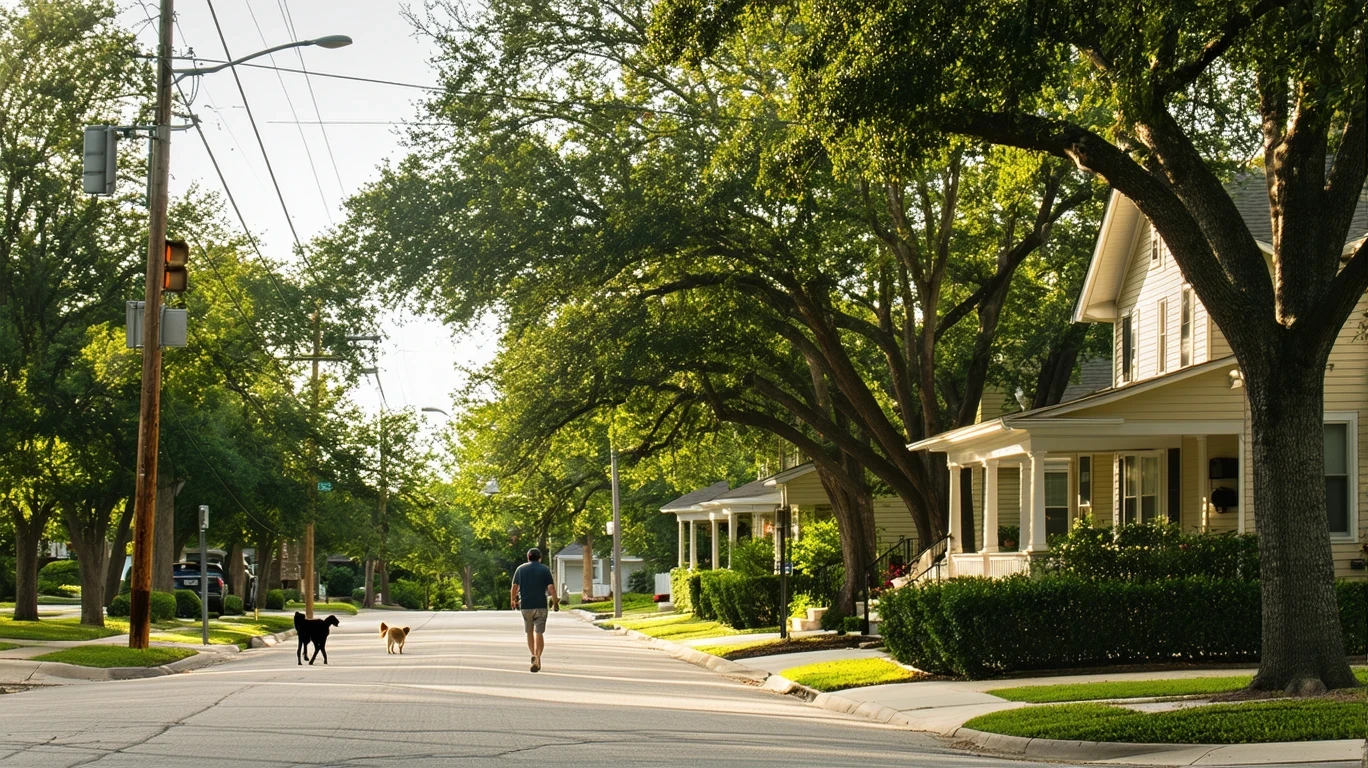
What surprises many newcomers is not the baseline cost of daily expenses, but the interaction between housing location and transportation burden. Austin’s infrastructure reveals walkable pockets with substantial pedestrian-to-road ratios, rail transit service, and notable cycling infrastructure. Food and grocery density exceeds high thresholds, and park access is integrated throughout the city. Both schools and playgrounds meet density thresholds, and hospital facilities are present. The urban form shows more vertical building character with mixed residential and commercial land use.
Yet the 25-minute average commute and the fact that only 4.8% of workers operate from home signal that car ownership remains a recurring expense for most households. Where you live within Austin determines whether you can rely on transit and errands accessibility, or whether you’re absorbing the full cost of vehicle dependency.
Driver verdict: Housing dominates, but the secondary cost layer—transportation—varies dramatically by neighborhood. Utility seasonality introduces moderate swings during summer cooling months, but it’s the combination of high housing entry cost and location-dependent car dependency that defines Austin’s expense reality.
Housing Costs (Primary Driver)
Housing is the primary cost driver in Austin, and the pressure comes from both ownership and rental markets. The median home value of $461,500 reflects strong demand, limited inventory, and the embedded cost of property taxes (which are significant in Texas, though no specific rate is provided in the data). For renters, the median gross rent of $1,549 per month positions Austin as expensive relative to many other Texas metros, though still below the peaks seen in coastal markets.
The choice between renting and owning hinges on entry cost tolerance and long-term plans. Ownership requires navigating a high purchase price and ongoing property tax exposure, but it locks in principal payments and builds equity. Renting offers flexibility and lower upfront cost, but exposes households to lease renewal increases and provides no equity accumulation.
Austin functions as a buying city for those who can clear the entry threshold and plan to stay. For transient workers, students, or households testing the market, renting remains the practical default despite the monthly outlay.
| Housing Type | Cost Anchor | What That Buys You |
|---|---|---|
| Median Home Value | $461,500 | Entry into ownership with equity build and property tax exposure |
| Median Gross Rent | $1,549/month | Flexibility and lower entry cost, no equity, renewal risk |
Conclusion: Austin is a buying city for those with capital and commitment. Renters face high monthly outlays without equity upside, making ownership the long-term value play if entry cost can be managed.
Utilities & Energy Risk
Utilities in Austin introduce moderate cost volatility, driven primarily by summer cooling demand. The electricity rate of 16.11¢/kWh sits near the national average, but Austin’s extended cooling season—shaped by triple-digit summer heat—means households run air conditioning for months at a stretch. Natural gas, priced at $30.71 per MCF (roughly 100 therms), plays a smaller role given the mild winters and rare freezing nights.
Illustrative context: A typical household using 1,000 kWh per month would face a baseline electricity cost of approximately $161 before fees and taxes during moderate months. In peak summer months, usage often climbs significantly higher as cooling systems run continuously, pushing bills well above that baseline.
The risk here is not catastrophic, but it’s recurring and seasonal. Households in poorly insulated homes or those without programmable thermostats face the highest exposure. Efficiency upgrades—sealing ducts, upgrading insulation, installing smart thermostats—reduce usage and help stabilize bills, though the magnitude of savings depends on starting conditions.
Risk classification: Moderate. Summer cooling dominates utility exposure, but the baseline rate is not extreme. The volatility comes from duration and intensity, not price spikes.
Groceries & Daily Costs
Grocery costs in Austin track close to national averages, with the regional price parity index of 98 suggesting near-parity pricing for most goods. The derived grocery estimates—bread at $1.75/lb, chicken at $2.00/lb, eggs at $2.80/dozen—reflect this near-average positioning, though these figures are modeled rather than observed local prices.
What matters more than individual item prices is the density and accessibility of grocery options. Austin shows high food and grocery establishment density, meaning most households have multiple options within a short distance. This accessibility reduces the friction of daily errands and limits the need for bulk-buying trips or long drives to discount stores.
For households prioritizing organic, specialty, or prepared foods, costs will run higher than the baseline. For those focused on staples and home cooking, Austin’s grocery pressure is manageable and does not represent a major cost driver relative to housing or transportation.
Transportation Reality
Transportation in Austin is a recurring exposure shaped by infrastructure, commute patterns, and household location. The average commute is 25 minutes, and only 4.8% of workers operate from home, meaning the vast majority of employed residents are commuting regularly. The current gas price of $2.41 per gallon is relatively low, but the cost of transportation extends far beyond fuel—it includes vehicle ownership, insurance, maintenance, and parking.
Austin’s infrastructure reveals a split reality. Walkable pockets with high pedestrian-to-road ratios, rail transit service, and notable bike infrastructure exist, particularly in denser, more vertical neighborhoods with mixed land use. In these areas, households can reduce or eliminate car dependency, relying instead on transit, cycling, or walking for daily errands and commutes. Food and grocery density is broadly accessible, and park access is integrated, making car-free or car-light living feasible for some.
But the 25-minute average commute and the low work-from-home rate suggest that most households are not living in these walkable pockets—or are commuting to jobs outside them. For these households, car ownership is not optional. The recurring cost of getting around becomes a significant secondary expense, particularly for multi-vehicle households or those with long commutes.
Transportation as exposure: Location within Austin determines whether transportation is a minor line item or a major recurring cost. Proximity to transit, job centers, and errands infrastructure can dramatically reduce vehicle dependency, but most households are absorbing the full cost of car ownership.
Cost Exposure Profiles
Austin’s cost structure creates distinct exposure profiles depending on housing tenure, location, and household composition. The primary division is between those who can access walkable, transit-served neighborhoods and those who cannot—or choose not to.
Low-exposure profile: Renters or owners in walkable pockets near rail transit, with short commutes or remote work arrangements, face lower transportation costs and benefit from high errands accessibility. Utility exposure remains moderate due to summer cooling, but the ability to walk or bike for daily needs reduces vehicle dependency. These households still face high housing costs, but they avoid stacking transportation expenses on top.
High-exposure profile: Households in car-dependent areas—farther from transit, job centers, or dense errands infrastructure—face the full cost of vehicle ownership, longer commutes, and higher transportation volatility. Multi-vehicle households or those with long commutes (19.9% of workers have long commutes) absorb recurring fuel, maintenance, and insurance costs. Combined with high housing entry costs, this creates a compounding pressure that defines affordability more than any single category.
The unemployment rate of 3.5% suggests a strong labor market, but income alone does not determine cost exposure—location and transportation structure do. Austin rewards those who can access its walkable, transit-rich pockets, but penalizes those who must commute from the periphery.
Frequently Asked Questions
Is Austin more affordable than Dallas in 2026? Austin’s median home value of $461,500 and median rent of $1,549 per month position it as expensive relative to many Texas metros, though specific comparisons depend on neighborhood and housing type. Dallas tends to offer more suburban inventory at lower entry costs, but Austin’s walkable pockets and transit access provide value for those who prioritize car-light living.
What does a typical cost profile look like in Austin? Housing dominates, with most households spending heavily on either mortgage payments (including property taxes) or rent. Transportation is the secondary cost driver, varying widely by location—walkable neighborhoods reduce vehicle dependency, while car-dependent areas require full ownership costs. Utilities introduce moderate seasonal swings during summer cooling months.
Do utilities cost more in Austin than in San Antonio? Austin’s electricity rate of 16.11¢/kWh is near the state average, and utility costs are comparable to other major Texas cities. The primary driver of utility expense is not the rate, but the duration and intensity of summer cooling demand, which is similar across central Texas metros.
What costs tend to surprise newcomers in Austin? Three factors catch people off guard: the embedded property tax burden in home values (Texas has no state income tax, but property taxes are significant), the intensity and duration of summer cooling costs, and the variability in commute length and transportation dependency depending on where you live within the metro.
Are property taxes higher in Austin than in Houston? Texas property taxes are high statewide due to the absence of a state income tax, and Austin’s rates are comparable to other major Texas metros. The surprise for newcomers is not the rate itself, but the total annual outlay when applied to a $461,500 median home value.
Can you live in Austin without a car? Yes, but only in specific neighborhoods. Austin has walkable pockets with rail transit, high pedestrian infrastructure, notable bike lanes, and broadly accessible grocery and food options. However, the 25-minute average commute and low work-from-home rate (4.8%) reveal that most residents still rely on cars. Location within the city determines whether car-free living is practical or restrictive.
How does Austin’s cost of living compare to the national average? Austin’s regional price parity index of 98 suggests near-average pricing for most goods and services, but housing is the clear outlier. The median home value and rent are significantly above national norms, making Austin expensive despite moderate costs in other categories.
Is Austin a good city for renters or buyers? Austin favors buyers who can clear the high entry cost and plan to stay long-term, as ownership locks in principal payments and builds equity despite property tax exposure. Renters face high monthly outlays without equity upside, making ownership the better long-term value play if capital and commitment are available.
How this article was built: In addition to public economic data, this article incorporates location-based experiential signals derived from anonymized geographic patterns—such as access density, walkability, and land-use mix—to reflect how day-to-day living actually feels in Austin, TX.
—