
Is Auburn the kind of place you grow roots—or just pass through? For many, the answer depends less on what Auburn costs and more on what Auburn feels like—and whether that feeling matches what you’re looking for. This isn’t a city that announces itself loudly. It’s a place where the tradeoffs are quiet but consistent: affordability paired with longer commutes, green space abundance paired with car dependency, suburban calm paired with limited walkability for daily errands. Understanding Auburn’s vibe means understanding who tends to feel at home here—and who starts feeling restless after a few months.
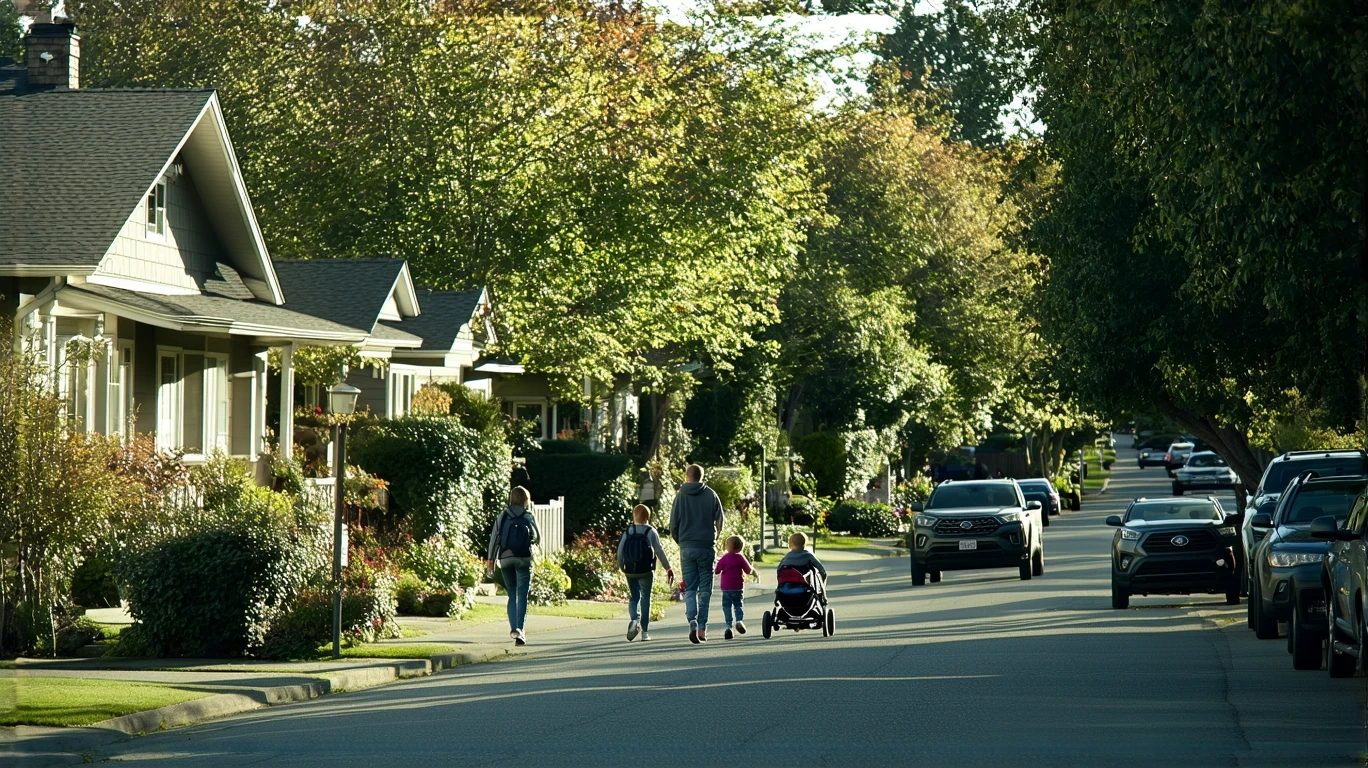
The Emotional Landscape of Auburn
Auburn sits in a sweet spot for people seeking relief from Seattle’s housing pressure without fully leaving the metro orbit. The city offers access to rail transit, integrated park systems, and a cost structure that feels manageable compared to closer-in suburbs. But that relief comes with tradeoffs that shape daily life in tangible ways. Errands cluster along corridors rather than spreading evenly across neighborhoods, which means planning trips rather than walking out the door. Walkable pockets exist, but they’re just that—pockets. For households comfortable with driving as the default and transit as the backup, Auburn tends to work. For those hoping to minimize car dependency or walk to groceries regularly, friction builds quickly.
The city’s character reflects a tension between suburban comfort and evolving density. Mixed-use land patterns exist, and building heights vary, but the overall texture remains car-oriented with selective pedestrian infrastructure. People who value outdoor access tend to feel rewarded here—park density is high, water features are present, and trail networks offer consistent recreation options. Families, however, often notice the limited school infrastructure density, which can mean longer drives or boundary concerns. Healthcare access centers on clinics rather than hospitals, which works for routine needs but requires travel for acute or specialized care.
What keeps coming up emotionally is the sense of in-between-ness: Auburn isn’t fully suburban in the quiet cul-de-sac sense, nor is it urban in the walkable-neighborhood sense. It’s a commuter city with green space perks, rail access, and a cost structure that rewards people willing to accept longer travel times and car dependency as baseline conditions.
Social Media Buzz in Auburn
In cities like Auburn, locals often describe the vibe as a mix of gratitude and compromise. Conversations on platforms like Reddit and Facebook tend to circle around a few recurring themes: housing affordability relative to Seattle, commute time acceptance, appreciation for parks and trails, and frustration with errands requiring intentional trips rather than spontaneous walks. The tone is rarely extreme—neither glowing nor bitter—but rather pragmatic and tradeoff-aware.
“I moved here because I couldn’t afford Kent anymore, and honestly, it’s been fine. You drive everywhere, but that’s just how it is out here.”
“The parks are legitimately great. If you’re into hiking or just want green space that isn’t crowded, Auburn delivers.”
“It’s not walkable in the way people from the city expect. You can walk in some areas, but you’re still driving to the grocery store most of the time.”
There’s a protective streak in local discussion—people push back against characterizations of Auburn as “just a pass-through” or “nothing special,” pointing to community events, trail access, and the presence of rail transit as evidence of substance. At the same time, there’s acknowledgment that Auburn doesn’t offer the texture or convenience of denser suburbs. Growth and change generate mixed feelings: some see new development as progress, others worry about losing the quieter, less-crowded character that drew them here in the first place.
Local News Tone
Local coverage tends to frame Auburn through the lens of growth management, infrastructure adaptation, and identity negotiation. The city is neither stagnant nor booming, but rather adjusting—adding density in some areas, debating how much change feels right, and managing the tension between commuter convenience and neighborhood character. Common discussion categories include:
- “Community Debates What Growth Should Look Like”
- “New Amenities Arrive as Town Identity Evolves”
- “Residents Weigh Convenience vs Quiet”
- “Transit Access Expands, But Car Dependency Remains”
- “Outdoor Recreation Stays a Defining Feature”
The tone is rarely celebratory or alarmist—it’s observational, focused on process rather than outcome. Auburn is framed as a city figuring out what it wants to be as the metro grows around it, with residents split between those who want more walkability and services and those who prefer the current suburban-leaning balance.
Review-Based Public Perception
On platforms like Google Reviews, Yelp, and Nextdoor-style forums, Auburn’s public perception reflects expectation matching more than objective quality. People who moved here seeking suburban affordability, park access, and rail connectivity tend to feel satisfied. People who expected walkable errands, dense amenities, or hospital-level healthcare locally tend to feel disappointed.
Positive mentions cluster around:
- Park quality and trail access—consistently praised as a standout feature
- Affordability relative to closer-in suburbs
- Rail transit availability for Seattle commutes
- Quieter pace compared to urban centers
Critical mentions focus on:
- Car dependency for daily errands, even in areas with some pedestrian infrastructure
- Limited school density, requiring longer drives or boundary navigation
- Clinic-only healthcare access, necessitating travel for hospital services
- Corridor-clustered food and grocery options rather than neighborhood-level walkability
Newer planned areas tend to generate comments about suburban uniformity and limited character, while older pockets attract mentions of charm mixed with concerns about upkeep variability. The overall sentiment isn’t “Auburn is great” or “Auburn is struggling”—it’s “Auburn works if you know what you’re getting.”
Comparison to Nearby Cities
| Aspect | Auburn | Kent | Federal Way |
|---|---|---|---|
| Overall Vibe | Suburban calm with rail access and park emphasis | Denser, more urban texture with mixed walkability | Sprawling suburban with retail concentration |
| Commute Identity | Accepted tradeoff for affordability and green space | Shorter but still car-dependent for many | Longer, with less transit flexibility |
| Errands Accessibility | Corridor-clustered, requires planning | More neighborhood-level options | Big-box retail focus, car-required |
| Outdoor Access | High park density, trail-rich | Moderate green space | Present but less integrated |
| Family Infrastructure | Limited school density | More school options | Moderate school presence |
Auburn distinguishes itself through outdoor access and rail connectivity, but it doesn’t offer the denser errands infrastructure of Kent or the retail concentration of Federal Way. If you prioritize parks, trails, and a quieter pace with Seattle access, Auburn tends to feel like the right fit. If you need walkable daily errands or dense school options, Kent may reduce friction. If you prefer big-box retail convenience and don’t mind longer commutes, Federal Way offers a different suburban profile. None of these cities “wins”—they serve different household priorities, and Auburn’s strength lies in its green space integration and transit access rather than walkability or amenity density.
What Locals Are Saying
“We moved here from Renton because we wanted a yard and access to trails without spending every dollar we make. The commute is longer, but the quality of life trade feels worth it.”
“I work remotely, so the car dependency doesn’t bother me as much. But if I had to run errands every day after work, I’d probably feel differently. You definitely plan your trips here.”
“The parks are honestly the best part. We’re out on the trails every weekend, and it never feels crowded. That’s rare this close to Seattle.”
“Finding a good school took more effort than I expected. The options exist, but they’re not as dense as in other suburbs. You have to be intentional about boundaries.”
“It’s quiet, which is what we wanted after years in the city. But ‘quiet’ also means you’re driving to do pretty much anything. If you’re okay with that, Auburn works.”
“I thought the rail station would mean less driving, and it does for my Seattle commute. But for everything else—groceries, errands, appointments—you’re still in the car.”
“Auburn gets a bad rap sometimes, but I think people just don’t understand what it’s trying to be. It’s not trying to be Bellevue or even Kent. It’s a commuter city with great outdoor access, and if that’s what you need, it delivers.”
Does Auburn Feel Like a Good Fit?
Auburn’s emotional profile is defined by tradeoffs that feel manageable to some households and limiting to others. This tends to work for people who value affordability relative to closer-in suburbs, who prioritize outdoor recreation and park access, who accept car dependency as baseline, and who view commute time as an acceptable exchange for lower [housing pressure](/auburn-wa/housing-costs/) and green space abundance. It tends to frustrate people who expect walkable errands citywide, who need dense school infrastructure locally, who want hospital-level healthcare without travel, or who prioritize nightlife and cultural amenities over suburban calm.
The city’s structure—rail access paired with car-oriented errands, high park density paired with limited family infrastructure, mixed-use pockets paired with overall suburban texture—creates a lived experience that rewards planning and accepts distance as part of daily logistics. If that resonates, Auburn offers a cost structure and outdoor environment that many find compelling. If it doesn’t, the friction compounds quickly.
Ultimately, Auburn isn’t a place that tries to be everything. It’s a commuter city with green space perks, rail connectivity, and a pragmatic character. Whether that feels like home depends on whether your priorities align with what Auburn actually offers—not what you hope it might become.
How this article was built: In addition to public economic data, this article incorporates location-based experiential signals derived from anonymized geographic patterns—such as access density, walkability, and land-use mix—to reflect how day-to-day living actually feels in Auburn, WA.
The perspectives shown reflect commonly expressed local sentiment and recurring themes in public discussion, rather than individual accounts.