
Is Arlington expensive to live in? Arlington is considered expensive in 2026, with a median home value of $833,300 and median rent of $2,227 per month. The value proposition depends on housing entry cost versus transit access and walkable infrastructure, which can reduce or eliminate car dependency for some households.
When Sarah Chen accepted a federal contracting job and started researching Arlington, the sticker shock hit immediately—not from groceries or gas, but from the simple question of where she’d sleep. A one-bedroom apartment near the Metro commanded over $2,000 a month, and buying seemed like a distant dream reserved for dual-income households or those arriving with serious equity. But as she dug deeper, she realized Arlington’s cost structure wasn’t just about high prices—it was about tradeoffs. Live near a Metro station and ditch the car? Pay less in transportation but more in rent. Move farther out for cheaper housing? Face a longer commute and rising fuel costs. The city’s expenses weren’t uniform—they were a negotiation between location, mobility, and lifestyle.
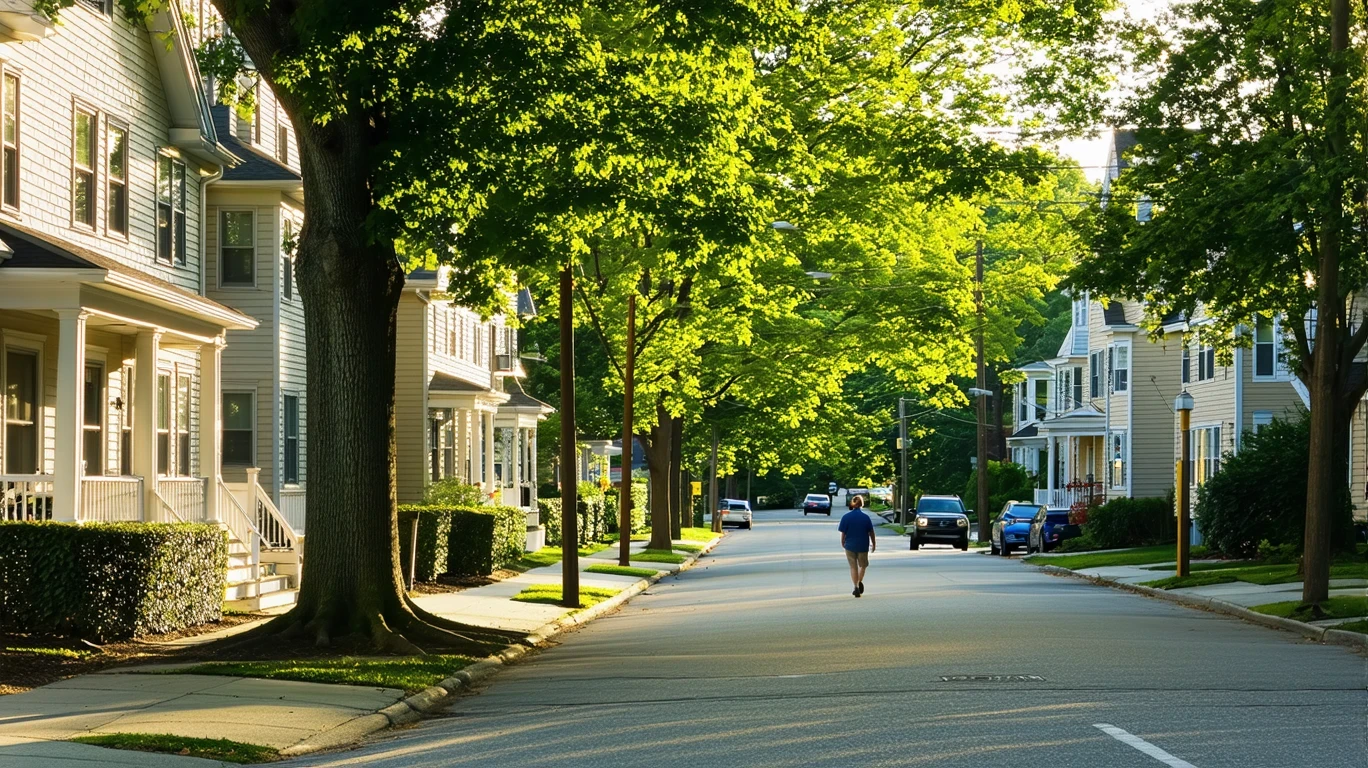
Overall Cost of Living Snapshot
Arlington’s cost structure is shaped by its position as an inner-ring suburb of Washington, D.C., with dense employment corridors, federal agency proximity, and a well-developed transit network. Housing dominates the expense profile, but the intensity of other costs—utilities, transportation, groceries—depends heavily on household structure and neighborhood choice.
The median household income of $137,387 per year reflects the city’s alignment with high-earning professionals, but it also signals that Arlington’s pricing is calibrated to that income tier. For households earning below that threshold, cost pressure is not evenly distributed: it concentrates in housing access, then cascades into transportation depending on whether you can live near work or rail.
Compared to much of Virginia, Arlington sits at the expensive end. Compared to D.C. proper, it often represents a slight step down in housing cost, though that gap has narrowed. The unemployment rate of 2.2% suggests a tight labor market, which supports wage growth but also sustains upward pressure on rents and home prices.
Driver verdict: Housing entry cost is the primary gate. Once you clear that, the next-largest variable is whether your daily life requires a car or whether you can rely on Metro, bike lanes, and walkable errands. Surprises come not from groceries or utilities, but from the cumulative cost of commuting if you live farther out to save on rent.
Housing Costs (Primary Driver)
With a median home value of $833,300, ownership in Arlington is a significant financial commitment. This figure reflects a mix of single-family homes, townhouses, and condos, with the higher end dominated by detached homes in established neighborhoods and the lower end by older condos near transit corridors. Buyers face not just the purchase price but also property taxes, HOA fees (common in condo and townhouse communities), and maintenance costs that scale with the age and type of the property.
Renting offers a lower entry cost but still commands $2,227 per month at the median. That figure typically reflects a one- or two-bedroom apartment in a mid-tier building, though location drives wide variation: units near Rosslyn, Clarendon, or Ballston stations command premiums, while those farther from Metro or in older buildings may fall below the median. Renters avoid property tax and maintenance exposure but face lease renewal risk in a market where demand remains strong.
The renting-versus-owning calculus in Arlington hinges on time horizon and mobility. Renters gain flexibility and lower upfront cost, making Arlington accessible for those in transition or uncertain about long-term stay. Owners gain stability and equity accumulation but lock in a high entry price and ongoing obligations. For households planning to stay five years or more, ownership can make sense if they can manage the down payment and monthly carrying costs. For those with shorter timelines or uncertain job tenure, renting avoids the transaction costs and market risk of a quick sale.
Conclusion: Arlington is a buying city for those with long horizons and capital; a renting city for those prioritizing flexibility or unable to meet the steep entry price. It is not a transitional city in the traditional sense—people come here for career access and stay if they can afford to.
| Housing Type | Cost Anchor | What That Buys You |
|---|---|---|
| Median Home Purchase | $833,300 | Equity-building, stability, property tax and maintenance exposure, long-term commitment |
| Median Rent | $2,227/month | Flexibility, lower entry cost, lease renewal risk, no maintenance burden |
Utilities & Energy Risk
Electricity in Arlington is billed at 16.36¢ per kWh, a rate that sits near the mid-to-high end for Virginia. For a household using around 1,000 kWh per month—typical for a moderate-sized apartment or townhouse with standard heating and cooling—illustrative monthly electricity costs before fees and taxes would be around $164. Actual usage varies widely based on unit size, insulation quality, thermostat habits, and whether you’re running window units or central HVAC.
Natural gas, priced at $20.71 per MCF (roughly 100 therms), plays a smaller role in Arlington’s utility profile than in colder climates, but it still matters for households with gas heat or water heating. Winter months drive the highest usage, though the region’s relatively mild winters mean gas bills don’t reach the extremes seen in the Midwest or Northeast. For context, a household using 1 MCF per month during heating season might see illustrative costs around $21 before fees and taxes, though again, this depends on home size, insulation, and thermostat settings.
The current temperature of 19°F with a feels-like of 8°F reflects an unusual cold snap for Arlington, where winter lows more commonly hover in the 30s and 40s. These occasional extremes can spike heating usage temporarily, but they don’t define the seasonal baseline. Summer cooling, driven by humid heat, tends to be the larger and more predictable utility expense.
Risk classification: Moderate. Utility costs in Arlington are noticeable but not dominant. The main exposure is summer cooling in poorly insulated units or older buildings. Winter heating is a secondary factor, with occasional cold snaps creating short-term spikes. Households in newer, energy-efficient buildings face lower volatility; those in older stock or larger single-family homes face higher and less predictable bills.
Groceries & Daily Costs
Arlington’s grocery landscape reflects both its urban density and its access to a wide range of retail formats. High food and grocery establishment density means most residents can reach a supermarket, corner store, or specialty shop without a long drive—and in many neighborhoods, without a car at all. This accessibility reduces the friction of daily errands and lowers the hidden costs of time and fuel that accumulate in car-dependent suburbs.
Grocery prices in Arlington track closely with the broader Washington metro area, sitting slightly above the national baseline due to regional cost structure and the mix of retailers serving the area. A household shopping at mid-tier chains will find prices comparable to other inner-ring D.C. suburbs, while those with access to discount grocers or wholesale clubs can reduce per-unit costs. The difference in annual spending between a household that plans meals, minimizes waste, and shops strategically versus one that relies on convenience stores and prepared foods can be substantial—not because Arlington is unusually expensive for groceries, but because the density of options rewards intentional choices.
For families, the ability to walk or bike to a grocery store—enabled by Arlington’s walkable pockets and mixed land use—can translate into lower transportation costs and more frequent, smaller shopping trips that reduce spoilage. For singles or couples, the same accessibility means less reliance on bulk purchasing and less need for a vehicle dedicated to errands.
Transportation Reality
The average commute in Arlington is 27 minutes, a figure that masks wide variation. For those living near Metro stations and working in D.C. or along the Orange, Silver, or Blue lines, the commute can be a predictable rail trip with no fuel or parking costs. For those driving to jobs in Tysons, Reston, or beyond, 27 minutes can stretch longer during peak hours, and the costs multiply: gas at $2.87 per gallon, parking fees, vehicle wear, and the opportunity cost of time spent in traffic.
Arlington’s rail transit presence and notable cycling infrastructure create a meaningful alternative to car ownership for some households. The pedestrian-to-road ratio exceeds high thresholds in parts of the city, meaning sidewalks, crosswalks, and pedestrian-friendly intersections are woven into the street network. For someone working in D.C. and living near a Metro stop, a car may be optional rather than essential—a shift that eliminates monthly payments, insurance, fuel, and maintenance.
But 45.9% of workers face long commutes, a signal that many Arlington residents either work outside the Metro-accessible core or have chosen to live here while commuting elsewhere. For these households, transportation is a recurring and significant expense. A 25-mile round-trip commute at 25 MPG and $2.87 per gallon costs roughly $2.87 per day in fuel alone, before tolls, parking, or vehicle depreciation. Over a month, that’s a baseline exposure of around $60 in gas, and over a year, over $700—just for the commute, not errands or weekend trips.
The work-from-home percentage of 5.6% is notably low, suggesting that most Arlington workers still travel to a physical workplace, whether that’s a federal office, a contracting firm, or a private employer. This keeps transportation a live cost factor for the majority of households.
Transportation as recurring exposure: If you can structure your life around Metro and walkable errands, transportation costs drop to transit fares and occasional car-sharing. If you need a car for work or family logistics, expect it to be one of your top three monthly expenses, behind only housing and possibly childcare. The difference between these two scenarios can easily exceed $500 per month when you account for car payments, insurance, fuel, and parking.
Cost Exposure Profiles
Arlington’s cost structure creates distinct exposure profiles depending on how you enter the housing market, how you get to work, and how your household is structured. These profiles don’t determine who can or cannot afford the city—they describe which costs dominate and where volatility hides.
Low-exposure scenario: A renter living in a Metro-accessible neighborhood, working in D.C. or along a rail line, with no car. Housing is the primary cost, but transportation drops to a Metro pass. Utilities are moderate and predictable in a newer building. Groceries are managed through walkable access to multiple stores. The main financial risk is lease renewal in a tight rental market.
High-exposure scenario: A homeowner in a single-family house, commuting by car to a job outside the Metro-accessible core, with school-age children. Housing costs include mortgage, property tax, and maintenance. Transportation includes two vehicles, fuel, insurance, and parking. Utilities are higher due to home size and older HVAC systems. Childcare and school-related costs layer on top. The main financial risks are property tax increases, major home repairs, and fuel price swings.
The gap between these profiles isn’t just about income—it’s about structure. Two households earning the same amount can face vastly different cost pressures depending on whether they’ve locked in a mortgage or face annual rent increases, whether they can walk to work or need to drive 20 miles, whether they have one car or two.
For families, Arlington’s strong school density and high playground availability reduce the need to pay for private alternatives or drive long distances for recreation, but the baseline cost of housing large enough for children remains steep. For singles or couples without kids, the ability to live in a smaller unit near transit and amenities can make Arlington’s cost structure more manageable, even at high absolute prices.
Frequently Asked Questions
Is Arlington more affordable than Washington, D.C. in 2026? Arlington is generally less expensive than D.C. for comparable housing, though the gap has narrowed in recent years. Renters and buyers often find slightly lower prices in Arlington, but the difference depends heavily on neighborhood and proximity to Metro.
What does a typical cost profile look like in Arlington? Housing dominates, followed by transportation if you own a car. Utilities are moderate, and groceries track regional norms. The profile shifts significantly based on whether you live near transit and whether your commute requires driving.
Do utilities cost more in Arlington than in nearby Virginia suburbs? Electricity rates in Arlington are near the mid-to-high end for Virginia, but the difference is usually smaller than the variation caused by home size, insulation, and usage habits. Natural gas costs are moderate and matter most in winter.
What costs tend to surprise newcomers in Arlington? The cumulative cost of car ownership if you don’t live near Metro, and the gap between median rent and what it actually takes to live in a walkable, transit-accessible neighborhood. Property taxes and HOA fees also catch some new homeowners off guard.
Are property taxes higher in Arlington than in Fairfax County? Arlington’s property tax rates and assessments tend to be higher than some parts of Fairfax, though the difference depends on the specific jurisdiction and property type. Homeowners should verify current rates and assessment practices before committing.
Can you live in Arlington without a car? Yes, if you live near a Metro station and work along a rail line or in D.C. Arlington’s walkable pockets, cycling infrastructure, and high grocery density make car-free living feasible for some households, though it requires intentional neighborhood selection.
How does Arlington’s cost of living compare to other Northern Virginia cities? Arlington is generally more expensive than outlying suburbs like Manassas or Woodbridge, but comparable to or slightly below Alexandria and Falls Church. The tradeoff is usually between housing pressure and commute length.
Is grocery shopping more expensive in Arlington than in the rest of Virginia? Grocery prices in Arlington are slightly above the state average, reflecting the Washington metro area’s overall cost structure. The impact on household budgets is moderate and can be managed through store choice and shopping habits.
How this article was built: In addition to public economic data, this article incorporates location-based experiential signals derived from anonymized geographic patterns—such as access density, walkability, and land-use mix—to reflect how day-to-day living actually feels in Arlington, VA.