
Can you live in Arlington Heights without a car? The short answer depends entirely on where you settle and where you need to go. This northwest Chicago suburb offers Metra rail access and pockets of genuine walkability, but the infrastructure still leans heavily toward driving for most daily routines. Understanding how people actually move through Arlington Heights—and what that means for your schedule, flexibility, and stress—matters more than any transit map can show.
How People Get Around Arlington Heights
Arlington Heights operates as a car-first suburb with selective transit utility. Most residents drive for groceries, errands, and non-commute trips. The city’s layout reflects mid-century suburban expansion: residential streets branch off commercial corridors, and while pedestrian infrastructure exists in concentrated areas, it doesn’t blanket the city uniformly. Rail service connects Arlington Heights to downtown Chicago, making it viable for traditional 9-to-5 Loop commuters who live near the station. But outside that narrow use case, day-to-day costs and logistics tilt heavily toward car ownership.
What surprises newcomers is the variability. Downtown Arlington Heights and areas within walking distance of the Metra station feel genuinely urban—dense enough to support errands on foot, with mixed-use blocks and higher foot traffic. Step a mile out, and you’re back in classic suburban territory: wider lots, fewer sidewalks, and grocery stores set back behind parking lots. The pedestrian-to-road ratio in walkable zones exceeds what you’d find in most Chicago suburbs, but that advantage shrinks fast as you move toward the edges.
Public Transit Availability in Arlington Heights
Public transit in Arlington Heights often centers around systems such as Metra’s Union Pacific Northwest Line, which runs frequent weekday service into Chicago. For commuters working downtown with predictable schedules, this rail link is the primary reason transit works at all. The station sits in the heart of downtown Arlington Heights, surrounded by the densest concentration of shops, restaurants, and apartments. If you live within a half-mile of that hub and work along the Metra corridor, you can structure a low-car or car-free life—at least on weekdays.
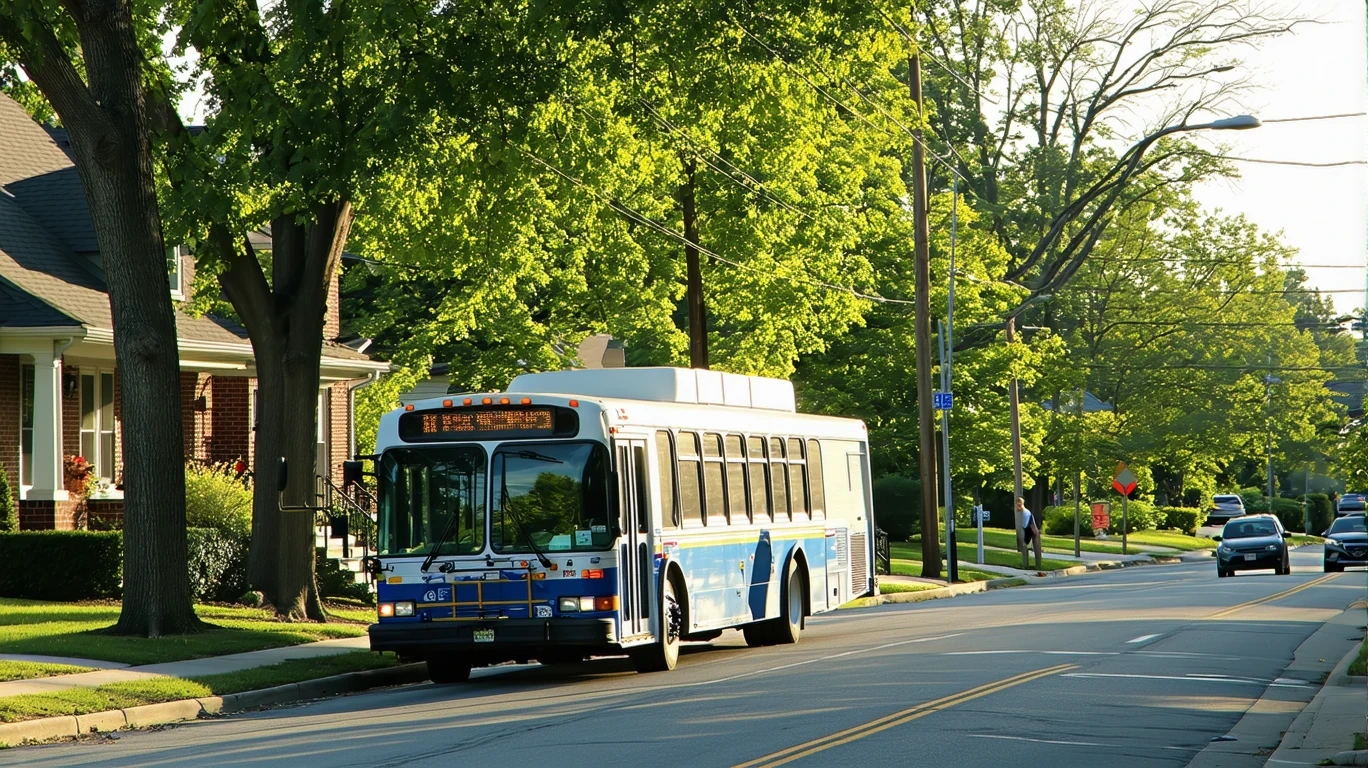
Pace bus service supplements rail with local and regional routes, but coverage thins quickly outside commercial corridors. Buses serve shopping centers, medical facilities, and connections to neighboring suburbs, but frequency and evening service remain limited. For households juggling multiple stops—daycare, grocery, gym, social plans—bus schedules introduce friction that most residents aren’t willing to absorb. Transit works best as a commute tool, not a household logistics solution.
Where transit falls short: late hours, weekends, and anywhere more than a mile from downtown or major arterials. Families with kids, anyone working non-standard hours, or households managing multi-destination days will hit the limits of transit coverage fast. The infrastructure exists, but it’s narrow in scope and optimized for a specific commuter profile.
Driving & Car Dependence Reality
Driving dominates because Arlington Heights is built for it. Parking is abundant and free in most areas. Roads are wide, traffic flows predictably outside rush hour, and every major retailer, school, and service assumes you’re arriving by car. For families, this setup reduces friction: you can chain errands, handle emergencies, and manage irregular schedules without consulting a timetable. The tradeoff is exposure to fuel costs, maintenance, insurance, and the time sink of traffic during peak periods.
Car dependence here isn’t about preference—it’s structural. Grocery stores anchor strip malls set back from sidewalks. Parks require parking lots. Schools assume drop-off and pickup by car. Even in walkable pockets, households with kids or irregular schedules find themselves defaulting to driving because the alternative introduces too much planning overhead. Gas prices in Arlington Heights currently sit at $2.91 per gallon, which matters less than the baseline assumption that you’ll own and use a vehicle regularly.
Sprawl amplifies this. Arlington Heights borders multiple suburbs, and many residents commute not to Chicago but to Schaumburg, Elk Grove Village, or other northwest corridor job centers. Those trips don’t align with transit routes, and driving becomes the only practical option. The average commute clocks in at 30 minutes, with 21.1% of workers facing longer hauls. That’s time spent in a car, not on a train.
Commuting Patterns & Daily Mobility
Commuting in Arlington Heights splits into two camps: those riding Metra to Chicago, and everyone else driving. The rail commuters cluster near downtown, work traditional office hours, and benefit from the predictability of train schedules. For them, getting around means walking to the station, riding 40 minutes to the Loop, and reversing the trip at day’s end. It’s efficient, low-stress, and insulates them from traffic volatility.
Everyone else drives—to Schaumburg office parks, O’Hare-adjacent logistics hubs, Elk Grove manufacturing sites, or other suburban nodes. These commutes don’t follow a single corridor, and transit can’t serve them. Multi-stop commutes (dropping kids, hitting the gym, running errands) further cement car dependence. Only 10.3% of workers in Arlington Heights work from home, meaning most residents are moving daily, and the infrastructure assumes they’re doing it by car.
Commute length matters because it shapes daily routines and limits flexibility. A 30-minute drive feels manageable until you’re doing it twice a day, five days a week, while also managing household logistics. Proximity to work or rail access becomes a major quality-of-life lever, not just a cost consideration.
Who Transit Works For — and Who It Doesn’t
Transit works for single professionals or couples living near the Metra station, commuting to downtown Chicago, and comfortable running most errands on foot or by bike within downtown Arlington Heights. The density of food and grocery options in that core zone supports low-car living, and rail service handles the commute reliably. This group skews younger, rents more often, and prioritizes proximity to the station over space.
Transit doesn’t work for families with school-age kids, anyone commuting to suburban job centers, households with multiple wage earners heading in different directions, or residents living more than a mile from downtown. The logistics break down fast: daycare pickup, weekend activities, grocery runs with kids, evening commitments. Buses don’t run frequently enough, and rail doesn’t go where most people need to be outside of Chicago.
Renters near the station have the best shot at low-car life, but even they often keep a car for weekend trips, Costco runs, or visiting family. Homeowners in residential zones almost universally own at least one vehicle, and two-car households are the norm. The infrastructure supports transit as a commute supplement, not a replacement for driving.
Transportation Tradeoffs in Arlington Heights
Choosing transit over driving in Arlington Heights means accepting narrower coverage, limited evening and weekend service, and higher planning overhead. The upside: predictable commute times, lower stress during rush hour, and insulation from fuel price swings. The downside: inflexibility. Miss a train, and you’re waiting 30 minutes. Need to run an errand after work, and you’re either walking, biking, or calling a ride.
Driving offers control and flexibility but ties you to traffic patterns, parking availability, and the ongoing cost of vehicle ownership. You can leave when you want, stop where you need, and handle multi-destination days without friction. But you’re also absorbing maintenance, insurance, and the time cost of sitting in traffic during peak periods. For most households, the tradeoff tilts toward driving because the alternative doesn’t cover enough of their daily needs.
The real question isn’t whether transit exists—it does—but whether your household’s rhythm aligns with its narrow coverage. If you’re a Loop commuter living downtown, transit works. If you’re a family in a residential neighborhood juggling school, work, and activities, it doesn’t.
FAQs About Transportation in Arlington Heights (2026)
Is public transit usable for daily commuting in Arlington Heights?
Yes, if you’re commuting to downtown Chicago and live near the Metra station. Rail service runs frequently on weekdays and handles the Loop commute reliably. For commutes to suburban job centers or non-standard hours, transit coverage thins quickly and driving becomes necessary.
Do most people in Arlington Heights rely on a car?
Yes. The majority of residents drive for daily errands, commuting, and household logistics. Even those who use Metra for work commutes often keep a car for weekends, groceries, and non-commute trips. The infrastructure assumes car ownership.
Which areas of Arlington Heights are easiest to live in without a car?
Downtown Arlington Heights, within walking distance of the Metra station, offers the best chance at low-car living. The area has high food and grocery density, pedestrian infrastructure, and direct rail access to Chicago. Outside that core, car dependence increases sharply.
How does commuting in Arlington Heights compare to nearby cities?
Arlington Heights benefits from Metra access, which gives it an edge over suburbs without rail service. But compared to cities closer to Chicago or with denser transit networks, it still leans heavily on driving. The average commute of 30 minutes reflects a mix of rail riders and drivers heading to suburban job centers.
Can you bike for transportation in Arlington Heights?
Biking is viable in pockets, particularly around downtown where bike infrastructure exists and destinations cluster. Outside those areas, biking becomes less practical due to wider roads, longer distances, and limited bike lanes. It works as a supplement but not as a primary transportation mode for most households.
How Transportation Fits Into the Cost of Living in Arlington Heights
Transportation isn’t just a line item—it’s a structural factor that shapes where you live, how you spend your time, and what flexibility you retain. In Arlington Heights, proximity to the Metra station or your workplace directly affects whether you can reduce car dependence and the time cost of commuting. Living near downtown might mean higher rent but lower transportation friction. Living farther out might mean cheaper housing but mandatory car ownership and longer commutes.
For a fuller picture of how transportation costs interact with housing, utilities, and other expenses, see what a budget has to handle in Arlington Heights. The key insight: transportation decisions ripple through your entire cost structure, not just your fuel budget. Choose your location with your commute and daily logistics in mind, and you’ll avoid the hidden costs of living somewhere that requires constant driving.
How this article was built: In addition to public economic data, this article incorporates location-based experiential signals derived from anonymized geographic patterns—such as access density, walkability, and land-use mix—to reflect how day-to-day living actually feels in Arlington Heights, IL.