
A first-time renter moving to Arlington Heights faces a median rent of $1,660 per month, which buys access to a suburb with rail transit, walkable pockets, and broadly accessible groceries—but not necessarily a car-free lifestyle. A first-time buyer looking at the median home value of $396,500 confronts a steep entry cost, offset by strong schools, integrated parks, and neighborhoods where errands don’t require constant driving. The difference between these two paths isn’t just monthly outlay—it’s exposure to heating bills in cold winters, control over housing stability, and whether your household can take advantage of Arlington Heights’s infrastructure or simply pays to live near it.
This article explains the real cost pressures in Arlington Heights, how ownership and rental costs behave over time, and which housing choice fits different household types in a suburb where place structure genuinely affects day-to-day expenses.
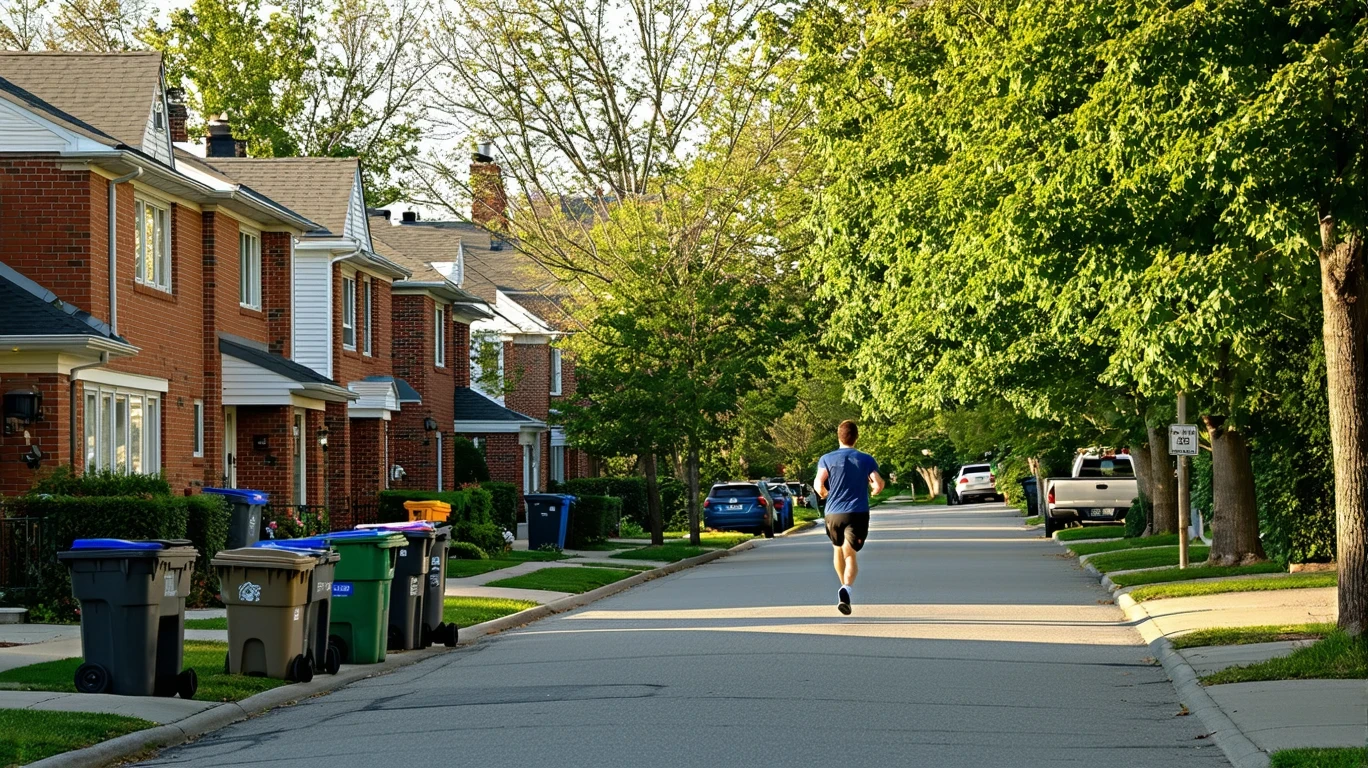
The Housing Market in Arlington Heights Today
Arlington Heights sits in the Chicago metro area with a median household income of $113,502 per year and a regional price level 3% above the national baseline. The housing market reflects this: home values are elevated, but so is the infrastructure that supports them. Rail transit connects commuters to downtown Chicago, walkable pockets reduce car dependency in parts of the city, and grocery density exceeds high thresholds, meaning daily errands don’t require the same planning burden found in car-dependent suburbs.
What newcomers often misunderstand is that Arlington Heights isn’t uniformly walkable or uniformly car-oriented. The pedestrian-to-road ratio exceeds high thresholds in certain areas, creating pockets where sidewalks, mixed land use, and transit access genuinely reduce household transportation costs. But these pockets don’t cover the entire city, and housing in less-connected areas still commands prices near the citywide median. Buyers and renters alike need to distinguish between paying for proximity to infrastructure and paying for the general reputation of the suburb.
The unemployment rate of 5.4% signals a stable but not overheated labor market, which keeps housing demand steady without the speculative pressure seen in faster-growing metros. For families, the draw is clear: school density and playground density both meet thresholds that indicate strong family infrastructure, and park density exceeds high thresholds with water features present. For singles and couples, the appeal depends more on whether they value rail access and walkable errands enough to justify the entry cost.
Renting in Arlington Heights
At $1,660 per month median gross rent, Arlington Heights sits above many peer suburbs but below the premium neighborhoods closer to downtown Chicago. What that rent buys varies significantly by location within the city. Apartments near the rail station or within walkable pockets offer access to transit, grocery stores within walking distance, and mixed-use streets where errands don’t require a car. Apartments farther from these nodes still cost near the median but require vehicle ownership and planning around longer trips for daily needs.
Renters gain flexibility—no exposure to property tax changes, no responsibility for heating system failures in cold winters, and the ability to relocate if job or family circumstances shift. But they also absorb rent increases without the tax or maintenance predictability that comes with ownership. In a suburb with strong schools and family infrastructure, rental stock tends to skew toward smaller units or older buildings, meaning families often find renting a short-term solution rather than a long-term fit.
The rental experience in Arlington Heights depends heavily on whether your household can use the infrastructure that makes the suburb appealing. If you work downtown and live near the rail line, the 30-minute average commute becomes manageable without a car. If you need to drive to work and also drive for groceries, you’re paying Arlington Heights prices while living a car-dependent lifestyle—essentially renting proximity to amenities you don’t use daily.
Owning a Home in Arlington Heights
The median home value of $396,500 represents a significant capital commitment, and ownership in Arlington Heights comes with exposures that renters avoid. Property taxes, while not specified in available data, are a recurring cost that rises over time and varies by assessed value and local levies. Heating costs matter in a climate where winter temperatures drop to 25°F (feeling like 18°F), and natural gas priced at $15.48 per MCF becomes a dominant expense for single-family homes with older furnaces or poor insulation.
Ownership also means control. Homeowners lock in housing cost predictability that renters never achieve, even as taxes and maintenance introduce their own variability. In a suburb with integrated parks and strong family infrastructure, ownership appeals to households planning to stay long enough to justify the entry cost and absorb the friction of buying and selling. The presence of both residential and commercial land use in many neighborhoods means homeowners in walkable pockets can reduce transportation costs over time, though most households still own at least one vehicle.
Maintenance exposure in Arlington Heights reflects the housing stock’s age and the climate’s demands. Cold winters stress heating systems, roofs, and foundations. Older single-family homes require more frequent furnace servicing, and homes with yards face seasonal upkeep that competes with the appeal of the city’s abundant public parks. Homeowners in multi-family buildings or townhomes shift some of this burden to shared structures, but they also lose control over timing and vendor choice.
Apartment vs House in Arlington Heights — Cost Behavior Comparison
| Expense Category | Apartment | House |
|---|---|---|
| Heating Exposure | Shared walls and smaller square footage reduce heating load; natural gas costs often included in rent or spread across fewer rooms | Full exposure to cold-weather heating costs; natural gas at $15.48/MCF becomes a dominant winter expense for older or poorly insulated homes |
| Parking & Transportation | Apartments near rail or in walkable pockets reduce car dependency; some households manage with one vehicle or none | Houses typically require at least one vehicle; parking is controlled but transportation costs remain high unless located in rare walkable zones |
| Outdoor Maintenance | No yard upkeep; integrated park access (density exceeds high threshold) provides green space without household labor | Yard maintenance competes with public park access; seasonal demands (snow removal, lawn care) add time and cost |
| Errands Friction | Broadly accessible groceries mean walkable apartments offer convenience advantage; food and grocery density both exceed high thresholds | Houses in car-dependent pockets require driving for errands despite citywide grocery density; planning burden increases |
Why these categories? The table reflects cost differences that actually vary in Arlington Heights due to climate (cold winters driving heating exposure), infrastructure (rail and walkable pockets reducing car dependency for some), and housing stock (mixed building heights and land use creating genuine lifestyle differences). Categories like insurance or property taxes were omitted because available data doesn’t clarify how they differ between apartments and houses locally, and generic national patterns don’t explain Arlington Heights-specific behavior.
Utilities & Upkeep Differences
Heating dominates winter utility costs in Arlington Heights. Current temperatures of 25°F (feeling like 18°F) signal a long cold season, and natural gas priced at $15.48 per MCF becomes the primary variable cost for single-family homeowners. Apartments with shared walls and smaller square footage reduce this exposure significantly, and many rental buildings include heat in the monthly rent, shifting the risk to landlords. Electricity at 18.74¢ per kWh matters year-round but doesn’t create the same seasonal volatility as heating.
Maintenance exposure differs by housing type and age. Older single-family homes face recurring furnace servicing, roof repairs, and foundation issues exacerbated by freeze-thaw cycles. Apartments shift these costs to property management, though renters indirectly pay through rent levels. Homeowners in newer construction or well-maintained buildings reduce emergency repair risk, but they still absorb the cost of deferred maintenance when systems fail.
The presence of integrated parks and water features in Arlington Heights means homeowners with yards face a choice: invest time and money in private outdoor space, or rely on abundant public green space. This isn’t a trivial decision—yard maintenance in a climate with cold winters and variable precipitation creates seasonal cost spikes that apartments avoid entirely.
Rent vs Buy: Long-Term Exposure in Arlington Heights
Renting in Arlington Heights means flexibility and limited exposure to property tax increases, maintenance surprises, or heating system failures. But it also means absorbing rent increases without the cost predictability that ownership provides. Over time, renters face rising housing costs with no equity accumulation and no control over timing or magnitude of increases.
Ownership in Arlington Heights means locking in a large portion of housing costs—mortgage principal and interest remain fixed for most buyers—but accepting exposure to property taxes, maintenance, and heating costs that rise over time. Homeowners gain control and stability, but they also absorb risks that renters avoid. The decision isn’t about which path costs less in year one; it’s about which risk profile fits your household’s income stability, time horizon, and ability to use the infrastructure that makes Arlington Heights appealing.
For families planning to stay long enough to justify the entry cost, ownership in neighborhoods with strong schools, walkable errands, and rail access offers genuine value. For singles, couples, or households with uncertain job stability, renting near transit preserves flexibility without sacrificing access to the suburb’s amenities. The wrong choice isn’t renting or buying—it’s choosing based on monthly payment alone without understanding how costs behave over time in this specific market.
FAQs About Housing Costs in Arlington Heights
Is $1,660 per month typical for rent in Arlington Heights?
$1,660 per month is the median gross rent, meaning half of renters pay more and half pay less. Rent varies significantly by location within Arlington Heights—apartments near the rail station or in walkable pockets with high grocery density command higher rents, while units farther from transit and amenities cost less but require car ownership.
What drives heating costs higher in Arlington Heights homes?
Cold winters create extended heating seasons, and natural gas priced at $15.48 per MCF becomes a dominant expense for single-family homes. Older homes with poor insulation or aging furnaces face higher costs, while apartments with shared walls and smaller square footage reduce heating exposure significantly.
Does owning a home in Arlington Heights make sense if I work downtown?
Rail transit connects Arlington Heights to downtown Chicago, and the 30-minute average commute makes ownership viable for downtown workers. Homeowners in walkable pockets near the rail station reduce car dependency, lowering transportation costs over time. Ownership makes sense if you plan to stay long enough to justify the $396,500 median home value and absorb the friction of buying and selling.
How does Arlington Heights’s infrastructure affect housing costs?
Walkable pockets with high pedestrian-to-road ratios, rail transit, and broadly accessible groceries reduce day-to-day transportation and errands friction for households located near these amenities. But not all of Arlington Heights is equally walkable—housing in car-dependent areas still costs near the citywide median without offering the same infrastructure advantages.
Are apartments or houses cheaper to maintain in Arlington Heights?
Apartments shift maintenance responsibility to property management and reduce heating exposure through shared walls and smaller square footage. Houses face full exposure to heating costs, yard upkeep, and repair risks exacerbated by cold winters. The cost difference isn’t just dollars—it’s time, control, and exposure to seasonal volatility.
Making Housing Choices in Arlington Heights
Housing costs in Arlington Heights reflect a suburb with strong infrastructure, elevated home values, and meaningful variation in how households experience daily life. Renters at $1,660 per month gain flexibility and avoid maintenance exposure, but they also absorb rising rents without equity accumulation. Buyers at $396,500 median home value lock in cost predictability but accept exposure to property taxes, heating costs, and maintenance risks that renters avoid.
The decision depends on whether your household can use the infrastructure that makes Arlington Heights appealing: rail transit, walkable pockets, broadly accessible groceries, and integrated parks. Families planning to stay long enough to justify the entry cost and use strong schools and playgrounds fit ownership well. Singles and couples who value transit access and walkable errands may find renting near the rail station a better match. Households in car-dependent pockets pay Arlington Heights prices without gaining the infrastructure advantages that justify the premium.
For more context on what a budget has to handle in Arlington Heights, including transportation, groceries, and utilities, see the companion budget guide. If you’re planning a move and evaluating logistics, compare moving company costs and options to understand that piece of the transition.
How this article was built: In addition to public economic data, this article incorporates location-based experiential signals derived from anonymized geographic patterns—such as access density, walkability, and land-use mix—to reflect how day-to-day living actually feels in Arlington Heights, IL.