
Arlington Heights is considered moderately priced in 2026, with a median home value of $396,500 anchoring the cost structure. The value proposition depends on housing entry cost versus transit access and walkable infrastructure—commute length and vehicle dependence remain key variables despite rail service presence.
Overall Cost of Living Snapshot
You’re weighing a move to Arlington Heights, and the first question isn’t whether you can technically afford it—it’s whether the cost structure matches how you actually live. The shape of expenses here is defined by a high housing entry threshold, moderate day-to-day costs, and a transportation picture that defies easy categorization. Arlington Heights sits in the Chicago metro with a regional price parity index of 103, meaning prices run slightly above the national baseline across most categories.
The primary cost driver is housing, particularly the upfront capital required to buy. Median home values reach $396,500, while median gross rent stands at $1,660 per month. These figures set the financial floor, but they don’t tell you where the pressure actually concentrates. For renters, the monthly obligation is substantial but predictable. For buyers, the entry cost is steep, but ownership shifts risk from rent escalation to maintenance, taxes, and insurance volatility.
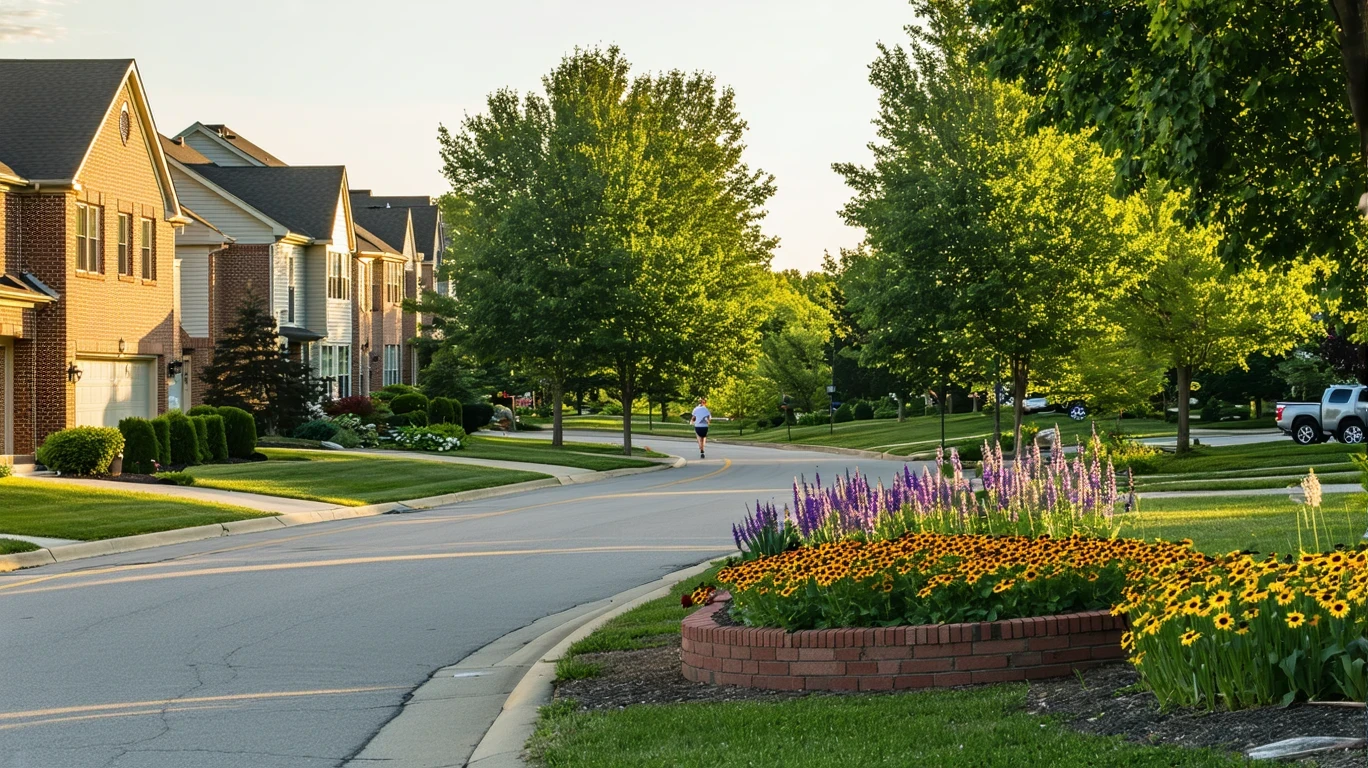
What surprises many newcomers is the mismatch between infrastructure and behavior. Arlington Heights has substantial pedestrian infrastructure relative to its road network, rail transit service, and high-density access to groceries and parks. Yet the average commute still runs 30 minutes, and only 10.3% of workers operate from home. This creates a tension: the built environment supports walkable errands and transit use, but many households still depend on cars for work trips. That duality shapes cost exposure more than any single price point.
Driver verdict: Housing entry cost dominates, but transportation dependency—despite available alternatives—and seasonal utility swings create secondary pressure points that vary widely by household structure.
Housing Costs (Primary Driver)
Housing is where Arlington Heights separates casual interest from committed planning. The median home value of $396,500 reflects a mature suburban market with strong schools, amenities, and proximity to Chicago. Median gross rent of $1,660 per month offers an alternative entry point, but it’s not a budget option—it’s a different risk profile.
Renting in Arlington Heights means accepting a fixed monthly obligation in exchange for flexibility and insulation from ownership volatility. You avoid property tax exposure, maintenance surprises, and insurance complexity, but you also forfeit equity accumulation and rent control. Ownership inverts that tradeoff: high upfront cost and ongoing exposure to tax adjustments, repair cycles, and insurance recalibration, but long-term cost predictability and asset-building potential.
The city functions as a long-term ownership market. Buyers here are typically committing to stability, school access, and neighborhood continuity. Renters are often in transition—testing the area, waiting for financial positioning, or prioritizing mobility over equity. Neither path is inherently better, but the cost structure rewards those who can absorb the entry threshold and plan to stay.
| Housing Type | Cost Anchor | What That Buys You |
|---|---|---|
| Ownership | $396,500 median home value | Equity position, tax/maintenance exposure, long-term cost control |
| Rental | $1,660/month median gross rent | Flexibility, predictable monthly cost, no ownership volatility |
Conclusion: Arlington Heights is a buying market with a rental transition tier. The entry cost is high, but the infrastructure and amenity access justify it for households planning multi-year tenure.
Utilities & Energy Risk
Utility costs in Arlington Heights reflect the Midwest’s seasonal extremes. Electricity runs 18.74¢ per kWh, which sits in the moderate range nationally but climbs during cooling season. Natural gas is priced at $15.48 per MCF (roughly 100 therms), and heating demand dominates winter months. Current weather shows 25°F with a feels-like temperature of 18°F—a reminder that heating exposure is real and recurring.
The primary risk isn’t the baseline rate; it’s the intensity and duration of seasonal demand. Summers require extended air conditioning, and winters demand consistent heating. Households in older homes or larger square footage face amplified exposure. Efficiency upgrades—insulation, programmable thermostats, high-efficiency HVAC—reduce usage and smooth volatility, but they don’t eliminate the underlying seasonal swing.
Utilities here are a moderate risk factor. They’re not the dominant cost driver, but they’re not negligible either. Budgeting for seasonal peaks is essential, and households without efficiency measures or usage discipline will see noticeable swings between low and high months.
Risk classification: Moderate. Seasonal volatility is predictable but meaningful, especially for larger homes or less efficient housing stock.
Groceries & Daily Costs
Grocery costs in Arlington Heights track slightly above the national baseline, consistent with the regional price parity index of 103. The city’s food establishment density exceeds high thresholds, meaning access is broadly distributed rather than corridor-dependent. This reduces the friction of daily errands—households can source groceries, pharmacy items, and routine supplies without long trips or planning overhead.
The cost pressure here is modest. Prices run higher than rural or low-cost metros, but the access density offsets some of that through competition and convenience. Families with multiple dependents or specific dietary needs will feel the cumulative weight more than single-person or two-person households, but the category itself doesn’t dominate the cost structure.
What matters more than individual item prices is the logistical ease. High grocery density means fewer long trips, less fuel burned on errands, and more flexibility in timing and vendor choice. That’s a cost advantage that doesn’t show up in price-per-pound comparisons but affects household time and transportation budgets.
Transportation Reality
Transportation in Arlington Heights defies the typical suburban script. The city has rail transit service and a pedestrian-to-road ratio that exceeds high thresholds, indicating substantial walkable infrastructure. Yet the average commute still runs 30 minutes, and only 10.3% of workers are home-based. That gap between infrastructure and behavior is the key tension.
For households whose work destinations align with rail service, car dependency drops significantly. The Metra line provides direct access to downtown Chicago and other regional hubs, reducing fuel costs, parking fees, and vehicle wear. But for those commuting to dispersed suburban job sites or non-rail-served areas, a car remains essential. Gas prices currently sit at $2.91 per gallon, which is moderate but compounds quickly with long or frequent trips.
The transportation cost exposure depends entirely on commute structure. A rail commuter with walkable errands can minimize vehicle use to occasional trips. A multi-car household with dispersed work sites and school runs faces recurring fuel, insurance, and maintenance costs. The infrastructure supports low-car living, but it doesn’t enforce it—households must actively align their routines to capture the savings.
One behavioral reality stands out: people in Arlington Heights can run most daily errands on foot or by bike within walkable pockets, thanks to high food and grocery density and integrated park access. That reduces the need for short, repetitive car trips that accumulate mileage and fuel costs. But work commutes—especially those not served by rail—still demand vehicle access, creating a split transportation profile where errands are low-friction but employment trips remain car-dependent for many.
Cost Exposure Profiles
Cost exposure in Arlington Heights concentrates in three areas: housing entry, transportation structure, and utility seasonality. The way these interact depends on household composition, commute alignment, and housing tenure.
Low-exposure scenario: A renter with rail-accessible work, walkable errands, and a small or efficient living space. Monthly housing cost is fixed, transportation is minimal, and utility swings are contained. The cost structure is predictable and manageable, with few volatility points.
High-exposure scenario: A homeowner with a multi-car household, dispersed suburban commutes, and a larger or older home. Housing costs include mortgage, taxes, insurance, and maintenance. Transportation demands multiple vehicles, fuel, and upkeep. Utilities swing with seasonal extremes and square footage. Each category compounds the others, creating cumulative pressure.
The difference isn’t income—it’s alignment. Households that match their behavior to the city’s infrastructure (rail use, walkable errands, efficient housing) experience lower recurring costs. Those whose routines require car dependency, long commutes, or large-space heating face higher exposure. Arlington Heights offers the infrastructure to support low-car, high-amenity living, but it doesn’t eliminate the cost of car-dependent patterns for those whose work or family structure demands it.
Frequently Asked Questions
Is Arlington Heights more affordable than nearby Chicago suburbs in 2026? Arlington Heights sits in the middle range for the Chicago metro—home values and rents run higher than outer suburbs but lower than closer-in areas like Evanston or Oak Park. The tradeoff is access: you’re paying for rail service, walkable infrastructure, and amenity density that many peer suburbs lack.
What does a typical cost profile look like in Arlington Heights? Housing dominates, whether through rent or ownership. Transportation costs vary widely based on commute structure—rail users spend less, multi-car households more. Utilities swing seasonally but remain moderate overall. Groceries and daily costs track slightly above national averages but benefit from high access density.
Do utilities cost more in Arlington Heights than nearby areas? Electricity and natural gas rates are consistent across the region, so the difference comes from usage intensity—home size, efficiency, and seasonal demand. Arlington Heights doesn’t have unusually high rates, but winter heating and summer cooling create predictable peaks.
What costs tend to surprise newcomers in Arlington Heights? The gap between infrastructure and behavior. Many expect typical suburban car dependency, but the city has rail access and walkable errands. Those who don’t adjust routines to use those options end up paying for both the infrastructure (through taxes and home values) and the car-dependent lifestyle (through fuel and vehicle costs).
Are property taxes higher in Arlington Heights than neighboring suburbs? Property taxes in Illinois suburbs tend to be substantial across the board, driven by school funding and municipal services. Arlington Heights is no exception—ownership here includes meaningful tax exposure, and that’s a recurring cost that doesn’t shrink with market downturns.
Is Arlington Heights a good value for families in 2026? For families planning long-term tenure, yes—school density and playground access both meet high thresholds, and park access is integrated throughout the city. The housing entry cost is steep, but the infrastructure supports family logistics without requiring constant driving. Short-term or transitional families may find the entry cost harder to justify.
How does commute length affect cost exposure in Arlington Heights? Commute length matters less than commute mode. A 30-minute rail commute costs far less over time than a 20-minute car commute to a non-transit-served job. The city’s average commute is 30 minutes, but the cost implication depends entirely on whether that’s rail, car, or mixed-mode.
Can you live in Arlington Heights without a car? It’s possible for households whose work aligns with rail service and whose daily errands fall within walkable pockets. Grocery density is high, and pedestrian infrastructure is substantial. But for families with school runs, dispersed activities, or non-rail commutes, a car remains functionally necessary.
How this article was built: In addition to public economic data, this article incorporates location-based experiential signals derived from anonymized geographic patterns—such as access density, walkability, and land-use mix—to reflect how day-to-day living actually feels in Arlington Heights, IL.
—