

Brentwood’s median home value sits at $842,400—a figure that immediately signals where cost pressure concentrates for households entering this market. Meanwhile, Antioch’s housing landscape operates under different structural constraints, where access, mobility texture, and day-to-day errands shape the cost experience more than a single entry barrier. Both cities sit within the Nashville metro, share identical utility rates and gas prices, and face the same regional economic conditions. Yet the decision between them hinges not on which is “cheaper overall,” but on which cost mechanisms dominate your household’s financial life in 2026.
For families weighing suburban tradeoffs, the comparison isn’t about totals—it’s about where financial pressure shows up first, how predictable ongoing costs remain, and whether front-loaded housing expenses or distributed daily friction costs matter more. Antioch offers walkable pockets, strong family infrastructure, and grocery density that reduces logistical burden. Brentwood delivers income stability, low unemployment (2.7% vs. 2.9%), and housing stock that appeals to households willing to absorb steep entry costs in exchange for long-term predictability. The right choice depends entirely on which costs your household can control, which you can’t, and how much flexibility you need when income or circumstances shift.
This article breaks down housing behavior, utility exposure, grocery strategy, transportation dependence, and tax structure—not to declare a winner, but to explain how the same income feels different depending on where cost pressure concentrates and how much control you retain over daily spending.
Housing Costs
Brentwood’s median home value of $842,400 creates a steep entry barrier that dominates the cost experience for buyers. This figure reflects a market where single-family homes, newer construction, and low inventory push prices well above regional norms. For households financing a purchase, the front-loaded obligation—down payment, closing costs, and ongoing mortgage payments—becomes the primary financial constraint. Renters face similar pressure: Brentwood’s median gross rent of $2,459 per month represents a substantial recurring obligation that leaves less room for flexibility in other budget categories. This housing structure favors high-income households (median household income: $181,576 per year) who can absorb the entry cost and maintain predictable monthly obligations without sacrificing discretionary spending or emergency reserves.
Antioch’s housing market operates under different dynamics. Without published median home values or rent figures, the cost experience is shaped more by access patterns, housing stock diversity, and the interplay between location and mobility. Antioch’s experiential signals reveal walkable pockets with substantial pedestrian infrastructure, mixed residential and commercial land use, and strong family infrastructure (schools and playgrounds exceeding density thresholds). These structural features reduce the need for expensive housing in premium locations, as households can access groceries, schools, and parks without relying solely on car-dependent commutes. Housing pressure in Antioch is less about a single entry barrier and more about navigating availability, competition for rentals in accessible corridors, and balancing proximity to transit or walkable amenities against unit size and condition.
The difference matters most for households at different income levels and life stages. First-time buyers in Brentwood face a steep climb: saving for a down payment on an $842,400 home requires years of disciplined saving, and the monthly mortgage obligation (before taxes, insurance, and maintenance) dominates the household budget. Renters in Brentwood experience similar front-loaded pressure, with $2,459 per month leaving limited flexibility for households earning below the median. In Antioch, renters and buyers encounter more variability: housing costs depend heavily on proximity to walkable corridors, access to grocery density, and tolerance for older housing stock. Families prioritizing school access and playground density may find Antioch’s infrastructure reduces indirect costs (time, transportation, convenience spending) even if per-unit housing costs vary widely.
| Housing Type | Antioch | Brentwood |
|---|---|---|
| Median Home Value | Data not available; market varies by proximity to walkable corridors and family infrastructure | $842,400 |
| Median Gross Rent | Data not available; rental pressure concentrated along accessible corridors | $2,459 per month |
| Primary Housing Pressure | Access, availability, and logistics friction | Entry barrier and ongoing obligation |
For renters, Brentwood’s $2,459 median gross rent creates a predictable but inflexible obligation. Households earning at or above the median can absorb this cost, but those below face limited room for error if income drops or unexpected expenses arise. Antioch’s rental market, while less documented, likely offers more variability: lower-cost units exist, but access to walkable amenities, grocery density, and transit may require tradeoffs in unit size, age, or location. First-time buyers in Antioch face less extreme entry barriers than Brentwood, but must navigate a market where housing quality, proximity to schools, and access to daily errands vary significantly by neighborhood.
Housing Takeaway: Brentwood’s housing costs are front-loaded and predictable, favoring high-income households who can absorb steep entry barriers and maintain stable monthly obligations. Antioch’s housing pressure is more distributed, shaped by access patterns, walkability, and family infrastructure rather than a single price point. Households sensitive to entry costs and ongoing mortgage or rent obligations will feel Brentwood’s pressure immediately. Households prioritizing flexibility, access to schools and parks, and reduced transportation dependence may find Antioch’s structure more forgiving, even if individual unit costs vary widely.
Utilities and Energy Costs
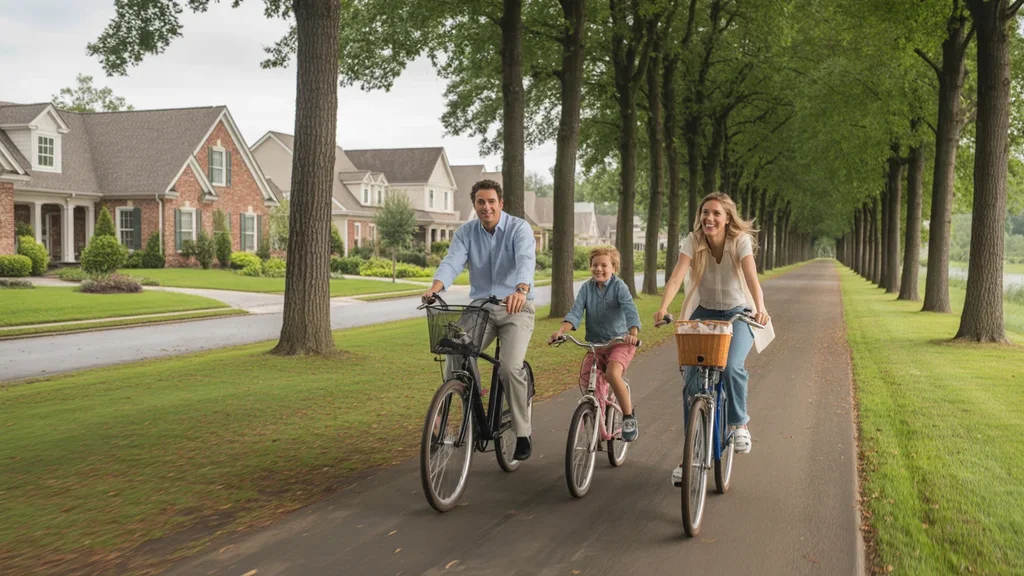
Both Antioch and Brentwood share identical utility rates: electricity costs 13.06¢ per kWh, and natural gas runs $20.33 per MCF. This parity means that differences in utility exposure stem not from pricing, but from housing stock, usage patterns, and seasonal intensity. Tennessee’s climate demands significant cooling in summer months, with extended periods of heat and humidity driving air conditioning usage. Heating needs are moderate but present during winter, particularly in older homes with less efficient insulation. The key question isn’t which city has cheaper rates—it’s which housing stock and household behaviors amplify or dampen seasonal volatility.
Brentwood’s housing stock skews newer, with larger single-family homes that often feature modern HVAC systems, improved insulation, and energy-efficient windows. These factors reduce baseline usage per square foot, but total consumption still rises with home size. A 3,000-square-foot home in Brentwood, even with efficient systems, will consume more electricity during summer cooling months than a smaller, older apartment in Antioch. However, the predictability is higher: newer homes experience fewer surprise spikes from failing equipment, drafty windows, or outdated heating systems. Households in Brentwood face higher absolute utility costs due to home size, but lower volatility and fewer emergency repair expenses.
Antioch’s housing stock is more mixed, with older single-family homes, apartments, and townhomes that vary widely in energy efficiency. Older homes with original windows, minimal insulation, and aging HVAC systems experience higher cooling and heating exposure per square foot. Apartments and smaller units reduce total consumption, but older construction can introduce unpredictability: a failing AC unit in July or a drafty heating system in January creates both cost spikes and comfort issues. Antioch’s mixed urban form—where residential and commercial land use coexist—also means some households live in denser, multi-unit buildings that share walls and reduce heating/cooling loads, while others occupy detached homes with full exposure to seasonal extremes.
Household size and housing type interact with these structural differences. Single adults or couples in Antioch apartments face lower absolute utility costs due to smaller square footage and shared walls, but may experience less control over thermostat settings or building-level efficiency. Families in larger Antioch homes face higher exposure if the housing stock is older, with summer cooling costs rising sharply during heat waves. In Brentwood, families in larger homes pay more in absolute terms, but benefit from predictable, efficient systems that reduce the risk of mid-season failures or runaway bills. Dual-income households in Brentwood can absorb higher baseline utility costs without strain, while single-income families in older Antioch homes may feel seasonal spikes more acutely.
Utility Takeaway: Brentwood’s utility exposure is higher in absolute terms due to larger, newer homes, but more predictable due to efficient systems and modern construction. Antioch’s utility costs vary widely depending on housing age, type, and location, with older homes introducing more volatility and seasonal risk. Households prioritizing predictability and willing to pay higher baseline costs will find Brentwood’s structure more stable. Households in smaller units or willing to manage seasonal variability may find Antioch’s lower absolute consumption offsets unpredictability, especially in apartments or townhomes with shared walls.
Groceries and Daily Expenses
Grocery and daily spending pressure in Antioch and Brentwood diverges not because of price differences—both cities share the same regional price parity index (97)—but because of access patterns, store density, and how households navigate convenience versus planning. Antioch’s experiential signals reveal high grocery density and medium food establishment density, concentrated along accessible corridors. This structure reduces friction: households can shop frequently, compare prices across multiple stores, and avoid bulk-buying pressure. Brentwood’s grocery landscape, while not mapped by experiential signals, reflects a more car-dependent, big-box-oriented model where households plan larger, less frequent shopping trips.
In Antioch, grocery density exceeding high thresholds means families and couples can access multiple options—discount chains, ethnic grocers, and mid-tier supermarkets—without long drives. This access reduces the need for convenience spending: if you run out of milk or eggs, a quick trip to a nearby store costs less time and gas than a 20-minute round trip to a single big-box retailer. Food establishment density in the medium band suggests dining out and takeout options exist, but aren’t as saturated as in denser urban cores. Households in Antioch face moderate temptation for convenience spending (coffee runs, quick lunches), but the grocery infrastructure supports cost-conscious strategies like frequent small shops, price comparison, and reliance on staples rather than prepared foods.
Brentwood’s grocery strategy leans toward larger, less frequent trips. Without the same corridor-clustered density, households rely more on big-box stores, warehouse clubs, and premium grocers that require driving and favor bulk purchases. This model works well for dual-income families with storage space, reliable transportation, and time to plan weekly menus. However, it introduces friction for households that value flexibility: running out of a staple mid-week means either making an unplanned trip or substituting with more expensive convenience options. Dining out in Brentwood skews toward sit-down restaurants and upscale casual chains, where per-meal costs are higher than Antioch’s mix of quick-service and mid-tier options.
Household size and income sensitivity shape how these differences play out. Single adults in Antioch benefit from grocery density: frequent small shops reduce food waste, and proximity to multiple stores allows price-conscious shopping without sacrificing convenience. Couples in Brentwood with dual incomes may prefer the efficiency of bulk shopping and less frequent trips, even if per-item costs are slightly higher at premium grocers. Families managing larger grocery volumes feel the difference most acutely: Antioch’s access reduces the time cost of restocking and allows incremental purchases that smooth weekly spending, while Brentwood’s model requires more upfront planning and storage capacity. Families in Brentwood also face higher temptation for dining out, as the restaurant landscape skews toward higher-check-average establishments.
Grocery Takeaway: Antioch’s high grocery density and corridor-clustered food options reduce friction and support flexible, price-conscious shopping strategies. Brentwood’s grocery model favors bulk purchases, less frequent trips, and higher reliance on premium or big-box stores. Households sensitive to convenience spending creep, frequent restocking needs, or price comparison will find Antioch’s structure more forgiving. Households with dual incomes, storage space, and preference for planned shopping trips may find Brentwood’s model more efficient, though per-trip costs and dining-out temptation run higher.
Taxes and Fees
Tennessee’s tax structure eliminates state income tax, shifting the burden onto property taxes, sales taxes, and local fees. Both Antioch and Brentwood operate under this framework, but the magnitude and predictability of these costs differ sharply due to housing values, local service levels, and prevalence of HOA fees or special assessments. The absence of income tax benefits all households equally in principle, but the reliance on property taxes means homeowners in higher-value markets face steeper annual obligations, while renters experience these costs indirectly through rent.
Brentwood’s median home value of $842,400 translates into substantial annual property tax obligations. Even at Tennessee’s relatively moderate effective property tax rates, a home valued near the median generates thousands of dollars in annual property tax liability. This cost is predictable—assessed values and millage rates change slowly—but it represents a significant ongoing obligation that compounds the front-loaded housing pressure. Homeowners in Brentwood must budget for property taxes alongside mortgage, insurance, and maintenance, further concentrating cost exposure in the housing category. HOA fees are common in Brentwood’s newer subdivisions, often bundling services like landscaping, trash collection, and shared amenities. These fees add predictability (services are covered) but reduce flexibility (you pay whether you use them or not).
Antioch’s property tax exposure is harder to quantify without median home values, but the structural difference is clear: lower home values mean lower absolute property tax bills, even at identical rates. Homeowners in Antioch face less front-loaded tax pressure, though the trade-off may include fewer bundled services or less comprehensive municipal infrastructure. HOA fees are less prevalent in Antioch’s older, more mixed housing stock, meaning households retain more control over which services they pay for (lawn care, trash, utilities) but also bear more responsibility for managing those costs individually. Renters in both cities experience property taxes indirectly, but Brentwood’s higher home values and rents mean a larger share of monthly rent reflects the landlord’s tax obligation.
Sales taxes apply equally across both cities, but spending patterns differ. Brentwood households, with higher median incomes and larger homes, likely spend more on taxable goods (furniture, electronics, home improvement), amplifying sales tax exposure in absolute terms. Antioch households, with more variability in income and spending, may feel sales tax pressure more acutely on essential purchases (groceries are exempt, but household goods, clothing, and dining out are not). Local fees—trash collection, water, sewer—vary by provider and housing type. Brentwood’s newer developments often bundle these into HOA fees, while Antioch households may pay separately, introducing more variability but also more control.
Tax and Fee Takeaway: Brentwood’s property tax exposure is higher in absolute terms due to steep home values, and HOA fees are common, bundling services but reducing flexibility. Antioch’s property tax burden is lower for homeowners, and HOA fees are less prevalent, giving households more control but also more responsibility for managing individual service costs. Homeowners in Brentwood face concentrated, predictable tax and fee obligations that compound housing pressure. Homeowners in Antioch face lower absolute tax costs but more variability in service fees. Renters in both cities experience these costs indirectly, but Brentwood’s higher rents reflect steeper underlying property tax obligations.
How to Get Around Antioch vs Brentwood
Transportation costs in Antioch and Brentwood stem less from gas prices—both cities share $2.46 per gallon—and more from how daily mobility patterns, commute friction, and car dependence shape household logistics. Antioch’s experiential signals reveal a mobility texture with walkable pockets, high pedestrian-to-road ratios, and bus service present. This structure means some households can reduce car reliance for daily errands, school drop-offs, or short trips, even if longer commutes still require driving. Brentwood’s transportation landscape, while not mapped by experiential signals, reflects a more car-dependent model where single-occupancy vehicle use dominates and transit options are minimal.
In Antioch, the presence of walkable pockets and bus service creates optionality. Households living near corridors with high grocery density, schools, and playgrounds can walk or take the bus for some trips, reducing weekly mileage and gas consumption. This doesn’t eliminate car ownership—most households still need a vehicle for work commutes, weekend trips, or errands outside walkable zones—but it reduces the frequency of short, high-friction trips (running to the store, picking up kids from school). The time cost of walking or waiting for a bus may be higher than driving, but the cash cost is lower, and the flexibility matters for single-car households or families managing tight schedules.
Brentwood’s transportation model assumes car ownership and favors households with multiple vehicles. Without the same pedestrian infrastructure or transit coverage, nearly every trip requires driving: grocery runs, school drop-offs, commuting to Nashville or other job centers. This introduces both direct costs (gas, maintenance, insurance for multiple vehicles) and indirect costs (time spent in traffic, parking fees in denser areas, wear and tear). For dual-income households with flexible schedules and reliable vehicles, this model works smoothly. For single-income families, households with one car, or those facing unexpected vehicle repairs, the lack of transit alternatives introduces friction and financial exposure.
Commute patterns amplify these differences. Antioch’s proximity to Nashville and bus service availability mean some commuters can reduce driving frequency or carpool more easily. Brentwood’s commute patterns, while not quantified in the data, likely involve longer drives to job centers, with less flexibility for transit or alternative modes. The time cost of commuting from Brentwood may be lower if traffic flows smoothly, but the cash cost (gas, vehicle depreciation) is higher due to greater distances and reliance on single-occupancy vehicles.
Transportation Takeaway: Antioch’s walkable pockets and bus service reduce car dependence for some trips, lowering gas consumption and providing flexibility for single-car households. Brentwood’s car-dependent model assumes multiple vehicles and favors households with dual incomes and predictable schedules. Households sensitive to transportation friction, vehicle repair exposure, or single-car logistics will find Antioch’s structure more forgiving. Households with multiple vehicles, flexible commutes, and tolerance for driving-intensive routines will find Brentwood’s model efficient, though direct transportation costs run higher.
Where Cost Pressure Concentrates
The cost experience in Antioch and Brentwood diverges not in totals, but in where financial pressure shows up first and how much control households retain over daily spending. Brentwood’s structure is front-loaded: housing dominates, with an $842,400 median home value and $2,459 median gross rent creating steep entry barriers and ongoing obligations. Once inside, costs are predictable—utilities run higher due to larger homes but remain stable, taxes and HOA fees are bundled and consistent, and transportation assumes car ownership. This model rewards high-income households who can absorb the initial shock and maintain steady monthly obligations without sacrificing flexibility elsewhere.
Antioch’s cost structure is more distributed. Housing pressure varies by access to walkable corridors, grocery density, and family infrastructure rather than a single price point. Utilities introduce more variability due to older housing stock, but smaller units and shared walls reduce absolute consumption. Groceries and daily errands benefit from high density and corridor clustering, lowering friction and supporting flexible, price-conscious strategies. Transportation costs are lower for households leveraging walkable pockets and bus service, though car ownership remains necessary for most. The trade-off is less predictability: costs depend heavily on housing choice, neighborhood access, and willingness to manage logistics actively.
For renters, Brentwood’s $2,459 median gross rent creates a fixed, high-stakes obligation that limits flexibility in other categories. Antioch’s rental market, while less documented, likely offers more variability and lower entry points, though access to walkable amenities and grocery density may require tradeoffs in unit size or condition. For homeowners, Brentwood’s steep entry barrier filters for high-income households who can sustain the mortgage, property taxes, and HOA fees without strain. Antioch’s homeownership landscape is more accessible in principle, but requires navigating a market where housing quality, proximity to schools, and access to daily errands vary widely.
Utility exposure in Brentwood is higher in absolute terms but more predictable, favoring households who value stability over flexibility. Antioch’s utility costs vary more, with older homes introducing seasonal spikes but smaller units reducing baseline consumption. Families in Brentwood pay more for utilities but face fewer surprises; families in Antioch pay less on average but must manage more volatility.
Grocery and daily spending pressure in Antioch is lower due to high density and corridor access, supporting frequent small shops and price comparison. Brentwood’s grocery model favors bulk purchases and less frequent trips, which works well for dual-income households with storage space but introduces friction for households needing flexibility or frequent restocking. Dining out and convenience spending temptation runs higher in Brentwood, where the restaurant landscape skews toward higher-check-average establishments.
Transportation patterns matter more in Brentwood, where car dependence is near-universal and multiple vehicles are often necessary. Antioch’s walkable pockets and bus service reduce car reliance for some trips, lowering gas consumption and providing flexibility for single-car households. The time cost of walking or waiting for transit may be higher, but the cash cost is lower, and the optionality matters for households managing tight budgets or unexpected vehicle repairs.
The decision between Antioch and Brentwood isn’t about which city is cheaper—it’s about which cost mechanisms dominate your household’s financial life. Households sensitive to housing entry barriers, ongoing mortgage or rent obligations, and predictable monthly costs will find Brentwood’s structure more stable, though the front-loaded pressure is steep. Households prioritizing flexibility, access to schools and parks, grocery density, and reduced transportation dependence will find Antioch’s structure more forgiving, though the trade-off is less predictability and more active management of daily logistics.
How the Same Income Feels in Antioch vs Brentwood
Single Adult
In Brentwood, housing becomes non-negotiable first: even a one-bedroom apartment near the median rent ($2,459) consumes a large share of gross monthly income, leaving less room for discretionary spending or emergency savings. Flexibility exists in dining out and entertainment, but transportation costs remain fixed (car ownership is assumed), and utilities run higher due to larger, newer units. In Antioch, housing costs vary more widely, allowing single adults to prioritize proximity to walkable corridors and grocery density, which reduces transportation and convenience spending. The trade-off is less predictability in utilities (older units) and more active management of errands, but the lower front-loaded housing pressure leaves more room for flexibility elsewhere.
Dual-Income Couple
In Brentwood, dual incomes can absorb the steep housing entry barrier and maintain predictable monthly obligations without strain, but the front-loaded pressure (down payment, closing costs, or high rent) requires disciplined saving and limits flexibility in the first few years. Once established, costs are stable: utilities are higher but predictable, taxes and HOA fees are bundled, and transportation assumes two vehicles. In Antioch, dual-income couples face less extreme housing pressure, allowing faster accumulation of emergency reserves or discretionary spending. The trade-off is more variability in utilities and groceries, and more time spent managing errands and transportation logistics, but the lower entry barrier and access to walkable amenities reduce the risk of financial strain if one income drops unexpectedly.
Family with Kids
In Brentwood, housing and transportation become non-negotiable first: a single-family home near the median value ($842,400) requires substantial income to sustain, and multiple vehicles are necessary for school drop-offs, extracurriculars, and commuting. Flexibility exists in dining out and entertainment, but the front-loaded housing pressure and ongoing obligations (mortgage, property taxes, HOA fees) dominate the household budget. In Antioch, families benefit from strong school and playground infrastructure (both exceeding density thresholds), high grocery density, and walkable pockets that reduce transportation friction and convenience spending. Housing pressure is lower in absolute terms, but families must navigate more variability in unit quality, utility costs, and access to specific neighborhoods. The time cost of managing logistics is higher, but the cash cost is lower, and the flexibility matters for families managing childcare, school schedules, and unexpected expenses.
Decision Matrix: Which City Fits Which Household?
| Decision Factor | If You’re Sensitive to This… | Antioch Tends to Fit When… | Brentwood Tends to Fit When… |
|---|---|---|---|
| Housing entry + space needs | Down payment size, monthly rent or mortgage obligation, and long-term predictability | You prioritize lower entry barriers and can tolerate variability in unit quality or neighborhood access | You can absorb steep front-loaded costs and value predictable, stable monthly obligations in newer housing stock |
| Transportation dependence + commute friction | Car ownership costs, gas consumption, and flexibility for single-car households | You value walkable pockets, bus service, and reduced car reliance for daily errands or school trips | You assume multiple vehicles, tolerate driving-intensive routines, and prioritize time efficiency over cash cost |
| Utility variability + home size exposure | Seasonal bill spikes, equipment failures, and baseline consumption driven by square footage | You can manage older housing stock and accept more volatility in exchange for lower absolute consumption in smaller units | You prioritize predictability and efficient systems in larger homes, even if baseline costs run higher |
| Grocery strategy + convenience spending creep | Frequency of shopping trips, access to price comparison, and temptation for dining out or takeout | You benefit from high grocery density, frequent small shops, and corridor access that reduces friction and convenience spending | You prefer bulk shopping, less frequent trips, and can absorb higher per-trip costs or dining-out temptation without strain |
| Fees + friction costs (HOA, services, upkeep) | Bundled service fees, property tax obligations, and control over which services you pay for | You value control over individual service costs and can manage more responsibility for lawn care, trash, and utilities separately | You prefer bundled HOA fees that cover services predictably, even if they reduce flexibility and add to monthly obligations |
| Time budget (schedule flexibility, errands, logistics) | How much time you spend managing daily errands, school drop-offs, and household logistics | You can tolerate more active management of errands and transportation in exchange for lower cash costs and access to walkable amenities | You prioritize time efficiency and can absorb higher cash costs for a car-dependent, driving-intensive routine with less logistical friction |
Lifestyle Fit
Antioch and Brentwood offer distinct lifestyle textures that extend beyond cost structure into how daily life feels, how households spend discretionary time, and what amenities shape weekend routines. Antioch’s experiential signals reveal a place where walkable pockets, mixed land use, and strong family infrastructure create a more neighborhood-oriented rhythm. Parks and playgrounds exceed density thresholds, schools are accessible, and grocery stores cluster along corridors, reducing the need for long drives to complete routine tasks. This structure favors families who value proximity to schools and outdoor space, couples who prefer frequent small errands over bulk shopping trips, and households who appreciate the optionality of walking or taking the bus for some trips. The trade-off is less uniformity: neighborhoods vary widely in walkability, housing quality, and access to amenities, requiring more research and active decision-making during the housing search.
Brentwood’s lifestyle leans toward spaciousness, privacy, and car-dependent convenience. Larger homes, newer subdivisions, and lower density create a quieter