
When people calculate the cost of owning a home in Anaheim, they usually stop at the mortgage. That’s a mistake. The $713,600 median home value dominates the conversation, but it’s the monthly obligations that follow—property taxes, insurance, maintenance, utilities, and sometimes HOA dues—that determine whether ownership is sustainable or quietly suffocating. These aren’t minor line items. In Orange County’s established suburban markets, they compound into a second rent check you write to reality instead of a landlord.
Anaheim sits in a housing market shaped by proximity, scarcity, and regional employment pressure. It’s not the most expensive city in the county, but it’s far from affordable in any traditional sense. The median gross rent is $1,958 per month, which positions Anaheim as a place where neither renting nor owning offers an easy path. The question isn’t whether housing is expensive—it is—but which form of expense comes with the right tradeoffs for your household’s timeline, income stability, and tolerance for long-term exposure.
This article breaks down where your money goes in Anaheim when you’re paying for housing, whether you rent or own. It explains the cost structure behind each option, the hidden volatility in ownership, and how Anaheim’s infrastructure and climate shape the experience of living here over time.
How this article was built: In addition to public economic data, this article incorporates location-based experiential signals derived from anonymized geographic patterns—such as access density, walkability, and land-use mix—to reflect how day-to-day living actually feels in Anaheim, CA.
The Housing Market in Anaheim Today
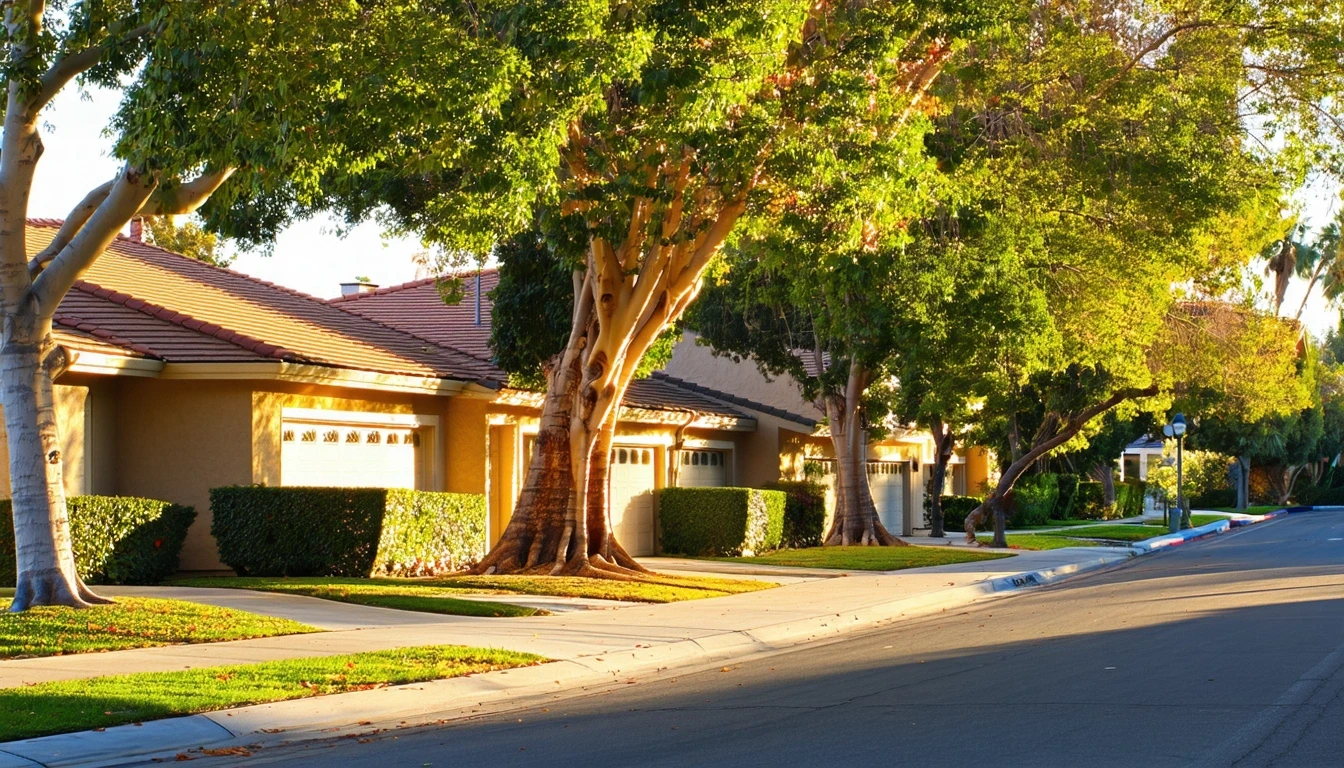
Anaheim’s housing market reflects its position as an established suburban city in Orange County, where proximity to employment centers, entertainment infrastructure, and regional transit creates persistent demand. The $713,600 median home value isn’t an anomaly—it’s the result of decades of constrained supply meeting steady population pressure. This isn’t a speculative market or a resort town inflating prices seasonally. It’s a working city where people need to live close to jobs, schools, and family networks, and where housing stock hasn’t kept pace with that need.
What newcomers often misunderstand is that Anaheim’s housing market isn’t uniform. The city contains walkable pockets with substantial pedestrian infrastructure and rail access, alongside car-oriented corridors where mobility depends entirely on vehicle ownership. This creates variation in how housing costs interact with transportation expenses. A home near a rail station or within a neighborhood where errands are broadly accessible reduces the friction of daily logistics, which indirectly affects the total cost of living even if the home price itself is higher.
The rental market operates under similar pressure. At $1,958 per month for median gross rent, Anaheim sits in a range where renters face significant monthly obligations without the equity-building component of ownership. But renting also avoids the capital requirements and long-term maintenance exposure that come with buying. For households without substantial savings or stable income trajectories, renting remains the only viable entry point, even at these levels.
Renting in Anaheim
Renting in Anaheim means navigating a market where demand is steady and supply is limited. The $1,958 median gross rent reflects a market that doesn’t offer much slack. Vacancy rates in Orange County tend to stay low, which gives landlords pricing power and reduces tenant leverage during renewals. Rent increases aren’t guaranteed, but they’re common enough that renters should expect upward pressure over time, especially in neighborhoods with strong access to transit, schools, or commercial corridors.
Location within Anaheim significantly affects rental experience. Neighborhoods with high food and grocery density, integrated park access, and proximity to rail transit tend to command higher rents, but they also reduce household dependence on driving for every errand. For renters without reliable vehicles or those trying to minimize transportation costs, paying more for a well-located apartment can lower total monthly exposure. Conversely, cheaper rentals in car-oriented areas often come with hidden costs: longer commutes, higher fuel expenses, and more time spent managing logistics.
Renters also avoid several categories of cost that owners absorb: property taxes, homeowners insurance, major repairs, and the unpredictability of systems failing (HVAC, water heaters, roofs). In Anaheim’s Mediterranean climate, cooling costs dominate summer utility bills, but renters in apartments often benefit from shared-wall insulation and smaller square footage, which moderates electricity usage compared to detached homes. The tradeoff is lack of control—renters can’t upgrade windows, install efficient HVAC, or make structural changes that would lower long-term costs.
For households prioritizing flexibility, income uncertainty, or short timelines, renting remains the rational choice despite the high monthly cost. It’s expensive, but it’s predictable, and it doesn’t require tens of thousands of dollars in upfront capital or exposure to the maintenance and tax obligations that define ownership.
Owning a Home in Anaheim
Ownership in Anaheim begins with the $713,600 median home value, but that figure is only the entry price. Once you own, the cost structure shifts from a single monthly rent payment to a web of obligations: mortgage principal and interest, property taxes, homeowners insurance, maintenance, utilities, and potentially HOA dues. These costs don’t all arrive on the same schedule, and they don’t all behave predictably.
Property taxes in California operate under Proposition 13, which caps assessed value increases at 2% per year as long as ownership doesn’t change. This creates long-term predictability for owners who stay in place, but it also means that new buyers pay taxes based on current purchase prices, which are significantly higher than what long-term residents pay. For a home purchased at $713,600, property taxes will reflect that valuation, and while the rate of increase is capped, the base is high.
Homeowners insurance in Anaheim isn’t subject to the same catastrophic risk premiums seen in wildfire zones or coastal flood areas, but it’s not negligible either. The cost depends on home age, construction type, and coverage limits. Older homes with outdated electrical or plumbing systems face higher premiums and more frequent claims, which can trigger non-renewal or rate increases. Even in the absence of claims, insurance costs tend to drift upward over time, and owners have limited ability to control this.
Maintenance is where ownership costs become most variable. Anaheim’s housing stock includes both mid-century homes and newer developments, and the age of the home directly determines maintenance exposure. Older homes require more frequent intervention: roof replacements, HVAC overhauls, water heater failures, and plumbing repairs. These aren’t monthly costs, but they’re inevitable, and they arrive in lumps. A roof replacement can cost tens of thousands of dollars, and it’s not optional. Newer homes delay some of these expenses, but they often come with HOA dues that bundle landscaping, exterior maintenance, and amenity access into a mandatory monthly fee.
Utilities in owned homes are almost always higher than in apartments. Detached single-family homes have more exterior surface area, less shared-wall insulation, and larger interior volumes to heat and cool. In Anaheim’s climate, where summers bring extended heat and winters are mild, cooling costs dominate. At 33.60¢ per kWh, electricity isn’t cheap, and a poorly insulated home or an aging HVAC system can push summer bills into uncomfortable territory. Owners have the ability to invest in efficiency upgrades—better insulation, modern HVAC, smart thermostats—but those improvements require upfront capital and years to pay off.
The advantage of ownership isn’t cost reduction—it’s control and equity. Owners can renovate, upgrade, and optimize their homes in ways renters cannot. They build equity as the mortgage principal is paid down, and they benefit from long-term appreciation if the market continues to rise. But these benefits come with exposure to volatility, maintenance unpredictability, and the reality that housing costs don’t stop at the mortgage.
Apartment vs House in Anaheim — Cost Behavior Comparison
| Expense Category | Apartment | House |
|---|---|---|
| Cooling Costs (Summer) | Lower due to smaller square footage and shared-wall insulation | Higher due to larger volume, more exterior surface area, and detached structure |
| Maintenance Responsibility | Landlord covers structural, HVAC, and appliance failures | Owner absorbs all repair and replacement costs, often in unpredictable lumps |
| Parking and Storage | Often limited or assigned; may incur separate fees | Typically includes garage or driveway; more flexibility for vehicles and storage |
| Outdoor Maintenance | None; landscaping and exterior upkeep handled by property management | Owner responsible for yard care, irrigation, and exterior repairs; varies by HOA presence |
Why these categories matter in Anaheim: The differences shown reflect Anaheim’s Mediterranean climate (cooling dominates utility exposure), the prevalence of detached single-family homes versus multi-family rentals, and the variation in housing age and HOA governance across neighborhoods. Categories like heating costs, snow removal, and flood insurance were excluded because they don’t meaningfully differ or apply in this market.
Utilities & Upkeep Differences
Utility exposure in Anaheim is driven primarily by cooling demand. The city experiences long, hot summers where daytime temperatures regularly push into the 80s and 90s, and older homes without modern insulation or efficient HVAC systems see electricity bills spike accordingly. At 33.60¢ per kWh, running air conditioning for extended periods isn’t trivial. Apartments, with their smaller square footage and shared walls, moderate this exposure. Houses, especially older detached homes, face higher costs unless owners have invested in insulation upgrades, reflective roofing, or modern cooling systems.
Natural gas, priced at $21.94 per MCF, plays a smaller role in Anaheim than in colder climates. Heating demand is minimal, and gas is used primarily for water heating and cooking. This reduces the seasonal volatility seen in cities with harsh winters, but it also means that electricity is the dominant utility cost and the one most sensitive to household behavior and home efficiency.
Upkeep differences between apartments and houses are structural, not incidental. Apartment dwellers don’t replace roofs, repaint exteriors, or repair irrigation systems. House owners do, and the timing of these expenses is unpredictable. An HVAC system might last 15 years or fail at 10. A water heater might give warning or flood a garage overnight. The age of Anaheim’s housing stock—much of it built in the 1950s through 1980s—means that many homes are at or past the point where major systems need replacement. Newer developments delay this exposure but often come with HOA dues that shift some maintenance costs into a predictable monthly fee.
The tradeoff is control. House owners can choose when to upgrade, what materials to use, and how much to spend. Renters can’t, but they also don’t carry the financial risk when something breaks.
Rent vs Buy: Long-Term Exposure in Anaheim
The decision between renting and buying in Anaheim isn’t primarily about monthly cost—it’s about exposure, control, and time horizon. Renting offers predictability within the lease term and flexibility to move without transaction costs. Buying offers equity accumulation and long-term cost stability, but it requires capital, absorbs maintenance risk, and locks households into a specific location and cost structure.
Renters face the risk of rent increases over time, especially in a market where demand remains strong and supply is constrained. California’s statewide rent control laws cap annual increases at 5% plus inflation for buildings over 15 years old, but that still allows for meaningful upward drift. Over a decade, even modest annual increases compound into significantly higher monthly obligations. Renters also remain exposed to landlord decisions: non-renewal, property sales, or conversion to condos.
Owners face different risks. Property taxes rise over time, though Proposition 13 caps the rate of increase for existing owners. Insurance costs tend to drift upward, and maintenance expenses arrive in unpredictable waves. A roof replacement, HVAC failure, or plumbing emergency can require five-figure outlays with little warning. Owners also absorb the risk of market downturns—if home values decline, equity evaporates, and selling becomes financially painful.
The advantage of ownership is that the largest component of the monthly cost—the mortgage principal—eventually disappears. A 30-year mortgage paid in full eliminates that obligation entirely, leaving only taxes, insurance, utilities, and maintenance. For households planning to stay in Anaheim long-term, this creates a path to lower housing costs in later years. Renters never escape the monthly payment, and it’s likely to be higher in year 20 than in year one.
But ownership only makes sense if the household can sustain the upfront costs, absorb maintenance volatility, and commit to staying long enough for equity and principal paydown to offset transaction costs. For households with uncertain income, short timelines, or limited savings, renting remains the safer choice despite its long-term cost trajectory.
FAQs About Housing Costs in Anaheim
Is it cheaper to rent or buy in Anaheim?
Neither option is cheap. Renting at $1,958 per month avoids upfront capital and maintenance risk but offers no equity. Buying at a $713,600 median home value requires significant savings and exposes owners to property taxes, insurance, and maintenance costs that extend well beyond the mortgage. The answer depends on timeline, capital availability, and risk tolerance, not monthly cost alone.
How much do utilities cost for a house in Anaheim?
Electricity is the primary driver, especially in summer. At 33.60¢ per kWh, cooling a detached home during extended heat can push bills significantly higher than in an apartment. Natural gas at $21.94 per MCF is used mainly for water heating and cooking, so it’s a smaller factor. Older homes with poor insulation or aging HVAC systems face higher exposure.
Do most homes in Anaheim have HOA fees?
HOA prevalence varies by neighborhood and housing type. Newer developments, townhomes, and condos are more likely to have mandatory HOA dues, which cover exterior maintenance, landscaping, and shared amenities. Older single-family detached homes typically don’t have HOAs, but that means owners absorb all maintenance responsibilities directly.
How does Anaheim’s housing market compare to nearby cities?
Anaheim sits in the middle of Orange County’s cost spectrum—less expensive than coastal cities but more expensive than inland alternatives. The $713,600 median home value reflects proximity to employment centers, transit access, and established neighborhoods. Renters and buyers looking for lower costs often move farther inland, but that typically increases commute time and reduces access to transit and walkable amenities.
What hidden costs do first-time buyers miss in Anaheim?
Property taxes based on purchase price, not long-term resident rates. Homeowners insurance that rises over time. Maintenance costs that arrive in lumps, not monthly installments. Utility bills that are higher in detached homes than apartments. And the reality that closing costs, repairs, and upgrades require cash reserves beyond the down payment.
Making Housing Choices in Anaheim
Housing costs in Anaheim don’t offer an easy path. Renting is expensive and offers no equity. Buying requires substantial capital and exposes households to maintenance volatility, tax obligations, and long-term commitment. The right choice depends on whether your household can sustain the upfront and ongoing costs of ownership, whether you plan to stay long enough for equity to matter, and whether you value control and stability over flexibility.
Anaheim’s infrastructure—walkable pockets, rail access, broadly accessible errands, and integrated green space—creates variation in how housing costs interact with transportation and daily logistics. A home near transit or within a neighborhood where errands don’t require driving reduces total cost of living even if the home price is higher. For families, the strong presence of schools and playgrounds signals established neighborhoods where ownership may offer long-term stability.
The hidden costs of ownership—taxes, insurance, maintenance, utilities—aren’t optional, and they don’t stop when the mortgage is paid off. But they also don’t erase the benefits of equity, control, and long-term cost predictability. For households with the capital and timeline to sustain ownership, Anaheim offers a market where housing is expensive but functional. For those without, renting remains the only realistic option, and what a budget has to handle in Anaheim extends well beyond the rent check.
If you’re planning a move to Anaheim, understanding the full cost structure of housing—not just the headline rent or home price—is the first step toward making a sustainable decision.