
What does it actually feel like to live in Allen? Not the glossy version from a relocation guide, but the daily emotional texture—the things that make people feel at home here, and the things that quietly wear on them. Allen sits in the Dallas-Fort Worth metro with a polished suburban identity, high household incomes, and a reputation for being family-friendly and well-kept. But sentiment isn’t about reputation. It’s about whether the place matches what you need it to be.
This article translates the emotional patterns that show up again and again in public discussion: what tends to delight, what tends to disappoint, and who tends to feel aligned with Allen’s particular tradeoffs.
Overall City Sentiment
Allen tends to work beautifully for people who want a clean, organized suburban base with strong access to groceries, parks, and outdoor space—and who don’t mind driving to Dallas for work or nightlife. The city offers walkable pockets and notable cycling infrastructure, which surprises some newcomers expecting pure car dependency. Food and grocery density exceeds high thresholds, and park access is integrated throughout the city, supported by water features that add to the outdoor appeal.
But there’s a tension here. Allen’s family infrastructure—schools and playgrounds—registers as limited relative to the city’s size and income profile, which frustrates some households who moved here specifically for family-oriented density. The city feels planned and polished, but that also means it lacks the organic texture, spontaneity, and neighborhood variety that some residents crave. People who thrive here tend to value predictability, convenience, and access to nature. People who feel restless often describe missing walkable urbanism, nightlife, or a sense of “realness.”
The income baseline is high—median household income sits at $121,259 per year—which shapes expectations. Residents tend to compare Allen not to scrappier suburbs, but to other polished, high-performing communities in the metro. That raises the bar for what feels “good enough.”
Social Media Buzz in Allen
On platforms like Facebook neighborhood groups, Reddit threads, and X (formerly Twitter), Allen’s discussion tends to center on a few recurring themes: pride in parks and trails, frustration with traffic and commute times, debates about growth and development, and a protective tone around the city’s identity.
The emotional range is wide. Some residents express deep satisfaction: “This is exactly what we wanted—safe, clean, great for weekend bike rides, and close enough to Dallas when we need it.” Others feel the limitations more acutely: “It’s nice, but it’s also kind of boring. Everything closes early, and there’s not much to do unless you drive somewhere else.”
Growth is a flashpoint. As new development arrives, some residents worry about losing the small-town feel, while others welcome the amenities and diversity that come with it. The tone is rarely angry, but it’s often wistful: “I love what Allen used to be. I’m not sure I love what it’s becoming.”
There’s also a recurring thread about commute fatigue. With an average commute time of 30 minutes and only 7.7% of workers working from home, many residents spend significant time on the road. That daily grind shapes how people feel about the city’s otherwise strong quality-of-life features.
Local News Tone
Local coverage of Allen tends to frame the city through the lens of growth, infrastructure expansion, and community identity. The tone is generally positive but not uncritical—there’s an ongoing conversation about what kind of place Allen wants to be as it continues to grow.
Simulated headline-style themes that capture the recurring discussion include:
- “Community Debates What Growth Should Look Like”
- “New Retail and Dining Options Arrive as Town Evolves”
- “Residents Weigh Convenience Against Quiet Suburban Character”
- “Parks and Trails Expansion Continues Across City”
- “Traffic and Commute Times Remain Top Concern for Locals”
The framing reflects a city in transition—no longer a sleepy suburb, not quite an urban center, and figuring out its identity in real time. That ambiguity shows up in sentiment: some people feel excited by the momentum, while others feel uneasy about losing what made Allen feel distinct.
Review-Based Public Perception
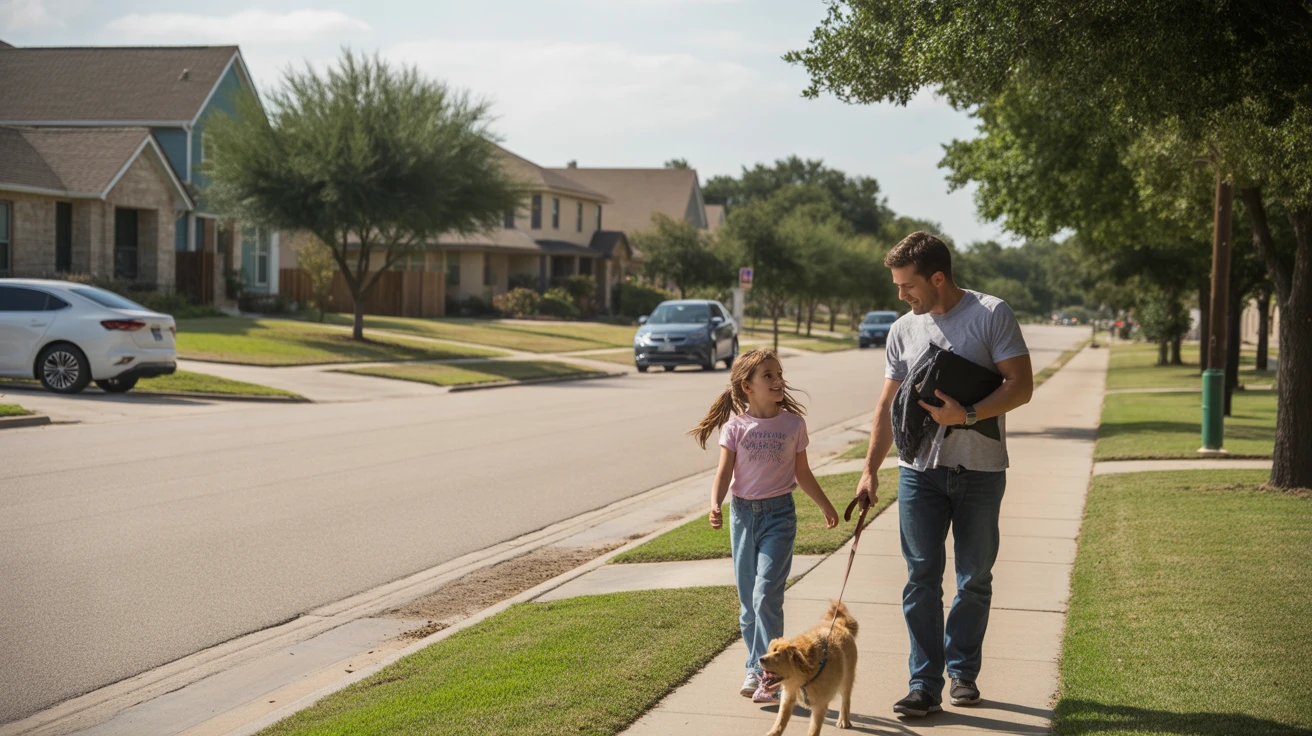
On platforms like Google Reviews, Yelp, and Nextdoor-style forums, Allen’s public perception splits along expectation lines. People who wanted suburban comfort, safety, and access to amenities tend to leave glowing reviews. People who wanted walkable urbanism, nightlife, or neighborhood texture tend to feel let down.
Praise often centers on parks, trails, grocery access, and the general sense of order. “Everything is clean and well-maintained. The parks are fantastic, and I never have trouble finding what I need.” The city’s integrated green space access and high food density show up in everyday satisfaction—errands feel manageable, and outdoor recreation is woven into daily life.
Criticism tends to focus on sameness, limited family infrastructure despite the family-friendly reputation, and the need to leave town for entertainment. “It’s fine, but it all looks the same. There’s no real downtown, no walkable main street, and not much personality.” Some families express surprise that school and playground density doesn’t match the city’s income level or reputation.
Newer planned areas tend to receive more praise for modern amenities and cohesive design, while older pockets are described as quieter and more established but less polished. The city’s mixed building height character and land-use mix create some variety, but not enough to satisfy residents looking for true urban texture.
Comparison to Nearby Cities
| Dimension | Allen | Plano | McKinney |
|---|---|---|---|
| Overall Vibe | Polished suburban with walkable pockets | Corporate, diverse, more urban feel | Historic charm, slower pace, small-town pride |
| Walkability | Notable in pockets, not citywide | Stronger in central areas | Strong in historic downtown, limited elsewhere |
| Nightlife & Dining | Limited, requires driving | More variety, denser restaurant scene | Concentrated downtown, quieter overall |
| Family Feel | Reputation strong, infrastructure mixed | Dense schools and activities | Tight-knit, slower growth |
| Parks & Outdoors | Integrated, high density | Strong but more spread out | Charming, nature-forward |
Allen sits between Plano’s urban density and McKinney’s small-town charm. If you want more walkable urbanism, dining variety, and corporate job proximity, Plano may feel like a better fit. If you want historic character, slower growth, and a tighter community feel, McKinney might align better. Allen works well for people who want suburban polish with strong parks and grocery access, but who don’t need dense walkability or a vibrant nightlife scene. It’s a place that rewards people who are comfortable driving for work and entertainment, but who want their home base to feel organized, green, and convenient for daily errands.
What Locals Are Saying
Here’s how different kinds of residents tend to describe their experience in Allen:
“We moved here from Dallas for the schools and parks, and the parks are incredible. But honestly, the school density isn’t what we expected. We’re driving more than we thought we would.” — Family with young children
“Allen is perfect if you want a quiet, safe base and you’re okay commuting. I work in Dallas, and the drive is manageable. Weekends here are peaceful.” — Young professional, remote worker
“I love the bike trails and the fact that I can walk to the grocery store from my neighborhood. That’s rare in this part of Texas.” — Active retiree
“It’s nice, but it’s also kind of sterile. Everything looks the same, and there’s not much to do at night. We end up going to Plano or Dallas a lot.” — Couple in their 30s
“I’ve been here for 15 years, and it’s changed a lot. It used to feel like a small town. Now it feels like everywhere else.” — Long-time resident
“If you want convenience, safety, and good parks, Allen delivers. If you want character or walkable urbanism, look elsewhere.” — Newcomer from the Northeast
“The commute wears on me, but the quality of life at home makes up for it. I just wish there were more local job options.” — Mid-career professional
Does Allen Feel Like a Good Fit?
Allen tends to work for people who value suburban order, strong access to groceries and parks, and a polished, organized home base—and who are comfortable driving for work, dining, and entertainment. The city offers surprising walkable pockets and notable cycling infrastructure, which adds texture to the suburban experience. Outdoor access is integrated and high-quality, supported by water features and dense park availability.
But Allen tends to frustrate people who expect dense family infrastructure to match the city’s income level and reputation, or who crave walkable urbanism, nightlife, and neighborhood variety. The city feels planned and predictable, which is exactly what some people want—and exactly what others find limiting.
If you’re trying to decide whether Allen aligns with your needs, consider exploring Renting vs Buying in Allen: The Real Tradeoffs to understand housing pressure and affordability dynamics, or Your Monthly Budget in Allen: Where It Breaks to see how the city’s cost structure shapes day-to-day life. And if you’re weighing lifestyle factors beyond sentiment, What Makes Life Feel Tight in Allen digs into the quality-of-life tradeoffs that matter most.
Allen’s emotional profile is clear: it rewards people who want convenience, safety, and green space, and who don’t mind trading urban texture for suburban polish. If that sounds like alignment, the city delivers. If it sounds like compromise, the friction will show up quickly.
How this article was built: In addition to public economic data, this article incorporates location-based experiential signals derived from anonymized geographic patterns—such as access density, walkability, and land-use mix—to reflect how day-to-day living actually feels in Allen, TX.
The perspectives shown reflect commonly expressed local sentiment and recurring themes in public discussion, rather than individual accounts.