
‘We moved to Alexandria for the schools, but stayed for the neighbors.’
That’s the kind of thing you hear often in Alexandria, VA—a city where the initial draw might be practical, but the emotional attachment runs deeper. Nestled along the Potomac River just outside Washington, DC, Alexandria occupies a rare middle ground: it offers walkable streets, historic architecture, and a genuine sense of place, yet it’s woven tightly into the fabric of the nation’s capital. For some, that combination feels like winning the lottery. For others, it’s a tradeoff that never quite settles.
Understanding whether Alexandria feels like home depends less on what the city has and more on what you’re willing to give up to get it. The vibe here isn’t neutral—it’s shaped by proximity, cost, and a community that takes its identity seriously.
What It Feels Like to Live Here
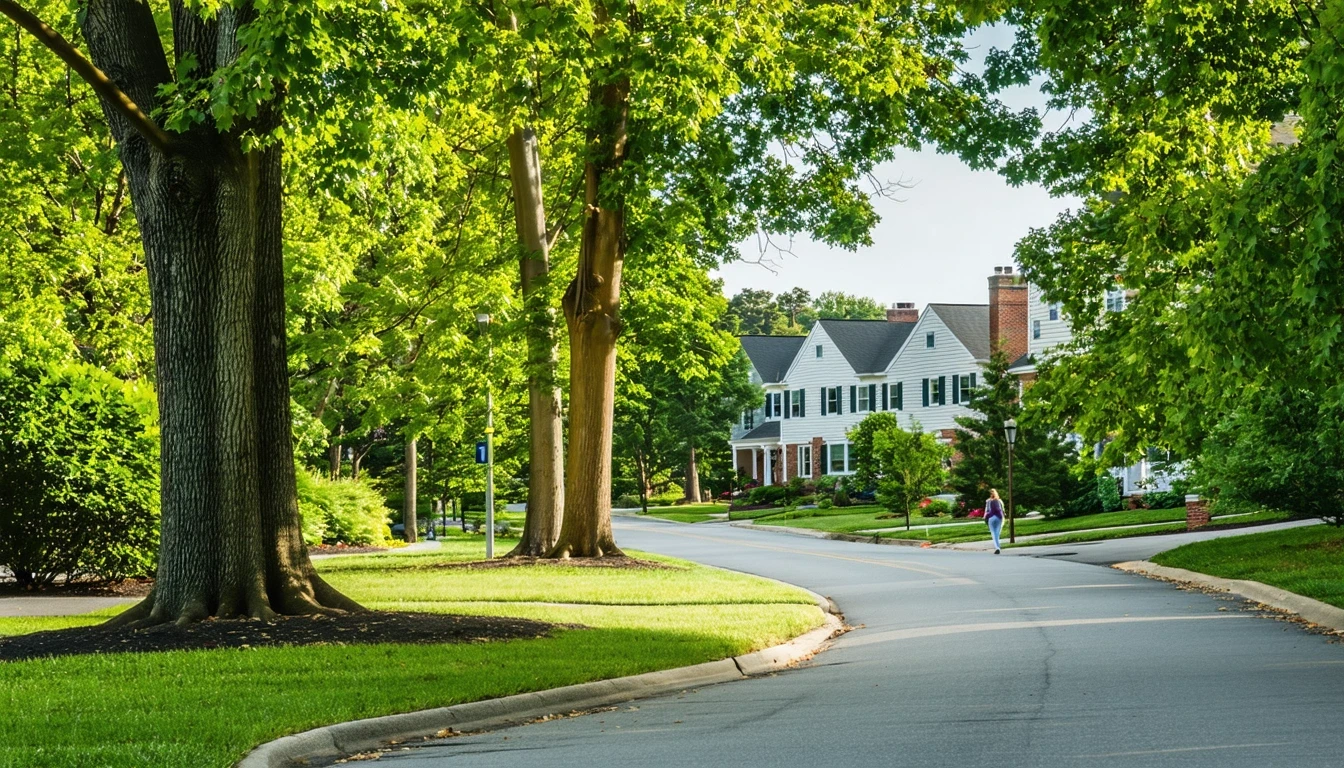
Alexandria tends to attract people who want the texture of city life without fully committing to urban intensity. The streets are lined with brick sidewalks, row houses with shutters, and corner cafes that feel like they’ve been there forever (even if they opened last year). There’s a palpable sense of civic pride—residents show up to planning meetings, debate historic preservation, and argue passionately about what belongs in Old Town versus what belongs somewhere else.
But that pride comes with pressure. Housing tradeoffs are steep, and the cost of entry creates a selection effect: many people here are professionals, dual-income families, or empty nesters who’ve traded space or newness for location and character. The result is a community that skews educated, engaged, and opinionated—which can feel vibrant or exhausting depending on your tolerance for HOA emails and neighborhood Listservs.
People who thrive here tend to value access over isolation. The rail line into DC, the bike lanes threading through residential streets, the grocery stores and parks within walking distance—these aren’t just conveniences, they’re part of the identity. You can live here without a car, or at least imagine doing so, which is rare for a place that still feels suburban in scale.
People who struggle here often cite the cost, the parking, or the sense that Alexandria is caught between two worlds: not quite a small town, not quite a city, and expensive enough that it feels like it should be more of one or the other.
Social Media Buzz in Alexandria
Online, Alexandria’s local discussion tends to circle around a few recurring themes: development, traffic, schools, and what counts as “authentic” Old Town versus tourist trap. The tone is rarely indifferent—people care deeply about what happens here, and that care can read as either community investment or territorial protectiveness depending on the thread.
On platforms like Reddit and Facebook groups, you’ll see posts celebrating farmers market finds, lamenting parking tickets, debating whether new apartment buildings belong near historic districts, and sharing recommendations for everything from dog groomers to HVAC contractors. There’s a strong undercurrent of mutual aid—people genuinely try to help each other navigate the quirks of living here.
But there’s also frustration. “I love this city, but I’m not sure I can afford to stay here,” is a sentiment that surfaces often, especially among younger residents or single-income households. “It’s beautiful, but it’s not worth what they’re charging,” is another. And then there’s the flip side: “If you want cheap, move to the exurbs—this is what proximity costs.”
The discussion around schools and family life tends to be intensely positive, with parents praising the infrastructure, the parks, and the sense that kids can actually walk or bike places. But even that comes with caveats: “Great for families who can afford it,” as one composite sentiment puts it.
Local News Tone
Local coverage in Alexandria tends to frame the city through the lens of growth, preservation, and identity. The stories aren’t about dramatic upheaval—they’re about incremental change and the community’s ongoing negotiation with itself about what Alexandria should become.
You’ll see recurring headline-style themes like:
- “Community Debates What Growth Should Look Like”
- “Historic District Faces Pressure from New Development”
- “Residents Weigh Walkability Gains Against Parking Loss”
- “Schools and Parks Draw Families Despite Rising Costs”
- “Old Town Identity Evolves as Newcomers Arrive”
The tone is rarely alarmist, but it’s not cheerleading either. There’s a sense that Alexandria is in transition—not crisis, not boom, but a slow, contested evolution. The coverage reflects a community that wants to preserve what makes it special while also acknowledging that standing still isn’t an option.
Review-Based Public Perception
On platforms like Google Reviews, Yelp, and Nextdoor, Alexandria’s public perception splits along predictable lines: people who wanted charm, walkability, and access tend to be delighted. People who wanted affordability, parking, or a quieter suburban rhythm tend to be disappointed.
Positive reviews often highlight the walkable errands, the quality of local restaurants and shops, the parks and waterfront access, and the sense of being “close to everything” without living in the middle of it. Families praise the schools and playgrounds. Empty nesters appreciate the ability to downsize without giving up urban amenities. Remote workers love the cafes and the fact that they don’t need to commute but can when they want to.
Complaints tend to focus on cost, parking scarcity, and the feeling that Alexandria has become a victim of its own success. “It’s lovely, but it’s not realistic for normal people anymore,” is a recurring theme. Others mention that newer developments feel generic, that traffic into DC is still brutal during peak hours, and that the city’s charm is increasingly reserved for those who can afford Old Town or the more established neighborhoods.
There’s also a divide between older pockets with tree-lined streets and newer planned areas that feel more like anywhere-suburbia. People who live in the latter sometimes express a sense of missing out on the “real” Alexandria, even though they’re technically within city limits.
Comparison to Nearby Cities
| Aspect | Alexandria, VA | Arlington, VA | Fairfax, VA |
|---|---|---|---|
| Overall Vibe | Historic charm meets walkable urbanism | Urban-suburban hybrid, transit-first | Traditional suburb, family-focused |
| Walkability | Strong in core areas, pockets elsewhere | Very strong near Metro corridors | Limited, car-dependent in most areas |
| Community Feel | Civic-minded, preservation-focused | Transient, professional, fast-paced | Stable, school-centered, quieter |
| Cost Pressure | High, especially for character homes | Very high, driven by transit access | Moderate to high, more space for the dollar |
| Transit Access | Rail present, bike-friendly | Extensive Metro, highly connected | Limited rail, more car-oriented |
If you’re choosing between Alexandria and Arlington, the decision often comes down to whether you want a place that feels like a city or a place that feels like a neighborhood. Arlington offers more transit density and a faster pace, but it can feel anonymous. Alexandria offers more character and a stronger sense of local identity, but it’s also more expensive for comparable space and can feel insular.
Fairfax, by contrast, offers a more traditional suburban experience—more space, quieter streets, strong schools—but you give up walkability and transit access. If you’re willing to drive everywhere and want a yard, Fairfax makes sense. If you want to walk to dinner or take the train into DC, Alexandria is the better fit.
None of these cities is objectively “better.” They’re different tools for different lifestyles. Alexandria works best for people who want proximity, texture, and civic engagement, and who are willing to pay a premium for it.
What Locals Are Saying
“I can walk my kid to school, grab coffee, and be on the Metro in 20 minutes. That’s worth every penny we’re paying in rent.”
— Young parent, Old Town
“It’s beautiful, and I love the history, but I’m not sure how much longer we can justify the cost. We’re looking at townhouses in Fairfax now.”
— Dual-income couple, mid-30s
“I moved here after retiring from federal service. I wanted walkability without the noise of the city, and Alexandria delivers. The waterfront is a gift.”
— Retiree, Del Ray
“The schools are great, the parks are great, but parking is a nightmare and everything feels like it’s designed for people who don’t have to worry about money.”
— Single parent, West End
“I work remotely and I’ve never felt more connected to a place. The cafes, the library, the farmer’s market—it’s all here, and I don’t need a car for any of it.”
— Remote worker, Rosemont
“It’s not the quiet suburb I thought it would be. There’s always construction, always traffic, always something. But the community is real, and that counts for a lot.”
— Long-time resident, Seminary Hill
“We chose Alexandria because we wanted our kids to grow up somewhere they could bike to their friends’ houses. That’s harder to find than you’d think.”
— Family of four, Beverley Hills
Does Alexandria Feel Like a Good Fit?
Alexandria doesn’t try to be all things to all people, and that clarity is part of its appeal. It works best for households that value access, character, and community engagement over affordability or spaciousness. It’s a place where you can walk to the grocery store, take the train to work, and still have a yard—but you’ll pay for that combination, and you’ll navigate the tension between preservation and growth every time a new development gets proposed.
If you’re a professional who wants to live near DC without living in DC, if you’re a family that prioritizes schools and walkability, or if you’re an empty nester who wants urban texture without urban intensity, Alexandria tends to feel like a fit. If you’re budget-conscious, car-dependent, or looking for a quiet, low-key suburban experience, the friction will show up quickly.
The city’s vibe isn’t neutral—it’s opinionated, engaged, and expensive. But for people who align with what it offers, that’s exactly the point. If you’re still weighing whether Alexandria works for your situation, it’s worth exploring where your money would actually go and what quality of life looks like in practice.
How this article was built: In addition to public economic data, this article incorporates location-based experiential signals derived from anonymized geographic patterns—such as access density, walkability, and land-use mix—to reflect how day-to-day living actually feels in Alexandria, VA.
The perspectives shown reflect commonly expressed local sentiment and recurring themes in public discussion, rather than individual accounts.