
It’s Sunday afternoon in Alexandria, and you’re mapping out the week’s meals. Chicken stir-fry Monday, tacos Wednesday, a sheet-pan dinner Friday. You know what you need: a pound of chicken, ground beef, rice, eggs, maybe some cheese. But before you head out, there’s a decision to make—do you drive to the discount grocer near the highway, stop at the mid-tier chain closer to home, or swing by the upscale market on your usual route? That choice, repeated week after week, shapes how grocery costs actually feel in Alexandria. It’s not just about the price of a gallon of milk; it’s about which store you choose, how far you’re willing to go, and whether your household has the time and flexibility to comparison shop. For families on tight budgets, that decision carries weight. For higher earners, it’s a matter of convenience. Either way, understanding how grocery prices work here—and who feels the pressure most—helps you plan smarter and spend with more confidence.
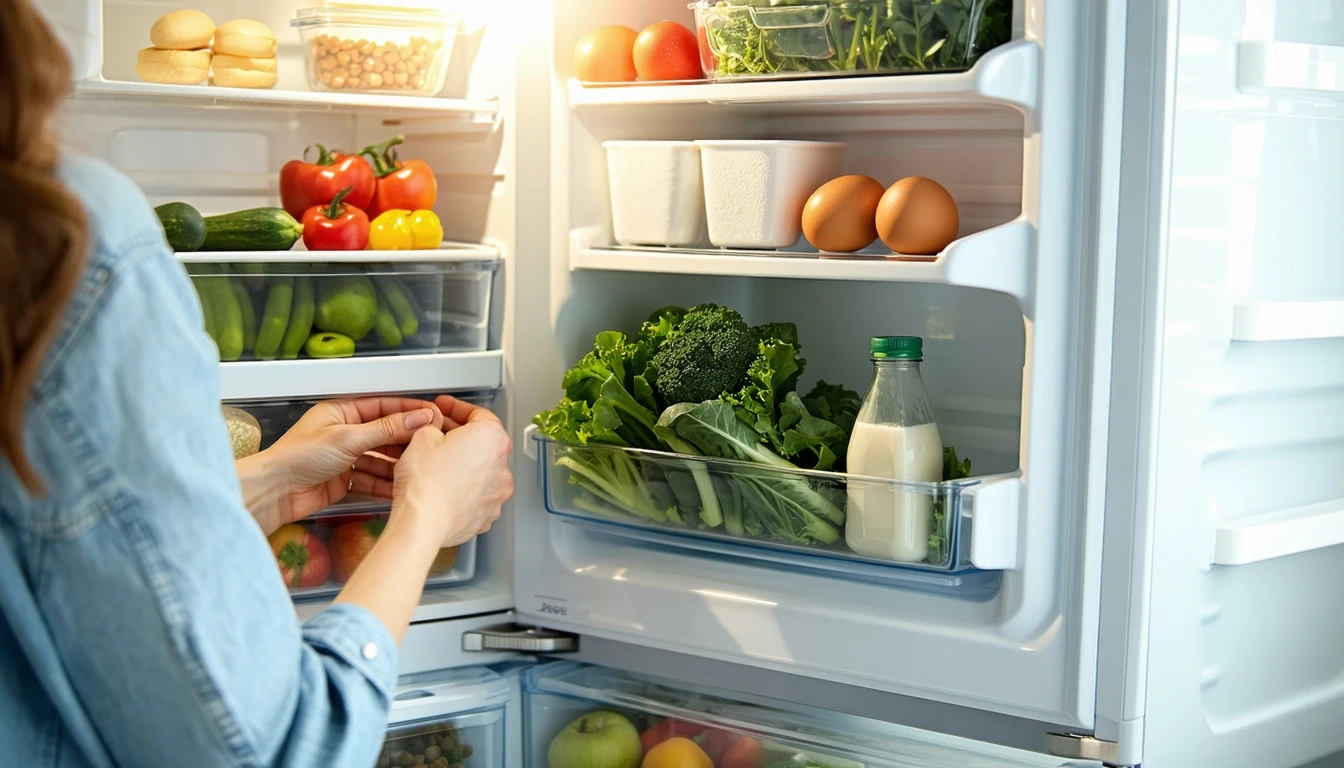
How Grocery Costs Feel in Alexandria
Grocery shopping in Alexandria sits in a somewhat favorable position compared to many other metro suburbs. The city’s regional price parity index of 97—slightly below the national baseline—suggests that the broader cost environment here runs a bit more affordable than the U.S. average. That modest advantage doesn’t guarantee low grocery bills, but it does mean that staple food prices tend to track closer to or slightly below what you’d see in higher-cost metros. For households earning near or above Alexandria’s median income of $113,179 per year, grocery costs rarely dominate the budget. But for single earners, retirees on fixed incomes, or larger families stretching each paycheck, even small differences in per-pound prices add up quickly. The pressure isn’t uniform—it’s household-specific, and it hinges on income, family size, and how intentionally you shop.
What makes Alexandria distinct is the density and accessibility of its grocery infrastructure. Food and grocery establishments here exceed typical suburban thresholds, and many neighborhoods support walking or short drives to multiple store options. That means comparison shopping isn’t just possible—it’s practical. You’re not locked into a single store by distance or time. Households that can afford to be flexible often rotate between discount chains for pantry staples, mid-tier grocers for produce and dairy, and premium markets for specialty items. Those who can’t afford that flexibility—whether due to time, transportation, or budget constraints—feel grocery costs more acutely, because every trip has to count and every item has to fit within a narrow margin.
The result is a grocery landscape where price pressure is real but manageable for most, and where store choice becomes one of the most effective levers households have to control food spending. Understanding that dynamic is the first step toward making grocery costs work in your favor, rather than feeling like they’re working against you.
Grocery Price Signals (Illustrative)
These prices illustrate how staple items tend to compare locally—not a full shopping list. They’re derived estimates based on national baselines adjusted by regional price parity, and they reflect typical pricing patterns rather than store-specific or week-specific snapshots. Use them as reference points for understanding relative cost positioning, not as guarantees of what you’ll see at checkout.
| Item | Price |
|---|---|
| Bread (per pound) | $1.78/lb |
| Cheese (per pound) | $4.59/lb |
| Chicken (per pound) | $1.96/lb |
| Eggs (per dozen) | $2.63/dozen |
| Ground beef (per pound) | $6.49/lb |
| Milk (per half-gallon) | $3.93/half-gallon |
| Rice (per pound) | $1.04/lb |
Derived estimate based on national baseline adjusted by regional price parity; not an observed local price.
These figures suggest that protein costs—particularly ground beef—carry the most weight in a typical grocery trip, while pantry staples like rice and bread remain relatively affordable. Eggs and milk sit in the middle, sensitive to seasonal and supply-chain shifts but generally stable. Cheese, often a household staple for families with children, runs higher per pound than chicken, which matters when you’re building meals around multiple servings. The takeaway isn’t that any single item is expensive or cheap in isolation—it’s that the mix of what you buy, and where you buy it, determines whether your grocery spending feels tight or comfortable. Households that lean heavily on ground beef, cheese, and prepared items will feel more pressure than those who build meals around chicken, rice, and eggs. Store choice amplifies that difference.
Store Choice & Price Sensitivity
Grocery price pressure in Alexandria varies significantly by store tier, and understanding that variation is one of the most practical ways to manage food costs. At the discount tier—chains that emphasize private-label products, no-frills layouts, and high inventory turnover—prices on staples like milk, eggs, bread, and canned goods often run noticeably lower than at mid-tier or premium grocers. These stores thrive on volume and efficiency, and they pass some of that savings on to shoppers willing to trade brand selection and store ambiance for lower per-item costs. For households on tight budgets, discount grocers can make the difference between stretching a paycheck and running short before the month ends. The tradeoff is limited selection, fewer organic or specialty options, and sometimes longer checkout lines during peak hours.
Mid-tier grocers—the familiar regional and national chains that dominate suburban shopping centers—offer a broader product mix, more consistent stock, and a shopping experience that balances price and convenience. Prices here tend to track closer to regional averages, and sales cycles create opportunities to stock up on high-use items at temporary discounts. These stores work well for households that value predictability and don’t want to drive to multiple locations. They’re also where most comparison shopping happens: you might buy your pantry staples at a discount chain but fill in produce, dairy, and proteins at a mid-tier grocer closer to home. For dual-income families or busy professionals, the time saved by shopping at a single mid-tier location often outweighs the modest per-item savings available elsewhere.
Premium grocers—often organic-focused, locally sourced, or specialty-oriented—charge higher prices across nearly every category, but they attract households that prioritize quality, variety, or dietary preferences over cost minimization. A pound of organic chicken or grass-fed ground beef at a premium grocer can run significantly more than conventional equivalents at a discount chain, and produce, dairy, and prepared foods follow the same pattern. For high-income households, the premium is worth it for the convenience, product quality, or alignment with personal values. For budget-conscious families, premium grocers are occasional stops for specific items, not weekly destinations. The key insight is that Alexandria’s grocery infrastructure supports all three tiers within close proximity for many residents, which means store choice isn’t just theoretical—it’s a real, actionable lever that households can pull to control costs without sacrificing access or quality entirely.
What Drives Grocery Pressure Here
Income plays the most direct role in determining whether grocery costs feel manageable or stressful. Alexandria’s median household income of $113,179 creates a local market where premium grocers can thrive, but it also means that households earning significantly below that median—single parents, service workers, retirees on Social Security—experience grocery shopping as a high-stakes budget exercise. When your household brings in $40,000 or $50,000 annually, every pound of ground beef and every carton of eggs carries weight. You’re not just deciding what to eat; you’re deciding what you can afford to eat, and whether this week’s grocery trip leaves enough room for utilities, gas, and rent. Higher-income households, by contrast, rarely face that calculus. They might notice when milk prices spike or when their favorite cheese costs more than usual, but those fluctuations don’t force difficult tradeoffs.
Household size amplifies grocery pressure in predictable ways. A single adult or couple without children can absorb price increases more easily than a family of four or five. Larger families consume more of everything—more milk, more eggs, more chicken, more bread—and those quantities multiply the impact of even modest per-item price differences. A $0.50 increase in the price of a gallon of milk might not register for a single person who buys one gallon every two weeks, but for a family buying three gallons a week, that same increase adds up quickly. Store choice becomes even more critical for larger households, because the savings from shopping at a discount grocer scale with volume. A family that switches from a mid-tier chain to a discount grocer for pantry staples might save enough over a month to cover an extra meal or two, which matters when you’re feeding multiple people on a fixed budget.
Regional distribution and access patterns also shape how grocery costs feel. Alexandria’s food infrastructure is broadly accessible, with high grocery density and walkable access in many neighborhoods. That reduces the friction of comparison shopping and makes it easier for households to rotate between stores based on sales, proximity, or product needs. In suburbs where grocery stores are sparse or require long drives, households often default to the nearest option regardless of price, which limits their ability to manage costs through store choice. Here, that constraint is less binding. The result is a grocery environment where price pressure exists but isn’t insurmountable, and where households that invest time in planning and comparison shopping can meaningfully reduce their food spending without sacrificing quality or variety.
Practical Ways People Manage Grocery Costs
One of the most effective strategies for controlling grocery spending is planning meals around what’s already on sale or in season, rather than building a shopping list first and then hoping prices align. Households that check weekly circulars or store apps before planning meals can often structure their week around discounted proteins, produce, and pantry staples, which reduces per-meal costs without requiring dramatic changes to eating habits. This approach works especially well for families with flexible meal preferences—if chicken thighs are on sale this week instead of breasts, you adjust the recipe rather than paying full price for the exact cut you had in mind. It requires a bit more upfront effort, but the payoff is lower bills and less food waste, because you’re buying what’s priced to move rather than what might sit unused in the fridge.
Buying in bulk for high-use items—rice, pasta, canned goods, frozen vegetables—also helps smooth out grocery costs over time, especially for larger households. Bulk purchasing reduces the per-unit cost of staples and cuts down on the frequency of trips, which saves both money and time. The tradeoff is upfront cost and storage space: you need enough cash flow to buy a 20-pound bag of rice instead of a 2-pound bag, and you need somewhere to keep it. For households living paycheck to paycheck, that upfront cost can be prohibitive, even when the long-term savings are clear. For those with a bit more financial cushion, bulk buying becomes a straightforward way to lower the effective cost of meals without changing what you eat.
Store rotation—shopping at a discount grocer for pantry staples and a mid-tier chain for perishables—gives households more control over where their grocery dollars go. It’s not about extreme couponing or driving across town to save $0.30 on a box of cereal; it’s about recognizing that not all items need to come from the same store, and that a 15-minute detour to a discount chain can reduce your monthly grocery spending without requiring you to give up the foods your family actually eats. This strategy works best in Alexandria because the density of grocery options makes multi-store shopping practical rather than burdensome. Households that treat store choice as a flexible tool, rather than a fixed habit, tend to feel less pressure from grocery costs over time, because they’re actively managing the tradeoff between convenience and price rather than passively accepting whatever their default store charges.
Groceries vs Eating Out (Directional)
The tradeoff between cooking at home and eating out isn’t just about preference—it’s about cost structure and time. Grocery shopping requires planning, preparation, and cleanup, but it delivers meals at a significantly lower per-serving cost than restaurant dining or takeout. For households with time to cook, groceries represent one of the most controllable parts of the monthly budget. For those juggling long commutes, irregular schedules, or caregiving responsibilities, the time cost of cooking can make restaurant meals feel necessary rather than optional, even when the financial cost is higher. The key is recognizing that the grocery-versus-dining tradeoff isn’t binary. Most households operate somewhere in the middle: cooking at home most nights, picking up takeout once or twice a week, and eating out occasionally for convenience or social reasons.
In Alexandria, where the average commute is 30 minutes and more than half of workers face long commutes, time pressure can push households toward more frequent restaurant spending, especially on weeknights. That doesn’t mean cooking at home becomes unaffordable—it means the friction of cooking increases, and the appeal of convenience grows. Households that feel grocery costs are tight often find that even modest increases in restaurant spending create budget strain, because dining out compounds quickly. Two takeout meals a week might not feel extravagant in the moment, but over a month, that spending can rival or exceed a week’s worth of groceries. The most effective approach is treating restaurant meals as a planned expense rather than a default, and using grocery shopping as the baseline for food spending, with dining out reserved for times when convenience or occasion justifies the premium.
FAQs About Grocery Costs in Alexandria (2026)
Is it cheaper to shop in bulk in Alexandria? Bulk buying reduces per-unit costs for high-use staples like rice, pasta, and canned goods, but it requires upfront cash and storage space. For larger households or those with flexible budgets, it’s one of the most straightforward ways to lower grocery spending over time.
Which stores in Alexandria are best for low prices? Discount-tier grocers typically offer the lowest prices on pantry staples, dairy, and eggs, while mid-tier chains provide broader selection and more consistent stock. Store choice depends on whether you prioritize cost savings or convenience, and many households rotate between tiers based on what they’re buying.
How much more do organic items cost in Alexandria? Organic products generally carry a premium over conventional equivalents, with the gap widest for proteins, dairy, and produce. The exact difference varies by store and item, but households prioritizing organic options should expect meaningfully higher per-item costs, especially at premium grocers.
How do grocery costs for households in Alexandria tend to compare to nearby cities? Alexandria’s regional price parity of 97 suggests grocery costs here run slightly below the national average, but local store mix and competition also matter. Compared to higher-cost metros, Alexandria offers modest relief; compared to lower-cost rural areas, prices here run higher due to density and demand.
How do households in Alexandria think about grocery spending when cooking at home? Most treat grocery shopping as the baseline for food spending, with meal planning and store choice serving as the primary cost-management tools. Cooking at home delivers lower per-meal costs than dining out, but it requires time and effort that not all households can consistently provide, especially during busy weeks.
Do grocery prices in Alexandria change much from season to season? Produce prices tend to fluctuate with growing seasons, and proteins can shift based on supply-chain conditions or demand spikes around holidays. Pantry staples like rice, pasta, and canned goods remain more stable year-round, which makes them reliable anchors for budget-conscious meal planning.
Can you save money by shopping at multiple stores in Alexandria? Yes, especially if you buy pantry staples and high-volume items at discount grocers and fill in perishables at mid-tier chains closer to home. The time cost of multi-store shopping varies by household, but for those with flexibility, store rotation is one of the most effective ways to reduce grocery spending without sacrificing quality or variety.
How Groceries Fit Into the Cost of Living in Alexandria
Grocery costs in Alexandria don’t exist in isolation—they’re one piece of a larger financial picture that includes housing, utilities, transportation, and discretionary spending. For most households, groceries represent a smaller share of the monthly budget than rent or mortgage payments, but they’re also one of the few categories where behavior and choice can meaningfully reduce costs in the short term. You can’t easily lower your rent by 10% or cut your car payment in half, but you can shift your grocery spending by choosing different stores, planning meals around sales, or cooking more often. That flexibility makes groceries a natural starting point for households looking to tighten their budgets or free up cash for other priorities.
At the same time, grocery costs interact with other expenses in ways that aren’t always obvious. Households that spend less on groceries by shopping at discount chains might spend more on gas if those stores are farther from home. Families that cook at home more often to save money might see higher utility bills from increased stove and oven use. The goal isn’t to minimize grocery spending in isolation—it’s to understand how food costs fit into your monthly budget and where the real tradeoffs lie. For some households, spending a bit more on groceries to save time is the right call. For others, investing time in meal planning and comparison shopping frees up cash for housing, childcare, or savings. The right answer depends on your income, your household size, and what matters most to you.
If you’re trying to get a complete picture of what it costs to live in Alexandria—not just groceries, but rent, utilities, transportation, and everything else—start with the full monthly breakdown. That’s where you’ll see how grocery spending fits alongside housing pressure, commute costs, and seasonal utility swings, and where you can make the most informed decisions about how to allocate your income. Grocery costs matter, but they’re just one part of the equation. Understanding the whole picture gives you the confidence to plan smarter, spend intentionally, and make Alexandria work for your household, not against it.
How this article was built: In addition to public economic data, this article incorporates location-based experiential signals derived from anonymized geographic patterns—such as access density, walkability, and land-use mix—to reflect how day-to-day living actually feels in Alexandria, VA.