
What are locals really saying about life in Escondido? The answer depends entirely on what you came here looking for. Escondido sits in a sweet spot—or a frustrating middle ground, depending on your lens—between affordable suburban comfort and the urban texture of coastal San Diego. It’s a city where you can find walkable pockets and rail transit access, yet still feel the pull of car dependency. Where grocery stores are plentiful but scattered along corridors rather than woven into every neighborhood. Where outdoor access feels abundant, but nightlife and dining variety feel thin. The vibe here isn’t about universal satisfaction; it’s about whether the specific tradeoffs Escondido offers match what you actually need day to day.
The Emotional Landscape of Escondido
Escondido’s overall sentiment revolves around a central tension: proximity without immersion. You’re close enough to San Diego to access its job market, culture, and coast—but far enough that spontaneity has a commute attached. For families and remote workers seeking space, lower housing pressure, and a median household income of $77,554 per year that stretches further than it would closer to the water, this distance feels like relief. For younger professionals or anyone craving walkable errands, frequent transit, and evening options within blocks, it feels like compromise.
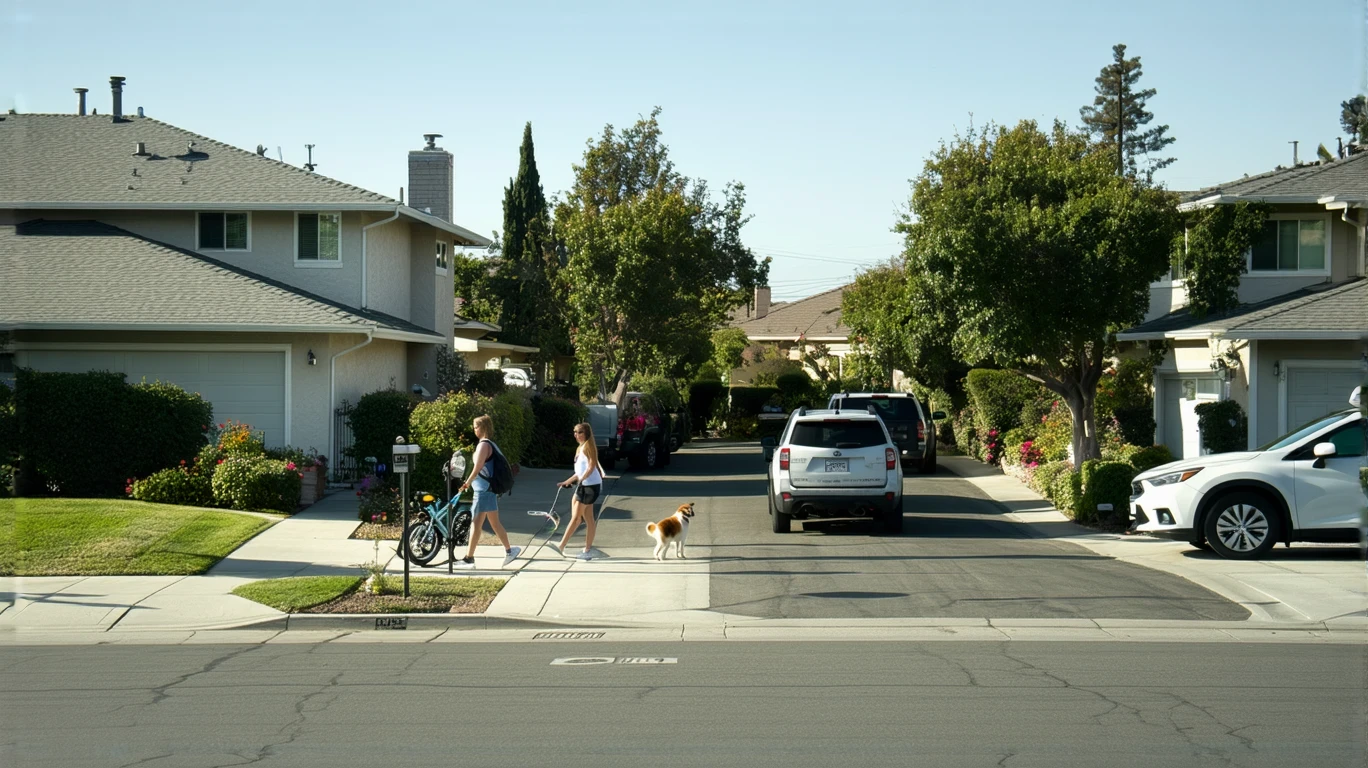
The city’s low-rise character and mixed land use create a recognizable suburban rhythm: residential streets with commercial corridors threading through. Some areas offer genuine pedestrian infrastructure and a sense of place; others feel like you’re always getting back in the car. People who feel at home here tend to value predictability, outdoor access, and the ability to own rather than rent. Those who feel restless often mention the planning burden—the need to map out errands, the lack of spontaneous walkable destinations, the sense that “doing anything” requires intention rather than impulse.
What keeps coming up emotionally is the question of whether Escondido is transitioning or settled. Growth is visible, but it doesn’t feel like transformation. The city has rail service, which is unusual and appreciated in a suburban context, yet the broader mobility texture still leans car-first. There’s pride in the climate, the parks, the relative affordability compared to the coast—but also a quiet frustration that amenities feel just out of reach, either geographically or in terms of variety.
What the Online Conversation Reveals
Social media discussion around Escondido tends to cluster around a few recurring emotional themes: defensiveness about being “overlooked,” pragmatic satisfaction with the value proposition, and low-grade irritation about infrastructure gaps. On platforms like Facebook neighborhood groups and regional Reddit threads, you’ll see residents quick to point out what Escondido does offer—accessible groceries, decent parks, reasonable housing tradeoffs—while also acknowledging what it doesn’t.
“It’s not trying to be downtown San Diego, and I’m fine with that. I get space, a yard, and I’m not spending $3,000 on rent.”
“You can definitely find walkable areas if you’re intentional about where you live, but it’s not the default. You’re still driving most places.”
“I love the access to hiking and parks, but I wish there were more local spots to just hang out in the evening without planning a whole outing.”
The tone isn’t bitter, but it’s not celebratory either. It’s pragmatic. People talk about Escondido the way you talk about a functional relationship: it works, it’s stable, but it’s not electrifying. There’s appreciation for what’s present—grocery density is genuinely high in certain corridors, and outdoor spaces are accessible—but also awareness of what’s missing. The healthcare conversation, for instance, often circles back to the fact that clinics are available locally, but hospital care means travel.
How Local Coverage Frames the City
Local news and community coverage in Escondido tends to focus on identity in flux. The city isn’t static, but it’s also not in the middle of a dramatic reinvention. Coverage often touches on themes of managed growth, infrastructure catch-up, and the ongoing negotiation between long-time residents and newcomers with different expectations. You’ll see recurring topic buckets like:
- “Community Debates What Growth Should Look Like”
- “New Retail and Dining Options Arrive Along Key Corridors”
- “Residents Weigh Affordability Against Convenience”
- “Outdoor Access Remains a Draw as Housing Costs Rise”
- “Transit Connections Expand, But Car Dependency Persists”
The framing is rarely crisis-oriented. Instead, it reflects a city working through the practical challenges of being a suburban hub in an expensive metro area. There’s attention to what’s being added—amenities, housing, services—but also to what residents feel is being lost or strained, like the small-town feel or the ease of getting around without traffic. The overall editorial tone suggests a place that’s neither booming nor stagnant, but rather adjusting in real time to shifting demographics and expectations.
Review-Based Public Perception
On Google Reviews, Yelp, and Nextdoor-style platforms, Escondido’s perception splits cleanly along expectation lines. People who moved here wanting suburban comfort, outdoor access, and lower costs than coastal alternatives tend to leave positive, if measured, feedback. Those who arrived hoping for urban texture, walkable daily life, or vibrant evening culture tend to express disappointment—not with what’s broken, but with what’s simply not part of the city’s design.
Praise often centers on:
- Access to parks and green space, with water features adding to the outdoor appeal
- Grocery availability, especially in areas where density is high
- Relative affordability compared to San Diego proper, with a median home value of $616,400 and median rent of $1,833 per month
- Climate that supports year-round outdoor activity
- Presence of rail transit, which adds flexibility for commuters
Criticism tends to focus on:
- Car dependency for most errands, despite pockets of walkability
- Limited school density, which creates friction for families trying to stay hyperlocal
- Lack of evening entertainment and dining variety within walking distance
- Healthcare requiring travel for hospital-level care
- A sense that amenities are “almost there” but require planning rather than spontaneity
Neighborhood variation shows up in reviews, though usually in broad strokes: newer planned areas tend to feel more polished but less textured, while older pockets offer more character but sometimes less walkable infrastructure. The common thread is that Escondido rewards intentionality—if you choose your location carefully and set expectations appropriately, it delivers. If you expect it to function like a denser, more mixed-use city, the friction becomes daily.
How Escondido Compares to Nearby Cities
| Aspect | Escondido | San Marcos | Carlsbad |
|---|---|---|---|
| Overall Vibe | Pragmatic suburban comfort with rail access | College-town energy with younger demographics | Coastal polish with premium price tag |
| Walkability | Pockets exist, but car-first overall | Campus areas walkable, rest car-dependent | More integrated pedestrian infrastructure |
| Affordability | Moderate relative to metro, still significant | Similar to Escondido, slight variation by area | Higher across the board |
| Dining & Nightlife | Limited, corridor-based | More variety near campus, still modest | Broader selection, coastal dining culture |
| Outdoor Access | Strong park presence, water features | Good access, less distinctive | Beach proximity dominates |
Choosing between these cities comes down to what you’re willing to trade. If you want the most affordable entry point into the San Diego metro with decent transit and outdoor access, Escondido makes sense—but you’ll give up coastal proximity and some walkable convenience. If you want younger energy and don’t mind a college-town feel, San Marcos offers similar affordability with a different social texture. If you prioritize beach access, dining variety, and polished infrastructure, Carlsbad delivers—but at a significantly higher cost. None of these cities is objectively “better”; they’re solving for different priorities.
Voices from the Ground
“I moved here from LA for work and honestly, the space and the rent difference made it worth it. I miss walkable coffee shops, but I don’t miss the financial stress.”
“We picked Escondido because we wanted a yard and good schools, but the school density thing has been harder than we thought. We’re driving more than we expected.”
“Retired here five years ago and it’s been great for us. The weather, the parks, the slower pace—it’s exactly what we wanted. We’re not looking for nightlife.”
“The rail connection is clutch if you’re commuting into San Diego. I don’t love being car-dependent locally, but at least I’m not stuck in traffic twice a day.”
“It feels like Escondido is almost walkable in some areas, which is almost more frustrating than if it weren’t trying at all. You get a taste of it and then you’re back in the car.”
“I like that it’s not trying to be something it’s not. It’s a suburban city with some perks. If you come in expecting that, you’ll be fine.”
“The grocery situation is actually solid if you know where to go. It’s not like everything is a drive to the next town over. But yeah, you’re planning your routes.”
Does Escondido Feel Like a Good Fit?
Escondido doesn’t ask you to love it unconditionally. It asks you to decide whether its specific mix of affordability, outdoor access, rail connectivity, and suburban structure aligns with how you actually live day to day. Because of its place-based design—walkable pockets rather than citywide walkability, corridor-clustered errands rather than neighborhood-integrated retail, rail transit in a car-first context—the city rewards people who can adapt their routines and who value space and cost savings over spontaneity and density.
This tends to work for families willing to drive for schools, remote workers who don’t need urban texture, retirees prioritizing climate and parks, and commuters who can use the rail line and don’t mind planning their local errands. It tends to frustrate younger professionals seeking walkable nightlife, car-free households, and anyone who measures quality of life by the number of destinations within a ten-minute walk.
The city’s emotional profile isn’t about happiness or unhappiness in the abstract. It’s about alignment. If you need what Escondido offers—and you’re comfortable with what it doesn’t—the vibe here is steady, functional, and livable. If you’re hoping it will become something else, or if you’re trying to force an urban lifestyle onto a suburban framework, the friction will be constant. Understanding where money goes and what quality of life factors matter most to you will clarify whether this city’s tradeoffs feel like compromise or like relief.
How this article was built: In addition to public economic data, this article incorporates location-based experiential signals derived from anonymized geographic patterns—such as access density, walkability, and land-use mix—to reflect how day-to-day living actually feels in Escondido, CA.
The perspectives shown reflect commonly expressed local sentiment and recurring themes in public discussion, rather than individual accounts.