
Evanston sits directly north of Chicago along Lake Michigan, functioning as both a commuter suburb and a self-contained small city with its own employment base, retail corridors, and transit infrastructure. The housing market here reflects that dual identity: home values and rents run well above the national baseline, but the city’s walkable pockets, rail access, and integrated parks create a cost structure that rewards proximity and planning. Median home values reach $454,600, and median gross rent sits at $1,625 per month—figures that place Evanston firmly in the higher-cost tier of the Chicago metro area. Yet these numbers tell only part of the story. What shapes the cost of living in Evanston is not just the price of housing itself, but how the city’s infrastructure, density, and land-use patterns change the expenses that flow from where you live.
This article explains how housing costs behave in Evanston, what drives the differences between renting and owning, and how location within the city changes your exposure to transportation, utilities, and time costs. It is written for households deciding whether Evanston fits their budget, and if so, which housing path makes sense given the city’s particular cost pressures.
The Housing Market in Evanston Today
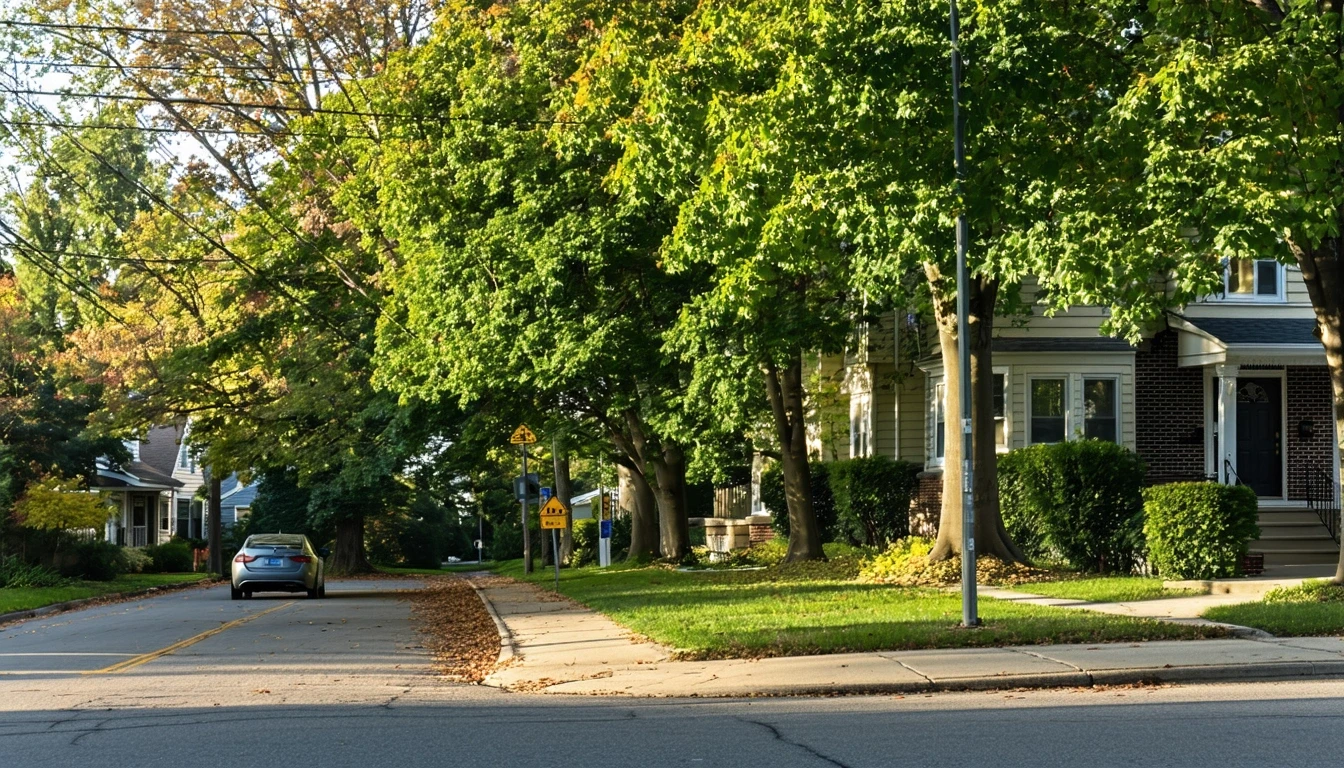
Evanston’s housing market is shaped by three forces that don’t always align elsewhere: proximity to a major employment center, the presence of a large university, and a built environment that predates car-dependent suburban design. The result is a housing stock that includes both older single-family homes on tree-lined blocks and mid-rise apartment buildings clustered near commercial corridors and transit stations. Home values here are elevated not just by regional demand, but by the scarcity of walkable, transit-served neighborhoods within reasonable commuting distance of Chicago. Buyers and renters are paying not only for shelter, but for access—to rail lines, grocery density, and parks that don’t require a car to reach.
The regional price parity index for Evanston stands at 112, meaning goods, services, and housing all cost more here than the national average. That premium is not evenly distributed across housing types. Older homes near the lake or along established residential streets command higher prices due to lot size, tree canopy, and proximity to schools and parks. Apartments and condos closer to transit nodes and commercial streets trade space for convenience, and their prices reflect the value of reducing car dependency in a region where commuting and parking both carry costs.
What newcomers often misunderstand is that Evanston is not a uniform suburb. The city’s pedestrian-to-road ratio exceeds the high threshold, and both food and grocery establishment density are well above typical suburban levels. This means that housing location within Evanston determines not just your commute time, but whether you need a second car, how often you drive for errands, and how much of your day is spent managing logistics. A household that selects housing near a rail stop and a grocery corridor will experience Evanston very differently—financially and practically—than one that chooses a larger home farther from those amenities.
Renting in Evanston
Median gross rent in Evanston is $1,625 per month, a figure that includes rent and tenant-paid utilities. At the city’s median household income of $93,188 per year, that rent represents roughly 21% of gross income for a household earning at the median—a manageable share by conventional standards, though it leaves less room for error than in lower-cost markets. Renters here face the same tradeoff found in most transit-accessible suburbs: pay more for housing, or pay more for transportation. The difference in Evanston is that the city’s infrastructure makes the first option more viable than usual.
Rental housing in Evanston clusters near transit stations, university edges, and commercial streets, where density and mixed land use support walkable errands. Renters in these areas can often reduce or eliminate car ownership, which shifts the cost equation significantly. A household that would otherwise spend several hundred dollars per month on a second car payment, insurance, and parking instead absorbs that cost into rent, gaining flexibility and reducing maintenance burdens. Renters farther from these corridors typically need at least one car, and often two, which narrows the financial advantage of renting over owning.
Rental availability in Evanston fluctuates with the academic calendar and the broader Chicago metro rental market. Lease renewals here tend to reflect regional rent pressure rather than hyperlocal oversupply, meaning renters should expect modest increases in stable years and sharper jumps when metro-wide demand tightens. The city’s unemployment rate of 5.4% suggests a labor market that is neither booming nor distressed, which typically translates to steady rather than volatile rental conditions. Renters gain flexibility and avoid property tax exposure, but they give up control over housing quality, renewal timing, and long-term cost predictability.
Owning a Home in Evanston
Owning a home in Evanston means locking in a mortgage principal while accepting exposure to property taxes, insurance, maintenance, and the costs of aging housing stock. The median home value of $454,600 represents a substantial entry cost, one that requires either significant savings or a high and stable income to manage responsibly. Ownership here is not primarily about monthly payment affordability—it’s about whether a household can absorb the volatility that comes with property taxes, storm-related repairs, and the heating and cooling demands of a climate with cold winters and warm, humid summers.
Property taxes in Illinois are structured at the county and municipal level, and while the specific rate for Evanston is not provided in the data, the state is known for relatively high property tax burdens compared to the national average. Homeowners here should expect property taxes to represent a significant and recurring cost, one that can rise over time as assessed values or municipal budgets change. Unlike rent, which can be walked away from at lease end, property tax exposure persists as long as you own the home, and it does not decline as the mortgage is paid down.
Maintenance and repair costs in Evanston are driven by housing age, climate, and the quality of the original build. Older homes—common in many of Evanston’s established neighborhoods—often require ongoing investment in roofing, windows, HVAC systems, and plumbing. The city’s winters are cold enough to stress heating systems, and summer humidity can accelerate wear on cooling equipment and exterior materials. Homeowners also face the cost of lawn care, snow removal, and compliance with local ordinances governing property upkeep, none of which apply to renters.
What ownership provides in Evanston is control and stability. Owners can choose when to upgrade insulation, replace appliances, or invest in energy efficiency—decisions that renters cannot make. They also lock in a portion of their housing cost (the mortgage principal) and gain the option to benefit from future home value appreciation, though that outcome is neither guaranteed nor uniform across neighborhoods. Ownership in Evanston makes sense for households that value control, expect to stay for many years, and can absorb the financial and time costs of maintaining a home in a climate with meaningful seasonal swings.
Apartment vs House in Evanston — Cost Behavior Comparison
The table below compares cost behavior between apartments and houses in Evanston, focusing only on categories where the difference is shaped by local conditions—climate, housing stock, infrastructure, or governance. Rows are included only where the distinction is meaningful in this city, not as a generic checklist.
| Expense Category | Apartment | House |
|---|---|---|
| Heating & Cooling | Lower exposure; smaller conditioned space and shared walls reduce seasonal load | Higher exposure; standalone structure and larger square footage increase heating demand in winter and cooling in humid summer months |
| Maintenance Responsibility | Landlord or HOA handles exterior, HVAC, and structural repairs; tenant handles interior only | Owner responsible for all systems, roof, siding, gutters, and seasonal upkeep (snow removal, lawn care) |
| Property Tax Exposure | Indirect; embedded in rent but not separately billed or controllable | Direct and recurring; billed separately and subject to reassessment and rate changes |
| Parking & Vehicle Dependency | Often located near transit and commercial corridors; may reduce need for second vehicle | Typically farther from transit nodes; driveway included but household more likely to need multiple cars |
| Outdoor Access & Green Space | No private yard; reliant on Evanston’s integrated park system (high density) for outdoor space | Private yard included; less reliance on public parks but higher maintenance burden |
Why these categories? Evanston’s cold winters and humid summers create a meaningful difference in heating and cooling costs between apartments and houses, driven by building envelope and conditioned volume. The city’s older housing stock means maintenance responsibility is not just theoretical—it’s a recurring cost for homeowners. Property tax exposure differs structurally between renters and owners, and Evanston’s transit and walkability infrastructure make location-based vehicle dependency a real cost variable, not a lifestyle preference. Finally, the city’s park density exceeds the high threshold, which reduces the necessity of a private yard for outdoor access, though it doesn’t eliminate the preference.
Categories like insurance, internet, and trash service are omitted because they do not vary meaningfully by housing type in Evanston, or because the variation is not driven by local factors.
Utilities & Upkeep Differences
Utility and maintenance costs in Evanston are shaped by the city’s climate, the age of its housing stock, and the efficiency of the systems installed in each building. Electricity in Evanston costs 16.36¢ per kWh, and natural gas is priced at $9.65 per thousand cubic feet (MCF). These are the rates households pay, but the bills they generate depend on how much energy a home or apartment consumes—and that varies significantly by building type, insulation quality, and occupant behavior.
Houses in Evanston, particularly older single-family homes, tend to have higher heating costs in winter due to larger conditioned spaces, standalone construction, and in many cases, older windows and insulation. Natural gas is the dominant heating fuel in the region, and a cold winter can drive noticeable increases in gas bills for homeowners. Apartments, especially those in multi-unit buildings, benefit from shared walls and smaller square footage, which reduce heating load. Cooling costs in summer are less extreme than in hotter climates, but humidity drives air conditioning use during warm months, and houses again face higher exposure due to size and building envelope.
Maintenance and upkeep costs differ not just in amount, but in predictability. Apartment renters typically pay only for interior damage or negligence; landlords or HOAs handle HVAC repairs, roof leaks, and exterior work. Homeowners, by contrast, must budget for all of it—and in Evanston’s older housing stock, that means planning for furnace replacements, window upgrades, and the eventual failure of water heaters, sump pumps, and other systems that wear out over time. Seasonal upkeep, including snow removal and gutter cleaning, adds recurring labor or expense that renters do not face.
The difference in utility and upkeep exposure between apartments and houses in Evanston is not marginal—it is structural. A household moving from an apartment to a house should expect a noticeable increase in both predictable costs (heating, cooling, lawn care) and unpredictable ones (emergency repairs, system replacements). The magnitude of that increase depends on the age and condition of the home, the efficiency of its systems, and the severity of each winter and summer season.
Rent vs Buy: Long-Term Exposure in Evanston
The choice between renting and buying in Evanston is not primarily a question of monthly affordability—it is a question of which risks and responsibilities a household is prepared to accept over time. Renters face renewal volatility and the possibility of displacement, but they avoid property tax increases, special assessments, and the cost of replacing a failing furnace in January. Owners lock in their mortgage principal and gain control over their housing quality and location, but they accept exposure to every cost that comes with maintaining a home in a climate that stresses buildings and systems.
Over time, renters in Evanston should expect their housing costs to move with the regional rental market, which tends to track employment growth, wage trends, and metro-wide housing supply. Rent increases are not predictable year to year, but they are also not cumulative in the way property taxes and maintenance costs can be. A renter who stays in the same unit for five years may see rent rise modestly in some years and sharply in others, but they are not responsible for a new roof, a broken sewer line, or a property tax reassessment.
Owners, by contrast, face a different volatility profile. The mortgage principal is fixed (for fixed-rate loans), but property taxes, insurance, and maintenance costs are not. A homeowner in Evanston may experience stable housing costs for several years, then face a sudden spike due to a tax increase, a major repair, or a change in insurance rates. These costs do not average out—they arrive irregularly and must be absorbed when they occur. Ownership also requires time: time to manage contractors, time to handle seasonal upkeep, and time to research and execute efficiency upgrades or repairs.
The long-term financial advantage of ownership in Evanston depends on home value appreciation, the household’s ability to absorb cost shocks, and the length of time they remain in the home. Ownership is not inherently cheaper than renting—it is a different risk profile, one that trades flexibility and predictability for control and the possibility of building equity. Households that value stability, expect to stay in Evanston for many years, and have the financial capacity to handle irregular expenses will find ownership advantageous. Those who prioritize flexibility, want to avoid maintenance responsibility, or expect to relocate within a few years will find renting a better fit.
How this article was built: In addition to public economic data, this article incorporates location-based experiential signals derived from anonymized geographic patterns—such as access density, walkability, and land-use mix—to reflect how day-to-day living actually feels in Evanston, IL.
FAQs About Housing Costs in Evanston
Is renting or buying more common in Evanston?
Evanston has a mixed housing tenure profile, with both renters and owners well-represented. The presence of a large university and proximity to Chicago support a significant rental population, while established residential neighborhoods are predominantly owner-occupied. Neither path is unusual here, and the choice depends more on household priorities—flexibility versus control—than on local norms.
How much do property taxes add to homeownership costs in Evanston?
Property taxes in Illinois are typically higher than the national average, and Evanston is no exception. While the specific rate is not provided in the available data, homeowners should expect property taxes to represent a substantial share of their annual housing cost—often comparable to several months of rent. These taxes are billed separately, can increase over time, and do not decline as the mortgage is paid down.
Does living near transit in Evanston actually reduce costs?
Yes, meaningfully. Evanston has rail service and walkable commercial corridors with high grocery and food establishment density. Households that locate near these amenities can often reduce or eliminate car ownership, which lowers insurance, fuel, maintenance, and parking costs. The savings from reduced vehicle dependency can offset a portion of the higher rent or home prices found in transit-accessible areas.
What drives utility costs in Evanston homes?
Heating costs dominate in winter due to cold temperatures, and natural gas is the primary heating fuel. Older homes with poor insulation or aging HVAC systems face higher bills. Summer cooling costs are driven by humidity rather than extreme heat, but air conditioning use still adds to electricity bills. Apartments generally have lower utility costs than houses due to smaller size and shared walls.
How does Evanston’s housing market compare to nearby suburbs?
Evanston’s housing costs are elevated relative to many Chicago suburbs, but the city offers infrastructure—walkability, transit, park access, and commercial density—that is uncommon in the region. Households comparing Evanston to other suburbs should weigh housing pressure against transportation savings, time costs, and the availability of services within walking distance. The tradeoff is not purely financial; it includes convenience, commute time, and the need for multiple vehicles.
Making Housing Choices in Evanston
Housing costs in Evanston are shaped by the city’s location, infrastructure, and the dual pressures of serving as both a commuter suburb and a self-contained small city. Home values and rents are high, but the city’s walkable pockets, rail access, and integrated parks create opportunities to reduce transportation costs and time burdens—if you choose housing that takes advantage of them. Renters gain flexibility and avoid property tax and maintenance exposure, but they give up control and face renewal volatility. Owners lock in their mortgage principal and gain stability, but they accept responsibility for every cost that comes with maintaining a home in a climate with cold winters and humid summers.
The right housing path in Evanston depends on how long you plan to stay, whether you value control over flexibility, and whether your household can absorb the irregular costs of ownership or prefers the predictability of renting. Location within the city matters as much as housing type: proximity to transit, grocery density, and parks changes not just your commute, but your need for a second car and the time you spend managing errands. Households that align their housing choice with Evanston’s infrastructure will find the city’s cost structure manageable; those that ignore it will pay more in both money and time.