
Newcomers to Mint Hill face a housing decision shaped less by affordability math and more by how ownership changes daily logistics in a place where errands cluster along corridors and half of all workers face long commutes. The rent-versus-buy question here isn’t just about monthly payments—it’s about whether locking in a mortgage makes sense when the cost structure rewards car ownership, planning ahead, and tolerance for distance.
Mint Hill’s median home value sits at $357,100, while median gross rent runs $1,409 per month. With median household income at $92,102 per year, the housing market reflects a suburban pattern where buyers prioritize space and equity over proximity, and renters absorb the cost of flexibility in a market built around ownership.
How this article was built: In addition to public economic data, this article incorporates location-based experiential signals derived from anonymized geographic patterns—such as access density, walkability, and land-use mix—to reflect how day-to-day living actually feels in Mint Hill, NC.
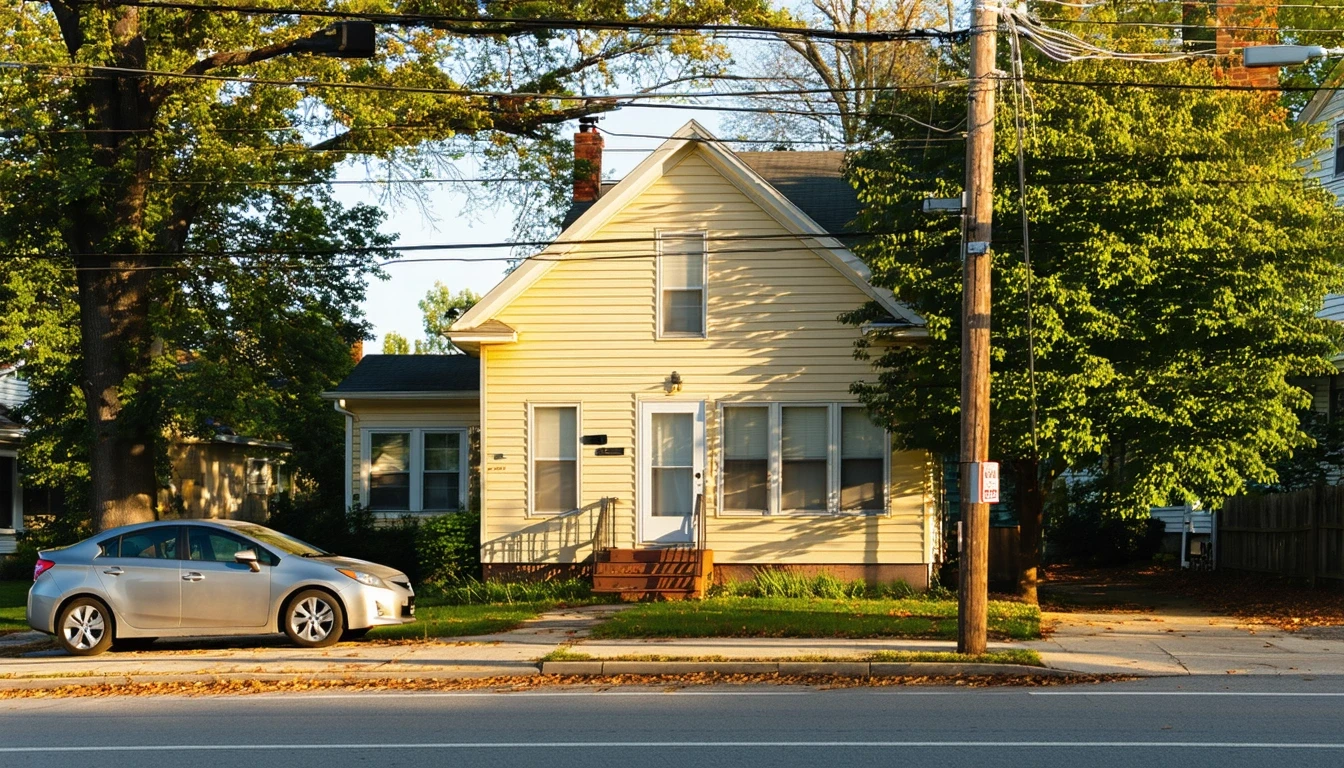
The Housing Market in Mint Hill Today
Mint Hill operates as a commuter-oriented suburb within the Charlotte metro, where housing stock tilts heavily toward single-family ownership and development patterns favor car-dependent access. The city’s pedestrian infrastructure shows pockets of walkability, but food and grocery options concentrate along commercial corridors rather than distributing evenly across neighborhoods. This creates a housing market where location within Mint Hill matters less for walkable convenience and more for commute direction and errand routing.
What newcomers often misunderstand is that Mint Hill’s housing costs don’t buy urban-style access. Despite mixed building heights and the presence of both residential and commercial land use, the city’s structure requires intentional trip planning. School density and playground availability fall below typical thresholds, meaning families often travel outside immediate neighborhoods for youth activities. Yet healthcare access is strong—hospital presence and pharmacy availability exceed expectations for a suburb of this size.
The result is a market where home values reflect space, ownership stability, and access to Charlotte-area employment, not walkable daily convenience. Buyers accept longer average commutes (28 minutes) and plan around the reality that only 4.9% of workers operate from home. For those evaluating what shapes the cost of living in Mint Hill, housing represents the largest single commitment, but its value depends entirely on whether your household can absorb the transportation and time costs that come with it.
Renting in Mint Hill
At $1,409 per month, median gross rent in Mint Hill sits below the home value-to-rent ratio you’d expect in a tighter urban market, signaling that rental stock serves a smaller, more transient population. Renters here face limited selection compared to ownership inventory, and most rental properties cluster near the same commercial corridors where errands concentrate. This means renters gain some logistical efficiency by living closer to grocery and service access, but sacrifice the space and stability that ownership provides.
Rental pressure in Mint Hill comes less from competition and more from structural mismatch. The housing market wasn’t designed around renter retention—it was built for buyers seeking equity and room to spread out. Renters who stay long-term often find themselves navigating lease renewals in a market where landlords can adjust to broader Charlotte metro trends, even if Mint Hill itself remains stable. The lack of rail transit and limited bus service means renters need cars just as much as owners, eliminating one of the traditional cost advantages of renting in a suburban setting.
For households evaluating whether renting fits, the decision hinges on how long you plan to stay and whether you value mobility over cost predictability. Renters in Mint Hill don’t escape car dependency, commute exposure, or the need to plan errands around corridors—they simply defer the tax, maintenance, and equity components of housing while accepting less control over long-term cost growth.
Owning a Home in Mint Hill
Ownership in Mint Hill means taking on property taxes, maintenance exposure, and the governance structures that come with suburban development—HOAs are common, though specific fee data isn’t available in local reporting. What ownership buys here is cost predictability on the largest line item (the mortgage principal and interest) and the ability to control how and when you address upkeep, rather than waiting on a landlord’s timeline or budget.
Property tax behavior in North Carolina follows a structure where assessed values can shift with reassessment cycles, and while Mint Hill’s home values have remained strong, owners should expect periodic adjustments that affect annual tax bills. Maintenance exposure skews toward climate-driven costs—hot, humid summers demand consistent HVAC upkeep, and the mixed building stock means older homes may carry deferred maintenance that becomes the buyer’s responsibility at closing.
Ownership also changes how you interact with Mint Hill’s infrastructure. Because errands cluster along corridors and family-oriented amenities are limited within walking distance, owning a home here means committing to a car-dependent lifestyle where your driveway, garage, and vehicle become essential infrastructure. Buyers who thrive in Mint Hill are those who see the home as a stable base for a regional lifestyle, not a walkable neighborhood hub.
The equity-building component of ownership matters more in Mint Hill than in rental-heavy urban cores. With median home values at $357,100 and a market that favors long-term owner occupancy, buyers who stay five years or more typically see the mortgage shift from mostly interest to meaningful principal paydown, building wealth that renters don’t capture. But that advantage only materializes if you can sustain the commute, absorb the transportation costs, and manage the ongoing expenses that come with suburban homeownership.
Apartment vs House in Mint Hill — Cost Behavior Comparison
| Expense Category | Apartment | House |
|---|---|---|
| Cooling & Heating | Shared walls reduce exposure; landlord controls system quality | Full envelope exposure to heat and humidity; owner controls efficiency investment |
| Maintenance Responsibility | Landlord handles HVAC, roof, exterior; tenant waits on timeline | Owner absorbs all costs and timing; deferred maintenance becomes equity risk |
| Commute Flexibility | Corridor-clustered rentals may reduce errand distance but not work commute | Location choice affects commute direction; 50.2% of workers face long commutes regardless |
| Outdoor Maintenance | Minimal; landlord or HOA manages landscaping | Yard upkeep required; humid climate accelerates growth and pest pressure |
Methodology note: The table above reflects only categories where Mint Hill’s climate, housing stock, or infrastructure create meaningful cost differences. Generic distinctions (e.g., “houses have more space”) were excluded. Cooling and heating exposure differs due to Mint Hill’s extended warm season and humidity, which penalizes full building envelopes. Maintenance responsibility matters more here because of climate-driven wear (HVAC, roofing, moisture intrusion). Commute and errand patterns were included because Mint Hill’s corridor-clustered layout and long-commute prevalence affect how location within the city changes daily logistics. Categories like insurance or property taxes were omitted because no apartment-versus-house distinction could be locally justified without rate data.
Utilities & Upkeep Differences
Utility exposure in Mint Hill is driven primarily by cooling demand. Electricity rates sit at 13.68¢/kWh, and homes with full exposure to summer heat see sustained air conditioning loads that dominate seasonal bills. Apartments with shared walls and landlord-controlled HVAC systems experience lower usage, but tenants sacrifice control over efficiency upgrades and thermostat management. Homeowners can invest in insulation, modern heat pumps, or programmable systems to reduce long-term exposure, but those improvements require upfront capital and time to pay off.
Natural gas, priced at $17.89/MCF, plays a smaller role in Mint Hill’s climate compared to heating-dominated regions, but homes with gas water heaters or backup heating systems still see winter usage. The distinction between apartments and houses here is less about fuel type and more about who controls the system and who pays for inefficiency.
Maintenance costs in Mint Hill reflect the humid subtropical climate. Homes require regular HVAC filter changes, seasonal system tune-ups, and vigilance around moisture intrusion—crawl spaces, attics, and exterior wood trim all face accelerated wear. Apartment dwellers avoid these costs directly but may experience slower repair timelines when systems fail. Homeowners gain control but absorb the full cost of climate-driven wear, which in Mint Hill is a consistent, ongoing expense rather than an occasional surprise.
Rent vs Buy: Long-Term Exposure in Mint Hill
The rent-versus-buy decision in Mint Hill comes down to cost predictability, control, and how long you plan to stay. Renters face lease renewals that can reflect broader Charlotte metro rent trends, even if Mint Hill’s local rental market remains stable. Owners lock in mortgage principal and interest, but take on property tax variability, maintenance exposure, and the risk that home values don’t appreciate as expected.
Ownership in Mint Hill rewards households that stay long enough to build equity and absorb the upfront costs of buying. The market here favors long-term occupancy—buyers who plan to stay five years or more benefit from principal paydown and potential appreciation, while those who move sooner often lose money to transaction costs and deferred maintenance catch-up. Renters avoid that risk but give up control over cost growth and the ability to capture equity gains.
The structural difference that matters most in Mint Hill is control over housing quality and timing. Owners can upgrade HVAC systems, improve insulation, or address maintenance on their own schedule. Renters depend on landlord responsiveness and budget priorities, which in a market with limited rental inventory can mean longer waits and deferred repairs. For households that value stability, control, and the ability to optimize costs over time, ownership fits. For those prioritizing flexibility, minimal responsibility, and the ability to relocate without transaction costs, renting makes sense—but only if you accept that your monthly budget in Mint Hill will include car expenses, commute costs, and limited control over housing cost growth.
FAQs About Housing Costs in Mint Hill
Is buying a home in Mint Hill worth it if I have a long commute?
Ownership in Mint Hill makes sense if you’re willing to absorb commute time and transportation costs in exchange for space, equity, and cost predictability. With 50.2% of workers facing long commutes, the market already reflects that tradeoff—buyers here prioritize home value over proximity. If your commute is sustainable and you plan to stay long enough to build equity, ownership fits. If the commute feels unsustainable or you’re uncertain about tenure, renting preserves flexibility.
How do utility costs differ between renting and owning in Mint Hill?
Renters in apartments with shared walls face lower cooling and heating exposure but lack control over system efficiency. Homeowners absorb full climate exposure—hot, humid summers drive sustained air conditioning costs—but can invest in efficiency upgrades that reduce long-term bills. Electricity at 13.68¢/kWh means cooling costs are noticeable but not extreme; the bigger difference is who controls the system and who pays when it underperforms.
Does Mint Hill’s housing market favor first-time buyers?
Mint Hill’s median home value of $357,100 sits above entry-level pricing in many markets, but the city’s income profile (median household income at $92,102) suggests the market serves move-up buyers and dual-income households more than first-timers. First-time buyers can find opportunity here, but they’ll compete with established buyers seeking space and equity, and they’ll need to accept the commute and car-dependency that come with suburban ownership.
Are HOA fees common in Mint Hill, and what do they cover?
HOAs are common in Mint Hill’s newer subdivisions, though specific fee data isn’t widely reported. Fees typically cover exterior maintenance, landscaping, and shared amenities, but they also introduce governance structures that limit owner autonomy. Buyers should verify HOA fee levels, rules, and financial health before closing, as these costs add to the monthly ownership burden and can rise over time.
How does renting in Mint Hill compare to nearby Charlotte neighborhoods?
Renting in Mint Hill offers more space and lower density than urban Charlotte neighborhoods, but you give up transit access, walkable errands, and the convenience of clustered services. Median rent at $1,409 per month reflects a market where rental inventory is limited and most units sit near commercial corridors. If you need car-free living or prefer walkable access, Charlotte’s inner neighborhoods fit better. If you want suburban space at a lower rent than comparable ownership costs, Mint Hill works—but only if you’re prepared to drive for everything.
Making Housing Choices in Mint Hill
Housing costs in Mint Hill reflect a market built around ownership, car dependency, and long-term stability rather than walkable convenience or transit access. Home values at $357,100 and rent at $1,409 per month signal a suburban structure where buyers prioritize space and equity, and renters accept limited inventory and corridor-clustered access in exchange for flexibility.
The decision between renting and owning here depends on how long you plan to stay, whether you can sustain the commute, and whether you value control over cost predictability. Ownership rewards households that stay long enough to build equity and absorb the upfront costs of buying, while renting fits those who need flexibility and want to avoid maintenance exposure—but both paths require a car, planning around errands, and acceptance that Mint Hill’s housing value comes from space and stability, not walkable access.
For households evaluating whether Mint Hill fits, the housing decision is inseparable from transportation costs, commute tolerance, and how you manage daily logistics. The city’s infrastructure supports those who plan ahead, drive everywhere, and see home as a base for regional living rather than a neighborhood hub. If that fits your lifestyle, Mint Hill’s housing market offers value. If it doesn’t, the cost structure will feel like a constant compromise.