
Many newcomers to San Marcos face the same question: rent for flexibility or buy for stability? The answer depends less on generic advice and more on how this city’s specific cost structure, infrastructure gaps, and transit advantages interact with your household’s income and logistics. San Marcos offers accessible home values compared to nearby Austin, but the tradeoff isn’t simple—what you save on purchase price, you may spend navigating a car-dependent errands landscape, limited family amenities, and the realities of Central Texas heat and property tax exposure.
This guide explains how housing costs behave in San Marcos, what renters and buyers actually face, and how to evaluate the rent-versus-buy decision based on what matters here: transit access, infrastructure density, income fit, and long-term cost predictability.
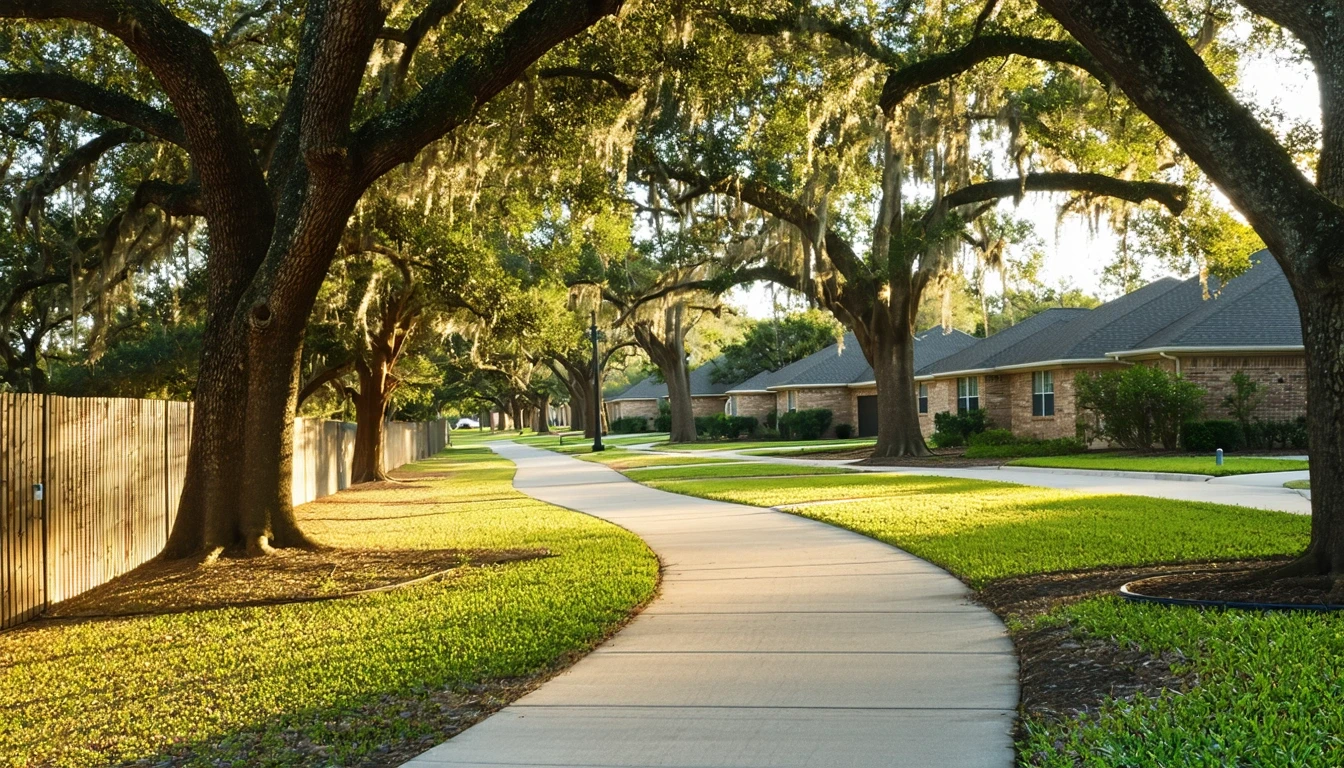
The Housing Market in San Marcos Today
San Marcos sits in the I-35 corridor between Austin and San Antonio, a position that shapes its housing market more than any single statistic. Commuter demand from both metros drives competition for housing, while Texas State University adds rental churn and seasonal pressure. The result is a market where home values remain accessible—median home value stands at $248,300—but income constraints are real. Median household income of $47,394 per year means that even “affordable” housing requires careful planning.
What surprises many newcomers is the infrastructure mismatch. San Marcos has rail transit, a rarity for a city of this size and a significant advantage for commuters. But grocery density is low, school and playground infrastructure is limited, and the only local healthcare options are clinics—no hospital. The city’s development pattern suggests growth outpaced the amenities that make daily life convenient. For buyers, this means evaluating not just the purchase price, but the hidden costs of car dependency and the logistics burden of running a household here.
The regional price parity index of 95 indicates costs slightly below the national average, but that modest discount doesn’t override the income-to-housing-cost squeeze. Renters and buyers alike face a market where affordability is tight, and the decision hinges on whether you value cost predictability (ownership) or flexibility (renting) more.
Renting in San Marcos
Median gross rent in San Marcos is $1,251 per month. For a household earning the median income, that represents just over 31% of gross monthly income—above the standard 30% affordability threshold. Renters here face immediate income pressure, but they also avoid the property tax, maintenance, and utility volatility that come with ownership in Central Texas.
Rental availability and cost vary significantly by proximity to Texas State University and access to the rail line. Apartments near campus or transit stations command higher rents but reduce car dependency, a meaningful tradeoff in a city where grocery stores and family amenities are sparse and spread out. Renters in outer subdivisions may find lower monthly costs, but they inherit longer drive times for errands, healthcare, and daily logistics.
University enrollment cycles also create rental volatility. Lease renewals often coincide with academic year timing, and demand spikes can push rents up faster than income growth. Renters gain flexibility to move when costs rise, but they lose the cost predictability that ownership provides. For households with tight income margins, that tradeoff is central.
Owning a Home in San Marcos
At $248,300, the median home value in San Marcos is accessible compared to Austin’s inflated market, but it’s not a bargain when measured against local income. A household earning $47,394 per year faces a home-price-to-income ratio of roughly 5.2 to 1, well above the historical affordability benchmark of 3 to 1. Buyers can enter the market, but the fit is tight, and the margin for error is thin.
Ownership in San Marcos means taking on exposures that renters avoid. Texas has no state income tax, so local governments rely heavily on property taxes to fund schools, infrastructure, and services. Property tax rates vary by jurisdiction, and while specific rates aren’t provided here, buyers should expect annual tax bills to represent a significant share of ownership costs—often more than insurance and sometimes rivaling principal and interest payments.
Maintenance exposure is shaped by Central Texas climate. Extended cooling seasons mean air conditioning systems work hard and age faster. Humidity, occasional severe storms, and temperature swings stress roofs, foundations, and exterior materials. Older homes in the city’s core may have charm and walkability, but they also carry higher repair unpredictability. Newer homes in outer subdivisions may have lower immediate maintenance needs, but they’re farther from transit and deeper into car-dependent territory.
Ownership also means navigating the infrastructure gaps that define San Marcos. Sparse grocery density and limited family amenities increase the frequency and distance of routine errands. Buyers with children face low school and playground density, which may require longer drives or reliance on private options. The absence of a local hospital means serious medical needs require travel to Austin or San Antonio, a consideration for families planning to age in place.
The upside: rail transit access. For commuters working in Austin or regional employment centers, the ability to avoid I-35 traffic and reduce car expenses is a tangible financial benefit. Ownership near transit stations also positions buyers in areas likely to see stronger appreciation as the corridor develops. But that advantage only matters if your household can absorb the upfront affordability pressure and the ongoing costs of maintaining a home in a climate that demands vigilance.
Apartment vs House in San Marcos — Cost Behavior Comparison
| Expense Category | Apartment | House |
|---|---|---|
| Cooling costs | Lower square footage and shared walls reduce AC load; landlord may cover efficiency upgrades | Larger square footage, standalone exposure, and older HVAC systems in existing stock increase summer electricity bills significantly |
| Maintenance unpredictability | Landlord absorbs HVAC, roof, and structural repairs; tenant risk limited to lease terms | Owner inherits all repair costs; older homes in humid climate face higher frequency of HVAC, foundation, and exterior issues |
| Errands logistics | Apartments near transit or commercial corridors reduce drive frequency despite sparse grocery density | Houses in outer subdivisions require longer, more frequent drives for groceries and family amenities due to low infrastructure density |
| Transit access value | Apartments near rail stations reduce car dependency and commute costs, a rare advantage in Texas | Houses in sprawl areas lose transit access, increasing transportation costs and time burden for commuters |
Why these categories? The comparison reflects what actually differs in San Marcos: extended cooling season and climate-driven maintenance, sparse grocery and family infrastructure that increases car dependency, and the unusual presence of rail transit that creates a location premium. Generic cost categories like base rent versus mortgage payment were omitted because they don’t explain how living in San Marcos specifically changes your cost experience.
Utilities & Upkeep Differences
Central Texas heat dominates utility exposure. The electricity rate of 15.69¢/kWh is moderate, but consumption isn’t. Extended cooling seasons mean air conditioning runs from late spring through early fall, and peak summer months drive bills sharply higher. Apartments benefit from smaller square footage and shared walls, which reduce cooling load. Houses, especially older single-family homes, face larger spaces, standalone exposure, and aging HVAC systems that work harder and fail sooner.
Natural gas, priced at $16.51 per MCF, plays a smaller role. Winters are mild, and heating needs are minimal compared to cooling. But severe cold snaps do occur, and homes with poor insulation or older heating systems can see sharp spikes during freeze events.
Maintenance differences are driven by housing age and climate stress. Mixed building height signals suggest San Marcos has both older homes in the core and newer construction in outer areas. Older homes face higher repair frequency—roofs, foundations, and HVAC systems all degrade faster in humid, high-heat environments. Newer homes may defer major repairs for years, but they’re often located farther from transit and amenities, increasing transportation costs as a hidden offset.
Apartment renters avoid most of this exposure. Landlords absorb HVAC replacement, roof repairs, and structural issues. Renters pay for the electricity they use, but they don’t inherit the capital cost of keeping aging systems functional. For buyers, upkeep isn’t just about monthly averages—it’s about volatility and the risk of large, unplanned expenses hitting when income margins are already tight.
Rent vs Buy: Long-Term Exposure in San Marcos
The rent-versus-buy decision in San Marcos isn’t about which option costs less in year one. It’s about which cost structure fits your household’s income stability, tolerance for volatility, and ability to navigate the city’s infrastructure gaps over time.
Renters face cost uncertainty in the form of lease renewals. University enrollment cycles, spillover demand from Austin, and landlord responses to rising property taxes all push rents upward. Renters can move when costs become unsustainable, but that flexibility comes at the expense of predictability. Every lease renewal is a negotiation, and every move imposes transaction costs—deposits, fees, time, and logistics burden.
Buyers lock in predictability through fixed-rate financing. Monthly principal and interest payments don’t change, which provides a stable foundation for long-term planning. But ownership exposes buyers to costs that renters avoid. Property taxes fluctuate with assessed values and local budget needs. Maintenance and repair costs are unpredictable, especially in older homes or during severe weather events. Cooling costs, while seasonal, represent a recurring summer expense that buyers can’t defer or avoid.
Car dependency adds another layer. Sparse grocery density and limited family infrastructure mean more frequent, longer drives. For renters near transit or commercial corridors, that burden is lighter. For buyers in outer subdivisions, transportation becomes a hidden cost that compounds over time—fuel, maintenance, insurance, and the opportunity cost of time spent driving.
Ownership also concentrates risk. If income drops, property taxes and maintenance don’t pause. If the local economy softens or university enrollment declines, home values may stagnate, trapping equity. Renters can adjust by moving to cheaper units or different neighborhoods. Buyers must absorb the cost or sell at a loss.
The advantage of ownership is control. Buyers can invest in efficiency upgrades, lock in lower cooling costs, and benefit from appreciation if the I-35 corridor continues to develop. Rail transit access, in particular, positions buyers in areas likely to see stronger demand as commuter pressure from Austin intensifies. But that upside only materializes if the household can sustain the upfront affordability squeeze and weather the volatility of Texas property taxes, climate-driven maintenance, and infrastructure gaps.
FAQs About Housing Costs in San Marcos
Is renting or buying more affordable in San Marcos?
Neither option is comfortable at median income. Median rent of $1,251 per month exceeds 30% of median household income, and median home values of $248,300 create a tight price-to-income ratio. Renting avoids property tax and maintenance exposure but offers no cost predictability. Buying locks in housing payments but adds taxes, upkeep, and car dependency costs in a market with sparse infrastructure.
How does San Marcos compare to Austin for housing costs?
San Marcos offers lower home values and rent than Austin, but income levels are also lower, so affordability pressure remains high. The tradeoff is access: San Marcos has rail transit, which reduces commute costs for those working in Austin, but it also has sparser grocery and family infrastructure, which increases household logistics complexity.
What drives utility costs for homeowners in San Marcos?
Cooling dominates. Extended summer heat and high humidity mean air conditioning runs for months, and older homes with aging HVAC systems face higher electricity consumption. Natural gas plays a smaller role due to mild winters. Buyers should expect summer utility bills to spike and plan for HVAC replacement as a recurring capital expense.
Does San Marcos have high property taxes?
Texas relies on property taxes to fund local services because there is no state income tax. Specific rates vary by jurisdiction, but buyers should expect property taxes to represent a significant share of total ownership costs—often comparable to or exceeding insurance premiums. Assessed values can rise over time, increasing tax bills even when income doesn’t.
Is San Marcos a good place for families to buy a home?
It depends on priorities. Home values are accessible compared to Austin, and rail transit offers commute advantages. But school and playground density is low, grocery access is sparse, and the only local healthcare is clinics—no hospital. Families must weigh upfront affordability against the logistics burden and infrastructure gaps that come with raising children here.
Making Housing Choices in San Marcos
Housing decisions in San Marcos require looking past the purchase price or monthly rent and understanding how this city’s specific cost structure, infrastructure, and geography shape your household’s financial exposure over time. Home values are accessible, but income fit is tight. Rent is above affordability thresholds, but it avoids the property tax and maintenance volatility that ownership brings. Rail transit is a rare advantage, but sparse grocery and family infrastructure increase car dependency and logistics complexity.
Renters gain flexibility and avoid long-term risk, but they face lease renewal uncertainty and lose the cost predictability that ownership provides. Buyers lock in stability and benefit from transit access, but they inherit climate-driven maintenance costs, property tax exposure, and the hidden burden of navigating a city where daily errands require planning and driving.
The right choice depends on whether your household can absorb the upfront affordability pressure, sustain the ongoing costs of car dependency and climate exposure, and benefit from the transit access and appreciation potential that San Marcos offers. For more on what a budget has to handle in San Marcos, including how transportation and errands costs interact with housing decisions, see our detailed breakdown. And for a broader view of what shapes the cost of living in San Marcos, explore how housing fits into the city’s overall expense structure.
If you’re planning a move, understanding logistics and timing can reduce stress and cost. See our 2025 moving company picks for guidance on selecting reliable movers and managing the transition.
How this article was built: In addition to public economic data, this article incorporates location-based experiential signals derived from anonymized geographic patterns—such as access density, walkability, and land-use mix—to reflect how day-to-day living actually feels in San Marcos, TX.