
Apartment vs House in Lebanon — Monthly Cost Comparison
| Expense Category | Apartment | House |
|---|---|---|
| Base Housing Cost | $1,151/month (median rent) | Mortgage varies by down payment and rate; median home value $325,800 |
| Utilities (Electricity) | Lower usage; shared walls reduce heating/cooling load | Higher exposure; detached structure increases seasonal demand at 13.10¢/kWh |
| Natural Gas (Heating Months) | Often included or minimal; smaller footprint | Direct responsibility; standalone heating at $11.31/MCF |
| Maintenance & Upkeep | Landlord responsibility; predictable monthly cost | Owner responsibility; episodic and seasonal (HVAC, roof, yard) |
| Property Taxes | Embedded in rent | Direct annual obligation; varies by assessment and jurisdiction |
| Outdoor Maintenance | Managed by property; no equipment or time cost | Yard care required; equipment, time, or service expense in humid growing season |
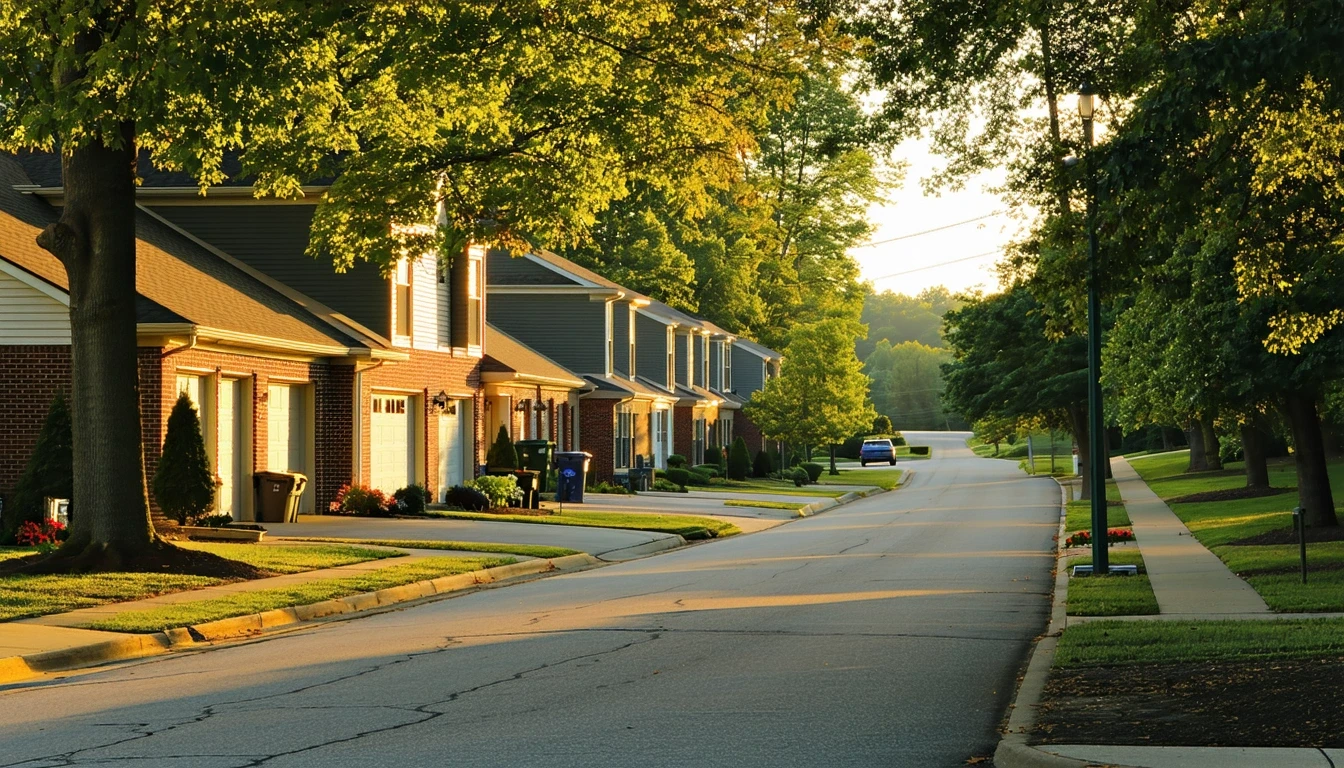
Why these categories differ in Lebanon: The low-rise suburban housing stock—predominantly single-family detached homes—creates distinct exposure for owners. Houses here are standalone structures subject to Lebanon’s humid subtropical climate, which drives higher cooling loads in summer and increases outdoor maintenance frequency. Apartments, typically smaller and with shared infrastructure, shift utility volatility and upkeep responsibility to the landlord. Categories like HOA fees and parking costs were omitted because they do not systematically vary between apartments and houses in Lebanon’s housing market; where HOAs exist, they appear in both housing types inconsistently.
—
The Housing Market in Lebanon Today
Lebanon sits in the Nashville metro area but operates as a distinct suburban market shaped by commuter access, low-rise residential development, and a median home value of $325,800. That figure reflects more than five times the city’s median household income of $63,698 per year, creating affordability pressure for buyers who lack substantial savings or dual incomes. The market here rewards those who can carry ownership costs over time, but it penalizes households stretched thin by the initial purchase.
What newcomers often misunderstand is that Lebanon’s housing affordability is not determined by price alone. The city’s sparse errands accessibility—food establishment density falls below typical thresholds, and grocery density sits in a medium band—means that where money goes extends beyond the mortgage or rent check. Car dependency is structural, not optional. Even with rail service present, the pedestrian-to-road ratio remains in a medium band, and daily errands require vehicle access. This changes the true cost of housing by embedding transportation, time, and logistics into every household’s baseline.
The regional price parity index of 97 suggests that Lebanon’s overall cost environment runs slightly below the national baseline, but that discount does not overcome the income-to-home-value gap. Buyers here are purchasing suburban stability and access to Nashville-area employment, not a low-cost alternative to urban living.
—
Renting in Lebanon
Median gross rent in Lebanon is $1,151 per month, a figure that appears manageable in isolation but must be understood within the city’s spatial structure. Renters here face the same car dependency as owners. Sparse food and grocery density means that running errands is not a walkable activity, even in neighborhoods with moderate pedestrian infrastructure. The mixed walkability profile—adequate for recreational strolls but insufficient for daily provisioning—forces renters to budget for vehicle ownership, fuel at $3.64 per gallon, and the time cost of driving to meet basic needs.
Rental availability in Lebanon reflects the low-rise, single-family character of the housing stock. Apartment complexes exist, but the market is not structured around high-density multifamily development. Renters often occupy single-family homes or small apartment buildings, and landlords here typically pass utility responsibility directly to tenants. That means renters must manage electricity at 13.10¢ per kilowatt-hour and natural gas at $11.31 per thousand cubic feet during heating months, adding seasonal volatility to an otherwise predictable monthly rent obligation.
For single professionals or couples without children, the rent figure works if income is stable and car costs are already embedded in the household budget. For families, the equation becomes more complex. School density sits in a medium band, but playground density falls below low thresholds, meaning that family-oriented infrastructure is present but not abundant. Renters with children must evaluate whether the suburban setting compensates for the logistical friction of accessing parks, activities, and services that are not within walking distance.
—
Owning a Home in Lebanon
The median home value of $325,800 positions Lebanon as a market where ownership is achievable for households with established savings and stable dual incomes, but challenging for first-time buyers or single earners. The low-rise housing stock—predominantly single-family detached homes—means that buyers are purchasing not just shelter but also responsibility for maintenance, utilities, and property taxes that fluctuate independently of the mortgage payment.
Ownership in Lebanon exposes households to the full cost of maintaining a standalone structure in a humid subtropical climate. Cooling dominates summer utility bills, and the detached nature of most homes eliminates the thermal buffering that apartments gain from shared walls. Heating costs during winter months are moderate but direct, with natural gas priced at $11.31 per thousand cubic feet. Yard maintenance is not optional; the growing season is long, and outdoor upkeep requires either time or contracted services.
Property taxes in Tennessee are locally assessed, and while specific rates for Lebanon are not disclosed here, buyers should expect annual obligations that adjust over time based on assessed value and jurisdictional budget needs. Unlike rent, which can be predicted month to month, ownership costs in Lebanon include episodic expenses—roof replacement, HVAC repair, water heater failure—that arrive without warning and must be absorbed by the household.
The presence of a hospital and pharmacies in Lebanon supports long-term ownership by reducing healthcare access risk, particularly for aging households or those managing chronic conditions. Rail service exists, offering a commuting alternative for buyers who work in Nashville, but the mixed walkability and sparse errands infrastructure mean that car ownership remains essential even for transit users. Ownership here is a bet on suburban stability, not urban convenience.
—
Utilities & Upkeep Differences
Utility exposure in Lebanon varies sharply between apartments and houses, driven by structure type and climate. Apartments, with smaller square footage and shared walls, reduce heating and cooling loads. Tenants in multifamily buildings often see lower electricity usage even during peak summer months, when outdoor temperatures regularly reach into the 90s and humidity amplifies the cooling burden. Houses, by contrast, are standalone structures with greater surface area exposed to the elements. Owners face higher electricity consumption during the extended cooling season, and natural gas heating costs during winter months fall entirely on the homeowner.
Maintenance exposure also diverges. Apartment tenants are insulated from the cost and complexity of HVAC replacement, roof repair, and water heater failure. Those obligations belong to the landlord, and while rent may embed some portion of expected maintenance costs, the tenant’s monthly obligation remains predictable. Homeowners in Lebanon must budget for episodic failures and seasonal upkeep. The humid climate accelerates wear on exterior paint, roofing materials, and HVAC systems. Yard care is a recurring expense, whether handled through personal labor or contracted services, and the long growing season means that outdoor maintenance cannot be deferred without visible consequences.
The low-rise character of Lebanon’s housing stock means that even modest homes carry the full maintenance profile of a detached single-family structure. There is no shared infrastructure to distribute costs, and no property management company to absorb the volatility of unexpected repairs. Ownership here requires financial reserves and a tolerance for the unpredictability of housing systems that age, fail, and require replacement on timelines that do not align with household cash flow.
—
Rent vs Buy: Long-Term Exposure in Lebanon
The choice between renting and buying in Lebanon is not a question of monthly payment equivalence but of risk profile and control. Renters face predictable monthly obligations but no equity accumulation and no protection against rent increases at lease renewal. Rent in Lebanon is currently $1,151 per month at the median, a figure that can adjust annually based on landlord decisions, market pressure, and local demand. Renters gain flexibility and freedom from maintenance responsibility, but they remain exposed to displacement risk and the possibility that cost structure will shift beyond their control.
Buyers, by contrast, exchange predictability for ownership. A fixed-rate mortgage locks in the principal and interest portion of the housing cost, but property taxes, insurance, and maintenance obligations remain variable. Over time, taxes adjust with assessed value and local budget needs. Insurance premiums respond to regional risk and claims history. Maintenance costs arrive episodically, driven by the age and condition of the home’s systems. Buyers in Lebanon are purchasing stability in the largest component of housing cost—the mortgage—but accepting volatility in nearly every other category.
The long-term advantage of ownership in Lebanon depends on household stability and income trajectory. Buyers who remain in place for a decade or more benefit from fixed mortgage payments even as rent in the surrounding market rises. They also gain the option to modify, improve, and control their living environment in ways that renters cannot. But buyers who are stretched thin by the initial purchase—households where the $325,800 median home value represents a significant multiple of annual income—face the risk that episodic maintenance costs or tax increases will destabilize their finances before equity accumulation provides a cushion.
Renters who prioritize liquidity, flexibility, or freedom from maintenance complexity may find that the suburban character of Lebanon—sparse errands accessibility, car dependency, low playground density—makes renting a better fit than ownership, particularly if they do not intend to stay long enough to recover transaction costs. Buyers who value control, stability, and the ability to build equity in a low-rise suburban market will find that Lebanon rewards patience and financial reserves, but punishes those who enter ownership without margin for error.
—
How People Actually Move Through Lebanon
Daily life in Lebanon is shaped by the city’s sparse errands accessibility and mixed walkability, which together create a car-dependent routine even for households located near the rail line. Food establishment density falls below typical thresholds, and grocery density sits in a medium band, meaning that provisioning a household—buying groceries, picking up prescriptions, running errands—requires a vehicle. The pedestrian-to-road ratio is moderate, sufficient for neighborhood walks or short recreational trips, but not structured to support car-free living.
For families, this spatial structure increases household logistics complexity. School density is moderate, but playground density is low, so parents must drive children to parks, activities, and social events rather than sending them out the door on foot. The presence of rail service offers a commuting alternative for adults working in Nashville, but it does not reduce the need for a car to manage daily household tasks. Even transit users in Lebanon are car owners, because the city’s land use and infrastructure do not support walkable errands.
This pattern affects housing costs indirectly but significantly. Households that might otherwise reduce transportation expenses by living car-free or car-light cannot do so in Lebanon. The cost of vehicle ownership, fuel, insurance, and maintenance becomes a fixed component of the household budget, layered on top of rent or mortgage obligations. For renters, this means that the $1,151 median rent is only part of the true cost of living here. For buyers, it means that the $325,800 home purchase must be evaluated alongside the ongoing expense of maintaining the mobility infrastructure—cars, fuel, time—required to function in a low-density, low-rise suburban environment.
—
How this article was built: In addition to public economic data, this article incorporates location-based experiential signals derived from anonymized geographic patterns—such as access density, walkability, and land-use mix—to reflect how day-to-day living actually feels in Lebanon, TN.
—
FAQs About Housing Costs in Lebanon
Is renting or buying more affordable in Lebanon, TN?
Affordability depends on household income, savings, and time horizon. Median rent of $1,151 per month is accessible for stable earners, but renters remain exposed to annual increases and gain no equity. Buying at the median home value of $325,800 requires significant upfront capital and commits households to property taxes, maintenance, and utility volatility. Buyers who stay long enough to build equity benefit; renters who prioritize flexibility or lack reserves may find renting the safer choice.
How do utilities differ between apartments and houses in Lebanon?
Apartments typically have lower utility costs due to smaller square footage and shared walls that reduce heating and cooling loads. Houses, as standalone structures, face higher electricity usage during Lebanon’s extended cooling season and direct natural gas heating costs during winter. Electricity is priced at 13.10¢ per kilowatt-hour, and natural gas costs $11.31 per thousand cubic feet, so the difference in consumption translates to noticeable cost variation between housing types.
What hidden costs should buyers expect when purchasing a home in Lebanon?
Buyers should budget for property taxes that adjust over time, homeowners insurance, and episodic maintenance costs such as HVAC replacement, roof repair, and water heater failure. The humid climate accelerates wear on exterior systems and increases the frequency of yard maintenance. Unlike renting, where the landlord absorbs these costs, ownership in Lebanon requires financial reserves to manage unpredictable expenses that do not align with monthly cash flow.
Does Lebanon’s rail service reduce the need for a car?
No. While rail service is present and offers a commuting option for Nashville-area workers, Lebanon’s sparse errands accessibility and mixed walkability mean that daily household tasks—grocery shopping, errands, family logistics—require a vehicle. Even households that use transit for commuting typically own and maintain a car for local mobility, making car dependency structural rather than optional.
How does Lebanon’s housing market compare to nearby Nashville?
Lebanon offers lower home values and rent than urban Nashville, but the suburban structure introduces different cost exposures. Buyers and renters in Lebanon face car dependency, lower errands density, and the maintenance profile of low-rise housing. Nashville provides denser infrastructure and more walkable errands access but at higher housing costs. The choice depends on whether a household prioritizes lower entry costs and suburban space or reduced transportation dependency and urban convenience.
—
Making Housing Choices in Lebanon
Housing costs in Lebanon are shaped by the tension between suburban affordability and structural car dependency. The median home value of $325,800 and median rent of $1,151 per month position the city as accessible to moderate-income households, but the income-to-home-value ratio and sparse errands infrastructure mean that financial pressure extends beyond the housing payment itself. Buyers and renters alike must budget for vehicle ownership, fuel, and the time cost of navigating a low-density environment where daily errands are not walkable.
Renters gain predictability and freedom from maintenance responsibility, but they remain exposed to rent increases and displacement risk. Buyers gain equity and control but accept volatility in taxes, insurance, and episodic repair costs. The long-term advantage of ownership depends on household stability, income trajectory, and the ability to absorb unexpected expenses without destabilizing finances.
For households evaluating Lebanon, the decision hinges on whether the suburban character—low-rise housing, hospital access, rail service, moderate school density—aligns with long-term goals and whether the household has the financial reserves to manage the full cost structure of ownership or the flexibility to adapt to rental market changes. Lebanon rewards patience, stability, and car ownership. It penalizes households stretched thin by the initial purchase or those expecting urban-style walkability and errands access. Understanding how housing costs behave here, not just what they cost today, is the foundation of a sound decision.
For those planning a move to the area, reviewing logistics and cost considerations in the Best Moving Companies Guide can help manage the transition and avoid unexpected expenses during relocation.