
New Braunfels sits in a market shaped by two forces: proximity to San Antonio’s employment base and its own identity as a growing small city. Median home values rest at $290,800, while median rent reaches $1,426 per month—figures that reflect regional pressure without full urban density. For households earning the local median income of $85,827 per year, these numbers land within traditional affordability boundaries, but the cost structure beneath them tells a more textured story about what housing actually demands here.
What distinguishes New Braunfels from peer markets is the gap between its infrastructure and its accessibility. Rail service exists—a rarity for cities of this scale—and pedestrian infrastructure exceeds expectations in pockets of the city. Yet grocery density falls below typical thresholds, and food options cluster along corridors rather than spreading evenly. The result is a place where you can walk your neighborhood but still need a car to manage weekly errands. That tension shapes how housing costs behave, particularly when comparing the flexibility of renting against the long-term exposure of ownership.
This article explains how housing costs work in New Braunfels: what renters face, what owners absorb, and how the structure of the city itself changes the tradeoffs between apartments and houses. It does not calculate affordability or simulate mortgage scenarios. Instead, it clarifies which costs are predictable, which are volatile, and how local conditions—climate, infrastructure, governance—alter the experience of paying for shelter over time.
The Housing Market in New Braunfels Today
New Braunfels operates as a commuter city with its own economic base. The unemployment rate sits at 3.6%, signaling a tight labor market, and the regional price parity index of 94 indicates costs run slightly below the national baseline. But housing does not follow that discount. Home values and rents reflect demand driven by San Antonio metro growth, Interstate 35 access, and the city’s role as a destination for both retirees and young families seeking space without full suburban sprawl.
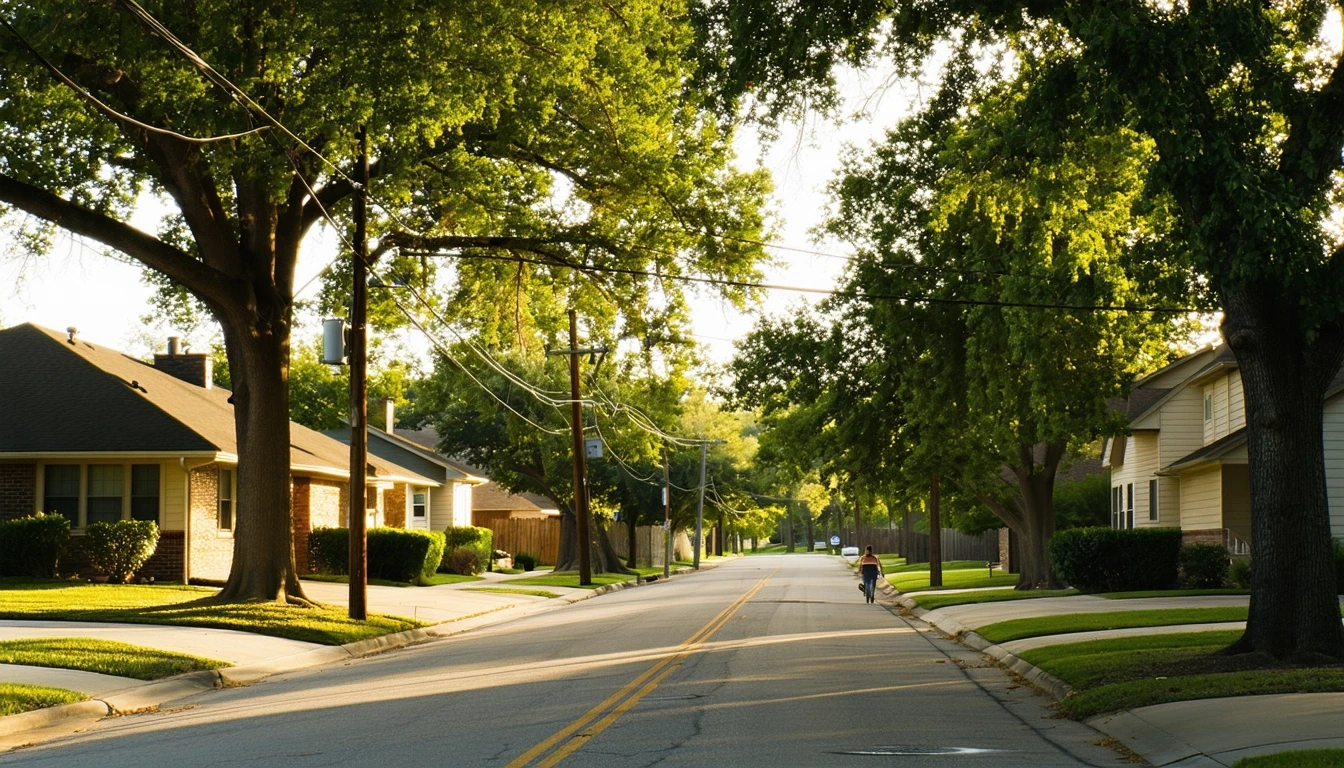
The housing stock skews low-rise. Average building heights fall below typical thresholds, and the mix of residential and commercial land use appears throughout the city rather than concentrating in a single downtown core. This creates variation at the neighborhood level: some areas offer walkable access to services, while others depend entirely on car travel. For newcomers, the mistake is assuming New Braunfels functions like a traditional suburb. It does not. It has rail connectivity, mixed-use pockets, and infrastructure that supports multiple mobility modes—but only in specific areas, and grocery access remains sparse citywide.
What this means for housing budgets is that location within New Braunfels matters more than in cities with uniform density. Choosing a neighborhood close to the limited grocery clusters or near the rail line reduces household logistics friction. Choosing based solely on housing cost can increase time and fuel expenses, even if the rent or mortgage payment appears lower.
Renting in New Braunfels
Rent at $1,426 per month reflects metro-area pressure, not small-city pricing. For a household earning the median income, this figure consumes roughly 20% of gross monthly income—well within conventional guidelines. But that calculation assumes stable rent and ignores the logistics burden created by sparse grocery density and corridor-clustered food options. Renters in New Braunfels do not simply pay for housing; they pay for housing in a place where running errands requires planning and car access, even in neighborhoods with sidewalks and pedestrian infrastructure.
The rental market here serves two populations: young professionals commuting to San Antonio via rail or Interstate 35, and households seeking short-term flexibility before buying. Both groups benefit from the predictability of lease terms and the ability to relocate without selling. But renters also absorb volatility at renewal. In a growing market with limited rental supply, lease increases can outpace wage growth, particularly for households not tied to San Antonio’s higher-paying employment sectors.
Apartment living in New Braunfels often includes bundled utilities—water, sewer, sometimes trash—which simplifies budgeting but obscures actual consumption costs. In a climate where current temperatures reach 83°F and cooling dominates household energy use, renters in apartments may not see the full cost of air conditioning, as it is either included or averaged across units. This creates a false sense of efficiency that disappears when transitioning to a house, where cooling exposure becomes direct and unavoidable.
Owning a Home in New Braunfels
At $290,800, the median home value positions New Braunfels as accessible for buyers with stable income and down payment capacity. For a household earning $85,827 per year, this price point fits within traditional lending ratios, assuming minimal debt and moderate savings. But the purchase price is only the entry cost. Ownership in New Braunfels means absorbing property taxes, insurance, maintenance, and utilities—all of which behave differently here than in denser or cooler markets.
Property taxes in Texas fund local services and schools in the absence of state income tax. While the specific rate for New Braunfels is not provided in available data, the structural reality is that taxes represent a recurring, non-negotiable cost that rises with assessed value. Unlike rent, which resets annually, property taxes adjust based on appraisal cycles and local budget needs. Owners gain stability in housing cost but accept exposure to tax increases tied to market appreciation.
Homeownership here also means managing cooling costs directly. Electricity rates sit at 15.87¢/kWh, and the extended heat season—temperatures in the low 80s are common even outside peak summer—makes air conditioning a structural expense, not a seasonal one. Houses, particularly older or poorly insulated stock, can see cooling costs dominate utility bills from April through October. Apartments often distribute this load across units or include it in rent, but owners pay the full amount based on square footage, insulation quality, and thermostat discipline.
Maintenance follows the same pattern. Low-rise housing stock and the prevalence of single-family homes mean yards, exteriors, and systems fall entirely on the owner. In a climate with heat stress and occasional severe weather, roofs, HVAC systems, and landscaping require regular attention. These are not emergency costs—they are predictable over time—but they are irregular, making budgeting more complex than the fixed rhythm of rent.
Some neighborhoods in New Braunfels operate under homeowners associations, which add monthly or annual fees in exchange for shared amenities or exterior maintenance. The prevalence and cost of HOAs vary widely, and buyers must evaluate whether the services provided justify the loss of autonomy. In areas with sparse grocery access and limited walkability, HOA amenities like pools or parks may substitute for public infrastructure, but they do not solve the logistics friction created by the city’s layout.
Apartment vs House in New Braunfels — Cost Behavior Comparison
The table below isolates cost categories that behave differently in New Braunfels based on housing type, climate, and infrastructure. Rows are included only where the distinction reflects local conditions, not universal housing differences.
| Expense Category | Apartment | House |
|---|---|---|
| Base Housing Cost | Rent at $1,426/month; resets annually | Ownership at $290,800; taxes and insurance rise with assessed value |
| Cooling Exposure | Often bundled or averaged; heat managed by building systems | Direct cost at 15.87¢/kWh; extended season makes AC structural year-round |
| Yard & Exterior Maintenance | Not applicable; managed by property | Required in low-rise housing stock; heat and storm exposure increase frequency |
| Water & Sewer | Typically bundled in rent | Billed separately; irrigation and outdoor use add variability |
| Flexibility | Lease terms allow relocation; exposed to renewal increases in growing market | Locked cost structure; selling requires market timing and transaction costs |
| Grocery Logistics | Requires car access; limited storage may increase trip frequency | Car dependency same, but garage and pantry space reduce errand frequency |
What drives these differences: New Braunfels combines a growing rental market, extended cooling season, low-rise housing form, and sparse grocery density. Apartments bundle or obscure some costs, while houses expose owners to the full variability of utilities, maintenance, and property-level governance. The city’s infrastructure—walkable in pockets but car-dependent for errands—affects both types, but houses offer storage and space that reduce trip frequency even when accessibility remains low.
Why some categories are omitted: Parking, snow removal, and elevator costs do not vary meaningfully in New Braunfels. The low-rise, car-oriented form makes parking universally available and snow removal irrelevant. Categories included reflect costs that genuinely differ based on local climate, infrastructure, or market conditions.
Utilities & Upkeep Differences
Utility exposure in New Braunfels is shaped by heat, not cold. Current temperatures in the low 80s are typical outside peak summer, and the cooling season stretches across more than half the year. For apartment renters, this cost is often invisible—bundled into rent or managed by central systems that distribute load across units. For homeowners, it is direct and unavoidable. At 15.87¢/kWh, a house running air conditioning from April through October will see electricity bills dominate the utility budget, particularly in older homes with poor insulation or oversized square footage.
Natural gas, priced at $19.31/MCF, plays a minor role. Heating demand is low, and gas is more commonly used for water heating or cooking. This is the opposite of northern markets, where heating costs drive winter bills. In New Braunfels, the primary utility question for homeowners is not whether to heat or cool, but how much cooling the house will demand and whether efficiency upgrades can reduce that exposure.
Maintenance in houses follows the rhythm of heat and weather. Roofs endure intense sun exposure, which shortens shingle life. HVAC systems run longer and harder than in milder climates, increasing wear and the frequency of service calls. Landscaping requires irrigation during dry stretches, adding to water bills and outdoor labor. These are not emergency expenses, but they are persistent, and they compound over time in ways that apartment living does not expose.
Apartments shift these burdens to property management. Renters do not replace HVAC filters, repair roof leaks, or manage irrigation systems. But they also lack control. If a building’s cooling system is undersized or poorly maintained, renters endure discomfort without recourse beyond complaints. Homeowners absorb the cost but gain the ability to upgrade, insulate, or replace systems on their own timeline.
Rent vs Buy: Long-Term Exposure in New Braunfels
The decision between renting and buying in New Braunfels is not a calculation of monthly payments. It is a choice between two risk profiles. Renters accept annual volatility—lease renewals that may spike in a growing market—in exchange for flexibility and freedom from maintenance. Owners accept long-term exposure to taxes, insurance, and upkeep in exchange for cost predictability and the ability to lock housing expenses at a fixed mortgage payment.
In a market where home values sit at $290,800 and rent reaches $1,426 per month, the gap between renting and owning narrows for households with down payment capacity. But ownership here means absorbing the full cost of cooling, exterior maintenance, and property-level governance. Over time, these costs do not disappear—they shift, rise, and require active management. Renters avoid this complexity but remain exposed to the whims of landlords and the broader rental market.
For households planning to stay in New Braunfels long-term, ownership offers insulation from rental market volatility. For those uncertain about job stability, family size, or geographic commitment, renting preserves optionality. Neither choice is inherently better. The question is which set of tradeoffs aligns with a household’s timeline, income stability, and tolerance for maintenance responsibility.
What matters most in New Braunfels is understanding that the city’s infrastructure—sparse grocery density, rail connectivity, walkable pockets—creates logistics friction that affects both renters and owners. Choosing housing based solely on cost without considering location relative to grocery clusters, rail access, or pedestrian infrastructure can increase household burden in ways that monthly rent or mortgage payments do not capture.
FAQs About Housing Costs in New Braunfels
Is renting or buying more affordable in New Braunfels?
Affordability depends on timeline and household stability. Rent at $1,426 per month avoids maintenance and tax exposure but resets annually in a growing market. Ownership at $290,800 locks housing cost but adds property taxes, insurance, cooling expenses, and upkeep. For households planning to stay beyond three years, ownership typically reduces long-term volatility. For those prioritizing flexibility, renting avoids the transaction costs and responsibility of ownership.
How much do utilities cost for a house in New Braunfels?
Electricity at 15.87¢/kWh drives the largest utility expense due to the extended cooling season. A house running air conditioning from April through October will see electricity dominate the utility budget, particularly in older or poorly insulated homes. Natural gas at $19.31/MCF plays a smaller role, primarily for water heating. Exact costs depend on square footage, insulation, and thermostat settings, but cooling is the structural driver, not heating.
Does New Braunfels have high property taxes?
Texas funds local services and schools through property taxes in the absence of state income tax. While the specific rate for New Braunfels is not provided here, the structural reality is that property taxes represent a recurring cost that adjusts with assessed value. Owners should expect taxes to rise over time as home values appreciate, and this exposure is part of the long-term cost of ownership in Texas markets.
Are there neighborhoods in New Braunfels where you don’t need a car?
New Braunfels has walkable pockets with pedestrian infrastructure and rail service, but grocery density remains sparse citywide. Even in neighborhoods with sidewalks and mixed-use development, running errands typically requires a car. The rail line offers commuter connectivity to San Antonio, reducing car dependency for work travel, but daily household logistics—groceries, appointments, errands—still depend on vehicle access in most areas.
What should renters in New Braunfels watch for at lease renewal?
Renters should expect lease increases in a growing market with limited rental supply. The key is understanding whether the increase reflects market-wide pressure or property-specific factors. In New Braunfels, proximity to rail, grocery clusters, and walkable infrastructure adds value that landlords may capture at renewal. Renters should evaluate whether the location justifies the cost or whether relocating to a different neighborhood offers better value without sacrificing access.
Making Housing Choices in New Braunfels
Housing costs in New Braunfels reflect a market caught between small-city scale and metro-area pressure. Home values at $290,800 and rent at $1,426 per month are accessible for households earning the median income, but the structure beneath those numbers—sparse grocery density, extended cooling season, neighborhood-level variation in walkability—creates tradeoffs that monthly payments alone do not reveal.
Renters gain flexibility and avoid maintenance but accept annual volatility and the logistics burden of a car-dependent city. Owners lock predictability but absorb the full cost of cooling, upkeep, and property taxes in a climate and market that make those expenses structural, not occasional. The choice depends on timeline, income stability, and willingness to manage the complexity of homeownership in a place where infrastructure and accessibility vary widely by neighborhood.
For readers evaluating monthly expenses or comparing New Braunfels to other markets, the lesson is this: housing cost is not just the rent or mortgage. It is the sum of shelter, utilities, maintenance, and the time and fuel required to manage daily life in a city where walkability exists in pockets but car dependency remains the norm. Understanding that structure is the first step toward making a housing decision that fits both budget and lifestyle.
How this article was built: In addition to public economic data, this article incorporates location-based experiential signals derived from anonymized geographic patterns—such as access density, walkability, and land-use mix—to reflect how day-to-day living actually feels in New Braunfels, TX.