
Many people moving to Sandy face the same question: does it make sense to rent here, or is ownership the only way to settle in? The answer isn’t obvious. Sandy’s housing market sits at an intersection of strong household incomes, significant home values, and infrastructure that actually makes renting viable long-term—something that’s not true in every suburban setting.
This article breaks down Sandy Affordability: What’s Easy, What’s Expensive, how ownership costs behave over time, and which housing path fits different household types in this city.
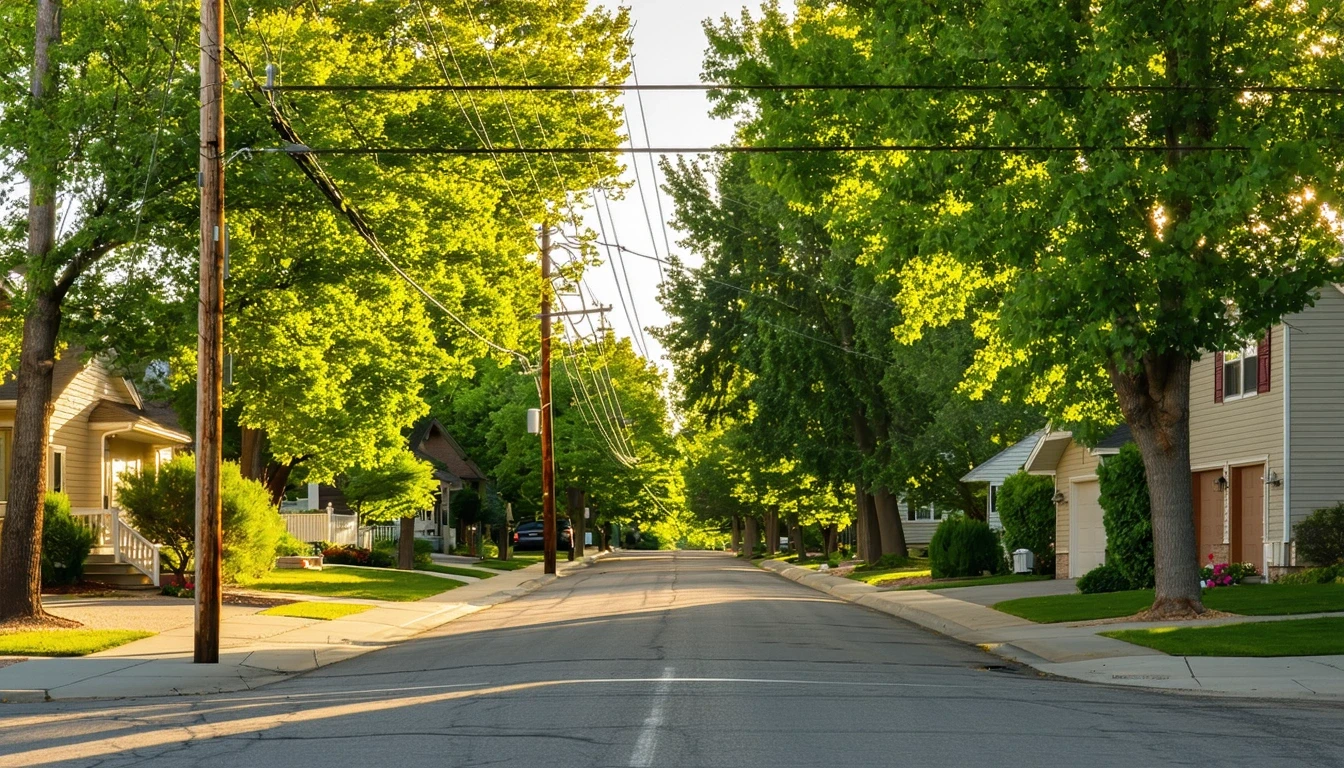
The Housing Market in Sandy Today
Sandy’s housing market reflects two competing forces. Median home values stand at $492,300, a figure that’s elevated relative to the regional price parity index of 96—meaning homes here cost more than the broader cost-of-living adjustment would predict. That gap signals demand pressure, likely driven by proximity to employment centers, school access, and the kind of infrastructure that reduces daily friction.
But here’s what newcomers often miss: Sandy isn’t a place where you need to own to access convenience. The city has rail transit service, high food and grocery establishment density, and walkable pockets with substantial pedestrian infrastructure. That combination is rare in suburban markets and changes the rent-versus-buy calculation significantly. Renters here aren’t trading off access or mobility the way they might in car-dependent sprawl.
Median household income sits at $108,165 per year, which is strong—but home values still represent a meaningful multiple of that income. The unemployment rate of 3.2% suggests a stable job market, but it doesn’t erase the down payment barrier or the income verification required to qualify for a mortgage at this price point.
Renting in Sandy
Median gross rent is $1,640 per month. That figure includes the base rent but not utilities, parking, or other fees that vary by building and lease structure. What matters more than the number itself is what renting gets you in Sandy.
Because the city has rail service and broadly accessible food and grocery options, renters don’t face the same logistical penalties common in other suburban markets. You’re not forced into car dependency for every errand. Walkable pockets mean some neighborhoods support daily routines on foot, and mixed land use—both residential and commercial development detected throughout the city—means rental buildings often sit near the services people actually use.
Renters also avoid exposure to property tax changes, insurance volatility, and the maintenance costs that come with ownership. In a market where home values are elevated, that insulation matters. Rent increases are predictable within lease terms, and while renewals bring uncertainty, the exposure is bounded and doesn’t compound the way ownership costs can.
For households prioritizing flexibility—whether due to job uncertainty, family planning, or simply wanting to test a neighborhood before committing—renting in Sandy offers more structural support than in cities where car ownership and long commutes are non-negotiable.
Owning a Home in Sandy
Ownership in Sandy starts with a $492,300 median home value. That’s the entry point, but it’s not the full cost picture. Buyers also take on property taxes, homeowners insurance, maintenance, and—depending on the neighborhood—HOA fees and special assessments.
Property taxes in Utah are governed by a combination of county, city, and school district levies. While the state has constitutional limits on assessment increases, the effective rate and total bill depend on location within Sandy and the specific taxing districts that apply. Buyers should verify the exact rate for any property they’re considering, as it’s not uniform across the city.
Insurance costs vary by home age, construction type, and proximity to risk factors like wildfire zones or flood plains. Sandy’s climate brings hot, dry summers and cold winters, which affects both heating and cooling system wear. Older homes may face higher maintenance exposure, particularly for HVAC, roofing, and water systems.
Ownership also means control. Buyers can renovate, install energy-efficient systems, and make long-term improvements that reduce operating costs over time. But that control comes with responsibility—when something breaks, the cost and the project management both fall to the owner.
For households planning to stay in Sandy for many years, ownership locks in a portion of housing cost (the principal and interest on a fixed-rate mortgage) while leaving other components—taxes, insurance, utilities, maintenance—exposed to change. That tradeoff between predictability and volatility is central to the ownership decision.
Apartment vs House in Sandy — Cost Behavior Comparison
| Expense Category | Apartment | House |
|---|---|---|
| Base Housing Cost | Rent typically includes building maintenance, exterior upkeep, and shared infrastructure | Mortgage principal and interest fixed (if financed with fixed-rate loan), but does not include taxes, insurance, or maintenance |
| Heating & Cooling | Shared walls and smaller square footage reduce heating and cooling load; some buildings include utilities in rent | Full exposure to Sandy’s hot summers and cold winters; standalone structures lose heat and cool air faster; owner pays full utility cost |
| Outdoor Space Maintenance | No yard care, snow removal, or landscaping responsibility | Owner handles all lawn care, snow removal, irrigation, and seasonal landscaping; time and cost vary by lot size |
| Access to Parks & Green Space | Sandy’s integrated park density (exceeds high threshold) means apartment residents have strong public green space access without private yards | Private yard provides controlled outdoor space, but public park access is equally strong; value depends on household use patterns |
| Errands & Daily Logistics | High food and grocery density means most apartment locations support walkable errands; rail transit access reduces car dependency | Houses in less dense areas may require driving for errands, though Sandy’s broadly accessible food infrastructure limits this gap |
| Repair & Maintenance | Landlord or property management handles appliance repair, plumbing, HVAC service, and structural issues | Owner pays for all repairs, replacements, and system failures; costs are unpredictable and can be large (roof, HVAC, water heater) |
Why these categories? The table focuses on cost behaviors that differ meaningfully in Sandy due to climate (heating and cooling exposure), infrastructure (park access and errands density), and housing stock (mixed building heights and land use). Categories like internet or trash service were omitted because they don’t vary significantly by housing type in this market. The distinctions above reflect how Sandy’s physical and structural characteristics change the cost experience between apartments and houses.
Utilities & Upkeep Differences
Utility exposure in Sandy is shaped by climate and building type. Electricity rates sit at 12.99¢/kWh, and natural gas is priced at $10.82 per MCF. Those are the unit costs, but what drives the bill is how much energy a household uses—and that varies dramatically between apartments and houses.
Apartments benefit from shared walls, which reduce heat loss in winter and heat gain in summer. Smaller square footage means less space to condition, and some buildings include water, gas, or trash service in the rent. Houses, by contrast, are standalone structures with full exposure to Sandy’s temperature swings. Heating a house through cold winters and cooling it through hot, dry summers creates noticeable utility costs, especially in older homes with less insulation or aging HVAC systems.
Maintenance exposure also differs. Apartment residents don’t handle exterior repairs, roof replacement, or landscaping. House owners do. In Sandy’s climate, that includes irrigation system upkeep, snow removal, and managing wear on exterior materials caused by UV exposure and temperature cycling. These aren’t monthly costs, but they’re recurring and unpredictable.
Rent vs Buy: Long-Term Exposure in Sandy
The rent-versus-buy decision in Sandy isn’t just about monthly payments—it’s about how costs behave over time and which risks each path exposes you to.
Renters face lease renewal uncertainty. Rent can increase annually, and while those increases are typically bounded by market conditions and lease terms, they’re not predictable over a decade. But renters also avoid property tax changes, insurance rate shifts, and the cost of major repairs. When a water heater fails or a roof needs replacement, it’s the landlord’s problem.
Owners lock in a portion of their housing cost if they finance with a fixed-rate mortgage—the principal and interest payment stays constant. But property taxes, insurance, and maintenance all change over time, and those changes aren’t optional. Taxes can rise due to reassessment or voter-approved levies. Insurance costs shift with risk models and claims history. Maintenance is episodic but inevitable—HVAC systems, roofs, and appliances all have finite lifespans.
What ownership provides is control and stability of place. Owners can renovate, install solar, upgrade insulation, or make other changes that reduce operating costs or increase comfort. They also build equity over time, assuming stable or appreciating home values. But that equity comes with illiquidity—selling a home takes months and incurs transaction costs.
In Sandy, the rent-versus-buy tradeoff is also shaped by infrastructure. Because the city has rail transit, walkable pockets, and high food accessibility, renters don’t sacrifice mobility or convenience the way they might in car-dependent suburbs. That makes renting a structurally viable long-term option, not just a transitional phase.
How this article was built: In addition to public economic data, this article incorporates location-based experiential signals derived from anonymized geographic patterns—such as access density, walkability, and land-use mix—to reflect how day-to-day living actually feels in Sandy, UT.
FAQs About Housing Costs in Sandy
Is it cheaper to rent or buy in Sandy, UT?
It depends on how long you plan to stay and which costs matter most to you. Renting avoids property tax, insurance, and maintenance exposure, while ownership locks in part of your housing cost but requires a substantial down payment. Sandy’s rail transit and walkable infrastructure make renting viable long-term, unlike in car-dependent suburbs.
What’s the median home price in Sandy, UT?
The median home value in Sandy is $492,300. That figure represents the middle of the market—half of homes cost more, half cost less. Buyers also need to budget for property taxes, insurance, and maintenance, which vary by property and location within the city.
How much is rent in Sandy, UT?
Median gross rent in Sandy is $1,640 per month. That includes base rent but typically not utilities, parking, or other fees. Rent varies by neighborhood, building age, and proximity to rail transit and walkable amenities.
Does Sandy, UT have high property taxes?
Property taxes in Sandy are governed by county, city, and school district levies. The effective rate depends on the specific taxing districts that apply to a property. Utah has constitutional limits on assessment increases, but the total tax bill still changes over time due to rate adjustments and voter-approved measures.
Is Sandy, UT a good place to buy a house?
Sandy offers strong household incomes, low unemployment, and infrastructure that supports both renters and owners. Home values are elevated relative to regional price parity, so buyers need substantial financial capacity. The city’s rail transit, park access, and mixed land use make it a strong fit for families and professionals planning to stay long-term.
Making Housing Choices in Sandy
Housing decisions in Sandy come down to three factors: financial capacity, time horizon, and how much you value control versus flexibility.
If you’re planning to stay for many years, have the income and savings to handle a $492,300 home purchase, and want to lock in a portion of your housing cost while building equity, ownership makes sense. But it requires accepting exposure to property taxes, insurance, and maintenance—all of which change over time in ways you can’t fully predict.
If you value flexibility, want to avoid repair responsibility, or aren’t ready to commit to a specific neighborhood, renting in Sandy offers more structural support than in most suburban markets. The city’s rail transit, walkable pockets, and high food accessibility mean renters don’t sacrifice convenience or mobility. That’s a meaningful advantage and one that’s often underestimated.
For more on What a Budget Has to Handle in Sandy, including utilities, transportation, and other recurring costs, see the companion budget guide. And if you’re weighing moving company costs and options, the logistics guide covers what to expect during the transition.