
Can you live in Winchester without a car? For most people, the answer is no—and understanding why reveals a lot about how this Kentucky city is built, how people move through it daily, and what that means for your time, flexibility, and household budget.
Winchester sits in a region where car ownership isn’t just common—it’s the baseline assumption. The street network, the spacing between daily destinations, and the lack of transit infrastructure all point in the same direction: if you’re planning a life here, plan on driving.
How People Get Around Winchester
Transportation options in Winchester are straightforward: nearly everyone drives. The city’s layout reflects decades of car-oriented development, with residential neighborhoods, grocery stores, schools, and workplaces spread across a geography that doesn’t lend itself to walking or biking for daily errands. Pedestrian infrastructure is minimal relative to the road network, and bike lanes are sparse. There’s no rail service, and bus transit—if present at all—plays little to no role in how people actually get around.
What newcomers often misunderstand is that Winchester isn’t a place where you can “get by” without a car by planning carefully or living in the right neighborhood. The infrastructure itself assumes vehicle access. Groceries, healthcare, schools, and jobs are distributed in ways that require point-to-point trips, and those trips almost always happen by car.
Public Transit Availability in Winchester
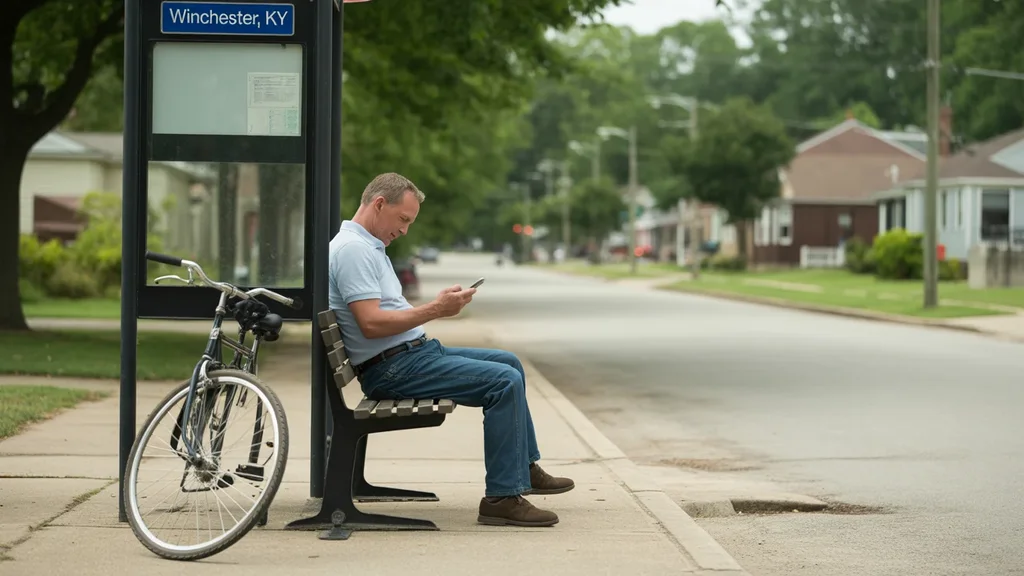
Public transit does not appear to be a meaningful part of Winchester’s transportation landscape. There are no detected bus stops, rail stations, or structured transit services that residents can rely on for daily commuting or errands. This isn’t a gap in coverage—it’s the absence of a system altogether.
In cities where transit exists but falls short, you’ll often find it works well in certain corridors or during peak hours, with limitations in suburban zones or late at night. Winchester doesn’t fit that pattern. There’s no core where transit is viable, no corridor where it’s frequent enough to structure your day around. If you’re moving here expecting any form of public transportation to supplement or replace car ownership, you’ll need to reset that expectation entirely.
Driving & Car Dependence Reality
Driving isn’t just the most common way to get around Winchester—it’s the only practical option for nearly every household. The city’s street network is built for cars, and daily life reflects that. Grocery stores aren’t within walking distance for most residents. Schools, doctors’ offices, and workplaces require deliberate trips. Even errands that might be walkable in denser cities—picking up prescriptions, grabbing takeout, dropping off mail—become car trips here.
Parking is rarely a problem, which is one of the upsides of car dependency in a smaller city. You won’t circle blocks looking for a spot or pay for daily parking at work. But the tradeoff is that you absorb all the fixed and variable costs of car ownership: insurance, registration, maintenance, and fuel. At $4.10 per gallon, gas isn’t cheap, and because nearly every trip requires driving, fuel costs become a steady, unavoidable part of the household budget.
Car dependence also shapes where people choose to live. Proximity to work matters, but so does access to grocery stores, schools, and healthcare. In a transit-served city, you might trade a longer commute for lower rent, knowing you can read or relax on the bus. In Winchester, every mile you live from your daily destinations is a mile you’ll drive, often multiple times a day.
Commuting Patterns & Daily Mobility
Commuting in Winchester typically means single-occupancy vehicle trips. There’s no carpool lane advantage, no express bus to catch, no train schedule to plan around. You leave when you need to leave, and you drive directly to where you’re going. For some households, that’s a straightforward trip to a single workplace. For others—especially those managing school drop-offs, childcare pickups, or multiple jobs—it means stitching together several trips across different parts of the city or into nearby Lexington.
The lack of transit also means there’s no fallback. If your car breaks down, you’re not inconvenienced—you’re immobilized. That makes reliable vehicle access essential, and it’s why many households here maintain two cars even when incomes are modest. It’s not about convenience; it’s about making sure both adults can get to work, kids can get to school, and groceries can get home.
Because Winchester is part of the Lexington metro area, some residents commute out of the city for work. That adds distance and time, but it doesn’t change the fundamental pattern: you’re driving, and you’re doing it alone.
Who Transit Works For—and Who It Doesn’t
Transit doesn’t work for anyone in Winchester in any meaningful, day-to-day sense. There’s no subset of the population—students, downtown workers, retirees—who can structure their lives around public transportation because the infrastructure simply isn’t there.
This is different from saying transit is inconvenient or limited. In some cities, transit works well for people who live near a bus line or close to downtown, even if it’s not practical for suburban families. In Winchester, there’s no version of that tradeoff to make. Whether you’re renting or owning, living near the center of town or on the outskirts, working locally or commuting to Lexington, the answer is the same: you need a car.
That uniformity simplifies some decisions—you’re not weighing proximity to a bus stop when choosing where to live—but it also removes flexibility. Households that might prefer to go car-light or car-free for financial or environmental reasons don’t have that option here.
Transportation Tradeoffs in Winchester
The tradeoff in Winchester isn’t between transit and driving—it’s between accepting car dependency or living somewhere else. Driving offers control, predictability, and the ability to move freely across a spread-out geography. You’re not waiting for a bus that may or may not come. You’re not limited by service hours or route maps. You decide when to leave, where to stop, and how to structure your day.
But that control comes with cost. Car ownership means insurance premiums, registration fees, maintenance, repairs, and fuel. It means exposure to gas price swings and the need to keep a vehicle running even when money is tight. It means that transportation isn’t a line item you can reduce by taking the bus more often—it’s a fixed part of your monthly budget in Winchester, and it doesn’t flex much.
For some households, especially those with steady incomes and reliable vehicles, that’s a manageable tradeoff. For others—particularly those on tight budgets, with older cars, or without access to credit for repairs—it creates real financial pressure. And because there’s no transit alternative, there’s no escape valve when that pressure builds.
FAQs About Transportation in Winchester (2026)
Is public transit usable for daily commuting in Winchester?
No. There is no public transit infrastructure in Winchester that residents can rely on for daily commuting. The city’s transportation network is entirely car-dependent, and there are no bus routes, rail lines, or structured services to provide an alternative.
Do most people in Winchester rely on a car?
Yes. Nearly everyone in Winchester drives for daily errands, commuting, and household logistics. The city’s layout, the spacing of destinations, and the absence of transit options make car ownership essential for almost all households.
Which areas of Winchester are easiest to live in without a car?
None. There are no neighborhoods in Winchester where living without a car is practical. Even areas closer to schools, grocery stores, or workplaces lack the pedestrian infrastructure and density needed to support car-free living.
How does commuting in Winchester compare to nearby cities?
Winchester’s commuting pattern is simpler but less flexible than in nearby Lexington, where some bus service exists. In Winchester, commuting means driving, period. There’s no option to take transit partway, carpool using dedicated lanes, or avoid traffic by timing your trip around a train schedule. You’re on the road, in your car, for every trip.
What happens if you don’t own a car in Winchester?
Daily life becomes extremely difficult. Without a car, you can’t reliably get to work, buy groceries, access healthcare, or manage household errands. Rideshare services may be available but are not a sustainable replacement for car ownership given the frequency and distance of trips required in Winchester.
How Transportation Fits Into the Cost of Living in Winchester
Transportation in Winchester isn’t a category you optimize—it’s a structural cost you absorb. Because the city is built around car use, and because there’s no transit alternative, every household carries the full weight of vehicle ownership. That includes insurance, registration, and maintenance, plus the variable cost of fuel at $4.10 per gallon.
How much that costs depends on your vehicle, your commute, and how many trips you make each week. But the pattern is consistent: transportation is a large, non-negotiable part of household spending here, and it doesn’t compress easily. You can drive less by combining errands or working from home, but you can’t eliminate the fixed costs of keeping a car on the road.
Because grocery stores are spread out and not densely clustered, even routine errands require planning and vehicle access. You can’t walk to the corner store for milk or pick up a prescription on your way home from the bus stop. Every need becomes a car trip, and those trips add up—not just in fuel, but in time and mental load.
Understanding this helps clarify what living in Winchester actually costs and where your money will go. If you’re comparing Winchester to other cities, don’t just compare rent or home prices—compare what it takes to move through daily life. In some places, you can trade a longer commute for cheaper housing and still get by on transit. In Winchester, cheaper housing might mean more driving, and there’s no transit option to fall back on.
For a fuller picture of how transportation costs fit alongside housing, utilities, and other essentials, the monthly budget breakdown offers grounded context. The key takeaway here is simpler: if you’re moving to Winchester, plan on owning a car, keeping it running, and driving it often. That’s not a lifestyle choice—it’s how the city works.
How this article was built: In addition to public economic data, this article incorporates location-based experiential signals derived from anonymized geographic patterns—such as access density, walkability, and land-use mix—to reflect how day-to-day living actually feels in Winchester, KY.
—